PROF. FERNANDO GARIBAY

6.4K posts

PROF. FERNANDO GARIBAY banner
PROF. FERNANDO GARIBAY

PROF. FERNANDO GARIBAY

@FERNANDOGARIBAY

Professor at Thunderbird School of Global Mgmt, Professor at Herberger ASU, Visiting Lecturer at Harvard, MIT, Stanford, GRAMMY® & BMI Award Winning Producer

Hidden Hills, CA Katılım Nisan 2009
1.7K Takip Edilen32.8K Takipçiler
PROF. FERNANDO GARIBAY
PROF. FERNANDO GARIBAY@FERNANDOGARIBAY·
The Voice in Your DNA Science confirms that your cells "hear" your internal monologue. The fields of psychoneuroimmunology, the study of how psychological processes influence the nervous and immune systems, and epigenetics, the science of how behavior and environment alter gene expression without changing the DNA sequence itself, now demonstrate that internal monologue directly modulates cellular function. Your thoughts are transduced into biochemical signals that alter immune response, gene activity, and chromosomal aging. How It Works: Three empirically validated pathways drive this process: 1. Neuro-Hormonal Transduction, the process by which the brain converts thoughts and emotions into hormonal signals that travel throughout the body. Your Hypothalamic-Pituitary-Adrenal axis or HPA axis, the body's central stress response system connecting the brain to the adrenal glands, translates cognitive stress into cortisol. Chronic negative self-talk suppresses lymphocyte proliferation, the ability of your white blood cells to multiply and mount a defense, and cytokine production, the release of signaling proteins that coordinate your immune response. In short, your inner critic silences your body's defense system from the inside. 2. Epigenetic Rewriting, the process by which life experiences and mental states chemically switch genes on or off without altering the DNA sequence itself. Social genomics identified the Conserved Transcriptional Response to Adversity or CTRA: self-critical thought upregulates pro-inflammatory genes while downregulating antiviral defenses. Your mental state edits cellular software in real time. 3. Telomeric Erosion, the gradual wearing down of telomeres, the protective caps at the ends of chromosomes that shield your DNA during cell division. Nobel laureate Elizabeth Blackburn demonstrated that psychological stress inhibits telomerase and shortens telomeres, the protective caps on chromosomes. Negative internal dialogue accelerates biological aging at the DNA level. What This Means in a Post-AI World: In a world where AI-driven algorithms increasingly shape our digital inputs, “algorithmic anxiety” is no longer merely a psychological concern. It is a genomic threat. If self-talk governs gene expression, then the stress signals fed to us by machines are rewriting our biology in real time. Constructive internal dialogue can no longer be dismissed as wellness culture. It is an evidence-based defense strategy for maintaining genomic stability against the rising tide of algorithmically induced stress. As health technologies advance beyond physical metrics toward monitoring the molecular footprint of thought itself, one truth becomes inescapable: every cell is listening. If you’re curious and/or want to learn more see the comment section for references below. Ref: 1. Cole, S.W. (2014). Human Social Genomics. 2. Blackburn, E. (2012). Stress & Telomeres. 3. Fredrickson, B. (2015). Well-being & Gene Expression.
English
0
3
4
1.1K
PROF. FERNANDO GARIBAY
PROF. FERNANDO GARIBAY@FERNANDOGARIBAY·
AI Just Formalized Scientific Taste For four centuries, the delta between a "good" scientist and a "great" one wasn't just raw intelligence, it was taste. It was the intuition to survey a thousand research paths and identify the one worth a lifetime of inquiry. Researchers at Fudan University have now transformed this intangible quality into a trainable objective. How it works:  Their framework, Reinforcement Learning from Community Feedback or RLCF, redefines scientific taste as a preference modeling problem. They developed Scientific Judge, trained on 700,000 field- and time-matched paper pairs from 2.1 million arXiv publications. Its primary metric? Predicting which research the community actually valued. Scientific Judge currently outperforms GPT-5.2 and Gemini 3 Pro in predicting citation impact. It generalizes to future papers and aligns with International Conference on Learning Representations or ICLR peer review scores it was never trained on. By using this as a reward model, they trained Scientific Thinker, a policy model that proposes high-impact research directions. These aren't just summaries; they are original hypotheses. The trained model produces better research ideas than its untrained self 81.5% of the time, and better than GPT-5.2 54.2% of the time. What this means in a post AI World: This represents a significant paradigm shift because we're moving beyond AI that executes science toward AI that determines what science is worth doing. The evaluative judgment that typically takes a PhD candidate years to cultivate, recognizing what matters before the consensus forms, has been distilled into an algorithmic signal. Rather than relying on expensive human annotations, the model learns from citation patterns: the recorded decisions of millions of researchers choosing what to build on. For principal investigators deciding where to allocate lab resources, for funding agencies evaluating grant proposals, and for doctoral candidates selecting dissertation topics, this tool introduces a data-driven compass where only intuition existed before. Scientific taste was the final frontier of human advantage in research. It has just been formalized. If you’re curious and/or want to learn more see the comment section for references below. References: [1] Tong, J., et al. (2026). arXiv:2603.14473 [2] Gong, Z., et al. (2026). arXiv:2603.16659 [3] Fudan University & SAIS. (2025). Nature Research Intelligence.
English
0
1
1
962
PROF. FERNANDO GARIBAY retweetledi
PROF. FERNANDO GARIBAY
PROF. FERNANDO GARIBAY@FERNANDOGARIBAY·
Self-Driving Labs in Biotech Over the past decade, biologists have begun to build “self-driving labs” for biotech, autonomous experimental loops that fuse robotics with machine learning to explore very large biochemical design spaces. These platforms now support longevity, oncology, and gene-editing programs, compressing screening and formulation timelines from months to days. Here’s How It Works: Think of a biotech SDL as an automated research kitchen. Robots measure and mix tiny droplets, incubators provide the right temperature and atmosphere, and cameras and sensors watch how cells respond. A central software “conductor” keeps track of every plate and setting, makes sure safety rules are followed, and sends the results to an AI model. That AI then suggests the next round of experiments, changing doses, swapping delivery methods, or tweaking gene-editing recipes. The result is a closed Design–Build–Test–Learn loop that can run with minimal human intervention. Why This Matters To You: For translational teams, this means mapping robust design spaces earlier and cutting attrition later in the pipeline. In Chemistry, Manufacturing, Controls, and formulation, SDL’s reveal operating windows that stay stable even when manufacturing conditions drift. In cancer and gene-editing studies, they compress cycles of hypothesis–test–refine while generating structured audit trails that speak the language of regulators. If you’re curious about the research cited and/or want to learn more see the comment section for references below. References: -Abolhasani, M., & Kumacheva, E. (2023). The rise of self-driving labs in chemical and materials sciences. *Nature Synthesis*. -Tobias, A. V., et al. (2025). Autonomous ‘self-driving’ laboratories: A review of technology and policy implications. *Royal Society Open Science*. -Drug Discovery Trends. (2024–2025). Coverage of autonomous formulation platforms and AI in drug discovery.
English
0
1
3
367
PROF. FERNANDO GARIBAY
PROF. FERNANDO GARIBAY@FERNANDOGARIBAY·
The Interconnected Brain Princeton researchers have explored the possibility that the human brain emits ultra-low-frequency electromagnetic activity that may function like part of a global neural network. If such signals can subtly influence other brains at distances as large as 10,000 KM, it raises a serious question: is human consciousness more interconnected than our current models assume? How it works: This work adds to a growing body of research suggesting brains communicate not only through neurons, but also through electromagnetic fields that may help shape empathy, intuition, and group behavior. Some experiments have reported that when one person meditates or sustains focused attention, other people nearby, and in some claims even far away, show small shifts in brainwave patterns. The Princeton Engineering Anomalies Research or PEAR Laboratory also ran a long series of experiments suggesting the mind may have a subtle capacity to influence the output of devices called Random Event Generators or REG’s for short. What started as a student’s curiosity about whether intention can affect the surrounding environment became a rigorous testing program where Dr. Robert Jahn and his lab assistant spent years running controlled trials to see whether consciousness has any measurable effect on the physical world. Their claim was that the mind was able to affect and change outcomes of the machine in ways that were beyond standard deviations. In essence, consciousness was having an effect over the physical world. To test this, they built machines designed to mimic a coin flip and record results over time. The REG ran about 200 “flips” per second and, when left unattended, continued to produce the expected 50/50 distribution, with a mean near the midpoint one would predict from chance. The interesting results appeared when human intention was introduced. In intention runs, participants focused on making the numbers higher or lower, and PEAR reported that the output began to deviate slightly from expectation in the intended direction. The shifts were small, but across many trials they were statistically detectable, leading Jahn and colleagues to argue that consciousness was influencing outcomes beyond what standard deviations would predict by chance. Later networked Random Number Generator monitoring extended the question from individuals to collective settings. Meta-analysis, however, emphasize small effect sizes, heterogeneity, and persistent concerns about bias and analytic flexibility. Some interpretations speculate that quantum measurement may be relevant, though this remains an open and controversial leap rather than an established mechanism. What it means in a post-AI world: If consciousness is truly interconnected, then in a post-AI world the real source of influence isn’t the individual, it’s groups of people whose attention and behavior synchronize and amplify each other. Since AI makes information inexpensive, the scarce resource becomes coordination, meaning advantage comes from aligning attention and intent at scale. That also widens the security risk: influence operations would increasingly aim to steer population-level emotions, not just beliefs, and AI-generated media makes it easier to synchronize (and weaponize) those collective emotional patterns. Ethically, the challenge shifts from moderating content to preventing mass manipulation of human states, with the core question becoming how to increase coherence without enabling coercion. If you’re curious about the research cited and/or want to learn more see the comment section for references below. Ref: -The Foundation: Jahn & Dunne (2005) The 28-year PEAR legacy. -The Global Scale: Nelson & Bancel (2011) Evidence of world events affecting the field. -The Scientific Skepticism: Bösch et al. (2006) A necessary balance regarding effect sizes. -The Modern Frontier: Plonka et al. (2026) Recent findings on group coherence and global RNG synchronization.
English
1
1
2
493
PROF. FERNANDO GARIBAY
PROF. FERNANDO GARIBAY@FERNANDOGARIBAY·
Gut Feelings: Memories from the Future Imagine knowing something about the future before it actually happens, whether it arrives as a gut feeling, a dream, or a sudden intuitive impression that an outcome is imminent. This is commonly referred to as precognition, defined as the ability to acquire information about future events prior to their occurrence. Although such experiences are often framed as speculative or attributed to “psychic” explanations, reports of anticipatory impressions are widespread across individuals and cultures. How it works: Precognition is often described as foreknowledge arriving through dreams, intuition, or a flash of certainty. Cognitive neuroscientist Julia Mossbridge, who has reported precognitive dreams since childhood, has been a leading voice trying to bring rigor to the conversation. A major set of experiments associated with researcher Dean Radin uses EEG monitoring while participants view randomly selected emotional images. Some images are positively valenced, such as smiling faces, whereas others are negatively valenced, such as accident scenes or other distressing content. The striking claim is that measurable brain activity can shift before the image appears, as if the nervous system anticipates what’s coming. Even more provocative is the claim that similar effects have shown up across repeated trials and replications. The broader story also includes declassified CIA-era interest in anomalous cognition, which, at minimum, suggests these questions have been taken seriously in certain institutional contexts. What it means in a post-AI world: In a world where AI can generate infinite explanations on demand, the scarce resource isn’t information, it’s meaning and discernment. If gut feelings are even occasionally valid, they may reflect a uniquely human channel of pattern detection that operates beneath conscious reasoning. That doesn’t mean we should accept every intuition uncritically. It means we should treat intuition like a signal: imperfect, noisy, and sometimes wrong, but potentially informative. The mature stance is disciplined openness: log the feeling, timestamp it, and compare it to outcomes. Let evidence, not stigma, guide the conversation.  Do you follow your intuition, or do you dismiss it as coincidence? If you’re curious about the research cited and/or want to learn more see the comment section for references below. Ref: -Rayne, E. (2025, November 26). Your consciousness can jump through time, meaning “gut feelings” are memories from the future, scientists say. Popular Mechanics. -Mossbridge, J., Tressoldi, P., & Utts, J. (2012). Predictive physiological anticipation preceding seemingly unpredictable stimuli: A meta-analysis. Frontiers in Psychology, 3, 390. -Bem, D. J. (2011). Feeling the future: Experimental evidence for anomalous retroactive influences on cognition and affect. Journal of Personality and Social Psychology, 100(3), 407–425. -Mumford, M. D., Rose, A. M., & Goslin, D. A. (1995, September 29). An evaluation of remote viewing: Research and applications (American Institutes for Research report prepared for the U.S. Central Intelligence Agency). American Institutes for Research.
English
0
1
2
393
PROF. FERNANDO GARIBAY retweetledi
PROF. FERNANDO GARIBAY
PROF. FERNANDO GARIBAY@FERNANDOGARIBAY·
Why Musicians Stay Young Longer Have you noticed how some people age slowly, not because life is easier, but because they have a powerful outlet to process its challenges? Lifelong musicians often exemplify this, thanks to music’s unique effects on the brain and body. Neuroimaging studies reveal that active musicians preserve emotion regulation with age. Brain scans show maintained or compensatory connectivity in prefrontal regions, supporting stable mood and resilience even in the 70s and 80s, countering typical age decline in these areas. How it works: Researchers at McGill found that playing music triggers sustained dopamine release in a self-contained loop: effort → sensation → meaning → fulfillment, without the crash of external rewards. Musicians retain high “emotional granularity,” discerning nuanced feelings rather than just good or bad. This prevents emotions from defaulting to chronic stress instead they resolve internally, like musical tension returning to harmony, reducing bodily tension that visibly ages us. They also excel at non-verbal self-regulation: when overwhelmed, they play, synchronizing heart rate, breathing, and muscle tone. studies indicate faster return to physiological baseline after stress compared to non-musicians. Why this matters in a post-AI world: In a post AI world where music is music becomes ubiquitous, inexpensive, and increasingly producible without formal training, learning and performing and instrument may indicate a shift in music’s sociological, cultural, and aesthetic value. Instrumental and vocal practice reframes music as embodied, skill-based discipline whose significance lies less in access or scarcity, and more in its developmental benefits including gains in cognition, mood regulation, and health/well-being. If you’re curious about the research cited and/or want to learn more see the comment section for references below. Ref: -Zhang et al. (2025). PLOS Biology - musical training and slower age-related neural change. -Eierud et al. (2023). Psychoradiology - lifelong musicians’ resting-state brain connectivity. -Ma et al. (2025). Annals of the NY Academy of Sciences - compensatory prefrontal/reward mechanisms in older musicians. -Salimpoor et al. (2011). Nature Neuroscience - dopamine release during musical pleasure. -Ferreri et al. (2019). PNAS - dopamine causally modulates music reward. -Kashdan, Barrett & McKnight (2015). Current Directions in Psychological Science - emotional granularity / emotion differentiation. -Thoma et al. (2013). PLOS ONE - music and faster stress recovery (autonomic markers). -McEwen (1998). Annals of the NY Academy of Sciences - allostatic load (stress → aging pathways). -Epel et al. (2004). PNAS - chronic stress and cellular aging (telomeres).
English
0
1
1
438
PROF. FERNANDO GARIBAY
PROF. FERNANDO GARIBAY@FERNANDOGARIBAY·
Deeper Humans: Reality "responds in reverse" Quantum physics is challenging the rules of time and suggests that decisions made today can influence behavior of particles in the past. Physicists in Copenhagen argue that reality "responds in reverse" through retrocausality, a concept that suggests that instead of cause-and-effect strictly flowing forward in time, future actions may "shape" or "fill in" past events. Measurement choices made now can appear to retroactively shape how events in the past behaved. This is an implication of what delayed-choice and quantum eraser experiments imply: now being framed more explicitly as reality “responding” to human choice. How it works: In famous delayed-choice experiments, researchers observed particles behaving as either waves or particles based on decisions made after their journey has already begun. In quantum eraser variants, the way “which-path” information is preserved or erased affects whether interference can be observed. The key point: the “history” of a quantum system can remain underdetermined until observation fixes which outcome becomes definite, effectively blurring the lines of chronological progression. While the results may sound like science fiction, researchers emphasize that it does not allow for traditional time travel or the ability to send information into the past. Instead, it reveals a fundamental interconnectedness within the fabric of reality where cause-and-effect is not a simple one-way street. These findings challenge our classical understanding of a fixed universe, suggesting that reality is a deeply entangled system in which the observer plays a critical role in determining the physical properties of the world around us. Why this matters in a post-AI world: In a post-AI world, the central scarcity won’t be information, it will be meaning. Synthetic intelligence can generate endless explanations, images, narratives, and reconstructions of reality. What delayed-choice and quantum-eraser results keep pointing to at minimum, as a disciplined metaphor grounded in physics is that observation is not a passive mirror of the world; it is a participatory act that helps finalize which description becomes real to us. The most important “measurement” in the coming era may be conscious attention: what we choose to notice, value, and integrate moment by moment, when machines can simulate almost any output on demand. If AI can produce almost any output on demand, then the uniquely human leverage points become the capacities that select, sanctify, and steer experience: lived presence, ethical judgment, courage, love, aesthetic discernment, etc. In other words, the human advantage is not raw cognition, it’s consciousness as orientation. We don’t just compute, we care. We don’t just predict, we commit. We don’t just describe the world, we decide what kind of world is worth building. Those are not “soft” skills, they are the governance layer of reality in a highly synthetic environment. So as intelligence becomes abundant, your attention becomes your agency. Your capacity to choose meaning, to witness beauty, to practice compassion, to act with integrity, becomes a competitive edge and a civilizational necessity. The future won’t only be about smarter machines; it will be about deeper humans. If you’re curious about the research cited and/or want to learn more see the comment section for references below. Ref: -Ma, X.-S., Kofler, J., & Zeilinger, A. (2016). Delayed-choice gedanken experiments and their realizations. Reviews of Modern Physics, 88, 015005. -Jacques, V., et al. (2007). Experimental Realization of Wheeler’s Delayed-Choice Gedanken Experiment. Science. -Scully, M. O., & Drühl, K. (1982). Quantum eraser: A proposed photon correlation experiment concerning observation and “delayed choice” in quantum mechanics. Physical Review A, 25, 2208. -Kim, Y.-H., Yu, R., Kulik, S. P., Shih, Y., & Scully, M. O. (2000). Delayed “Choice” Quantum Eraser. Physical Review Letters, 84, 1.
English
0
1
3
356
PROF. FERNANDO GARIBAY
PROF. FERNANDO GARIBAY@FERNANDOGARIBAY·
Gut Feelings: Memories from the Future Imagine knowing something about the future before it actually happens, whether it arrives as a gut feeling, a dream, or a sudden intuitive impression that an outcome is imminent. This is commonly referred to as precognition, defined as the ability to acquire information about future events prior to their occurrence. Although such experiences are often framed as speculative or attributed to “psychic” explanations, reports of anticipatory impressions are widespread across individuals and cultures. How it works: Precognition is often described as foreknowledge arriving through dreams, intuition, or a flash of certainty. Cognitive neuroscientist Julia Mossbridge, who has reported precognitive dreams since childhood, has been a leading voice trying to bring rigor to the conversation. A major set of experiments associated with researcher Dean Radin uses EEG monitoring while participants view randomly selected emotional images. Some images are positively valenced, such as smiling faces, whereas others are negatively valenced, such as accident scenes or other distressing content. The striking claim is that measurable brain activity can shift before the image appears, as if the nervous system anticipates what’s coming. Even more provocative is the claim that similar effects have shown up across repeated trials and replications. The broader story also includes declassified CIA-era interest in anomalous cognition, which, at minimum, suggests these questions have been taken seriously in certain institutional contexts. What it means in a post-AI world: In a world where AI can generate infinite explanations on demand, the scarce resource isn’t information, it’s meaning and discernment. If gut feelings are even occasionally valid, they may reflect a uniquely human channel of pattern detection that operates beneath conscious reasoning. That doesn’t mean we should accept every intuition uncritically. It means we should treat intuition like a signal: imperfect, noisy, and sometimes wrong, but potentially informative. The mature stance is disciplined openness: log the feeling, timestamp it, and compare it to outcomes. Let evidence, not stigma, guide the conversation.  Do you follow your intuition, or do you dismiss it as coincidence? If you’re curious about the research cited and/or want to learn more see the comment section for references below. Ref: -Rayne, E. (2025, November 26). Your consciousness can jump through time, meaning “gut feelings” are memories from the future, scientists say. Popular Mechanics. -Mossbridge, J., Tressoldi, P., & Utts, J. (2012). Predictive physiological anticipation preceding seemingly unpredictable stimuli: A meta-analysis. Frontiers in Psychology, 3, 390. -Bem, D. J. (2011). Feeling the future: Experimental evidence for anomalous retroactive influences on cognition and affect. Journal of Personality and Social Psychology, 100(3), 407–425. -Mumford, M. D., Rose, A. M., & Goslin, D. A. (1995, September 29). An evaluation of remote viewing: Research and applications (American Institutes for Research report prepared for the U.S. Central Intelligence Agency). American Institutes for Research.
English
0
1
4
473
PROF. FERNANDO GARIBAY
PROF. FERNANDO GARIBAY@FERNANDOGARIBAY·
The Psi-Inhibitory Filter In psychology and parapsychology, psi denotes the hypothesized to account for purported extrasensory perception such as telepathy, clairvoyance, precognition and psychokinesis, insofar as these effects are claimed to occur without known sensory channels or established physical/biological mechanisms. New neurobiological evidence suggests the human brain does not just generate consciousness, it actively filters it. Research led by Dr. Morris Freedman argues that the frontal lobes act as a “psi-inhibitory filter,” a neurobiological theory proposing that frontal circuits suppress innate psi abilities such as telepathy, clairvoyance, and psychokinesis. By temporarily inhibiting the left medial middle frontal region using repetitive transcranial magnetic stimulation or rTMS, healthy participants reportedly showed a statistically significant enhancement in their ability to influence Random Event Generators or REG’s. REGs are devices, often electronic, that output streams of unpredictable 1s and 0s and are used to test mind-matter interaction through statistical deviation from chance. This reframes psi from a rare anomaly to a capacity that may be present but normally dampened by executive control. How it works? The left medial middle frontal region is a hub for executive function and self-awareness and is often associated with self-monitoring and narrative control. This region helps enforce the boundary between “self” and “other.” When rTMS quiets this area, it may reduce internal commentary while preserving task focus. Here is an everyday analogue most people recognize: you suddenly think of a friend you have not spoken to in months, and they text minutes later. Most of the time we dismiss that as coincidence because the mind is noisy and self-correcting. The filter hypothesis argues the opposite, that the signal is usually weak and quickly overwritten by the brain’s need for control and explanation. What this means in a Post-AI World As AI surpasses human capacity for logic and data processing, this research points to a different frontier, shared attention and connection. AI can optimize information, but it cannot participate in mutual regulation that binds groups. If filter thinning is understood as a transient easing of performative self-monitoring, so that attention is less consumed by self-presentation and more available for stable, shared focus then its practical advantage is fundamentally collective. Groups that can thin their filters together reduce internal noise  such as rumination, status defense, misattribution, and thereby coordinate more rapidly, repair ruptures sooner, and sustain trust under pressure. In this frame, the “text-from-a-friend” moment is not a claim about private power; it is about how humans may tune into one another. The advantage is not better computation, it is better coherence between people. If you’re curious about the research cited or want to learn more, see the comment section for references below. References: -Freedman, M., Binns, M. A., Meltzer, J. A., Hashimi, R., & Chen, R. (2024). Enhanced mind-matter interactions following rTMS induced frontal lobe inhibition. Cortex, 172, 222–233. -Rossi, S., Antal, A., Bestmann, S., Bikson, M., Brewer, C., Brockmöller, J., et al. (2021). Safety and recommendations for TMS use in healthy subjects and patient populations, with updates on training, ethical and regulatory issues: Expert guidelines. Clinical Neurophysiology, 132(1), 269–306. -Miller, E. K., & Cohen, J. D. (2001). An integrative theory of prefrontal cortex function. Annual Review of Neuroscience, 24, 167–202. Bösch, H., Steinkamp, F., & Boller, E. (2006). Examining psychokinesis: The interaction of human intention with random number generators. Psychological Bulletin, 132(4), 497–523. -Irwin, H. J., & Watt, C. (2007). An Introduction to Parapsychology (2nd ed.). McFarland. #garibay #garibayinstitute #fernandogaribay
English
0
0
4
217
PROF. FERNANDO GARIBAY
PROF. FERNANDO GARIBAY@FERNANDOGARIBAY·
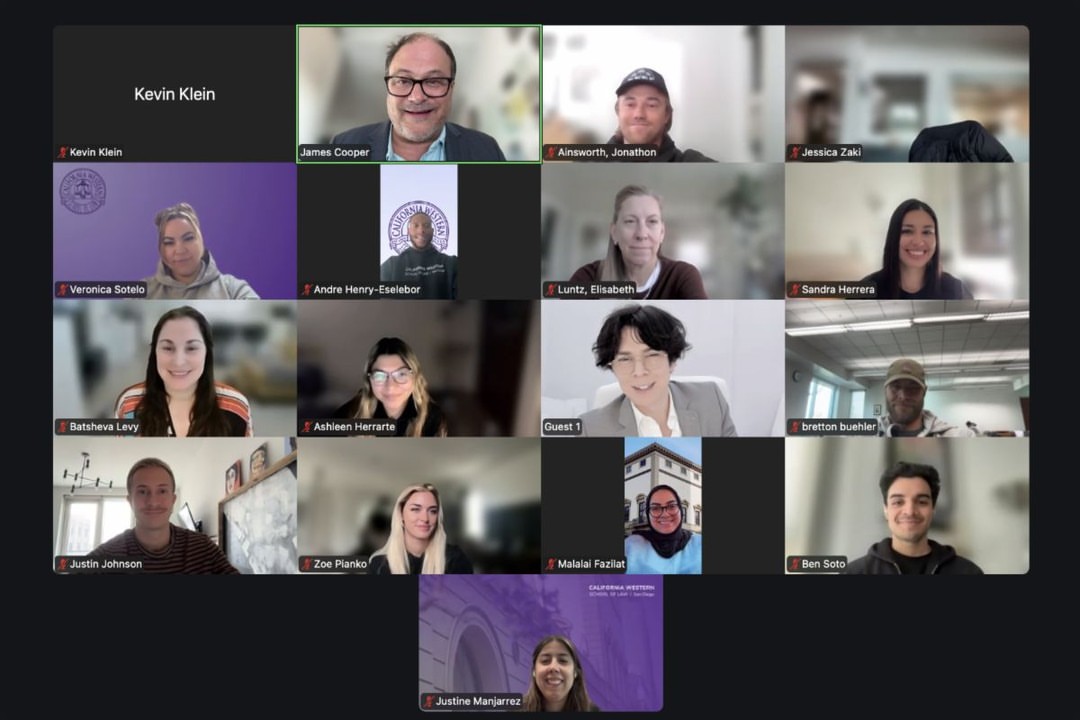
Repost from California Western School of Law • This past Thursday, Professor Fernando Garibay of ASU’s Thunderbird School of Management was a guest lecturer in CWSL’s AI and the Law course. The music super producer (and co-writer of Lady Gaga’s Born This Way album and SIA’s recent work) is a long-time collaborator and writing partner of CWSL Professor James Cooper. A globally recognized thought leader on Artificial Intelligence and sought-after advisor to governments, Professor Garibay works to promote the responsible use of technology in diplomacy, commerce, and human relations. He shared his vision of what AI can do with the class, leaving our students with a sense of hope and possible paths for their respective careers. He called for “hyperspecialization” and recommended that we all strive to be better curators and trust-builders. Thank you, Professor Fernando Garibay, for being there for our students again!
PROF. FERNANDO GARIBAY tweet media
English
0
0
1
207
PROF. FERNANDO GARIBAY retweetledi
PROF. FERNANDO GARIBAY
PROF. FERNANDO GARIBAY@FERNANDOGARIBAY·
The Psi-Inhibitory Filter In psychology and parapsychology, psi denotes the hypothesized to account for purported extrasensory perception such as telepathy, clairvoyance, precognition and psychokinesis, insofar as these effects are claimed to occur without known sensory channels or established physical/biological mechanisms. New neurobiological evidence suggests the human brain does not just generate consciousness, it actively filters it. Research led by Dr. Morris Freedman argues that the frontal lobes act as a “psi-inhibitory filter,” a neurobiological theory proposing that frontal circuits suppress innate psi abilities such as telepathy, clairvoyance, and psychokinesis. By temporarily inhibiting the left medial middle frontal region using repetitive transcranial magnetic stimulation or rTMS, healthy participants reportedly showed a statistically significant enhancement in their ability to influence Random Event Generators or REG’s. REGs are devices, often electronic, that output streams of unpredictable 1s and 0s and are used to test mind-matter interaction through statistical deviation from chance. This reframes psi from a rare anomaly to a capacity that may be present but normally dampened by executive control. How it works? The left medial middle frontal region is a hub for executive function and self-awareness and is often associated with self-monitoring and narrative control. This region helps enforce the boundary between “self” and “other.” When rTMS quiets this area, it may reduce internal commentary while preserving task focus. Here is an everyday analogue most people recognize: you suddenly think of a friend you have not spoken to in months, and they text minutes later. Most of the time we dismiss that as coincidence because the mind is noisy and self-correcting. The filter hypothesis argues the opposite, that the signal is usually weak and quickly overwritten by the brain’s need for control and explanation. What this means in a Post-AI World As AI surpasses human capacity for logic and data processing, this research points to a different frontier, shared attention and connection. AI can optimize information, but it cannot participate in mutual regulation that binds groups. If filter thinning is understood as a transient easing of performative self-monitoring, so that attention is less consumed by self-presentation and more available for stable, shared focus then its practical advantage is fundamentally collective. Groups that can thin their filters together reduce internal noise  such as rumination, status defense, misattribution, and thereby coordinate more rapidly, repair ruptures sooner, and sustain trust under pressure. In this frame, the “text-from-a-friend” moment is not a claim about private power; it is about how humans may tune into one another. The advantage is not better computation, it is better coherence between people. If you’re curious about the research cited or want to learn more, see the comment section for references below. References: -Freedman, M., Binns, M. A., Meltzer, J. A., Hashimi, R., & Chen, R. (2024). Enhanced mind-matter interactions following rTMS induced frontal lobe inhibition. Cortex, 172, 222–233. -Rossi, S., Antal, A., Bestmann, S., Bikson, M., Brewer, C., Brockmöller, J., et al. (2021). Safety and recommendations for TMS use in healthy subjects and patient populations, with updates on training, ethical and regulatory issues: Expert guidelines. Clinical Neurophysiology, 132(1), 269–306. -Miller, E. K., & Cohen, J. D. (2001). An integrative theory of prefrontal cortex function. Annual Review of Neuroscience, 24, 167–202. Bösch, H., Steinkamp, F., & Boller, E. (2006). Examining psychokinesis: The interaction of human intention with random number generators. Psychological Bulletin, 132(4), 497–523. -Irwin, H. J., & Watt, C. (2007). An Introduction to Parapsychology (2nd ed.). McFarland. #garibay #garibayinstitute #fernandogaribay
English
0
1
3
365
PROF. FERNANDO GARIBAY
PROF. FERNANDO GARIBAY@FERNANDOGARIBAY·
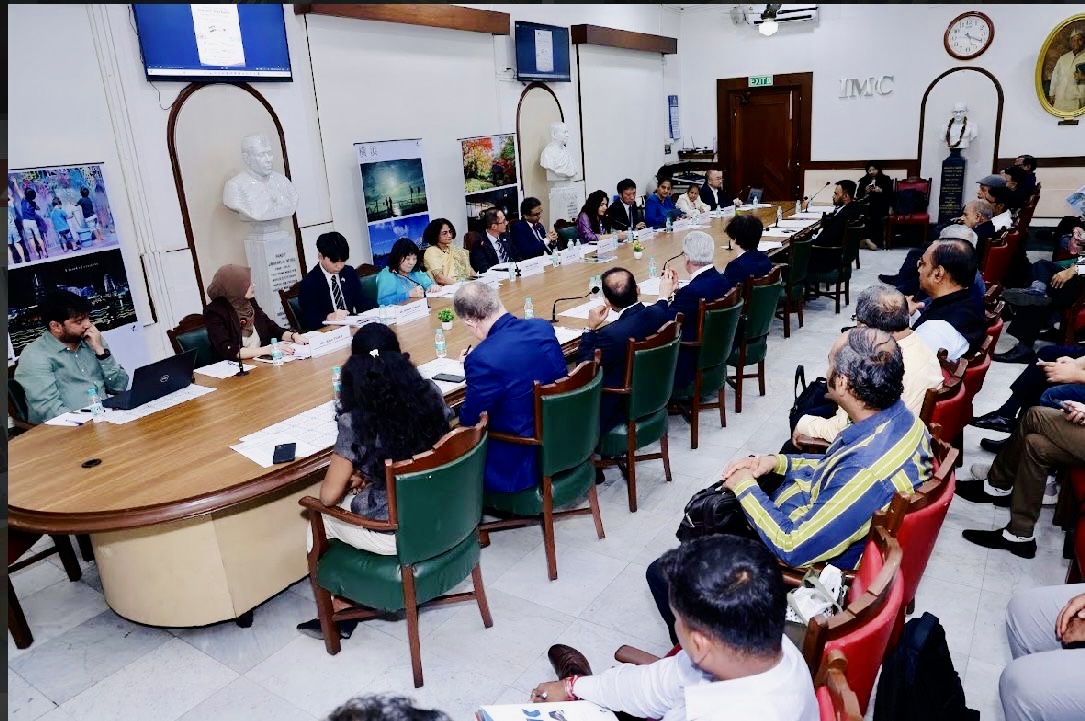
I was deeply honored to be received last week at the official residence of Hon. Chief Minister Devendra Fadnavis, alongside Prof. Ronald C. Gunnell, President of the Garibay Institute. What made the moment especially meaningful was not only the caliber of leadership present, but the shared commitment to exploring new pathways for cultural and academic diplomacy, where soft power becomes a practical, measurable force for long-horizon collaboration. At the heart of our discussions was India’s youth and Maharashtra’s extraordinary cultural vitality, and how arts, music, design, global leadership, and artificial intelligence can be advanced as an integrated ecosystem, expanding education, opportunity, and constructive diplomacy at scale. I’m sharing a few images from this journey through India, from Mumbai to Delhi, including high-level meetings, movement through the city, and the everyday textures that continually reaffirm why cultural exchange is not symbolic, but strategic. India, thank you for your warmth, clarity of vision, and gracious hospitality. @CMOMaharashtra @Dev_Fadnavis @rgunnell1 @Millpeacemakers @clintvalladares
PROF. FERNANDO GARIBAY tweet media
PROF. FERNANDO GARIBAY tweet mediaPROF. FERNANDO GARIBAY tweet media
English
0
1
1
286
PROF. FERNANDO GARIBAY retweetledi
PROF. FERNANDO GARIBAY
PROF. FERNANDO GARIBAY@FERNANDOGARIBAY·
Super-Brain, Super-Time: Why Musicians Still Matter After AI The musician's "super-brain" has been the gold standard for studying neuroplasticity for decades. What many people label “talent,” science shows is actually a full-body mental workout that can reshape your nervous system over time. While dancers map the body to space, musicians map the body to time and sound with a precision that rarely shows up in many other fields. How it works: Traditional listening is simply hearing a melody; the musician’s brain operates more like a high-speed processor. When musicians play, the brain runs its own “symphony,” coordinating fine motor control, mathematical timing, and emotional expression in millisecond. Research shows that musicians have a larger, more insulated corpus callosum, the bridge that connects the left and right hemispheres of the brain. This isn’t just for music. This ‘high-speed highway’ helps musicians integrate structure and logic with emotion and expression faster than the average person. Musicians also exist in “Super-Time.” Most people experience time in seconds; musicians operate in sub-millisecond clock supported by cerebellar timing systems and predictive processing that effectively “pre-loads” upcoming structure and movement. In other words, they don’t predict the distant future, they become unusually skilled at anticipating what comes next in the next few milliseconds to seconds, then adjusting in real time. In a post-AI world where music generation becomes abundant and many people may feel flooded with content yet starved for meaning, musicians will still matter because they operate on a model of how humans create meaning, by committing to a craft, turning repetition into refinement, and transforming raw experience into shared emotion and belonging. Consider how music functions as a tool for social stability. In a crisis, the sound of a Choir can help people feel connected and regulated. In that sense, musicians don't just play notes, they adapt familiar melodies to mirror the current moment, giving people a shared way to process grief or find courage. This is a functional act of human connection. It ensures people do not have to navigate hardship alone. This level of emotional support and cultural preservation is something an automated system can describe, but can’t quite perform. At least for now. If you’re curious about the research cited and/or want to learn more, see the comment section for references below. Ref: -Neuroplasticity from training (structural change, longitudinal) Hyde, K. L., Lerch, J., Norton, A., Forgeard, M., Winner, E., Evans, A. C., & Schlaug, G. (2009). Musical training shapes structural brain development. The Journal of Neuroscience, 29(10), 3019–3025. -Corpus callosum differences in musicians (interhemispheric “high-speed highway”) Schlaug, G., Jäncke, L., Huang, Y., Staiger, J. F., & Steinmetz, H. (1995). Increased corpus callosum size in musicians. Neuropsychologia, 33(8), 1047–1055. -Enhanced auditory brainstem responses (fast subcortical encoding of sound) Musacchia, G., Sams, M., Skoe, E., & Kraus, N. (2007). Musicians have enhanced subcortical auditory and audiovisual processing of speech and music. Proceedings of the National Academy of Sciences, 104(40), 15894–15898. -Rhythm prediction + auditory–motor coupling (your “pre-loading” idea) Chen, J. L., Penhune, V. B., & Zatorre, R. J. (2008). Listening to musical rhythms recruits motor regions of the brain. Cerebral Cortex, 18(12), 2844–2854. -Selective attention in noise (your 2025 MIT/Manting point) Manting, C. L., Pantazis, D., Gabrieli, J., & Lundqvist, D. (2025). How musicality enhances top-down and bottom-up selective attention: Insights from precise separation of simultaneous neural responses. Science Advances, 11(38), eadz0510.
English
0
1
2
488