Sabitlenmiş Tweet

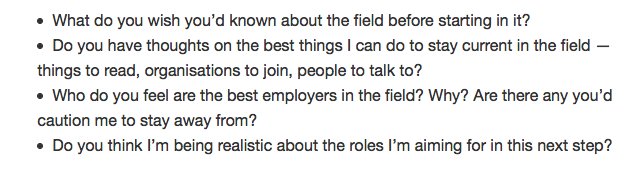
Questions to Ask Other Professionals In Your Industry on lifehacker, anyone want to answer? goo.gl/cLfnFo
English
Alex V-R ⍟
19.5K posts

@ffeindadifyr
Welsh Tenor and Tutor. Toured the UK with ETO Education - Laika the Spacedog and Silver Electra Opera.
Since 2015, the Welsh Government has invested over £16 million into helping Wales’ brightest students reach elite universities, which are more often than not in England. But what if we’re investing in the wrong group entirely? ✍️ Joshua Romain wp.me/p8Mk4U-1hHe

Patients with diabetes are dying in hospital because their insulin is not being managed appropriately, a patient safety watchdog has warned bmj.com/content/392/bm…
I hate to be the bearer of bad news but if infrastructure like this 👇 gets blown up, as of this moment it will take at least a decade to recover from this war - and the truth is that the world's energy picture is probably changed forever. This single facility 👇produced roughly 20% of global LNG supply (aljazeera.com/news/2026/3/18…) and, as of 2011, had taken $70 billion to build (energyintel.com/0000017b-a7be-…). What makes this even worse is that Iran's strike on this was retaliation after Israel attacked their South Pars gas field which draws from the same natural gas reservoir, which is the world's largest by far (9,700 km² - about the size of Qatar itself). Heck, on the list of the 25 largest natural gas fields (en.wikipedia.org/wiki/List_of_n…) this single reservoir holds roughly 40% of their combined recoverable reserves - and is nearly 6 times bigger than the 2nd biggest field in the world. And, unlike many of the others on the list, it's only at 10% depletion (meaning 90% of the gas is still there). Which means that, probably for many years, a huge share of the gas from the world's largest reservoir simply won't be extractable, as infrastructure on both sides - Qatar's and Iran's - has now been blown up. From a global energy supply perspective, we're deep into worst-case scenario territory.

Lots of reaction coming in to this incredible error which has put 21 Welsh hospital patients at risk of HIV infection. Politicians have described the failings as "terrifying", demanded a "fully transparent" investigation, and...

Right now, in barns and equipment sheds across the American Midwest, farmers are making the most consequential decision of this war. Not generals. Not senators. Farmers. At $683 per ton urea, corn economics have collapsed. Nitrogen is the single largest input cost for corn production. At pre-war prices a farmer could justify 180 pounds per acre and expect a margin. At $683 the math breaks. Soybeans fix their own nitrogen from the atmosphere through root bacteria. They do not need the molecule trapped behind the Strait of Hormuz. The seed decision is being made this week across roughly 90 million acres of American cropland. Once the planter rolls into the field, the choice is irreversible. Corn seed in the ground stays corn. Soy seed stays soy. The acreage allocation locks in. USDA Prospective Plantings reports March 31. That report will tell the world how American agriculture responded to the Hormuz blockade. But the decisions it captures are being made now, in conversations between farmers and agronomists and seed dealers who are looking at nitrogen prices and making the rational economic choice: plant the crop that does not need the input you cannot afford. Every acre that shifts from corn to soybeans tightens the corn balance sheet for the rest of the year. Corn feeds livestock. Corn feeds ethanol. The Renewable Fuel Standard mandates 15 billion gallons of corn ethanol annually, consuming roughly 43 percent of the US corn crop regardless of price. That demand is inelastic. If acres shift and production falls while the mandate holds, corn prices spike. Feed costs spike. The protein cascade reverses. The US cattle herd sits at 86.2 million head, a 75-year low. Poultry and pork margins that were benefiting from cheap feed compress when corn crosses $5 per bushel. This is how a naval blockade 7,000 miles from Iowa reaches the American grocery shelf. Not through oil. Not through shipping. Through nitrogen. The farmer cannot afford the molecule. The molecule cannot transit the strait. The farmer plants soy instead. The corn supply tightens. The ethanol mandate consumes its fixed share. The remaining corn reprices. The feed reprices. The meat reprices. The grocery bill reprices. The decision is not political. It is arithmetic performed on a kitchen table by a person who needs to plant in three weeks and cannot wait for a ceasefire, an escort convoy, or an insurance normalisation that the Red Sea precedent says takes years. The deepest penetrator in the American arsenal cannot reach a sealed Iranian doctrinal packet. But the fertiliser price it failed to resolve is reaching every planting decision on 90 million acres of the most productive farmland on Earth. The war’s most irreversible consequence is not happening in a bunker. It is happening in a barn. And by the time USDA publishes the data on March 31, the seeds will already be in the ground. Full analysis in the link. open.substack.com/pub/shanakaans…
🚨 Hidden away in Plaid Cymru's Manifesto 👇🏼 Just like Sadiq Khan's hated ULEZ, but for Wales. Punishing working families, tradies, and anyone without an electric car they can't afford. Wales deserves better than this nanny-state nonsense. Vote Reform on May 7th ➡️🏴🗳️
@bryan_caplan As former EU Commission President Jean-Claude Juncker said, "We all know what to do, we just don't know how to get re-elected after we've done it.” (The quest for prosperity, Economist, 2007-03-15)

There are a few phrases in education that I really have a problem with. One is "when done well..." This relativistic and unfalsifiable claim is applied to all sorts of pedagogical interventions, but it hampers criticality and growth. Link in reply, please share if you can!