Philip Schellekens

2.2K posts

Philip Schellekens banner
Philip Schellekens

Philip Schellekens

@fibke

Chief Economist @UNDP Asia and the Pacific

Bangkok, Thailand Katılım Ocak 2011
611 Takip Edilen5.9K Takipçiler
Philip Schellekens retweetledi
UNDP in Asia and the Pacific
UNDP in Asia and the Pacific@UNDPasiapac·
AI can be a powerful ally for nature but only if people are at the center. Across Asia-Pacific, AI for biodiversity must reflect local realities, be co-designed with communities, and build local capacity not dependence. AI must serve both people and the planet. Sara Beery, MIT Electrical Engineering and Computer Science Department. Read More: go.undp.org/iym #AI4HD #AI4HumanDevelopment #NextGreatDivergence @aaptiinstitute @DigiFuturesLab @GWtweets @MITSloan @MITEECS @Tsinghua_Uni @USTCGlobal @fibke
English

1
1
4
303
Philip Schellekens retweetledi
UNDP Indonesia
UNDP Indonesia@UNDPIndonesia·
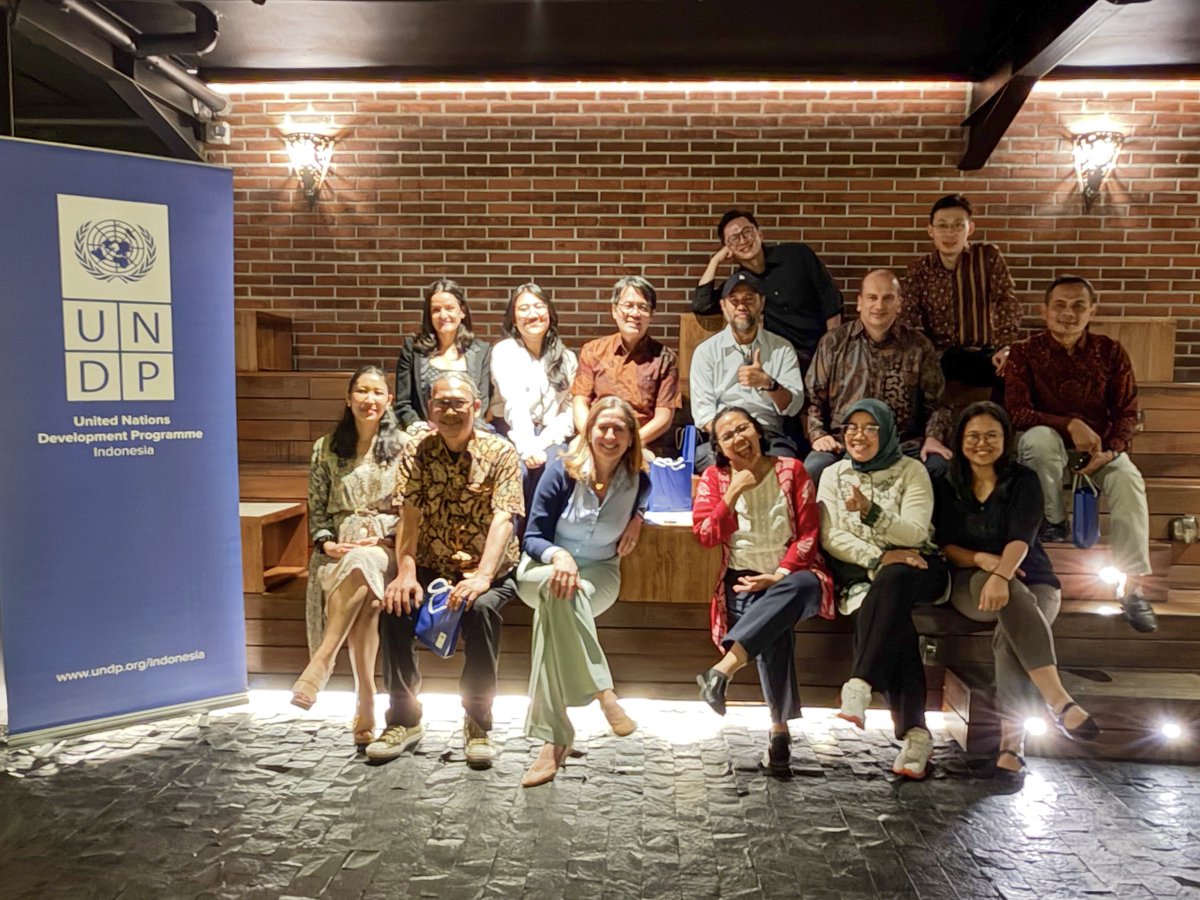
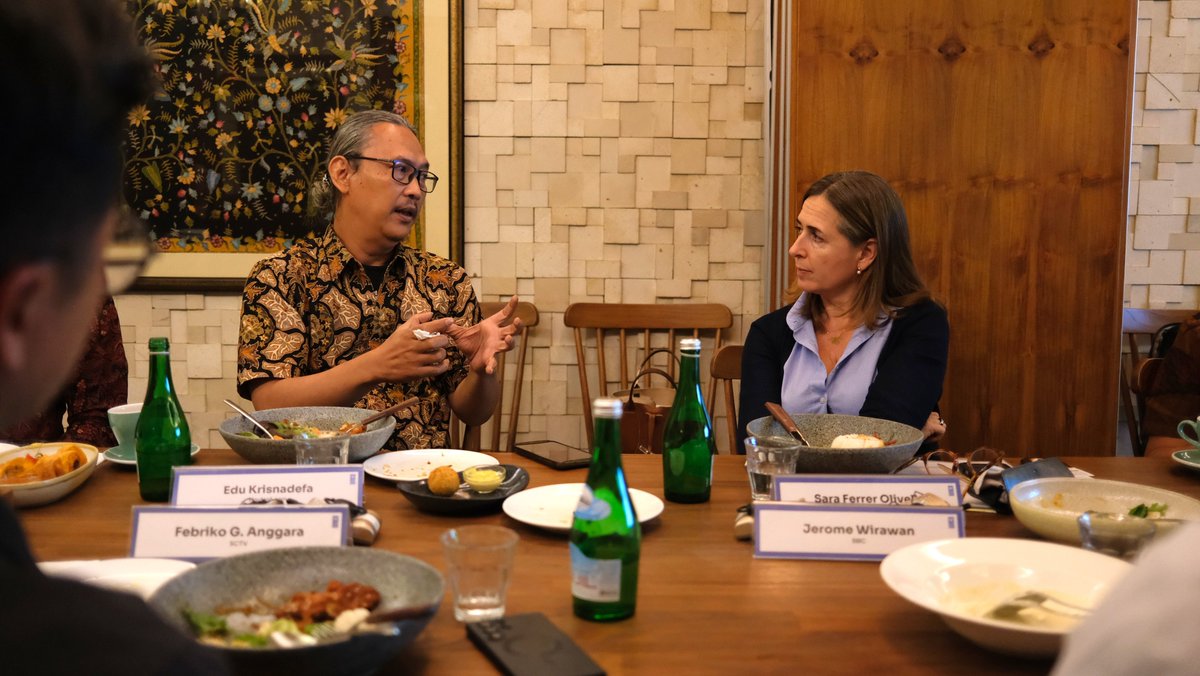
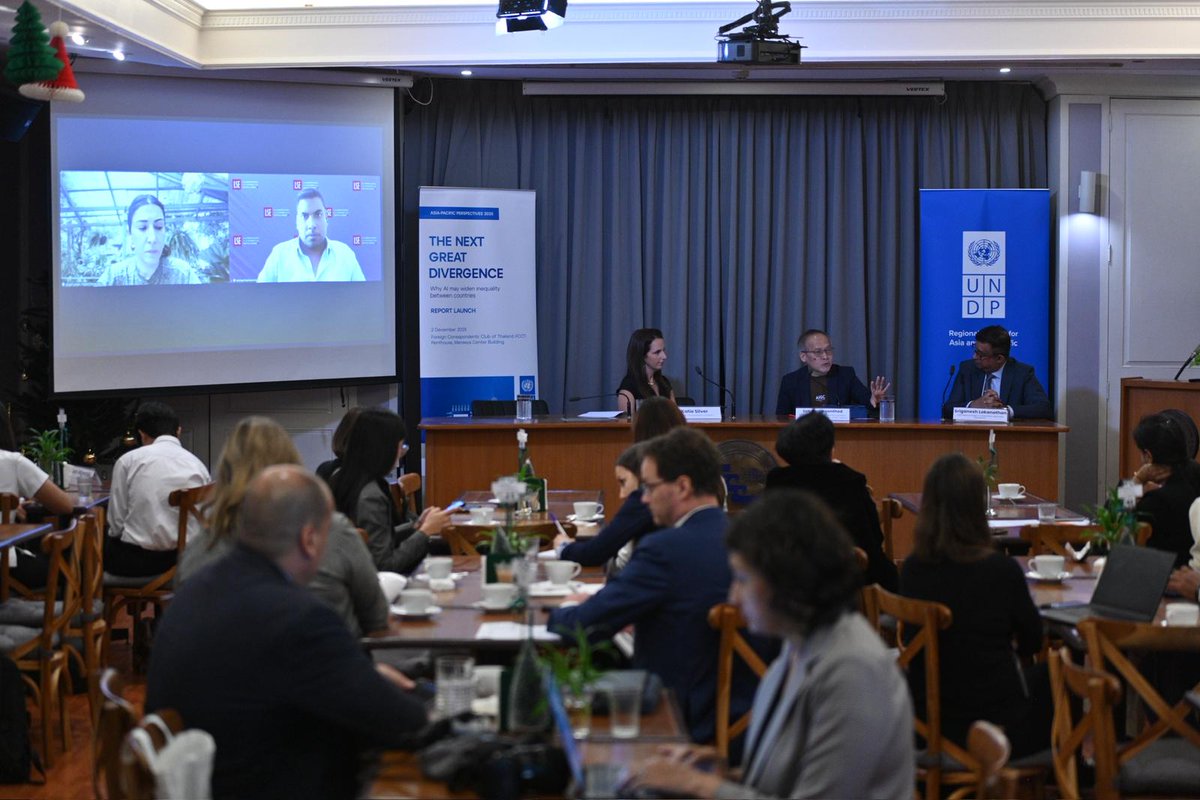
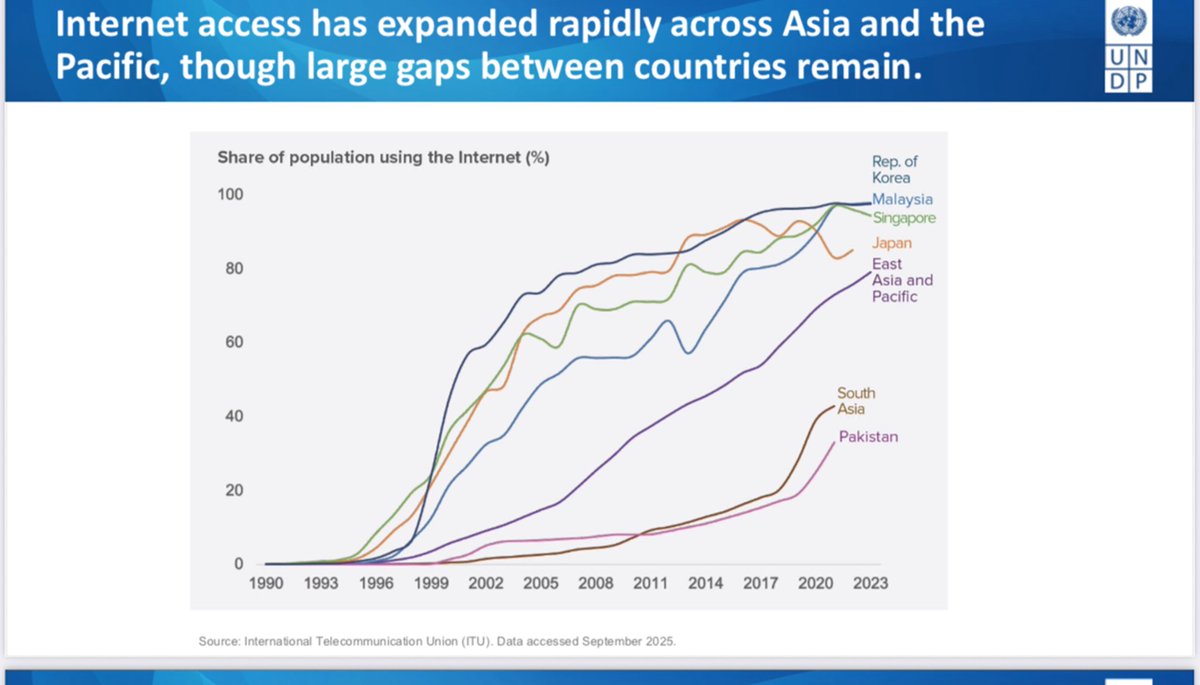
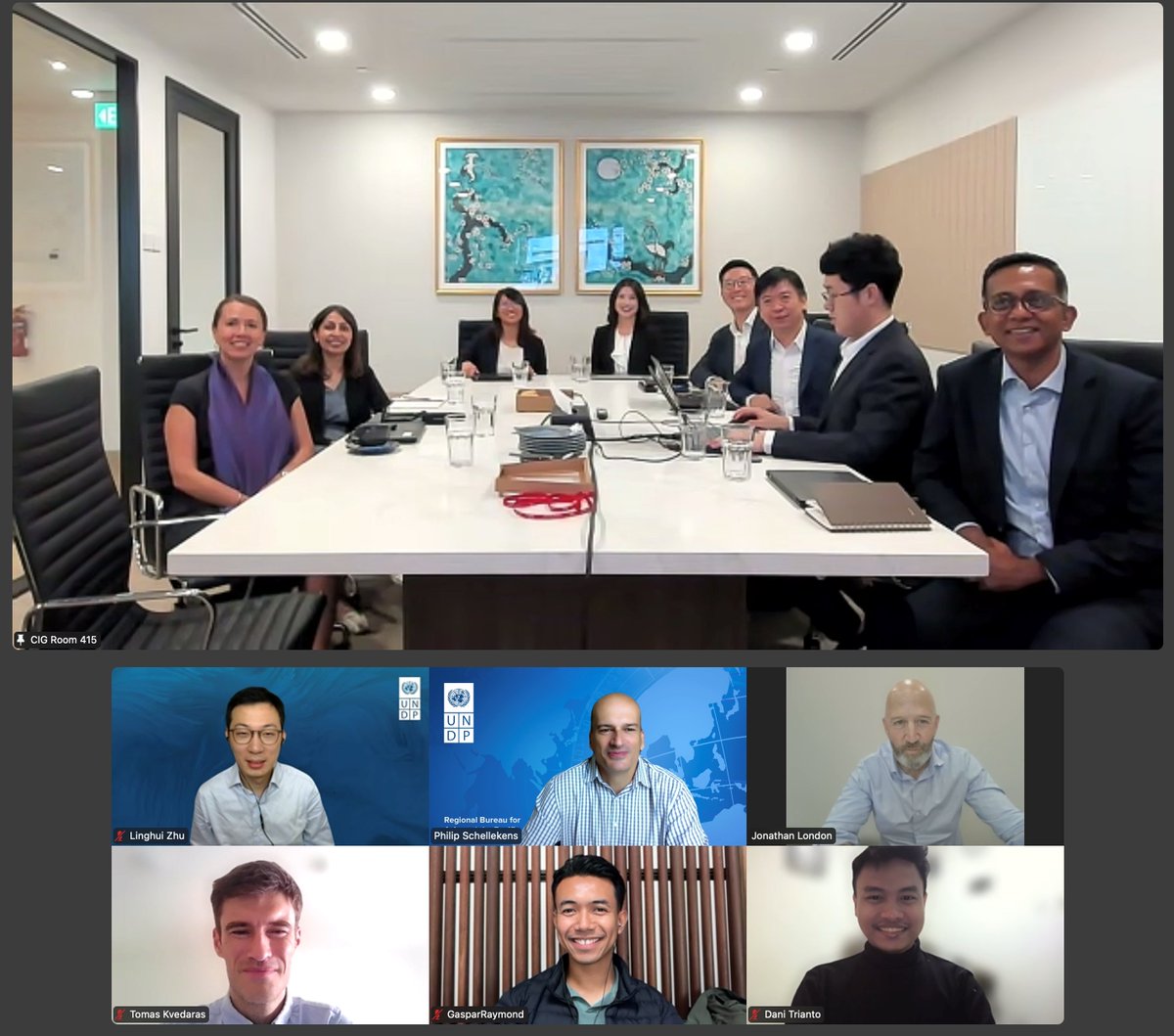
Last night UNDP🇮🇩 RR @SaraFOlivella met 🇮🇩's media leaders to unpack UNDP’s new AI report, The Next Great Divergence, presented by @fibke. Insight: stronger digital literacy, better infrastructure and smart regulation are essential for making AI a driver of inclusive development.
UNDP Indonesia tweet mediaUNDP Indonesia tweet mediaUNDP Indonesia tweet mediaUNDP Indonesia tweet media
English
2
3
4
475
Philip Schellekens retweetledi
Kanni Wignaraja
Kanni Wignaraja@kanniwignaraja·
In Asia-Pacific region, over 25% of people still offline, rural access is often half that of cities. Yet the region has >50% of the world’s AI users and the fastest adopters globally. This extreme contrast means AI can supercharge progress—or deepen existing fragility and inequalities. Leaders in govt and corporate sector, innovators and investors who will determine the speed, scale and shape of AI adoption and use, will decide which in the very near future. #AI4HD #AIDivergence @UNDP Report link: go.undp.org/iBK
Kanni Wignaraja tweet mediaKanni Wignaraja tweet media
English
1
13
20
1.1K
Philip Schellekens
Philip Schellekens@fibke·
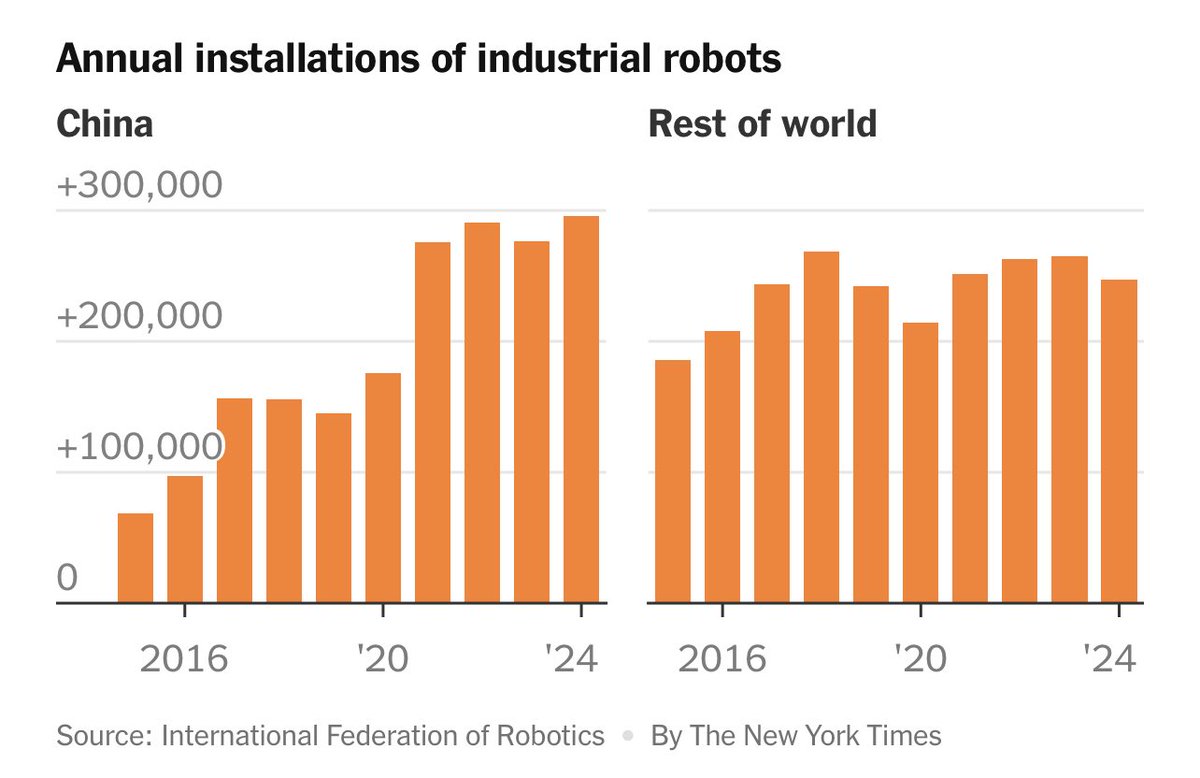
Look at this chart: China is installing more robots every year than the rest of the world combined. Brace for impact!
Philip Schellekens tweet media
English
0
1
5
340
Philip Schellekens retweetledi
Diana Torres
Diana Torres@DianaFTorresR·
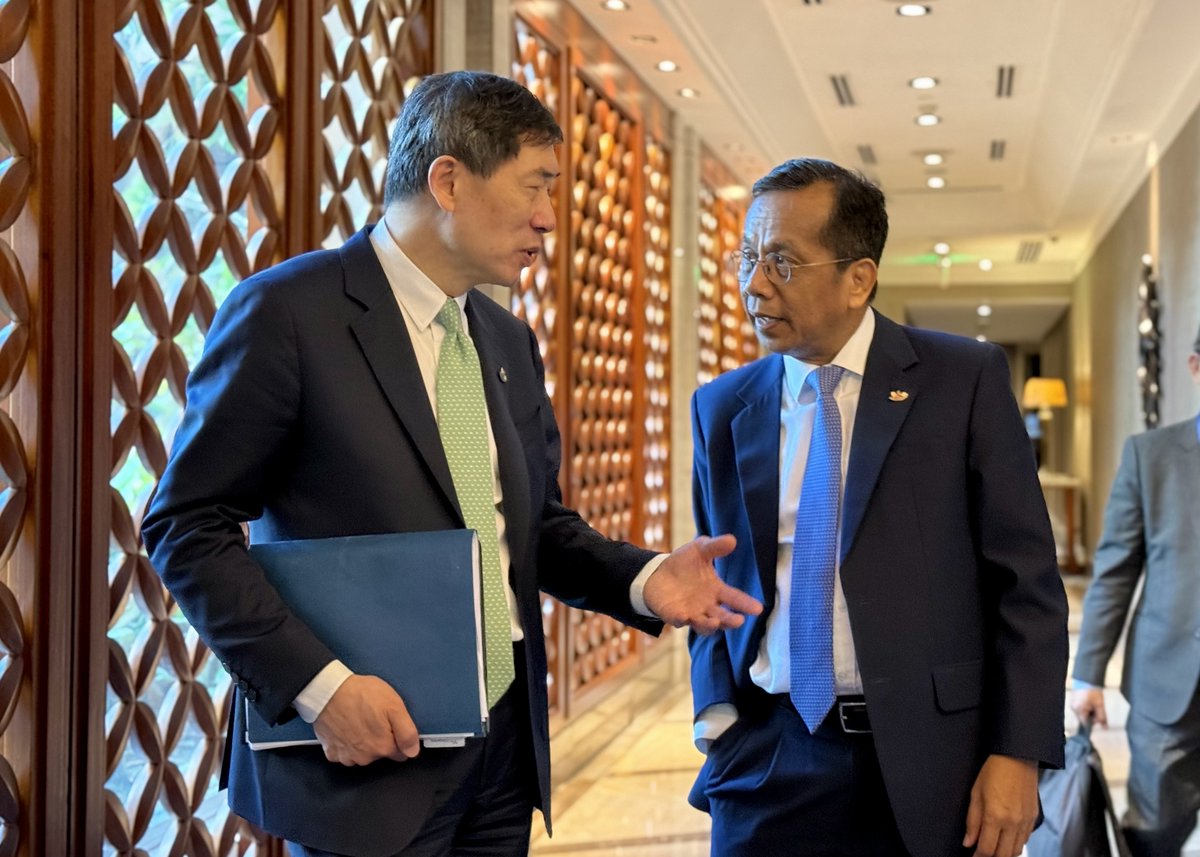
Great exchange with @ChandlerINST on advancing dynamic governance capabilities in Asia-Pacific—helping governments anticipate, adapt & act with agility to navigate today’s multilayered & rapidly evolving challenges by fostering people-centered and future-ready institutions.
Diana Torres tweet media
English
0
2
7
391
Philip Schellekens retweetledi
UNDP in Asia and the Pacific
UNDP in Asia and the Pacific@UNDPasiapac·
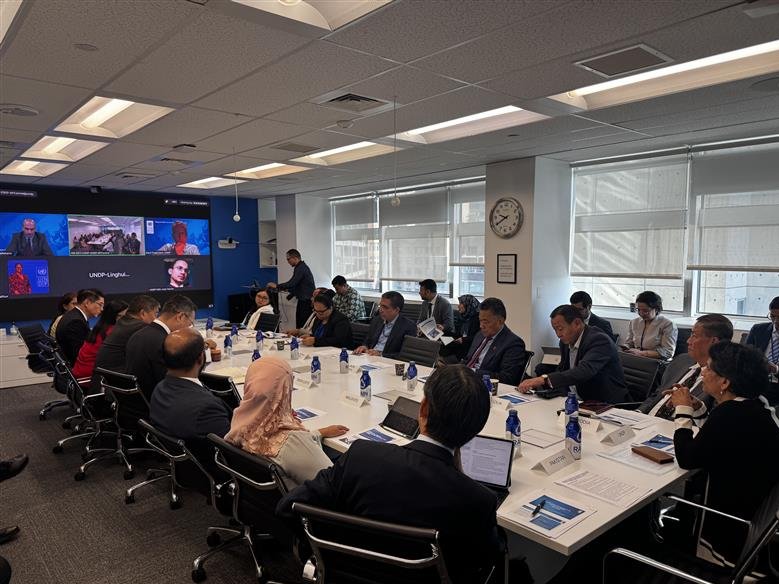
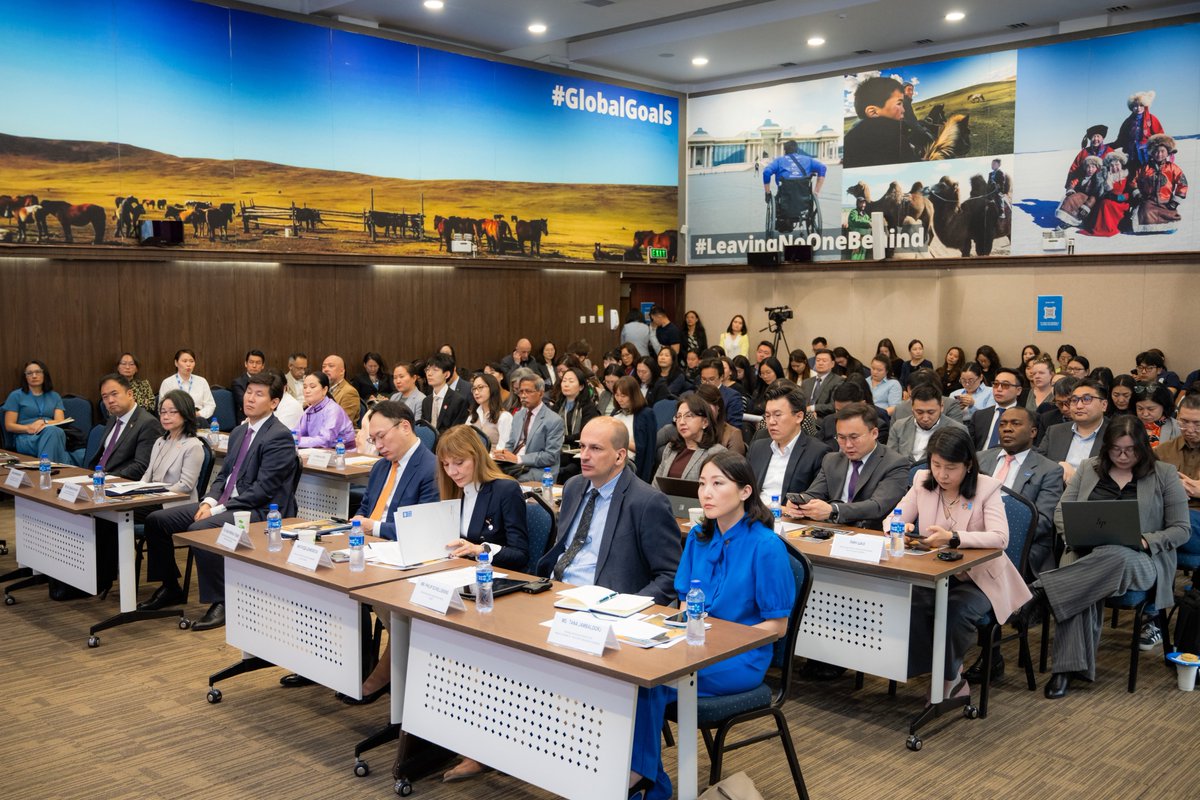
Rich discussions on sustainable development, trade, and policy innovation! The dialouge focused on current economic and trade drivers and impacts on the region, and feedback on the proposed new UNDP Regional Programme that is framed by multi-country partnerships, transboundary concerns and catalytic innovations and financing.
UNDP in Asia and the Pacific tweet media
English
0
3
7
495
Philip Schellekens
Philip Schellekens@fibke·
All countries are developing countries. If poverty is measured not only against today’s standards but against the progress we know is possible tomorrow, then no country is rich.
Philip Schellekens tweet media
English
1
0
3
259
Philip Schellekens
Philip Schellekens@fibke·
Mongolia needs a more people-centered growth model. Can AI come to the rescue? Check our latest blog.
Kanni Wignaraja@kanniwignaraja

AI is about choices. Choices that drive human development. Here's the story of a potential take-off in Mongolia. @MatildaDimovska & @fibke highlight 5 best practices for Mongolia on this path: ✅Digital infrastructure ✅Reliable energy ✅Education & skills ✅Planning for job transitions ✅AI Governance Lessons here that are also relevant across Asia-Pacific. Don’t miss it! go.undp.org/UgF

English
0
2
3
723
Philip Schellekens retweetledi
UNDP Mongolia
UNDP Mongolia@UNDPMongolia·
🆕@UNDP’s 2025 Human Development Report launched in #Mongolia🇲🇳today, calling for inclusive AI that expands people’s choices. As global human development slows, the report urges action to ensure AI serves everyone & empowers all to shape their future. 👉go.undp.org/Ux7
UNDP Mongolia tweet mediaUNDP Mongolia tweet mediaUNDP Mongolia tweet mediaUNDP Mongolia tweet media
English
1
8
15
874
Philip Schellekens retweetledi
Haoliang Xu
Haoliang Xu@HaoliangXu·
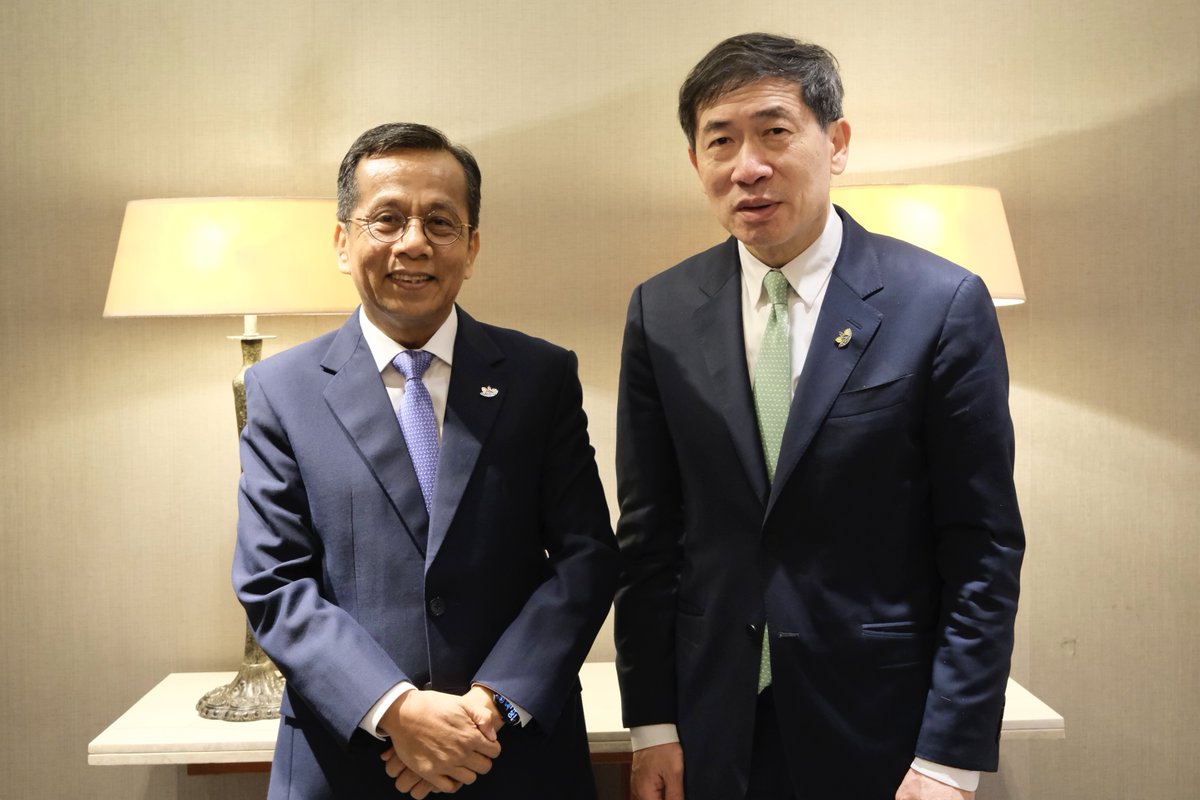
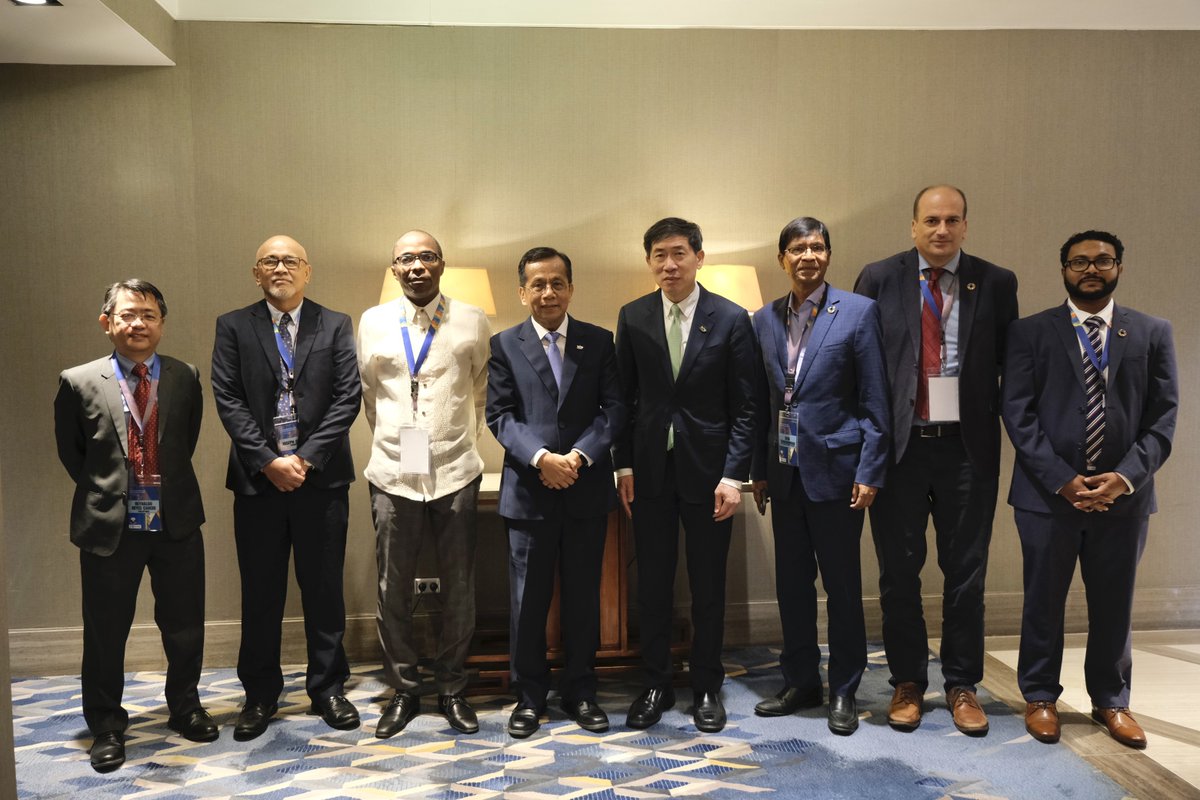
Fruitful disc. w/ #Philippines Economy, Planning, & Development Sec. Arsenio Balisacan on evidence-based planning, fiscal devolution, digital transformation & SDG financing. @UNDP expresses its support for the Dept’s expanded mandate & looks forward to stronger coop. #HLCMIC2025
Haoliang Xu tweet mediaHaoliang Xu tweet mediaHaoliang Xu tweet media
English
0
2
16
762
Philip Schellekens
Philip Schellekens@fibke·
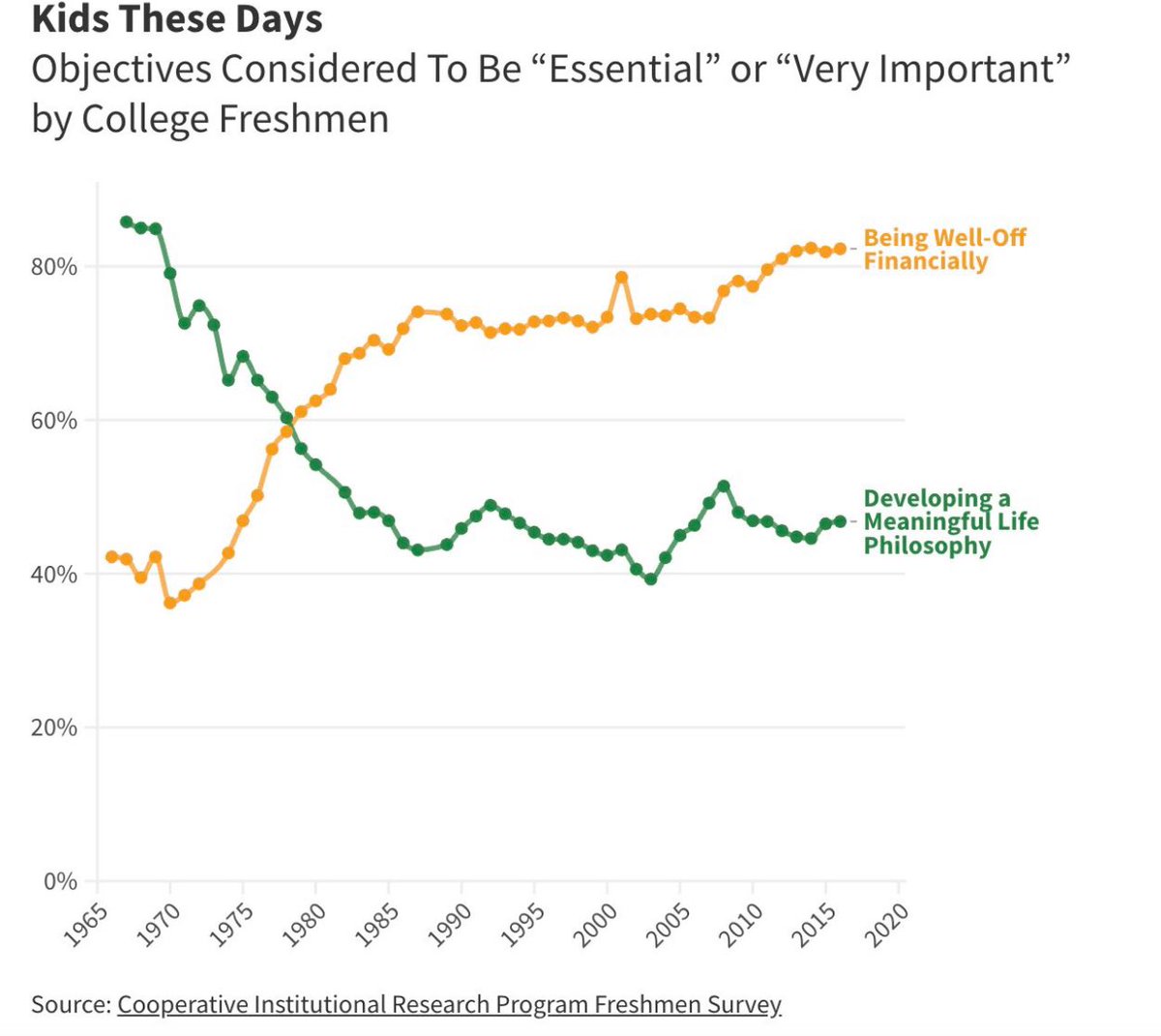
Youngsters, apply yourself with purpose - don’t just pursue money. What the world needs today is not just idealism or ambition – it’s both Great insights below from Rutger Bregman: Every year, thousands of teenagers write passionate application essays about the global problems (hunger, poverty, inequality – you name it) they aspire to solve. But a few years later, nearly half work for firms like McKinsey & Company, Goldman Sachs and Kirkland & Ellis. My friend Simon van Teutem, who studied at Oxford, calls it the ‘Bermuda Triangle of Talent’: consultancy, finance, and corporate law. This isn’t just a waste of time. It’s a waste of potential on a historic scale. Call it the paradox of ambition. We celebrate, cherish and cultivate it. We admire the startup founder who works 80-hour weeks, the young consultant with a six-figure salary, and the investment banker who pulls all-nighters. But ambition, on its own, is just fuel—it can power anything, from a rocket headed for Mars to a bulldozer razing a rainforest. As the novelist Allen Raine once wrote: “People may spend their whole lives climbing the ladder of success only to find, once they reach the top, that the ladder is leaning against the wrong wall.”
Philip Schellekens tweet mediaPhilip Schellekens tweet mediaPhilip Schellekens tweet media
English
0
2
5
296
Philip Schellekens
Philip Schellekens@fibke·
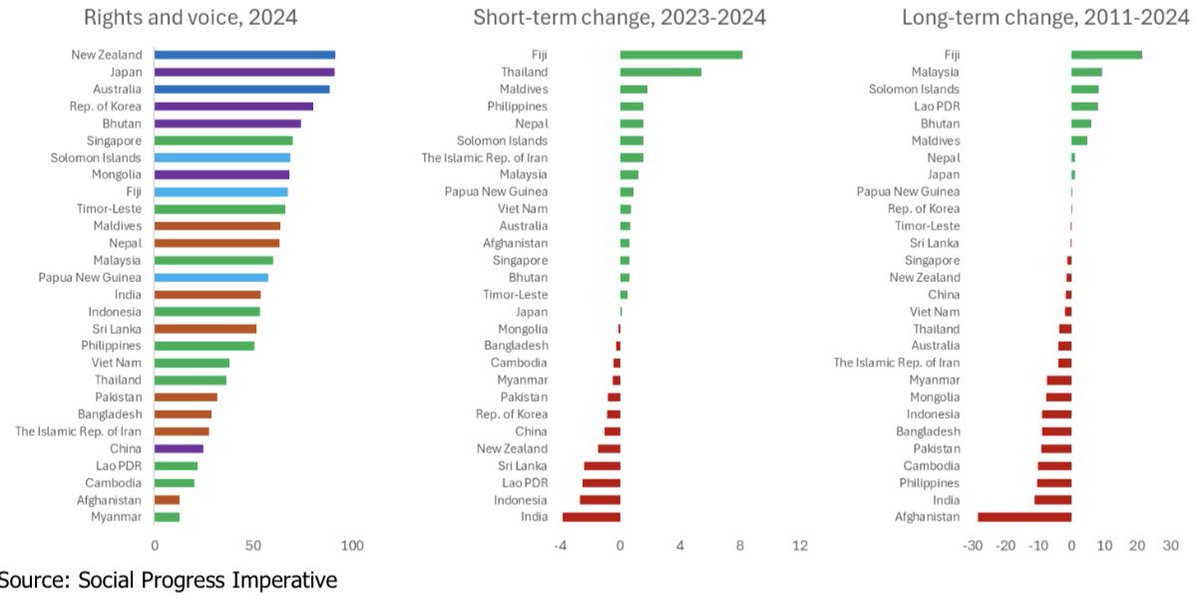
Worrying shift in Asia and the Pacific: Two-thirds of countries (18 out of 28) have seen a long-term decline in rights and voice, according to the latest Social Progress Index of the Social Progress Imperative.
Philip Schellekens tweet media
English
1
2
5
272
Philip Schellekens
Philip Schellekens@fibke·
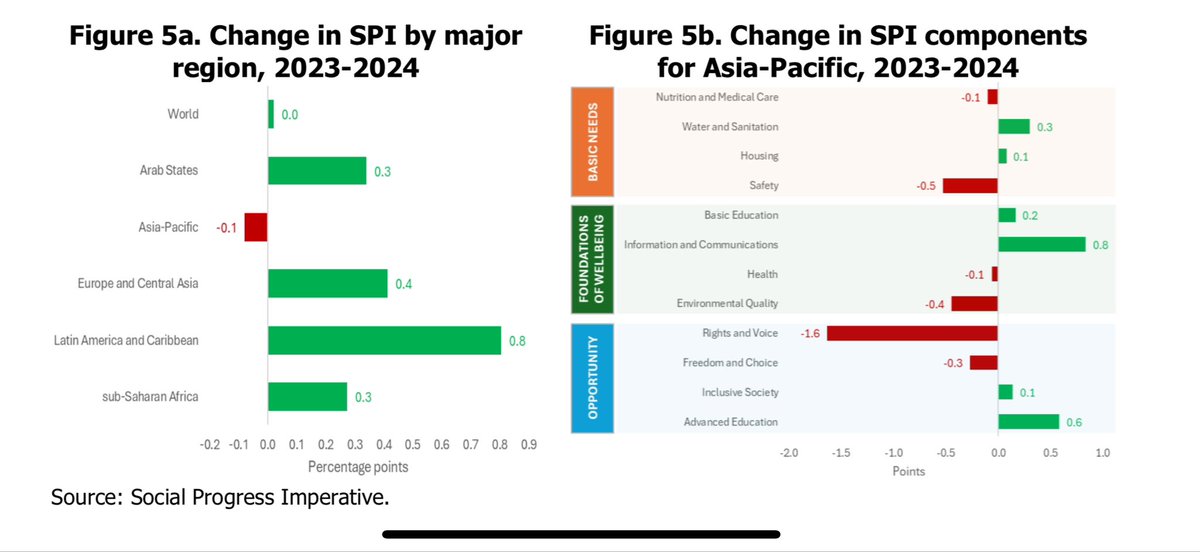
Asia-Pacific is the only region in the world where social progress declined last year. Again. The main reason is a continuing erosion in rights and voice. See below a regional breakdown of the Social Progress Index over time and across key dimensions. @socprogress
Philip Schellekens tweet media
English
0
4
4
316
Philip Schellekens
Philip Schellekens@fibke·
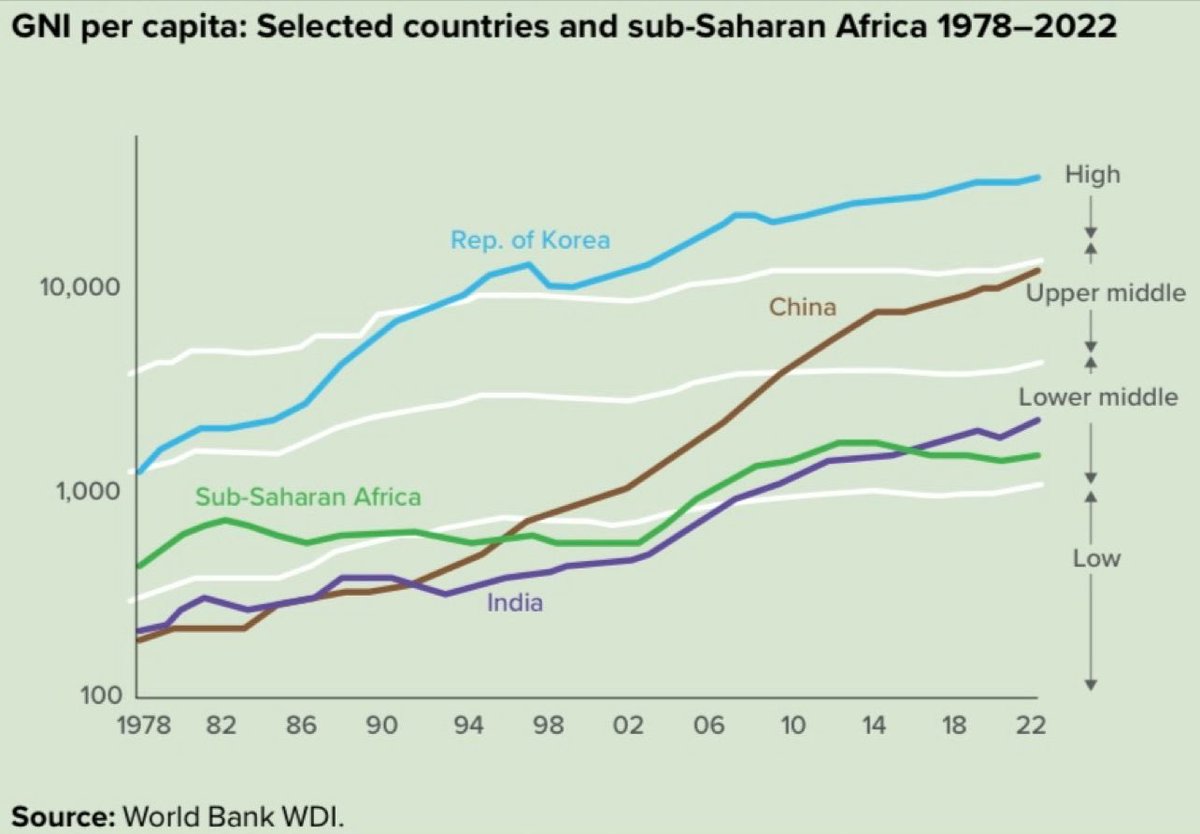
Amid all the pessimism surrounding China in today’s geopolitical climate, look at the bigger picture. After four decades of rapid growth, China is on the verge of crossing the high-income threshold. In 1978, China’s income per capita was two times lower than Sub-Saharan Africa’s. Today, it’s nine times higher. When China opened up, it started at the same income level as India. Look where we are now. I’m not pessimistic about China’s future. Many have underestimated the country’s ability to adapt. Take the example of US tech restrictions on China which, quite contrary to their intent, prompted a doubling down on innovation. China’s new AI model DeepSeek just wiped half a trillion off Nvidia’s market valuation. This isn’t to suggest that China doesn’t face important challenges. But it’s a reminder to view these through the lens of the capacity to adapt, innovate, and turn obstacles into opportunities.
Philip Schellekens tweet media
English
0
3
7
2.1K