
Pedro Morales
18.4K posts


$IOVA - You have recently seen me pointing out that Amtagvi is now Standard of Care(SoC) for second line metastatic melanoma. Every pharmaceutical company in the world when developing a new drug is to first get it approved. The majority of drugs in development will fail even before phase 1 and even more at phase 2. Iovance Biotherapeutics not only got a first in class drug approved via accelerated approval process but now that drug is considered Standard of Care for advanced melanoma. This is why investing in $IOVA is no longer a speculative or YOLO (you only live once) type of investment. Iovance is a commercial stage pharmaceutical company that you can monitor its fundamentals just like any other big pharma company. If your research makes you feel comfortable to invest in $IOVA, do. If it doesn’t don’t. The company doesn’t need the PRs to artificially boost the share price. It just needs to execute the Amtagvi launch! What makes $IOVA unique is not only its first approved drug becomes standard of care, but it also has a massive pipeline with multiple additional indications to treat many types of solid tumors such as Non-Small Cell Lung Cancer (NSCLC), soft tissue sarcomas, endometrial cancer, and many more with next generation TIL. So how important is being THE Standard of Care drug? Remember Amtagvi is THE ONLY TREATMENT SPECIFICALLY INDICATED FOR second line metastatic melanoma! In April of 2024, The National Comprehensive Cancer Network (NCCN) lists Amtagvi as a category 2A preferred therapy for advanced melanoma. 2A is a designation for true second line treatment. Patients are supposed to be treated with Amtagvi after frontline treatments fail them. The National Comprehensive Cancer Network (NCCN) is a non-profit alliance of 34 leading cancer centers in the United States. It is widely considered the gold standard for oncology practice, primarily because it develops the NCCN Clinical Practice Guidelines in Oncology. These guidelines serve as the definitive manual for how to diagnose, treat, and manage almost every type of cancer. The guidelines are a comprehensive set of maps or algorithms that doctors use to make clinical decisions. They cover over 97% of all cancer cases and are updated continuously to reflect the latest clinical trials and FDA approvals. The guidelines’ key components: 1. Treatment Algorithms: Visual flowcharts that guide a physician from a patient's initial diagnosis through various branches of treatment (surgery, radiation, chemo, immunotherapy) based on the stage and molecular profile of the cancer. 2. Category of Evidence: Every recommendation is assigned a category 1, 2A, 2B, or 3 based on the level of clinical evidence and the degree of consensus among experts. 3. Discussion Manuscripts: Detailed scientific papers that explain the logic and data behind every recommendation in the flowchart. Why is NCCN a big deal? The NCCN’s influence extends far beyond just giving advice to doctors; it fundamentally shapes how cancer care functions: 1. Insurance & Reimbursement: Most insurance companies use NCCN guidelines to decide which treatments they will pay for. If a drug is listed in the NCCN Compendium, it is much easier to get coverage. 2. Standardizing Care: Whether you are at a major hospital or a rural clinic, the NCCN guidelines ensure that patients receive a consistent, evidence based standard of care. How are the guidelines created? The guidelines are developed by multidisciplinary panels of experts-surgeons, oncologists, radiologists, and even patient advocates. These panels meet regularly to review new data. Since Amtagvi is listed as 2A on the NCCN for advanced melanoma, if an oncologist doesn’t follow the guidelines, they better have a good reason or insurance won’t pay and they may be in trouble if something happens to the patient. I expect Amtagvi demand will continue to increase especially when ex-US approvals arrive. Canada already approved.


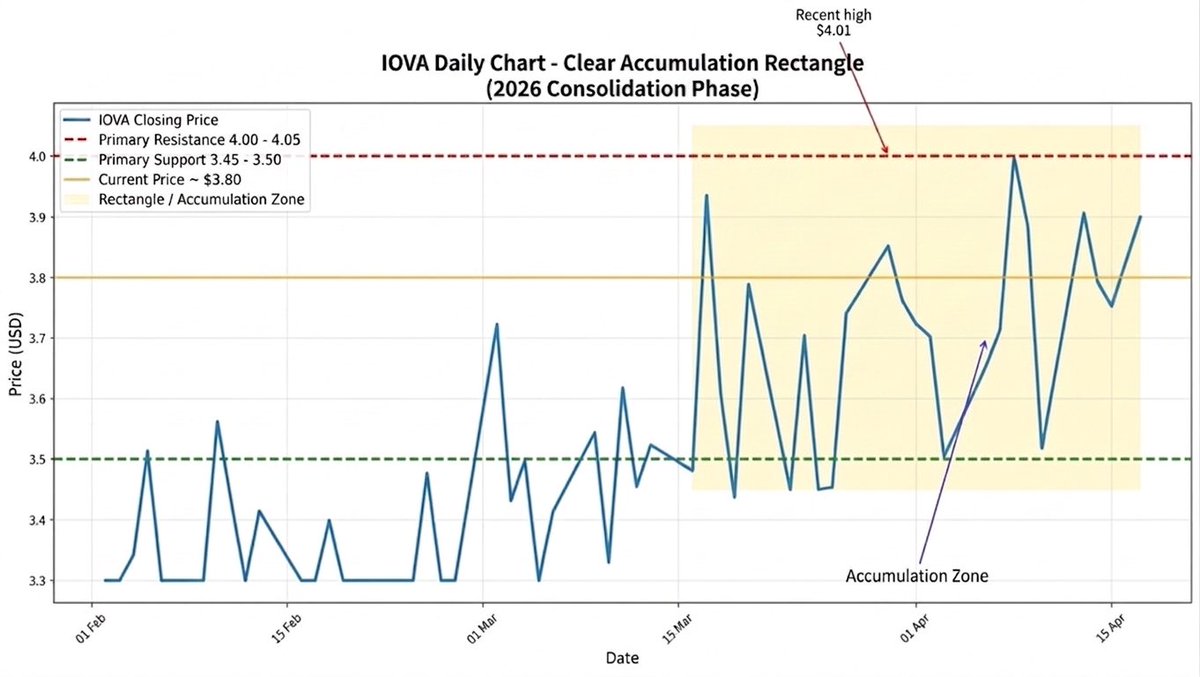
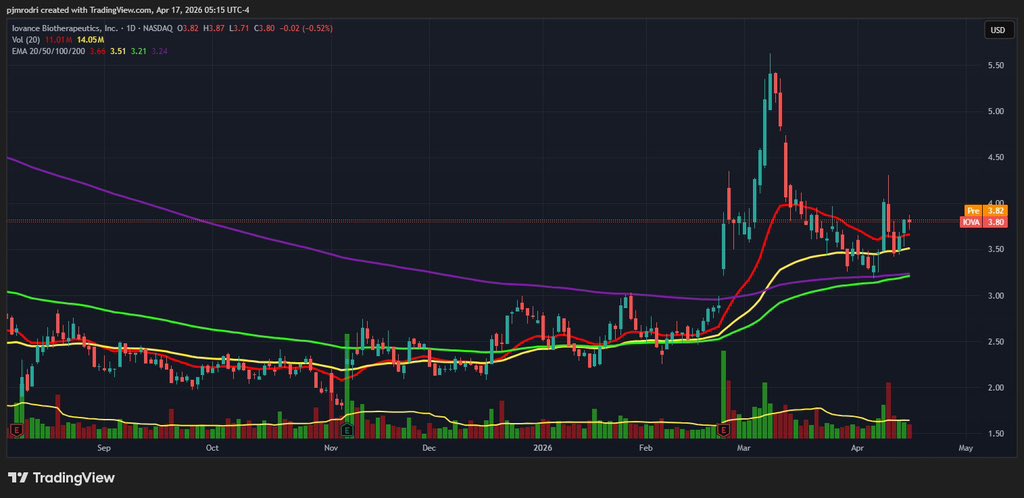
Situation analysis for $IOVA ahead of tomorrow's options expiration: We are currently observing a distinct technical consolidation around the $3.80 zone. Market dynamics suggest that a breakout above $4.00 is unlikely for the remainder of the week due to the current options structure: 1.Open Interest Concentration: There are 15,010 Call contracts at the $4.00 strike expiring tomorrow, April 17th. 2.Market Maker Influence: Given this high concentration, Market Makers are maintainining tight control over price action to mitigate hedging risks, favoring a scenario where these contracts expire out of the money. 3.Outlook: The current sideways movement is a necessary "cleansing" process. Once these contracts expire tomorrow at 4:00 PM, the order flow will be liberated from derivative-driven pressure. Starting Monday, with a clean slate, the market will be positioned to reflect the stock's true trend without expiration-related distortions. Patience and strategic vision are key.