

Candace Bengtson
58 posts














What is the first words that comes to mind when you see this ICE badge?

English



I would believe 6500 years because that lines up with the approximate time period of Adam and Eve. But 65,000? No. Somebody’s calendar is off. Even if the powered white figure is not the girls grandfather, the sentiment is there. God bless her and her future. This is rare. Congratulations of her graduation 🎆
English

When an Aboriginal Australian girl graduated college in 2016, her grandfather, an Aboriginal elder who lives on a remote island, traveled almost 2,000 miles to attend the ceremony and dance with her.
In 2016, a young Aboriginal Australian woman graduated from college, an achievement that marked not just personal success, but the power of perseverance, family, and cultural pride.
To honor the moment, her grandfather, an Aboriginal elder, journeyed nearly 2,000 miles from a remote island to attend her ceremony. Dressed in traditional body paint and ceremonial adornments, he danced beside her, symbolizing the union of ancient tradition and modern achievement.
The photo captures a profound moment where two worlds meet: the deeply rooted spirituality and heritage of Indigenous Australia, and the rising presence of Aboriginal voices in academia and society. His long journey wasn't just physical, it was generational, representing centuries of survival, resilience, and hope.
Australia’s Aboriginal peoples are the world’s oldest continuous cultures, with traditions, stories, and ceremonies that have been passed down for over 65,000 years.
© Reddit
#archaeohistories

English


I saw a guy saying, “This woman should never be allowed in a church.”
Personally, I think she should be welcomed.
What do you think, would she be welcome in your church?

English
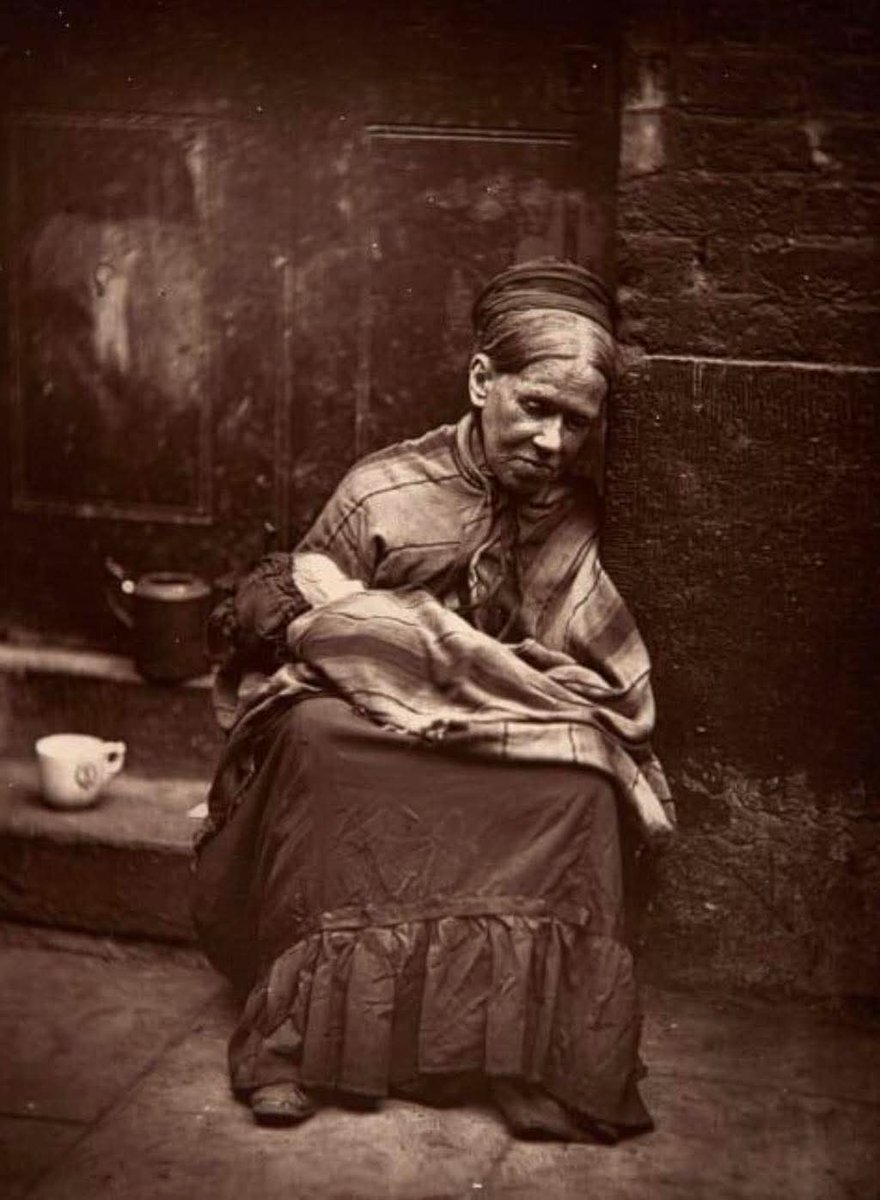
“The Crawlers”, 1877. ‘The Crawlers’ were the lowest of the British poor. This elderly widow is sitting outside a tailor’s shop, holding a baby while its mother works. She was given a cup of tea and a slice of bread daily in return.
The photograph titled “The Crawlers” was taken in 1877 and captures one of the harshest realities of Victorian poverty in London. The term “crawlers” referred to some of the most destitute people in society — often the elderly, widowed, or disabled, who were too frail to work and forced to rely on scraps of charity to survive. They were called “crawlers” because many were so weakened by hunger, disease, or age that they could only move slowly, often crawling or dragging themselves along the streets.
In this haunting image, an elderly widow sits outside a tailor’s shop, cradling an infant. The baby’s mother, likely a working-class woman struggling to make ends meet, left her child in the widow’s care while she labored inside. The widow’s payment for this exhausting responsibility was meager: a cup of tea and a slice of bread a day. Such arrangements were common, as survival for the poorest relied on fragile networks of mutual aid and the charity of others.
This photograph is more than a snapshot, it is a window into the crushing inequalities of Victorian society. While industrial Britain was generating immense wealth, many of its citizens were trapped in cycles of poverty, living day to day on the edge of survival.
Social reformers later used photographs like this as evidence to push for changes in housing, sanitation, and welfare laws, laying the groundwork for Britain’s eventual social safety nets.
© Historical Photos
#archaeohistories
English