@jhylee95 @SupademoHQ Are you still making reddit posts? I've been finding that not being able to have a link to the site anymore has dropped inbound traffic by 99%
English
Daniel
182 posts
@firsttimelifer
https://t.co/Gy2z0eigty - closing the loop on cold outbound | Model Enjoyer











Sol, Terra, and Luna, our GPT‑5.6 family of models, are starting to roll out now in ChatGPT, Codex, and the API.


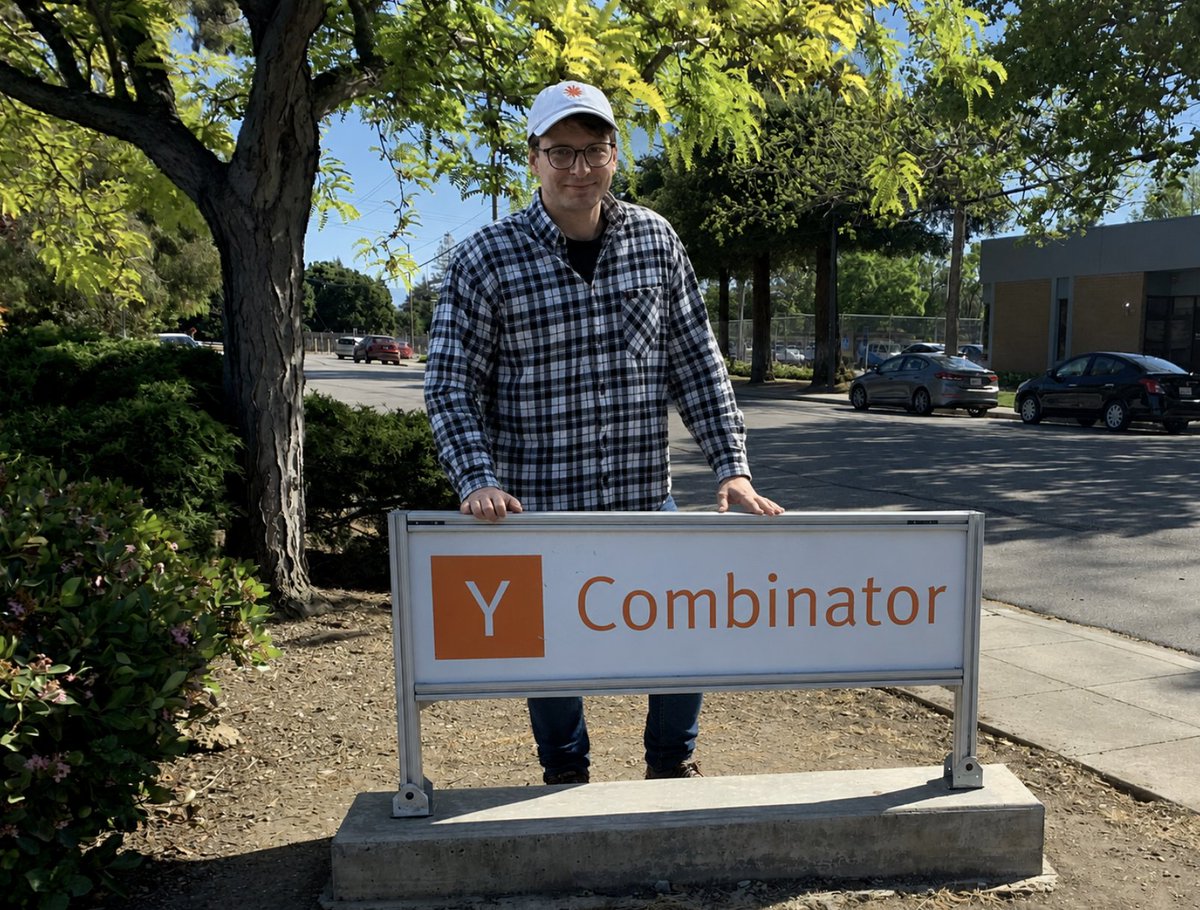




the most expensive $100k they ever saved
I've been frustrated with the linear chat experience for learning, so I used Fable to help rethink it. Introducing Rabbithole 🐇, an infinite canvas where you can select anything, ask anything, and your questions branch instead of stack. This lets you pull on a thread until your curiosity is satisfied, then easily step right back to where you started. Completely changed the way I learn with AI.

Today we release Antidoom, an open-source method that removes a common failure mode in reasoning models: the doom loop. Doom-loop rates before and after, with eval scores up across the board: > Early LFM2.5-2.6B checkpoint: 10.2% → 1.4% > Qwen3.5-4B: 22.9% → 1% (greedy sampling) 🧵
CHINA CONSIDERS RESTRICTING OVERSEAS ACCESS TO CUTTING-EDGE AI MODELS China’s Ministry of Commerce has led meetings over the past month with major AI companies, including Alibaba, ByteDance, and Z.ai, to discuss measures that would restrict overseas access to cutting-edge AI models, including models that have not yet been released. The discussions reportedly include not only closed-source models but also open-weight models. However, the scope of application is still under debate, and the rules may ultimately apply only to future frontier models. Officials have also discussed designating the leakage or theft of proprietary AI technologies as a national security crime, with stronger penalties, as well as restricting the types of foreign capital that can invest in Chinese AI startups. The backdrop is the U.S. move to strengthen export controls on AI models, along with national security concerns over cutting-edge models that could possess advanced cyberattack capabilities. Chinese authorities are reportedly concerned that advanced U.S. cybersecurity AI models could be used to exploit vulnerabilities in Chinese software. Since the beginning of this year, China has continued to tighten measures to prevent AI technology from being transferred overseas. Authorities have investigated whether Chinese AI startups that relocated abroad violated export control laws, while also strengthening oversight of overseas transactions involving Chinese investors, technology, data, and national security concerns. Future regulations could take the form of a tiered framework based on technological capability. Basic open-source AI models may be managed through a filing system, high-performance models may be subject to security reviews, and the most sensitive frontier models may be banned from public release or restricted to use within China.