Frank.tw
4.1K posts


@YiXia90314 我12年帳號在去年7月也被ban掉了..呵呵 不意外拉,全球這個社群獨大,能拿他們怎麼辦?全球世界各地都有人每天上演這個劇碼,但他們根本一點想改善的想法都沒有,垃圾企業..根本人類災難!
中文

@ee19XiJinping @xibaozi36064237 真的吧,AI沒辦法做到一個畫面這麼長,頂多幾十秒然後換不同場景剪接成一個片段,這是監視器,蠻正常的
中文





@nonocccqw @TWlocalTV 幹嘛按喇叭提醒?按了下次還不是又腦衝,救的了這次,下次呢? 你是幫他還是害他? 不如讓他舒服一次,以後就不敢這種騎法了啦!不知道有視線死角的地方要看一下嗎? 狗衝什麼?? 是被懶覺控制大腦嗎?
中文

@TWlocalTV 後面假笑感覺就是想要引起警察注意,結果沒挑釁成功= = 成功的話又可以賺一波流量放上網吸引粉絲了...現在學生抖音看多真的變智障= = 真懷念以前沒被抖音污染的社會...
中文


@1cy_IC What is the name of the serie, please
English



@timehe88 @Jordan97995944 給你們工作機會就不錯了,還嫌....不爽就不要幹阿= = 死巴著一家公司不放,然後還不離職,有病是嗎?
中文






@n7_mantis @konstructivizm No way, crime would only increase... Humans are inherently evil.
English

@konstructivizm Be cool if worldwide there's a law that requires low lights at night. That way people would stop looking down at their phones and back up into the sky. That it we need more sky sanctuaries...
English
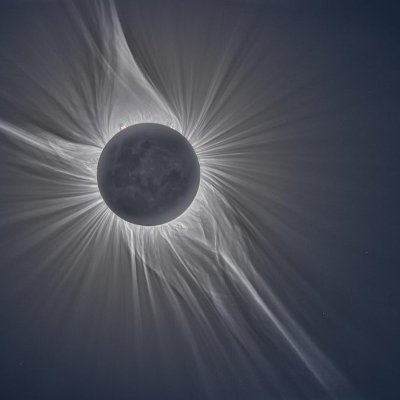
The Oort Cloud: Our Solar System’s Invisible Frontier
Far beyond the planets, at the outermost edge of the Sun’s domain, lies a realm so vast and remote that it challenges the imagination: the Oort Cloud.This enormous spherical shell of icy comets and frozen debris forms the true boundary of our solar system. While Neptune orbits at about 30 AU and Pluto at roughly 40 AU, the Oort Cloud begins thousands of astronomical units from the Sun and may extend out to 100,000 AU or farther. (One AU — the average Earth-Sun distance — is roughly 150 million kilometers.)To grasp this scale: light, traveling at 300,000 km per second, takes just eight minutes to cross one AU. Yet it requires weeks to reach the inner edge of the Oort Cloud and more than a full year to arrive at its outermost fringes — over one light-year away.Human technology barely scratches this frontier. Voyager 1, our most distant spacecraft, would still need roughly 300 years just to reach the inner Oort Cloud and another 30,000 years to cross it.Here, the Sun’s gravitational grip grows incredibly weak. Icy bodies drift in a loosely bound swarm, easily nudged by the gravity of passing stars or the subtle tides of the Milky Way itself. Occasionally, one of these frozen wanderers is disturbed from its ancient orbit and sent plunging inward — becoming the long-period comets that streak dramatically across our night skies millions of years later.The Oort Cloud isn’t just far away; it represents a conceptual edge. Our solar system doesn’t end neatly at the planets or even at the Kuiper Belt — it fades gradually into interstellar space across a volume so immense that it underscores both our isolation and our subtle connection to the rest of the galaxy.A vast, invisible reservoir of ice and history, silently guarding the outer limits of the Sun’s realm — the Oort Cloud reminds us just how breathtakingly large our cosmic backyard truly is.

English