Food Climate Partnership

37 posts

Food Climate Partnership banner
Food Climate Partnership

Food Climate Partnership

@foodplusclimate

Advancing knowledge on the links between food systems and climate change. Better data, better policy, better outreach.

Katılım Aralık 2021
93 Takip Edilen48 Takipçiler
Sabitlenmiş Tweet
Food Climate Partnership
Food Climate Partnership@foodplusclimate·
GHG emissions from agricultural land are systematically underestimated. Putting agriculture in a bucket with the forestry sector— which represents a big carbon sink— obscures the impact of agriculture on climate change. civileats.com/2021/06/30/the…
English
1
14
37
0
Food Climate Partnership
Food Climate Partnership@foodplusclimate·
1/3 of global households rely on biomass for cooking. Switching to cleaner cookstoves can save lives, cut food system carbon emissions, and promote gender equality. At COP27, leaders should take steps to ensure universal clean cooking access by 2030. news.climate.columbia.edu/2022/11/14/tra…
English
0
2
1
0
Food Climate Partnership
Food Climate Partnership@foodplusclimate·
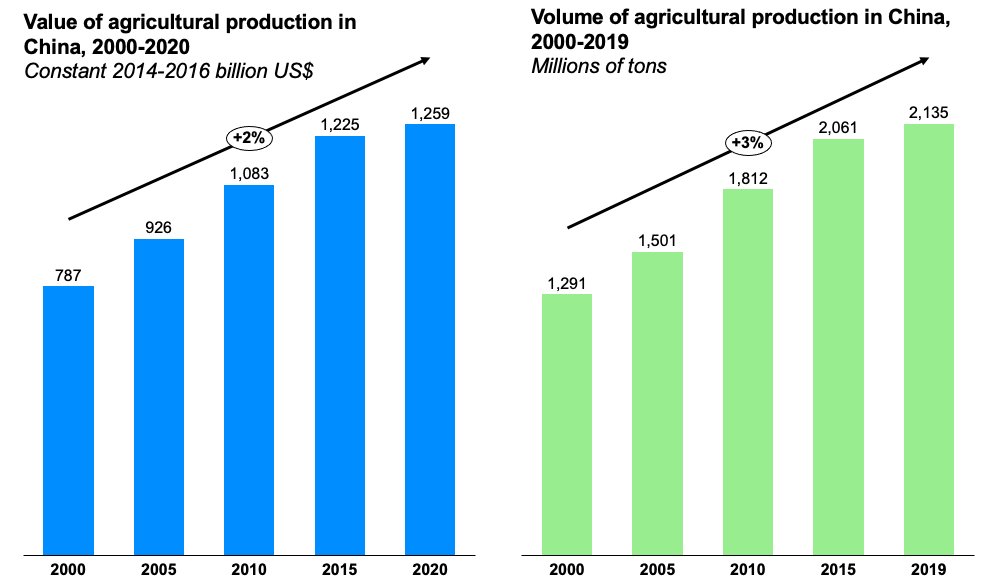
In 40 years, Chinese grain consumption tripled and meat consumption increased 14x. Today, China is the world's largest agri producer and importer. Join us tomorrow am for our #ClimateWeek spotlight on China's food system and its links to climate change. foodclimatepartnership.org/policy
Food Climate Partnership tweet media
English
0
0
0
0
Food Climate Partnership
Food Climate Partnership@foodplusclimate·
Thank you @wilsonCEF for hosting an excellent event on food+climate opportunities in China and the US. Great convo on the importance of keeping food policy priorities— e.g. nutrition, security and safety— at the forefront of the food/climate discussion. wilsoncenter.org/event/climate-…
English
0
1
1
0
Food Climate Partnership
Food Climate Partnership@foodplusclimate·
Great write-up in Science News using some of the GHG emissions data we helped develop. "All the steps that take food from the farm to our plates to the landfill... bring food-related emissions... to 33 percent." sciencenews.org/article/food-e…
English
0
0
0
0
Food Climate Partnership
Food Climate Partnership@foodplusclimate·
The conversation on GHG emissions from food systems tends to focus on ag and land use (rightfully so, due to their magnitude). However, GHG emissions generated outside of agricultural land are increasing at higher rates, esp. in industrialized countries. essd.copernicus.org/articles/14/17…
English
0
0
0
0
Food Climate Partnership
Food Climate Partnership@foodplusclimate·
Climate change poses great challenges to food systems. How will it impact global nutrition? What is the future of smallholder farming? How can we finance healthy & resilient food systems? Join us Apr 1 to hear leading experts discuss the future of food eventbrite.com/e/columbia-uni…
English
0
4
8
0
Food Climate Partnership
Food Climate Partnership@foodplusclimate·
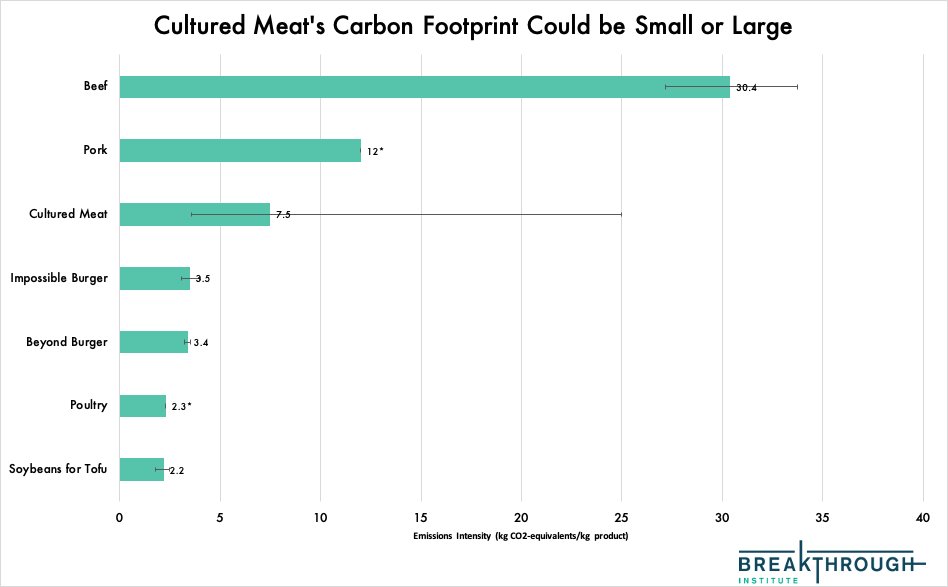
@danrejto @TheBTI Great thread. Curious if/how the order here changes if emissions intensity is in kg CO2eq per kg protein instead of per kg product?
English
0
0
0
0
Dan Rejto 🇺🇸🌎🍴
Cultured meat is featured in the new #IPCCReport as a technology that can help meet growing protein demand and reduce environmental impacts. THREAD 🧵
English
4
9
41
0
Food Climate Partnership
Food Climate Partnership@foodplusclimate·
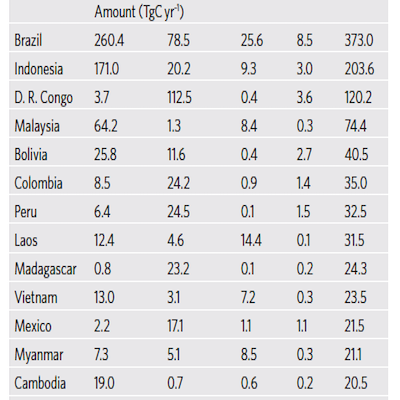
@waiterich From the Feng et al. paper (1st two columns are commodity and small-scale ag, respectively, last column is the total)
Food Climate Partnership tweet media
English
0
0
0
0
Food Climate Partnership
Food Climate Partnership@foodplusclimate·
Deforestation in the tropics has been more severe than what's reported by standard bookkeeping methods. Also, food systems drive the vast majority of tropical deforestation. For the 3 countries with highest avg annual rates (Brazil, Indo, DRC) ag drives over 90% of deforestation
Philippe.ciais@ciais_philippe

🔥🌳 Doubling of tropical forest C loss over last 20 years @gcarbonproject @IPCC_CH @IPSL_outreach @INSU_CNRS @NASA_Landsat @V_ERIFY_H2020 @CoCO2_project Our new study by Y Feng et al 👉 bad news revealed by analysis of #Landsat satellite images 🌎 doi.org/10.1038/s41893…

English
1
1
6
0
Food Climate Partnership
Food Climate Partnership@foodplusclimate·
Energy use in agriculture and fisheries is a significant source of GHG emissions (>1 gigaton in CO2eq in 2019). On-farm electricity use has tripled since 1990 providing major opportunities to decarbonize the food system by advancing clean energy systems. essd.copernicus.org/articles/14/81…
English
1
0
2
0
Food Climate Partnership
Food Climate Partnership@foodplusclimate·
Expanding robust cold chains can reduce food waste, w/ positive impacts on climate. Where possible, countries should invest in energy-efficient systems based on next-gen refrigerants & renewable energy, else the climate impact may be minimal or reversed. doi.org/10.1016/j.ijre…
English
0
0
0
0
Food Climate Partnership
Food Climate Partnership@foodplusclimate·
The 1989 Montreal Protocol targeted ozone-depleting Chlorofluorocarbons (CFCs), which were replaced by Hydrofluorocarbons (HFCs)— many of which have global warming potentials 4000X greater than CO2. The Kigali Amendment aims to phase out the most harmful. doi.org/10.1016/j.jcle…
English
1
0
1
0
Food Climate Partnership
Food Climate Partnership@foodplusclimate·
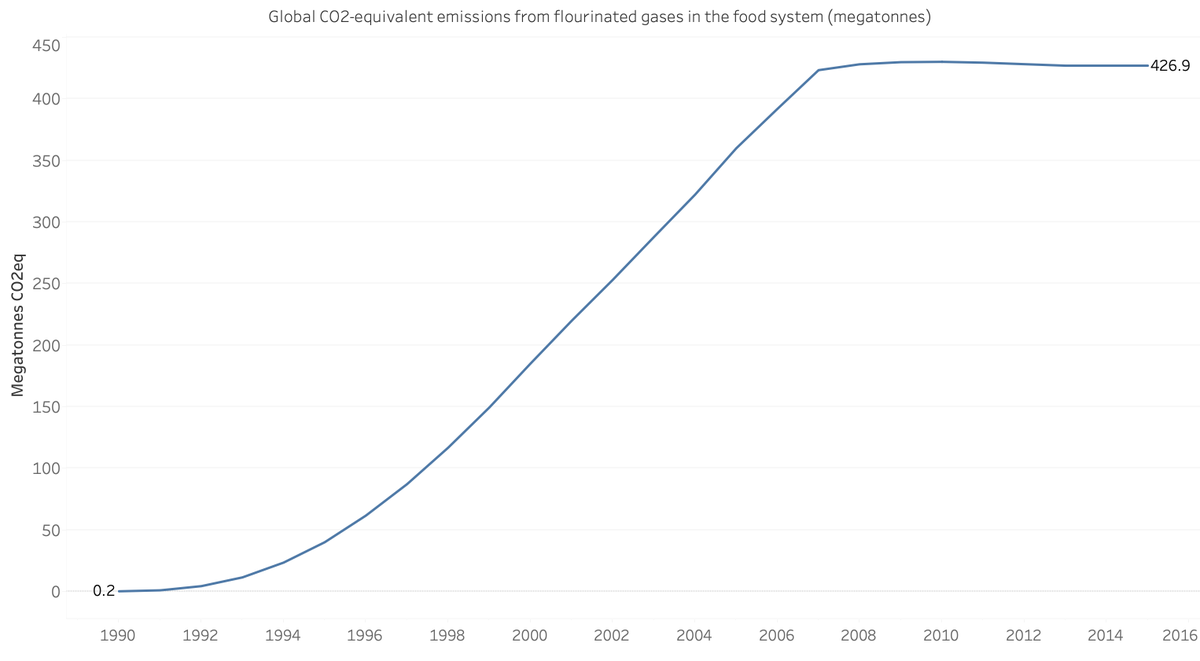
One of the fastest growing sources of GHG emissions from food systems are fluorinated gases released from refrigeration systems. Food system f-gas emissions increased from near 0 in 1990 to 427 megatons in 2015, in CO2 equivalents. (Source: FAOSTAT) #data/EM" target="_blank" rel="nofollow noopener">fao.org/faostat/en/#da
Food Climate Partnership tweet media
English
1
0
1
0
Food Climate Partnership
Food Climate Partnership@foodplusclimate·
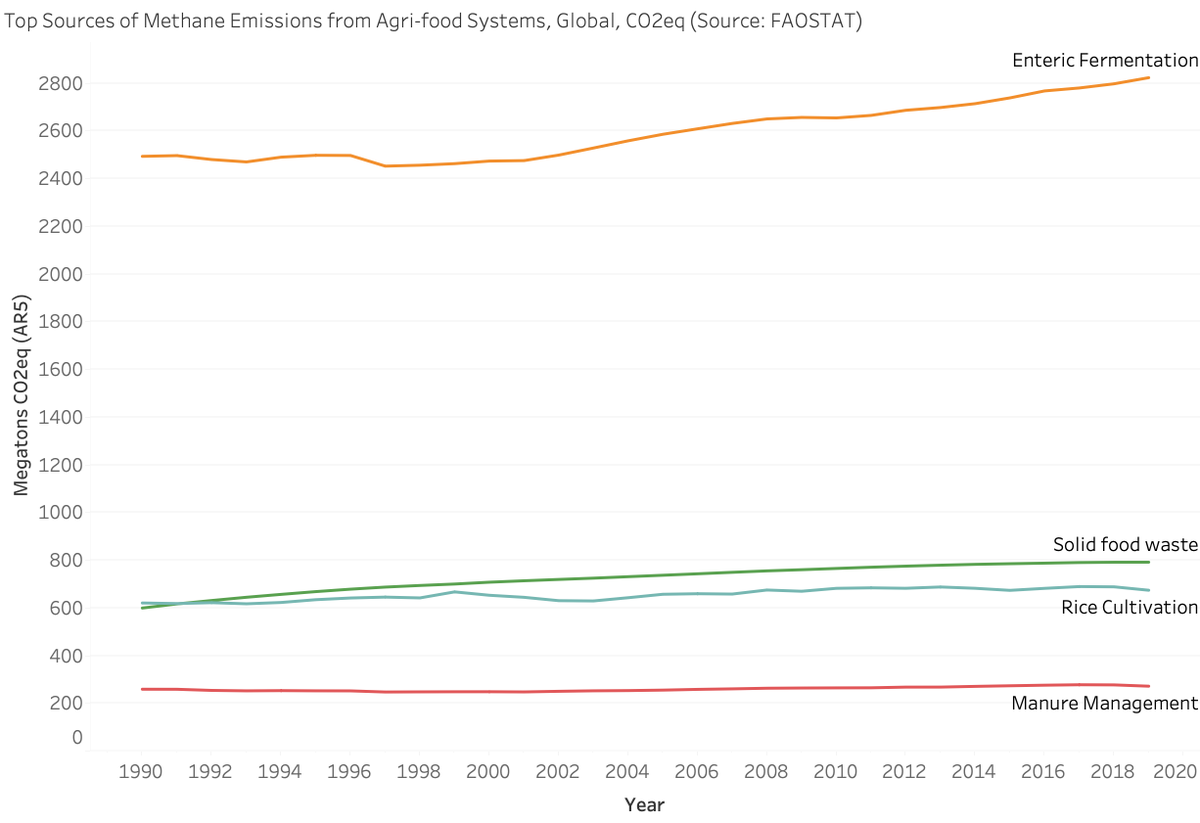
Solid food waste in landfills is the second highest source of methane emissions from food system activities (source: FAOSTAT). Solutions to this issue are generally two-pronged: 1) throw away less food, and 2) improve waste management systems globally— particularly for organics.
Food Climate Partnership tweet media
English
0
1
5
0
Food Climate Partnership
Food Climate Partnership@foodplusclimate·
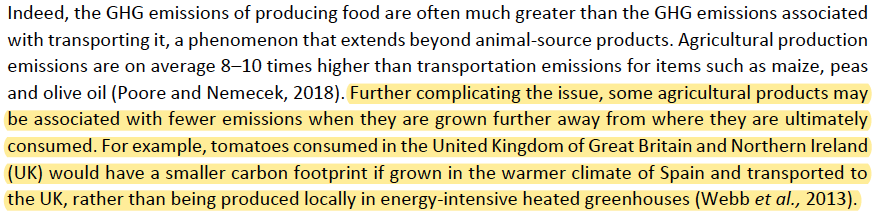
Counterintuitively, GHG emissions associated with some food products may actually be fewer when they are grown *further away* from where they are ultimately consumed. fao.org/3/cb6754en/cb6…
Food Climate Partnership tweet media
English
1
1
7
0