Institute for Public Affairs in Zimbabwe retweetledi
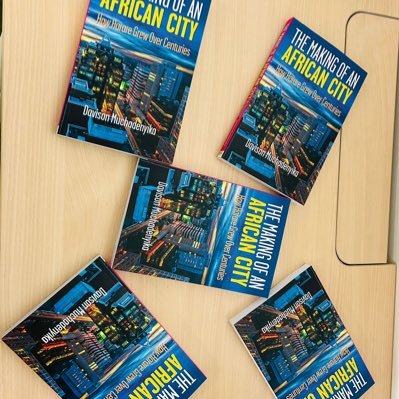
NEW BOOK: Exactly five years ago, I announced the publication of my inaugural book: Seeking Urban Transformation: Alternative Urban Futures in Zimbabwe. Today I announce the publication of my second one: The Making of An African City: How Harare Grew over Centuries. A culmination of five years of writing and re-writing this book, started in Harare in Dec 2019 and finalized in Islamabad, Pakistan.
This book was written in many cities: Harare, Punta Cana, Fairfax, Washington DC, Seoul, Yokohama, Tokyo, Nairobi, Mombasa, Kisumu, Lusaka, Turkana, Paris, Brussels, Frankfurt, Geneva, Addis, Freetown, Makeni, Kenema, Accra, Cancun, Amsterdam, Pretoria, Bangkok, Johannesburg, Mutare, Victoria Falls, Karachi, Lahore, and Islamabad. I underscore the origins, growth, status and prospects of Harare. I must confess that I enjoyed engaging with internal, published and unpublished material that shows the intricacies of how this city we call home was shaped for centuries. For the past decade, I have been asked by political actors to help with ideas that could transform this city. Now this book concludes with a set of strategies that any city administration could prioritize. I view Harare from an African perspective, and I am aware that there are many simplistic narratives churned from the north that views African cities as disorderly galore. We have to write from our own perspective!
The book will be available in Harare bookstores by April 1, 2025.
Enjoy the read and as usual this won’t be last!
Essential reading for anyone interested in understanding @cityofharare2. Thanks to @ChraHarare
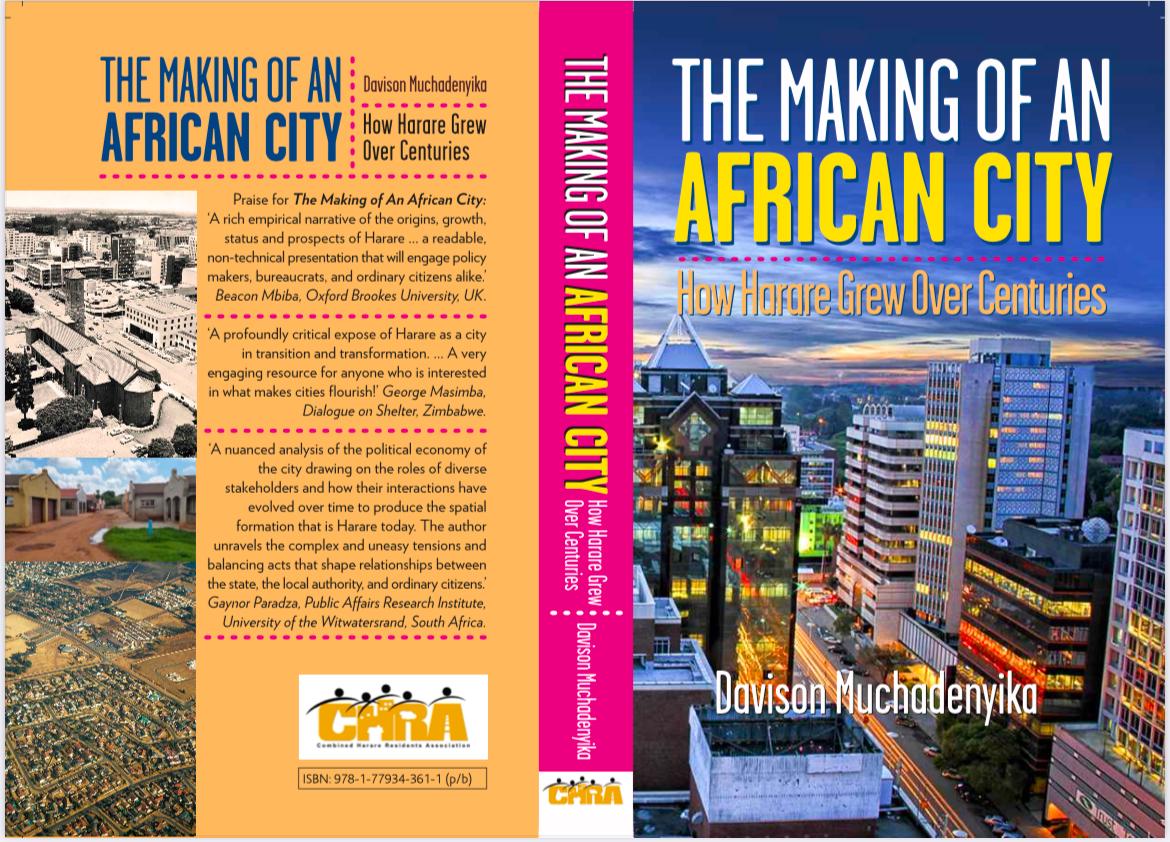
PRAISE FOR THE MAKING OF AN AFRICAN CITY
‘In both colonial and contemporary Zimbabwe, preoccupation with the politics of rural land has overshadowed attention to urbanism and the urban question. In response, this book is a rich empirical narrative of the origins, growth, status and prospects of Harare, Zimbabwe’s primate city. Using ordinarily inaccessible archival and administrative data, it provides a sorely needed comprehensive account of how the post-2000 Fast Track Land Reform Programme unfolded in the city, the structural changes it occasioned as well as the opportunities and mammoth tasks required to make Harare the sustainable African sunshine city it aspires to be. Scholars are offered new material and a platform for further investigations and deeper theorization of post-colonial urbanization. It is a readable non-technical style presentation that will engage policy makers, bureaucrats, and ordinary citizens alike’ – Beacon Mbiba, Oxford Brooks University, UK.
‘A profoundly critical expose of Harare as a city in transition and transformation. The author traces Harare’s evolution since its founding spotlighting triggers for growth while, in the same vein, acknowledging episodes of tensions and regression. Deploying hard evidence from manifold accounts of concerted land, housing, and infrastructure experiences from across the city, the author draws out potential pathways for Harare’s future growth. A very engaging resource for anyone who is interested in what makes cities flourish!’ – George Masimba, Dialogue on Shelter, Zimbabwe.
‘This is an interesting delve into the development of Harare that spans decades from the establishment of the original city to current developments and the future of the city. The book offers a nuanced analysis of the political economy of the city drawing on the various roles of the diverse stakeholders and how their roles and interactions have evolved over time to produce the spatial formation that is Harare today. The author draws on secondary and primary data to unravel the complex and uneasy tensions and balancing acts that shape relationships between the state, the local authority, and ordinary citizens and how these play out to mold the city of Harare of today. Davison uses the themes of land governance, centre local relations, innovations, and politics to highlight how the power relations between the City of Harare and national government negotiate their positioning and deploy their power to exercise control over the formation of the city. The book uses case studies of specific examples to illustrate how this does not always work as well as the consequences. Interesting to note is the symbiotic and reinforcing relationship between the City of Harare and the Government of Zimbabwe in shaping the city’ - Gaynor Paradza, Public Affairs Research Institute, University of Johannesburg, and University of the Witwatersrand, South Africa.
English