Francesco Massa

251 posts

Francesco Massa banner
Francesco Massa

Francesco Massa

@frances23398579

Mechanical Engineering BA @sapienzaroma • R&D @seeweblive • Building @regolo_ai

Frosinone, Lazio Katılım Nisan 2020
460 Takip Edilen47 Takipçiler
Sabitlenmiş Tweet
Francesco Massa
Francesco Massa@frances23398579·
So proud of my latest goal : Second place at @LDO_Space and @telespazio T-Tec with horus 🥈☝️
Leonardo Space@LDO_Space

The award ceremony for the seventh edition of #T-TeC was held today in Rome, at the headquarters of the Italian Space Agency (@ASI_spazio). The contest is an #OpenInnovation competition organised by #Leonardo and @telespazio to foster technological innovation in the #Space sector among the younger generation of students and researchers from universities around the world. Discover more: lnrdo.co/4ncB1c0 #Leonardo4Innovation

English
0
0
1
40
neha
neha@nxhaaa19·
@frances23398579 And then you still open the file just to make sure the agent didn’t hallucinate the entire thing.
English
1
0
1
4
Francesco Massa
Francesco Massa@frances23398579·
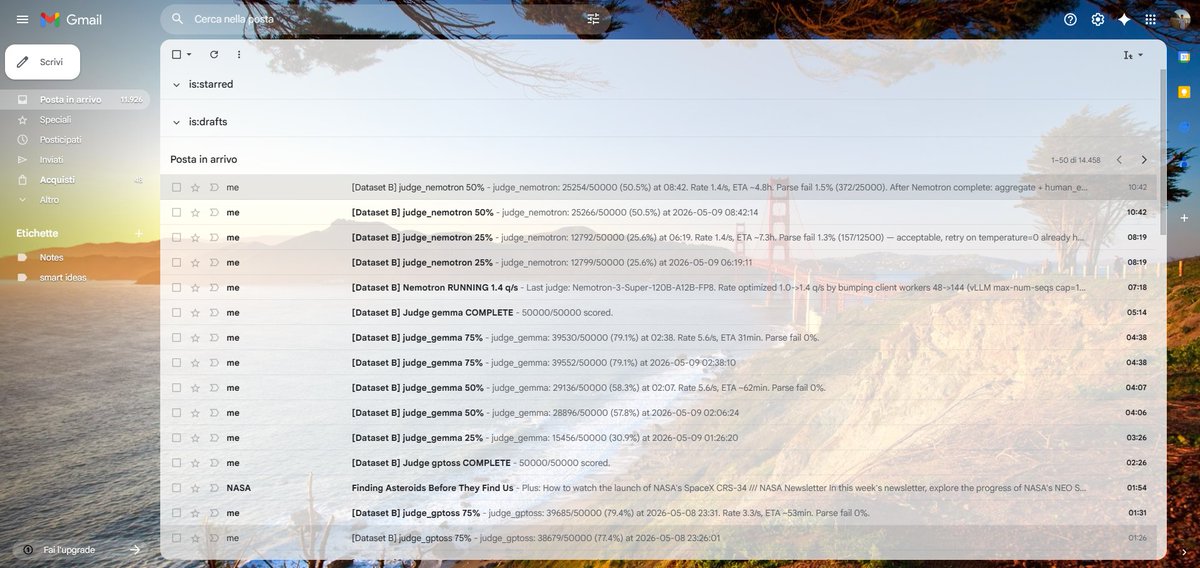
Nothing hits like an email from your agents confirming the work is already done.
Francesco Massa tweet media
English
1
0
1
9
Francesco Massa retweetledi
Boston Dynamics
Boston Dynamics@BostonDynamics·
Balancing commercial goals and robotics research can be tricky, but with Atlas we're making it work.
English
334
1.3K
7.5K
491.1K
Francesco Massa
Francesco Massa@frances23398579·
I Believe in Destiny. Together I had one of the most inspiring talk with one of my friends because he had to give me back a charger that I forgit near his office. Imagine if I hadn't forgotten it
English
0
0
0
11
Gabriele Berton
Gabriele Berton@gabriberton·
What are some real-world use cases for "small" (<10B) LLMs?
English
342
13
867
183.1K
Francesco Massa retweetledi
Akshay 🚀
Akshay 🚀@akshay_pachaar·
CPU vs GPU vs TPU vs NPU vs LPU, explained visually: 5 hardware architectures power AI today. Each one makes a fundamentally different tradeoff between flexibility, parallelism, and memory access. > CPU It is built for general-purpose computing. A few powerful cores handle complex logic, branching, and system-level tasks. It has deep cache hierarchies and off-chip main memory (DRAM). It's great for operating systems, databases, and decision-heavy code, but not that great for repetitive math like matrix multiplications. > GPU Instead of a few powerful cores, GPUs spread work across thousands of smaller cores that all execute the same instruction on different data. This is why GPUs dominate AI training. The parallelism maps directly to the kind of math neural networks need. > TPU They go one step further with specialization. The core compute unit is a grid of multiply-accumulate (MAC) units where data flows through in a wave pattern. Weights enter from one side, activations from the other, and partial results propagate without going back to memory each time. The entire execution is compiler-controlled, not hardware-scheduled. Google designed TPUs specifically for neural network workloads. > NPU This is an edge-optimized variant. The architecture is built around a Neural Compute Engine packed with MAC arrays and on-chip SRAM, but instead of high-bandwidth memory (HBM), NPUs use low-power system memory. The design goal is to run inference at single-digit watt power budgets, like smartphones, wearables, and IoT devices. Apple Neural Engine and Intel's NPU follow this pattern. > LPU (Language Processing Unit) This is the newest entrant, by Groq. The architecture removes off-chip memory from the critical path entirely. All weight storage lives in on-chip SRAM. Execution is fully deterministic and compiler-scheduled, which means zero cache misses and zero runtime scheduling overhead. The tradeoff is that it provides limited memory per chip, which means you need hundreds of chips linked together to serve a single large model. But the latency advantage is real. AI compute has evolved from general-purpose flexibility (CPU) to extreme specialization (LPU). Each step trades some level of generality for efficiency. The visual below maps the internal architecture of all five side by side. 👉 Over to you: Which of these 5 have you actually worked with or deployed on?
GIF
English
69
877
3.2K
239.5K
Francesco Massa
Francesco Massa@frances23398579·
My Cousin just won an hackaton like sport
Francesco Massa tweet media
English
1
0
1
24
Francesco Massa retweetledi
Sebastian Raschka
Sebastian Raschka@rasbt·
April was a pretty strong month for LLM releases: - Gemma 4 - GLM-5.1 - Qwen3.6 - Kimi K2.6 - DeepSeek V4 All are now added to the LLM Architecture Gallery. More details once I am fully back in May!
Sebastian Raschka tweet media
English
75
439
3K
122.6K
Francesco Massa
Francesco Massa@frances23398579·
Just tried a Kimi2.6 + Opus4.7 + GPT5.5 Planning Session. If you craete a first plan and ask different models opinions you will end with a top tier output.
English
0
0
0
69
Francesco Massa
Francesco Massa@frances23398579·
Coding with this song feels different
Francesco Massa tweet media
English
1
0
2
116
Francesco Massa
Francesco Massa@frances23398579·
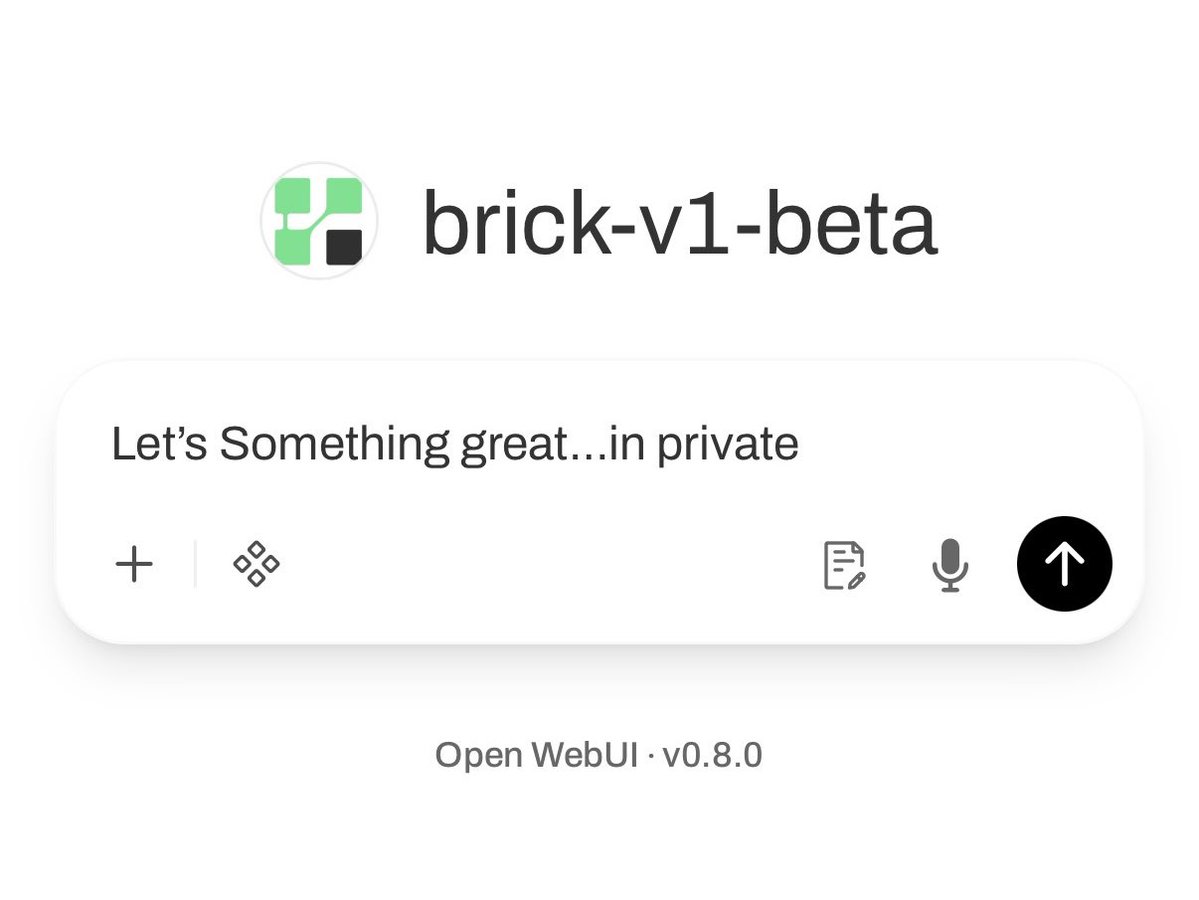
We just cut our AI costs by 60%, without losing quality. Meet brick-1, the first model from Regolo.ai 🧱 Same performance as our most powerful model, at half the price.⚡️ How? brick-1 is a semantic router gateway that behaves like a multimodal LLM. You send it anything : • text 📝 • images 🖼️ • audio 🎙️ • or a mix and it automatically routes your request to the best underlying model for the job. Better answers. Lower costs. No manual model selection. I’ve already plugged it into my personal Openclaw and Hermes agents, and I’m spending 63% less than my previous daily average (I was too lazy to change to the cheapest model between tasks, and sometimes it not even possible). This is a public beta. The final model will ship alongside a full technical paper. Try it: • Base URL: api.regolo.ai/v1 • Model Name: brick-v1-beta • Docs: docs.regolo.ai
Francesco Massa tweet media
English
0
0
0
49