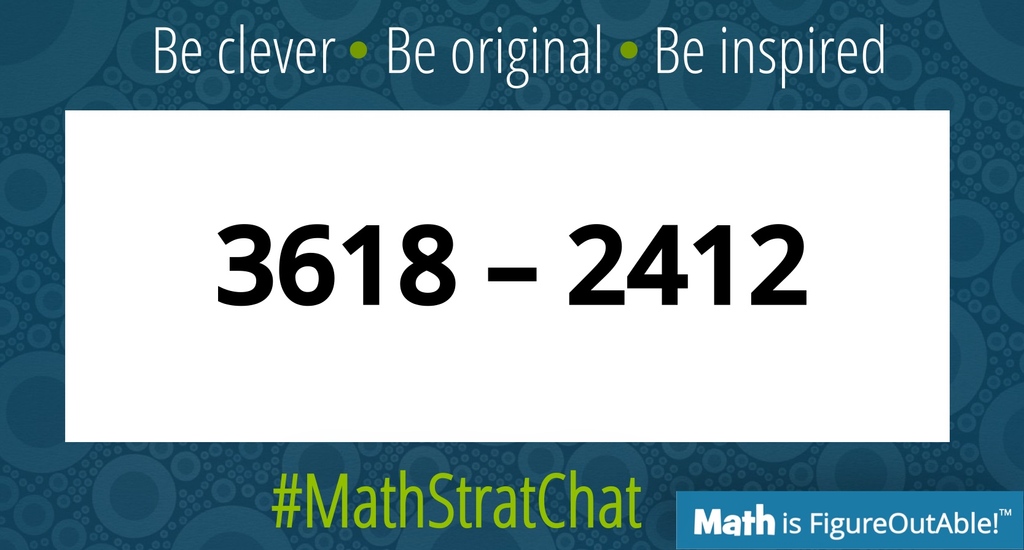
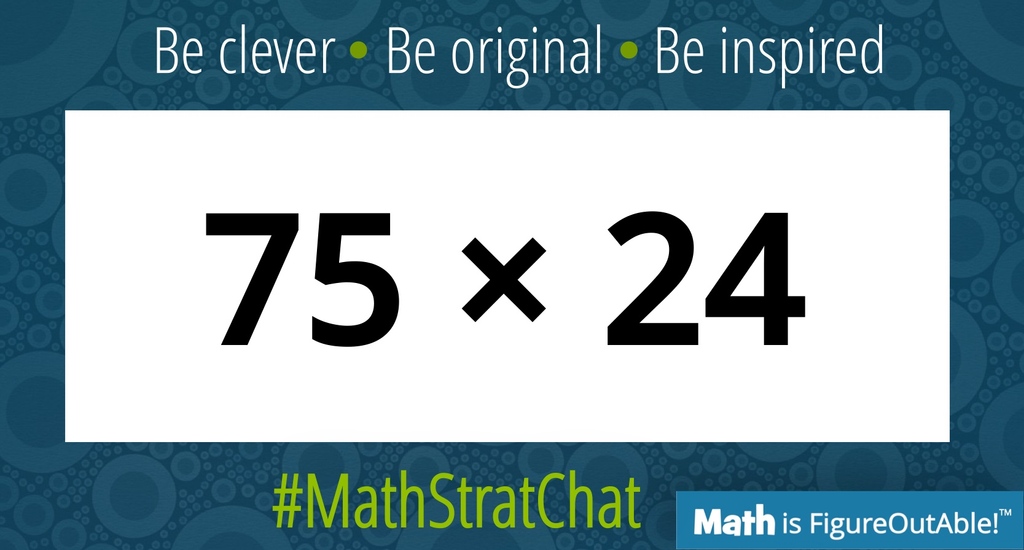
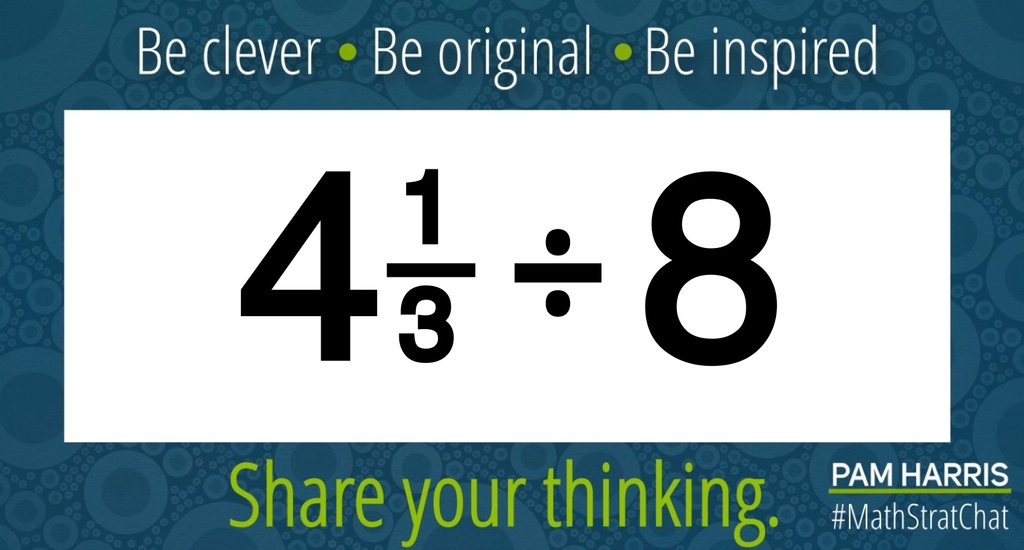
@pwharris 8 x 12 ½ = 100 so I have to scale 36 by 12 ½ then I am answering 12 ½ x 36 is 100% of ? 36 x 12 ½ means it’s time to double and halve. 18 x 25 is 9 x 50 is 450!
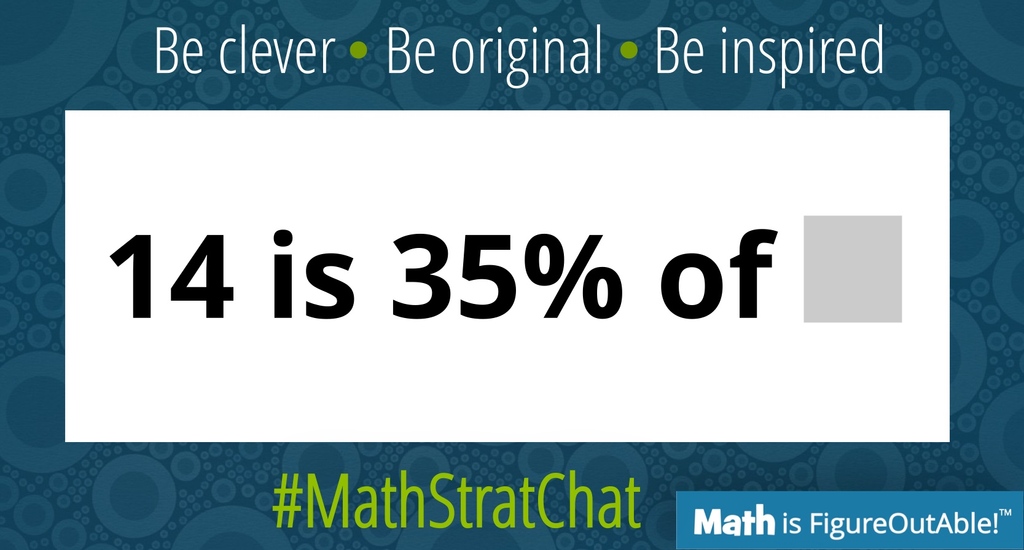
@pwharris So if 14 is 35% of some number then some number then 14 is what percent of 35? It has to be 40 percent because 2 x 7 is 14 and 5 x 7 is 35. Scale 2 and 5 up by 20 and it is 40 and 100 percent.
Ok actually this is the #MathStratChat for this week. Sorry!
Rules: post your favorite or a clever solution! It's also fun to comment on other's strategies. Tell us about your reasoning. Like/Retweet so others can see!
#MTBoS#ITeachMath#MathIsFigureOutAble
@pwharris 25 x 36 - 1 x 36 so 25 x 36 = 25 x 4 x 9 and using the associative property that would be 100 x 9 = 900. Then it’s 900 - 36 or 864. (I know that 36 + 64 = 100)
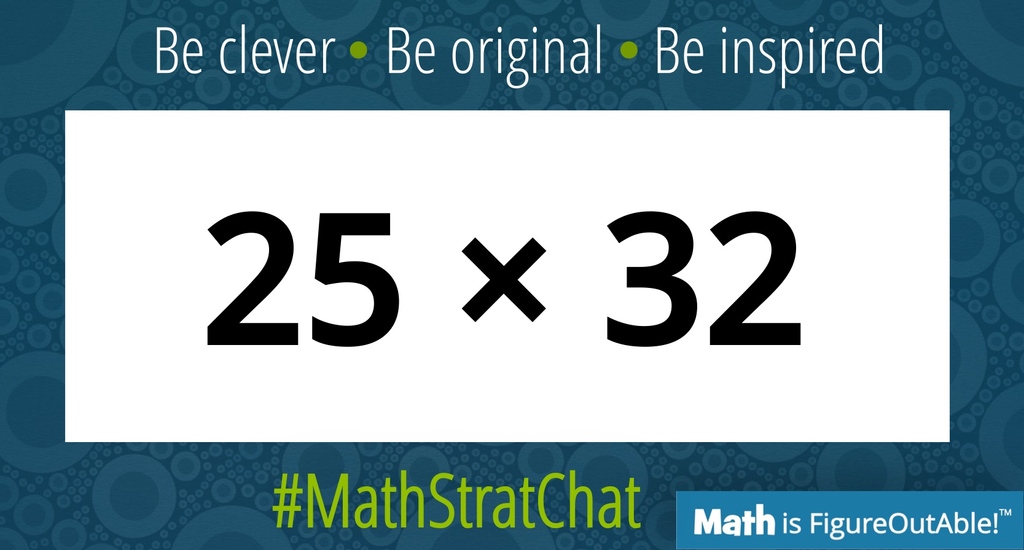
@pwharris Double and halve - 25 x 32 = 50 x 16 = 100 x 8 = 800. A great example of the identity property at work. 25 x 2 x 32 x ½ or you could factor 32 and use the associative property (25 x 4) x 8
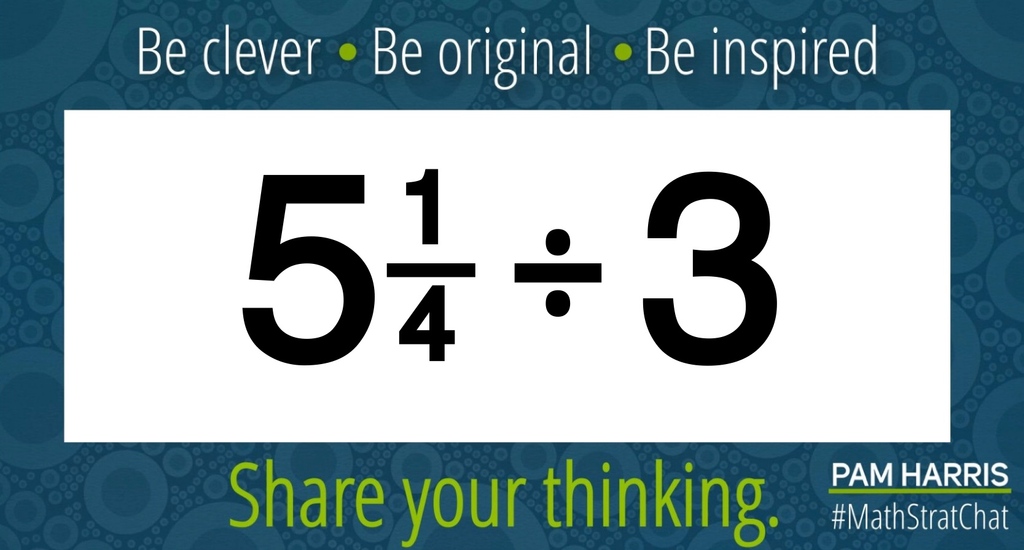
@pwharris 5 ¼ = 3 + 2 ¼ so 3/3 = 1 now 2 ¼ = 3 - ¾ and 3/3 = 1 and ¾ / 3 = ¼ so it’s 1 + 1 - ¼ or 1 ¾. Or you could do 5 ¼ + ¾ = 6 then 6/3 = 2 and ¾ / 3 = ¼ so 5 ¼ /3 must be 2 - ¼ or 1 ¾.
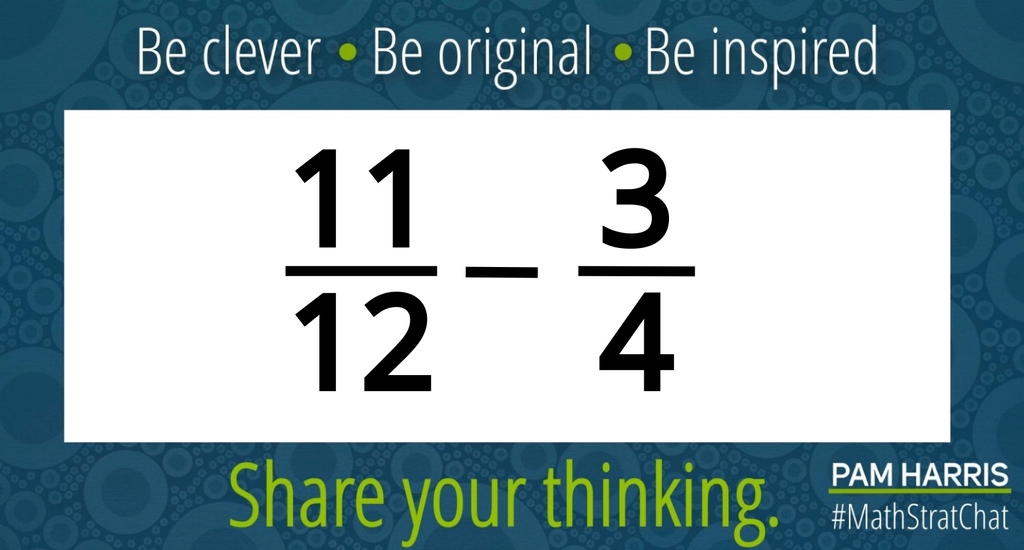
@pwharris 11/12+1/12 - ⅔ = ⅓. And ¼ + 1/12 = ⅓ so it’s ¼. Gotta love those unit fractions especially the ones with consecutive denominators. The difference between the two unit fractions is always a unit fraction where the denominator is the product of the two consecutive denominators.