@ThomasDiLeva Solsjäl har alla kvaliteter som krävs för att bli en riktig fotbollshymn! Bra gung, refräng och stämning. Minns remix-tävlingen i början av 00-talet
Började faktiskt skriva på en inofficiell VM låt i vintras: ”Forza Sweden Go Go Go!” Men avbröt projektet pga ett annat stort projekt jag håller på med i studion. Så här i efterhand känns det skönt…tycker det blir rörigt med så många VM-låtar därute. Men men…😅
@dhh It looks really nice, especially in dark mode. Basecamp has really come a long way since I helped with the Swedish language translations back in the day!
Basecamp 5 is dropping very soon, and one of my absolute favorite features is that the whole system can be driven by the keyboard. Real nvim combo move gymnastics here!
Informationen att Bröderna Olsen inte alls var två mysiga pensionärer, utan den ena var nyss fyllda 50 och den andra 46 år - är den typen av info som det kommer ta ett tag att resa sig ifrån.
@pikuma Imagine having an SGI for 3D work in the early 90s. I got into 3D modeling around 97 and used various software on Mac. Around 99, though, OpenGL and hardware acceleration became a reality on Mac systems, and it was a huge productivity boost!
The SGI Buyer's Guide: This guide tries to help you when you want to buy an used SGI. First it will try to help you deciding which system fits best to your needs, and then it will point out important items you should care about when buying a machine.
🔗hardware.majix.org/computers/sgi/…
@ID_AA_Carmack@esrtweet I installed BeOS on a Power Mac in the late 90s. It was fascinating to see how much better it utilized the hardware than Apple’s own operating system before OS X. True multitasking had finally arrived!
I did a Doom port on BeOS, and I found it very pleasant. The NeXT workstations we were using had all the 90s Unix cruft (terminfo, as you mentioned, was a good example even then), while BeOS seemed to have implemented just the core goodness.
In some ways, it might well have been a better transition OS for Apple at the time, but in the long run with the rise of Linux on the server, being “actually unix” with OSX genuinely has been the better path.
This is a really spectacularly good retrospective on the BeBox and BeOS, with oodles of technical and historical detail that answer questions I've been carrying around for decades.
There's one omission I find very curious, though. The author never examines or even considers the impact of Linux on BeOS's competitive environment. And I think there was a major one.
A major thrust of the BeBox was its attempt to capture the imagination of tinkerers and hackers. Thus the GeekPort with its pin spacing designed to be friendly to people who weren't already electronics technicians. That goal persisted when the company went software-only in 1997 - they counted on those forward thinkers to be early adopters and evangelize BeOS into mainstream acceptance.
Alas, by 1997 the forward thinkers willing to take a flyer on something that wasn't Windows or MacOS had a more appealing alternative. Linux didn't have pervasive multithreading, or an uber-cool file system that was also a database, but it did have one advantage that trumped those: open source. Paradise for tinkerers, who could expect to achieve a degree of comprehension and control impossible while the OS remained an opaque proprietary blob.
I don't think this alone doomed BeOS, but it was a blocker for the takeoff trajectory that Gassee and his crew had planned. Then they fumbled their negotiation with Apple, apparently thinking they held stronger cards than they did.
It's a sad story. Some of BeOS's innovations, most notably the file system, were striking and worthy. I wish we'd gotten to keep those.
jdhodges.com/blog/bebox-bea…
I remember when Rails fully embraced REST. It took some time to understand the benefits, but once I saw how controller actions were structured around those principles, it all started to make sense, especially from an API perspective. REST also felt natural because it aligns so well with the underlying semantics of HTTP and its verbs!
A couple of years ago, I built a custom CMS for news content with video transcoding and delivery in Rails. It scaled really well with AWS CloudFront, but I remember spending a lot of time building the video generation logic from scratch. This would definitely have saved me some time back then!
I'm staring down the barrel of a Rails app that might need to push a lot of video, so I cleaned up the HLS video code I wrote least year for @BeautifulRubyHQ and made it easier to ship streaming web video in your Rails app without needs a SaaS.
beautifulruby.com/code/hls-0-2-0
@DirtyTesLa This is not safe. We do not want self driving cars to maneuver like idiots on the road. A more laid back approach is much preferred. Think about all the other poor drivers who have to face this and take action to prevent a crash.
Imagine a Road Rash for the Sega Mega CD that used this technique for scaling the road and sprites. In reality, we got a straight port of the Mega Drive version, still relying on software scaling, but with improved audio. The market was probably not large enough to justify a full rewrite of the game engine.
Fun trivia: there is a patch for Road Rash CD that offloads the software scaling to the Mega CDs faster 68k CPU, improving the frame rate.
More incredible hardware scaling & rotation from John O'Brien on the Mega CD. No other home console could do this at the time, until the 3DO. John O' Brien was the man !!!. #Sega#MegaCD#SegaCD#BatmanReturns
I recall reading some time ago that the intro sequence was created using a variety of software tools. Not everything was done in LightWave 3D. They also used a large physical model of the spaceship, filmed with a motion control rig. Some shots in the intro may well be CG, particularly the fast flybys in the distance.
In later seasons, CG models were used more extensively, likely because 3D software advanced rapidly in the mid 1990s. PC and Mac versions of LightWave 3D also made the process more accessible and efficient.
I have never worked with the original Amiga version of LightWave, but its interface was largely carried over to later platforms, retaining much the same structure and workflow.
Star Trek in the Ocean was an interesting idea.
After all it’s still not 100% explored.
Something James Cameron would use in his brilliant movie The Abyss.
The question. Did Seaquest do the idea justice for TV?
I have mixed feelings.
I never watched it like I did Trek.. just episodes here and there.
@TheMekon_Venus Amiga Computer played a significant role in the production of the sci-fi series seaQuest DSV (1993–1996), particularly through the use of Video Toaster and Lightwave 3D for visual effects
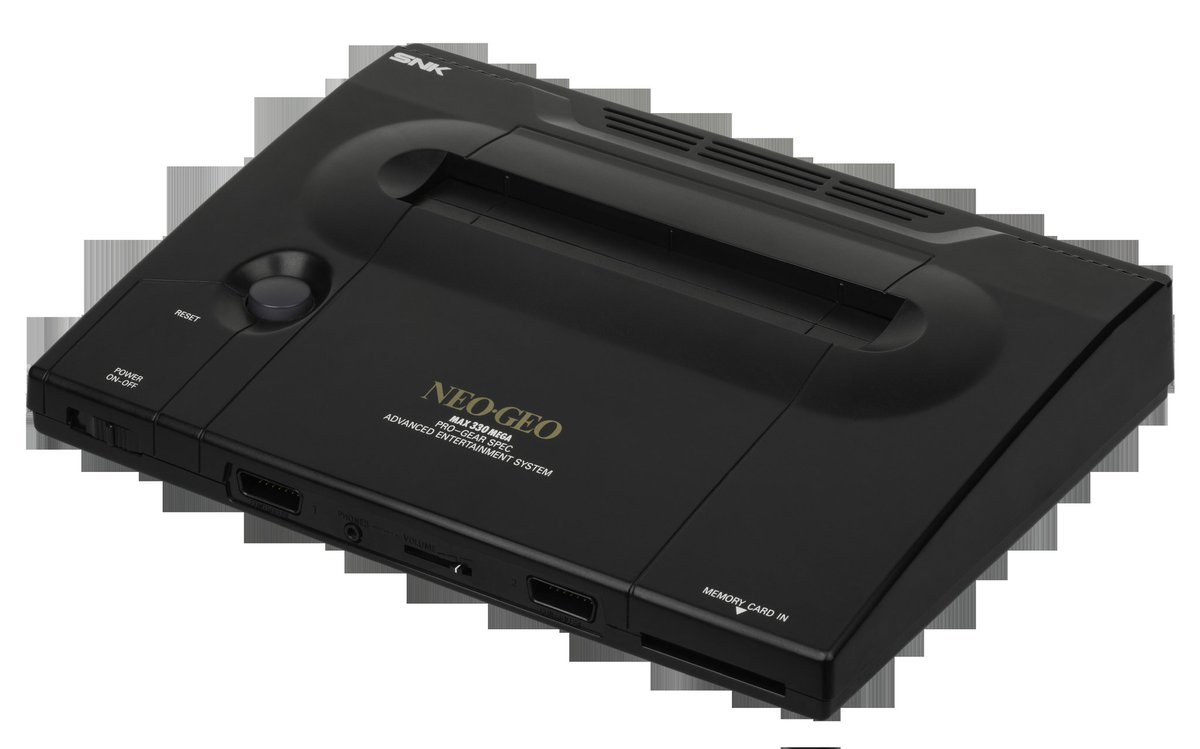
It could only shrink sprites, but it ran at 60 fps. That makes it less suitable for racing games, where large scaled sprites move toward the camera, since the sprites had to be stored at their largest size. Instead, Neo Geo games most often used scaling to zoom the view in and out in fighting games.
In the beginning we got a lot of bad FMV games ported from laserdisc. Sega later used the ASIC in Sonic CD and it is clear they had problems early on, probably because the development documentation was not good enough. They managed to create a Mode 7 like playfield with a low frame rate, and the hardware does not scale sprites. Later games from third party developers did this better, such as Soul Star.
@fredrikmar@sonicgdavies Most people don’t realize that this was really the beginning of the end of SEGA. Super fans had spent between 200 and $300 for the add-on, which promised so much more memory a digital signal processor and a 3-D ASIC. Where was the hardware rotation in scaling?