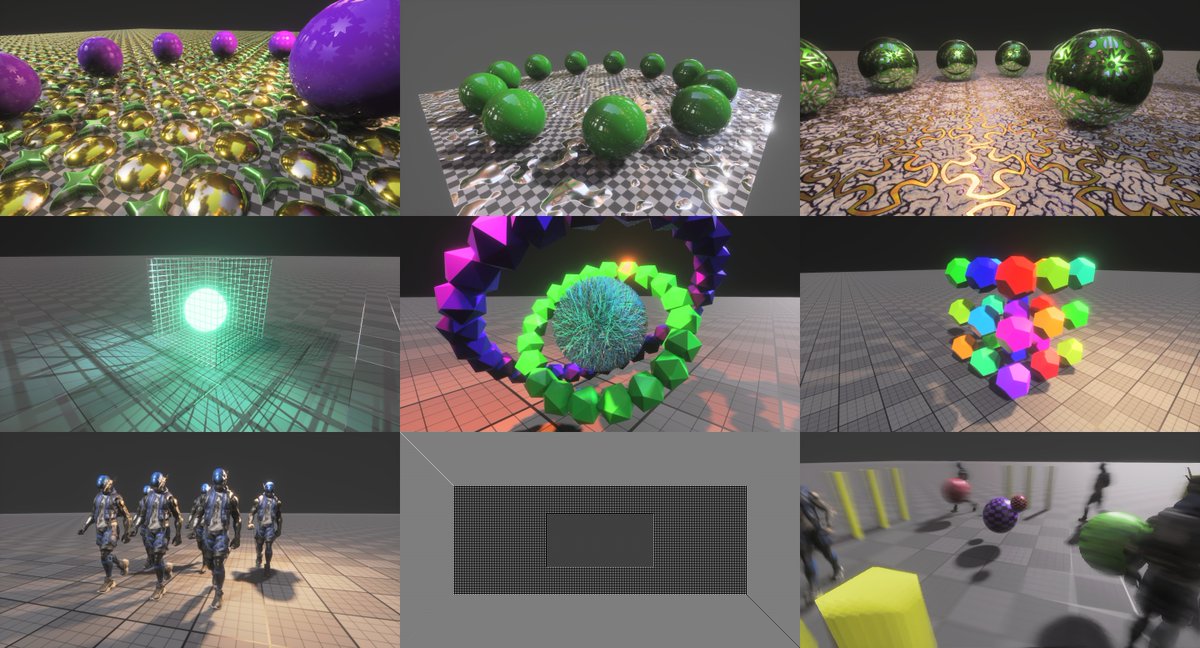
A new tutorial describes how to use Ray Tracing with #Tellusim Core SDK. It's not any more difficult than rasterization. The tutorial includes a comparison between Ray Tracing and CS rasterization: tellusim.com/05_hello_traci…
@bkaradzic Exactly! And it is still in use for CPU and GPU radix sort algorithms: #L205" target="_blank" rel="nofollow noopener">github.com/Tellusim/Tellu…
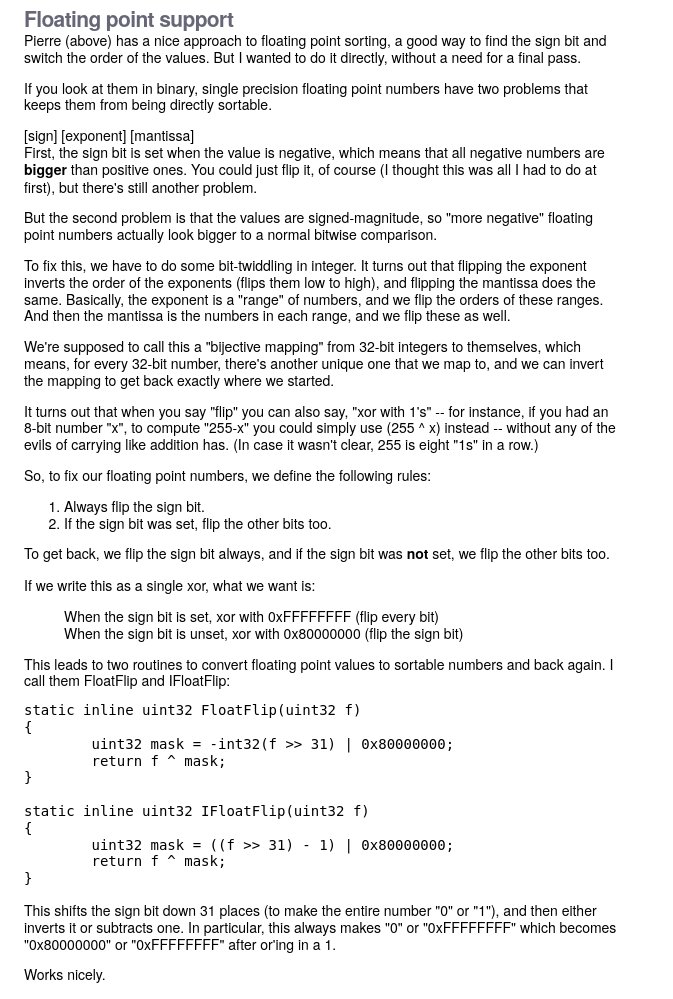
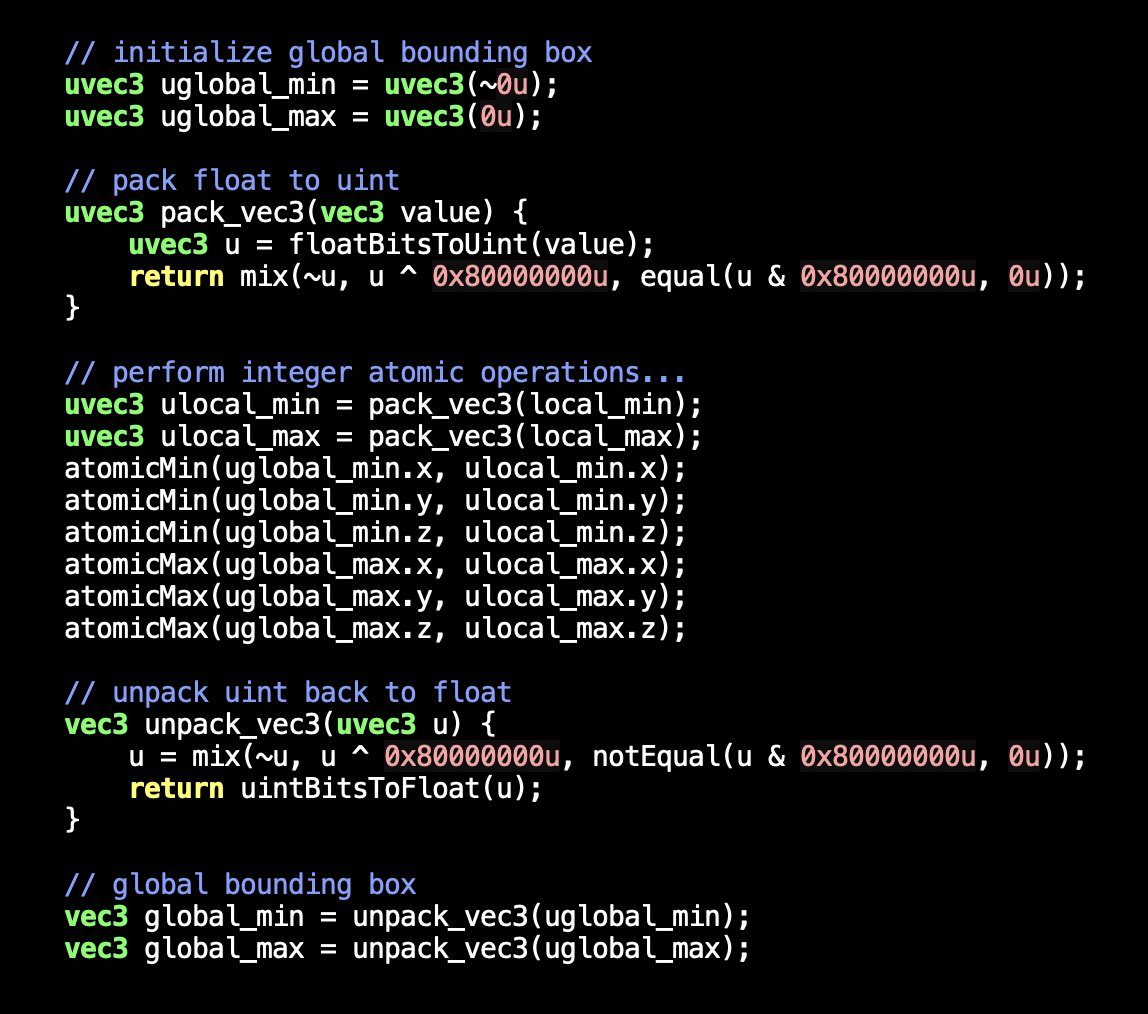
Not all graphics APIs support atomic min/max operations on floating-point numbers. This trick allows it using standard integer min/max atomic operations, with negligible performance impact:
@rompa69@guycalledfrank Yes, it is possible to use bitwise logic:
pack: u ^ (((u >> 31u) * ~0u) | 0x80000000u)
unpack: u ^ (~((u >> 31u) * ~0u) | 0x80000000u)
The performance of multi-viewport rendering is not different from the single-viewport mode in #Tellusim Engine. It allows using an enormous number of screens/HMDs to a single PC, rendering the same scene using multiple GPUs. A single 2080Ti can easily run 5 2k screens with Google Map Tiles API data.
#Tellusim Explorer can easily handle the editing of 500,000 #GravityMark asteroids. Each asteroid has the correct motion vectors even when animated using a compute shader.
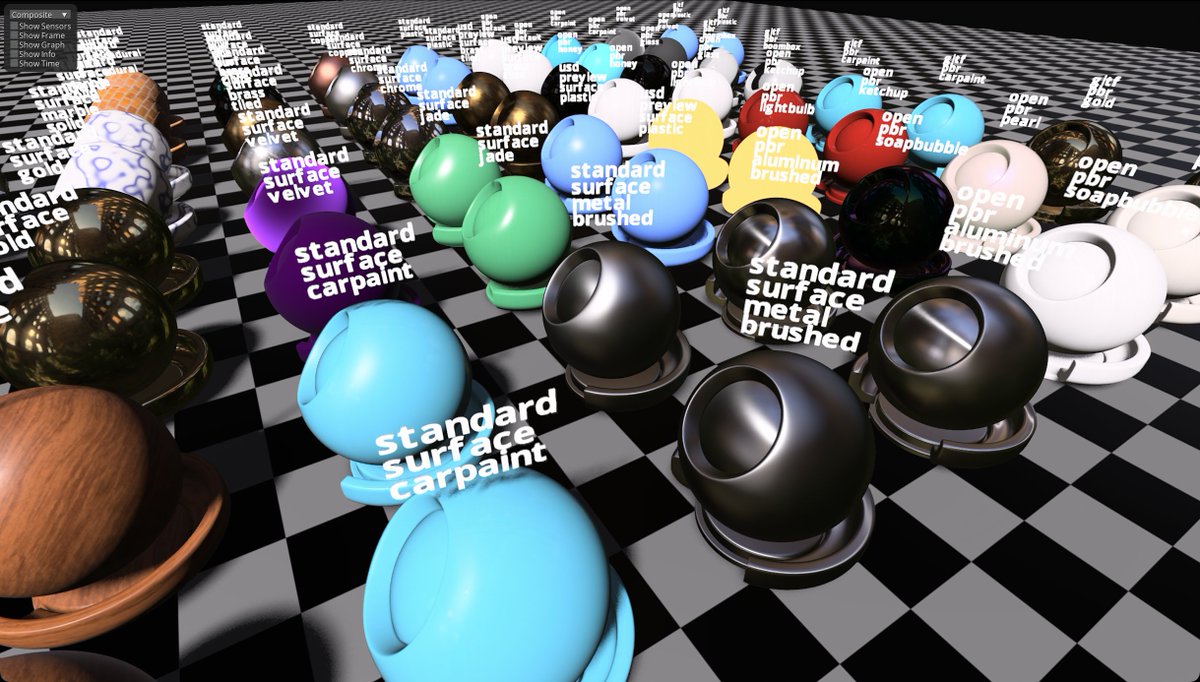
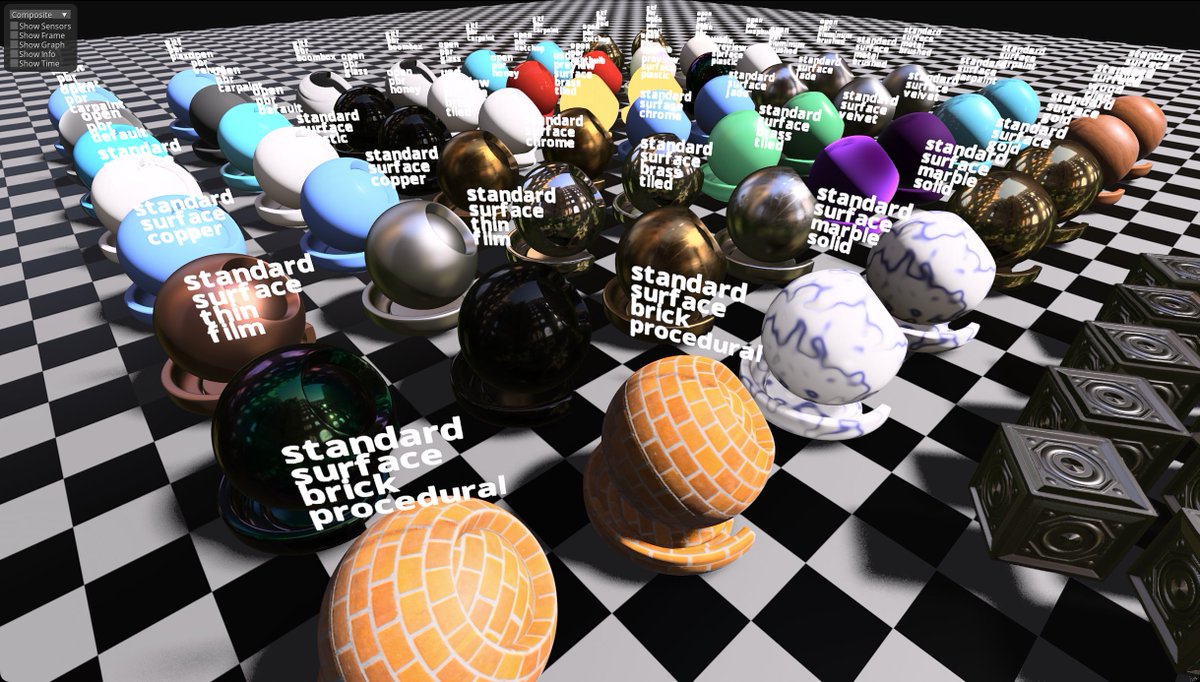
Loading USD files with NodeGraphNodeAPI (MaterialX) materials is now just a single line of code! Thanks to the improved USD loader and updated MaterialX plugin, this demo showcases NVIDIA Omniverse PhysicalAI SimReady materials running inside Tellusim Engine.
A new 3D Interface plugin demonstrates how to embed CPU-based objects into the GPU-driven rendering pipeline. #Tellusim provides a customizable injection API for all rendering steps, and a compute shader API allows the querying of any scenegraph parameters.
#Tellusim's GPU-based Node scattering is not limited by geometry. It involves Lights, Decals, or Node hierarchies and delivers astonishing results with GPU-driven rendering and multi-GPU support. Two 2080Ti GPUs can renders this scene on 4 2K displays at 60 FPS and scales without limits.
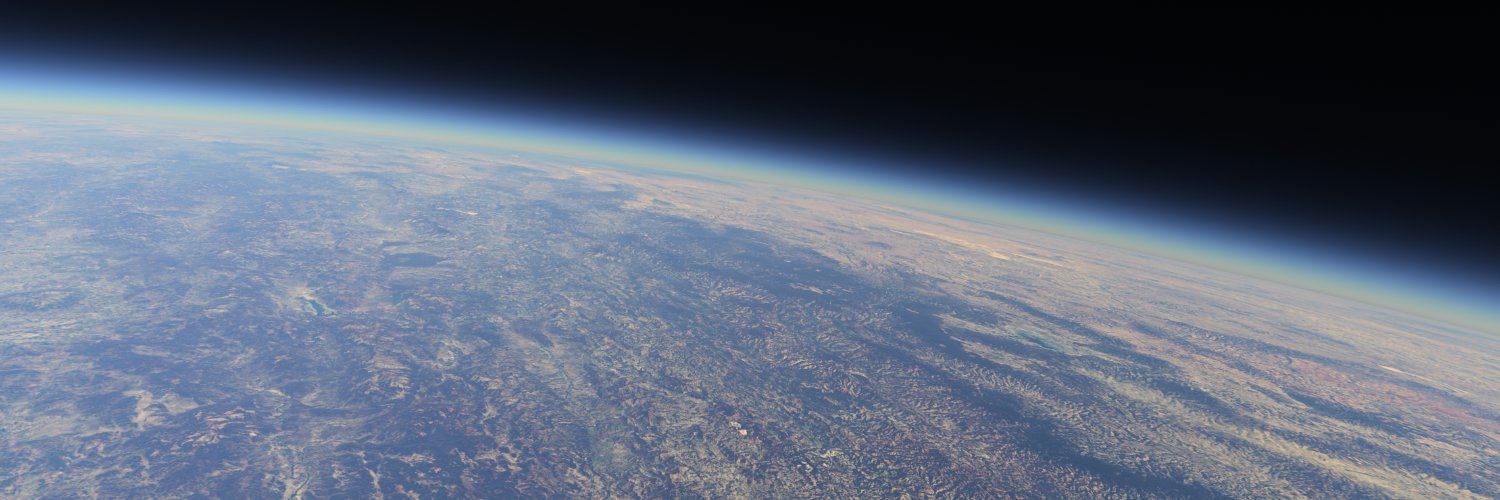
It's impossible to list all the features of the new #Tellusim SDK 31. You can find all the details on our forum. The globally scattered Earth demo is the best showcase of this release:
A list of predefined macro values has been added to the Shader guide: #predefined-macro-values" target="_blank" rel="nofollow noopener">docs.tellusim.com/core/started/0…
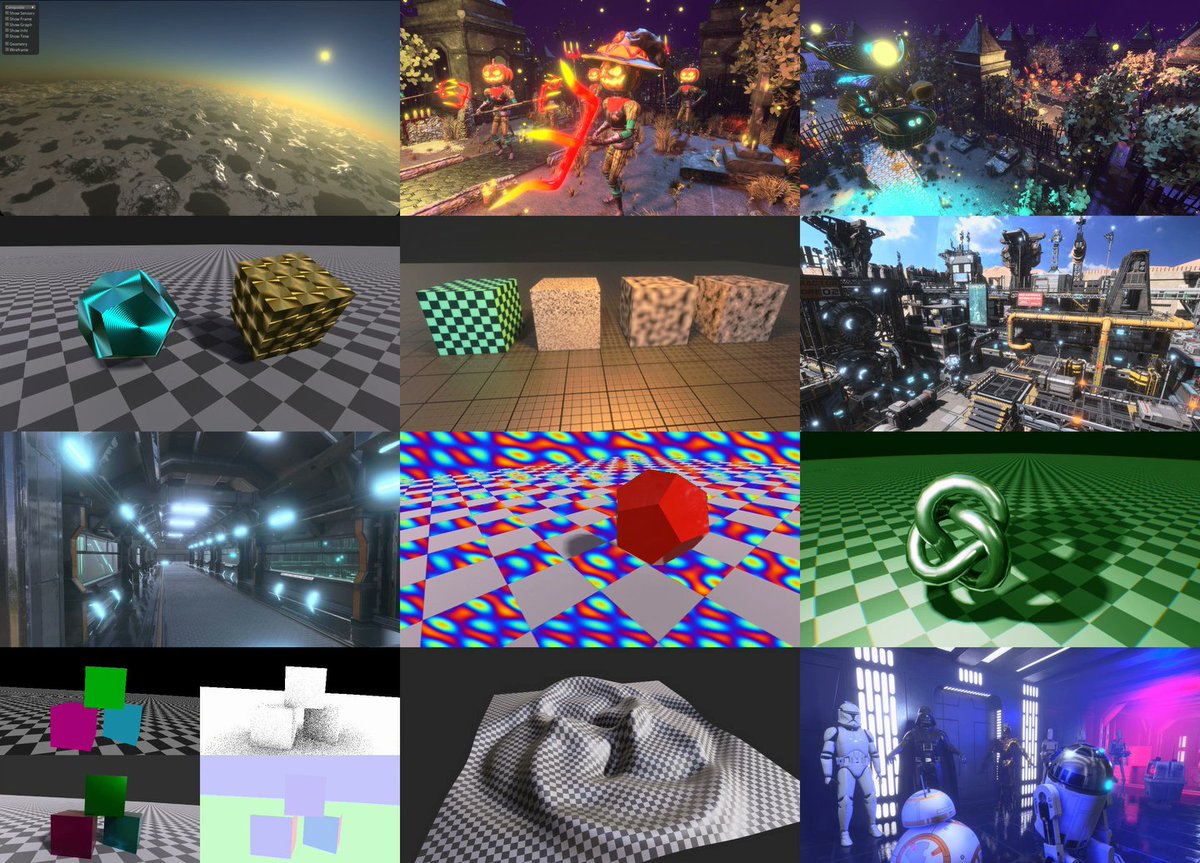
Tellusim SDK 44 is here! It brings support for Apple tvOS platform, MuJoCo physics plugin, an Inverse Kinematics plugin, improved compatibility, real-time state tracking, and major tool and API upgrades. Details: tellusim.com/sdk-44/