fx483 retweetledi
fx483
493 posts

fx483 retweetledi

15 Biases that distort our Decision Making in less than 2 minutes:
1. Confirmation Bias - We interpret new information as confirmation of our existing beliefs.
2. Availability Bias - We tend to rely on information that comes to our mind easily/the quickest.
3. Action Bias - We favor action over inaction. That's why we sell or buy prematurely.
4. Overconfidence - We overestimate our own knowledge and ability.
Paradoxically, we feel more knowledgeable the less we know.
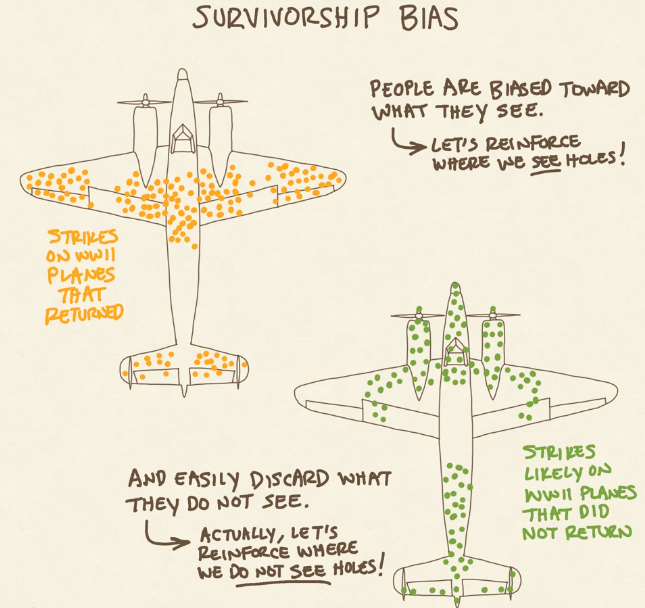
5. Survivorship Bias - This is a sample bias that occurs when we assess only successful outcomes and disregard failures.
6. Self-Serving Bias - Our failures are situational, but our successes are our responsibility.
7. Low-Risk Bias - We tend to reduce small risks to zero, even if we can reduce more risk with another option.
8. Commitment Bias - We avoid decisions that contradict things we have said or done in the past.
9. Dunning-Kruger Effect - The less you know, the more confident you are. The more you know, the less confident you are.
10. Anchoring - Our judgment is heavily screwed by the first information we are given about something.
11. Hindsight Bias - In retrospect, events seem more predictable than they actually were.
12. Loss Aversion - Losses weigh twice as much as the equivalent gain.
Result -> we reject gambles with positive expected values.
13. Halo Effect - You either like or dislike everything about someone or something. Nothing in between.
14. Cause-Effect Fallacy - We love to see cause-effect relationships where none exist.
15. Recency Bias - We tend to put too much weight on recent events.

English
fx483 retweetledi
fx483 retweetledi
fx483 retweetledi

7 Realizations That Changed My Life
1) Nobody is paying attention to you as much as you are to yourself.
That thing that mortifies you? Other people probably don’t even notice.
As the great David Foster Wallace rightly said, “You'll worry less about what people think about you when you realize how seldom they do.”
2) People mistake comfort for happiness—they’re completely different things.
Comfort is a shallow satisfaction with the finer aspects of life. Happiness is a deep contentment with how everything is, including the uncomfortable bits.
3) No one can make you change—you have to choose to change.
No amount of self-help books, coaching, seminars, or Twitter threads will magically hand you a better life—you have to choose to do the painful work to change.
4) Similarly: you can never make anyone else change—they have to choose to change.
So stop trying. You’re not helping, you’re just meddling.
5) You can’t buy happiness. But you can absolutely buy away unhappiness.
Sad but true: You won't be happy starving and freezing to death under a bridge. Happiness can only come once you get the basics of your life in order.
6) Not every problem has to be fixed. Not every disagreement has to be resolved. Not every insecurity has to be conquered.
Choose your battles wisely.
7) If you’re not growing or changing, you’re not living.
Many people in this world are alive, but not living. Don’t be one of them.
For more content that can change your life, sign up to my newsletter. No fluff, no filler, no BS. Just five minutes each week that could potentially change everything. markmanson.net/breakthrough

English
fx483 retweetledi

A concept everyone needs to understand:
The 7 Types of Rest
Burnout has become a common phenomenon of the modern era.
We all need a plan for rest, but there's more to rest than meets the eye.
Author and speaker Dr. Saundra Dalton-Smith proposed that there are 7 Types of Rest:
1. Physical Rest: Can be passive (sleeping, napping) or active (yoga, stretching, massage).
2. Mental Rest: Take short breaks between tasks and meetings, create a power-down ritual to separate work from personal, meditate.
3. Sensory Rest: Turn off social media, get away from screens and bright lights, switch from Zoom to phone call.
4. Creative Rest: Can be natural (taking in a sunrise/sunset, walking in the woods) or man-made (going to a museum, experiencing new music).
5. Emotional Rest: Spend time alone or with people with whom you can be your full, authentic self.
6. Social Rest: Spend less time with people who drain your energy and more time with people who give you energy.
7. Spiritual Rest: Connect with something bigger than yourself. Can be through volunteering, working on a purpose-driven job, or participating in spiritual or faith-based activities.
While this may seem like a lot, you can actually hit multiple types of rest with simple additions to your weekly routine.
For example, adding a daily tech-free walk in nature is a perfect way to hit physical, mental sensory, creative, and emotional rest.
As you think about your days, make sure you are finding ways to incorporate the seven types of rest into your life. You'll feel more comprehensively recharged and ready to take on life's challenges as a result.
Reframe rest and recovery as a core part of your daily systems, not a reward for your efforts.
You don’t need to “earn” your recovery—it should be a central part of your ritual that allows you to thrive.
If you enjoyed this or learned something, follow me @SahilBloom for more in the future.

English

fx483 retweetledi
fx483 retweetledi
fx483 retweetledi
fx483 retweetledi
fx483 retweetledi
fx483 retweetledi
fx483 retweetledi
fx483 retweetledi

10 powerful new AI tools you cannot miss:
1. Rose.ai - Research faster
2. Humata.ai - ChatGPT for your files
3. Perplexity.ai - ChatGPT on steroids
4. Durable.co - Build websites with AI
5. Stockimg.ai - Create images with AI
6. Kickresume.com - AI resume builder
7. Cohesive.so - Create magical content
8. Tldrthis.com - Summarize online content
9. Decktopus.com - AI presentation generator
10. SnackPrompt.com - The best ChatGPT prompts
English
fx483 retweetledi
fx483 retweetledi
fx483 retweetledi
fx483 retweetledi
fx483 retweetledi
fx483 retweetledi