Toni Wahrstätter ⟠@nero_eth
Ethereum has effectively been running in single-lane mode: one long queue of transactions, executed strictly in order. Even with multi-core CPUs, validation stays sequential.
BALs (Block-level Access Lists, EIP-7928) change that. Each block carries a precise map of every account and storage slot it will touch, removing any guesswork during execution.
They also include the post-transaction state diff for every transaction.
Not just what a transaction accesses, but what the state becomes immediately after.
With these diffs, clients can detect conflicts deterministically, resolve dependencies, and execute transactions in parallel.
Parallelism becomes safe, predictable, and consistent across clients.
BALs are slated for the Glamsterdam hardfork in 2026.
This upgrade will be the foundation for several future scalability improvements across the execution layer.
This is how Ethereum scales using the hardware everyone already has: BALs turn single-lane validation into multi-lane execution, unlocking far higher throughput without compromising decentralization.
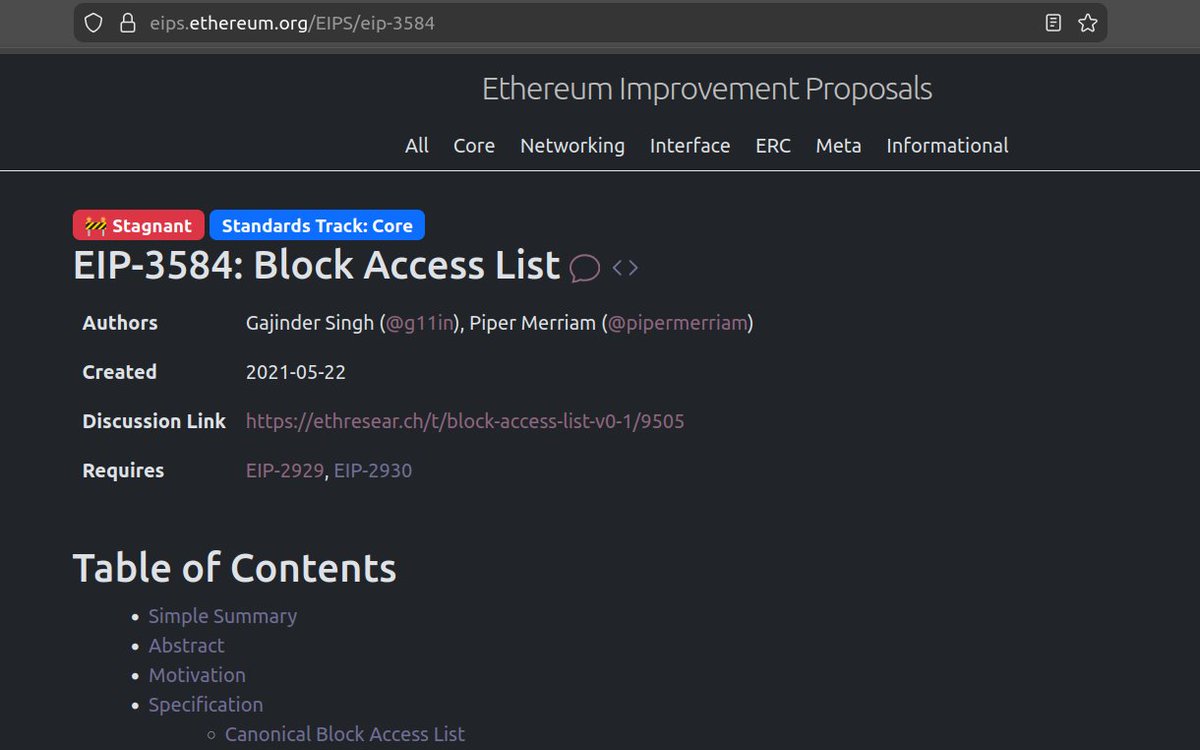
For more, visit blockaccesslist.xyz, read the EIP, or reach out with questions.