Gabriel de Vitto

2.9K posts

Gabriel de Vitto banner
Gabriel de Vitto

Gabriel de Vitto

@ga_devitto

PhD student in Philosophy (@unav). Professor at Faculdade Belavista. Views are my own. «Weil alle Philosophie geschöpfliche Philosophie des Geschöpf» – Przywara

Brazil Katılım Ocak 2021
485 Takip Edilen2.1K Takipçiler
Sabitlenmiş Tweet
Gabriel de Vitto
Gabriel de Vitto@ga_devitto·
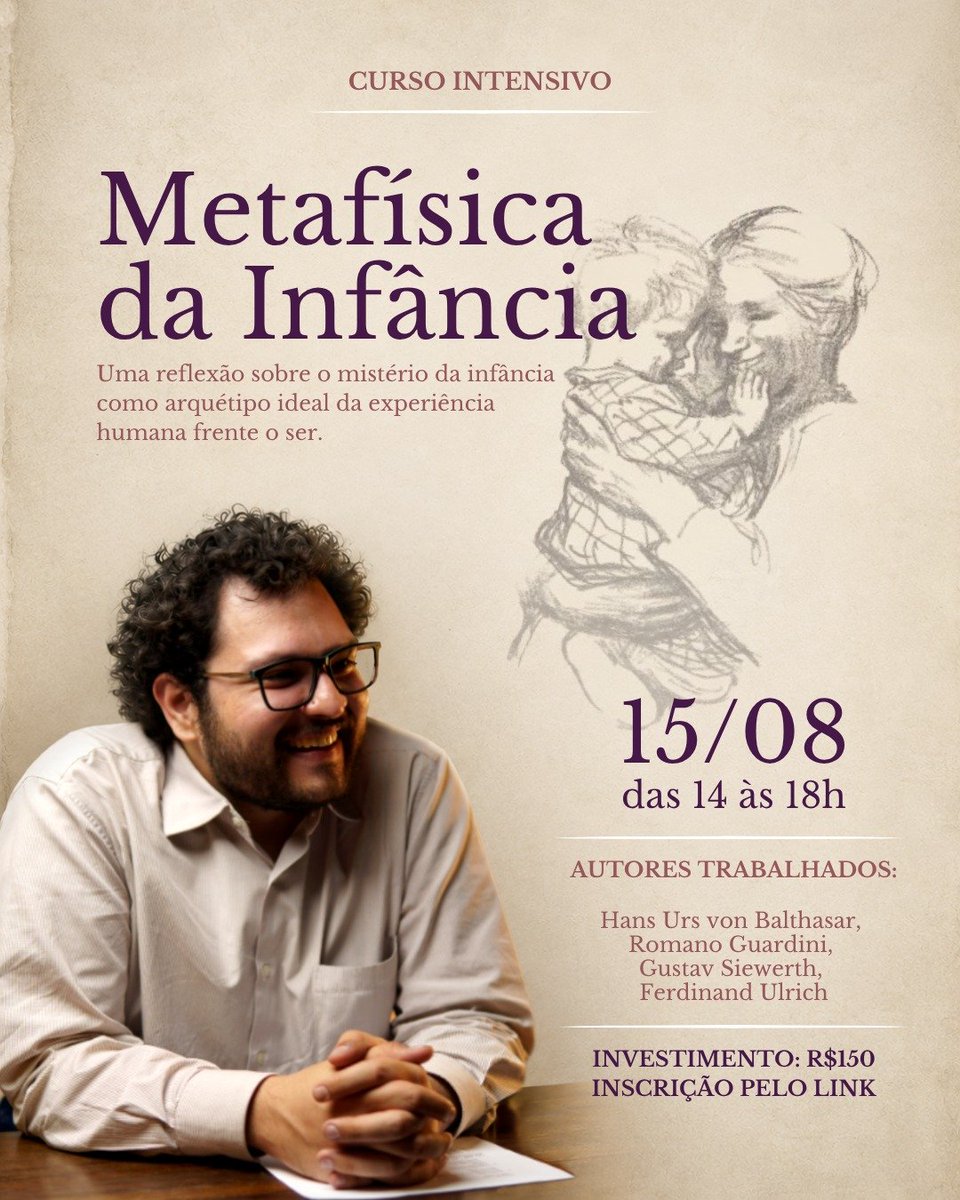
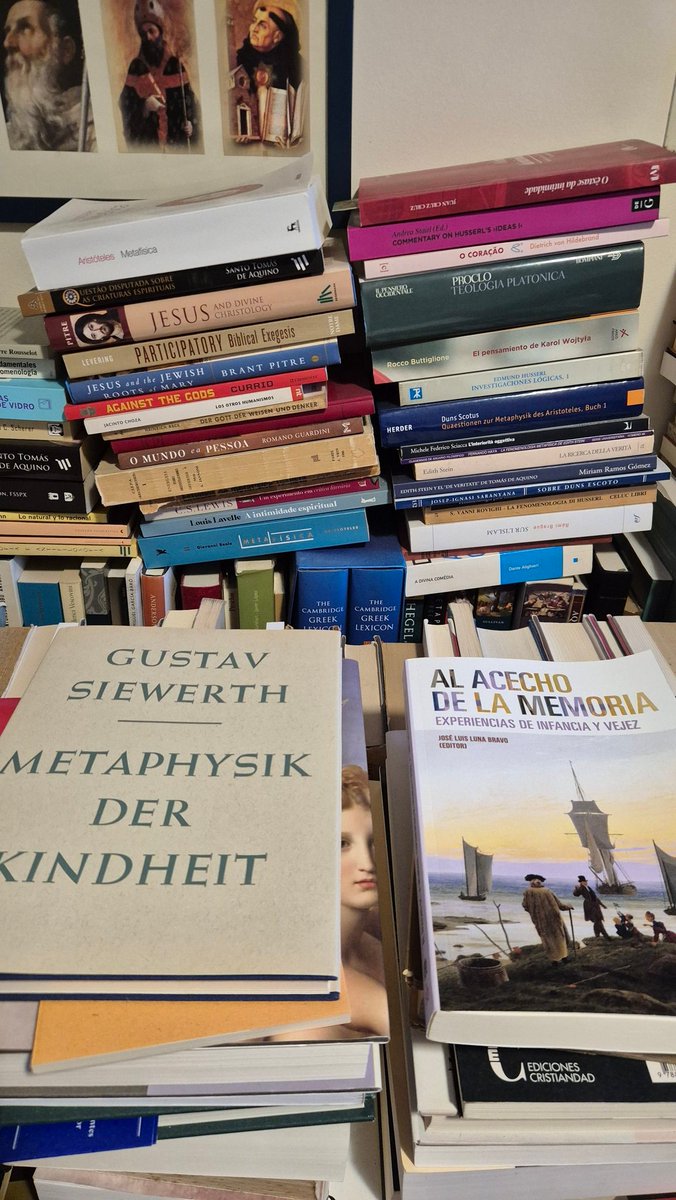
Estou pensando em oferecer um "aulão" sobre a metafísica da infância, baseado nos meus estudos das obras de Gustav Siewerth, Hans Urs von Balthasar, Ferdinand Ulrich e Romano Guardini. O tema é absolutamente fascinante, tanto do ponto de vista filosófico quanto do pessoal e espiritual. Por exemplo, já pararam para pensar o que Jesus realmente quer dizer quando afirma que devemos ser como as crianças para entrar no Reino dos Céus? Além disso, com certeza, também seria de grande proveito para pais e educadores. Enfim, se você tiver interesse, deixe-me saber comentando abaixo!
Gabriel de Vitto tweet media
Português
14
3
59
7K
Dr. João Peculiar
Dr. João Peculiar@sugamosto1·
@vendomonza Muito rara. Meu pai me deu de presente de aniversário em 2008. Acho toda a tradução do Trajano um desastre rítmico
Português
2
0
0
312
Gabriel de Vitto
Gabriel de Vitto@ga_devitto·
@MateusMBruno Fiquei curioso para saber qual é a relação que você viu entre o que está nesse print com o meu comentário
Português
1
0
1
168
Gabriel de Vitto
Gabriel de Vitto@ga_devitto·
Se eu tivesse notícia do cristianismo apenas por esse evangelicalismo, provavelmente me tornaria neoplatônico ou budista mahayana – a depender se venceria em mim a tendência ao idealismo objetivo ou ao idealismo subjetivo. Aliás, isso é um ponto central: o catolicismo, enquanto Analogia Incarnationis, dos sacramentos à liturgia e à dogmática, é a maior salvaguarda do realismo. Os outros sistemas religiosos tendem para os extremos do nominalismo ou do idealismo.
João Figueiredo@joaofig

Não sabia que a ideia de Jesus era estabelecer um sistema de castas dentro da igreja, com área VIP e sofá

Português
6
7
115
9.5K
Conor Stark
Conor Stark@StarkConor·
Rousseau, Kant, and especially Hegel are the philosophers who have done the most to make the larger aims and motivations of “modern philosophy” cogent and appealing to me. Dismissing any of them as superficial, or rejecting them without admiration, says a great deal about a person—and not in a good way.
English
9
1
50
3.5K
Gabriel de Vitto
Gabriel de Vitto@ga_devitto·
And yet, there are not enough resources to handle all the potential canonization processes, given the large number of holy lives that Opus Dei produces. In my archdiocese of São Paulo alone, there are four causes that could be opened – one of them, in fact, being a diocesan priest of the Priestly Society of the Holy Cross.
English
0
0
7
530
Gabriel de Vitto
Gabriel de Vitto@ga_devitto·
@HelkeinFilo Ponto para a hermenêutica. Só o contexto pode salvar a certeza em casos assim.
Português
0
0
2
81
Gabriel de Vitto
Gabriel de Vitto@ga_devitto·
@StarkConor It has always struck me that Aristotle's criticism is aimed much more at what Plato left unsaid – but which, in his view, he ought to have said – and at what he did not formulate well enough, than at systematic disagreements
English
1
0
7
375
Conor Stark
Conor Stark@StarkConor·
In Posterior Analytics I.11, Aristotle explicitly distinguishes what the Platonists call Forms (εἴδη) from what he calls the “the universal” (τὸ καθόλου). This distinction needs to be kept in mind when attending to criticisms (including Aristotle’s own in Meta., Zeta) which are based on the assumption that, for the Platonists, the Forms just are universals. Aristotle knows better. The better question is “why does he choose to present Forms this way in Zeta?”. The text from APo: “It is not necessary, if there is to be demonstration, that there be Forms (eide) or something one apart from the many; however, it is necessary to say truly one thing of many. For if this is not so, there will not be a universal, but if there is not a universal, there will not be a middle, so that neither will there be demonstration. Thus it is necessary that there be something one and the same, [and] not equivocally, for the many.” (77a5-9)
English
6
7
49
3.1K
Gabriel de Vitto
Gabriel de Vitto@ga_devitto·
«The great burning problem of uniting the truth-core of historical relativity and development with the unavoidable idea of a world of absolute truth and values will, in our view, only be resolved if Scheler's thought of the "personal idea" — in Suarez's language, the "possibile individuale" — is united with the thought of the "una substantia" of St. Thomas. In this way, the moment of the "individuum ineffabile" is transposed into the absolute world of ideas itself, while on the other hand it unfolds as the "essential form" (Wesensform) of physical and psychophysical life through and in actual life itself. Thus "idea" and "reality" fall as it were into one». – Erich Przywara, Religionsbegründung: Max Scheler–J. H. Newman
English
0
1
5
392
Gabriel de Vitto
Gabriel de Vitto@ga_devitto·
@textkritik I have already done that: the first edition of Adolf Reinach in Portuguese (my native language) is mine. However, unfortunately, there are very clear limits to what someone can accomplish alone.
English
1
0
1
134
Institut für Textkritik
@ga_devitto First thing I learned from my publisher … do not complain, work until you have light. If you find it urgent to edit Przywara write and discuss a plan, publish it and then begin. Nobody has an interest to stop you. Your plan must convince the publisher, and that’s it.
English
1
2
7
349
Gabriel de Vitto
Gabriel de Vitto@ga_devitto·
The fact that an edition of Erich Przywara's complete works has not yet been published - not even in German! - is one among several clear indications that we are failing to preserve and disseminate the vitality and originality of our Catholic intellectual tradition, given that, meanwhile, there are dozens of new editions of Freud, Heidegger, Foucault...
English
3
2
51
7.6K
Gabriel de Vitto
Gabriel de Vitto@ga_devitto·
@StarkConor Absolutely. There should be, at the very least, something analogous to Migne's edition of the Church Fathers. Btw, thinking about this makes me realize just how important and commendable the Sources Chrétiennes project was.
English
0
0
4
304
Conor Stark
Conor Stark@StarkConor·
@ga_devitto I think we need to get the scholastics out too. Albert’s editions are coming along, but many still lack solid critical editions.
English
3
0
11
559
Gabriel de Vitto
Gabriel de Vitto@ga_devitto·
@luccaqui_ Acho que o principal ponto aí é a diferença de jurisdição canônica: enquanto a FSSPX é só um grupo de sacerdotes se autogerenciando segundo seus critérios heréticos, o "sínodo" alemão é composto por metade (talvez mais) das dioceses legitimamente constituídas da Alemanha.
Português
2
0
10
927
Lucca de Santo Tomás
Lucca de Santo Tomás@luccaqui_·
Sem querer diminuir o peso das prováveis ações da FSSPX, que são gravíssimas e merecem correção, mas é patética essa invocação da autoridade eclesiástica, no melhor estilo Concílio de Trento e Contra-reforma com a FSSPX enquanto a igreja alemã e “sinodal” caminha livremente.
Português
18
19
193
7.1K
Gabriel de Vitto
Gabriel de Vitto@ga_devitto·
«Die »Transzendentalien«, in denen eine echte Logos-Philosophie als echter »Transzendentalismus« sich konstituiert, sind (weil alle Philosophie geschöpfliche Philosophie des Geschöpfes ist) nicht »reine Wahrheit in reinem Denken«, sondern »transparente Wahrheit in umwegigem Gleichnis«; – nicht »reines Gut in reiner Verwirklichung«, sondern »transparentes Gut in Ärgernis und Anstoß«; – nicht »reine Schönheit in reiner Anschauung«, sondern »transparente Schönheit in entstellter Mißgestalt« (oder zum mindesten in jener »Fragilität«, in der gerade ein »klassisch Vollendetes« jeweils unmittelbar zum »Scherbenhaufen« seiner selbst steht)». – Erich Przywara, Mensch: typologische Anthropologie
Deutsch
0
3
16
932
Gabriel de Vitto retweetledi
ACI Digital
ACI Digital@acidigital·
O arcebispo do Rio de Janeiro (RJ), cardeal Orani João Tempesta, anunciou na reunião do Conselho Arquiepiscopal no dia 5 de maio a abertura da causa de beatificação do monge beneditino dom Estêvão Bettencourt, fundador da revista Pergunte e Responderemos. Segundo o vigário episcopal para a vida consagrada e delegado arquidiocesano para a causa dos santos da arquidiocese do Rio, dom Roberto Lopes, OSB, o desejo da abertura do processo de beatificação de dom Estêvão Bettencourt não é recente. Ele contou ao jornal Testeumunho de Fé, da arquidiocese, que em 2015 houve uma primeira tentativa de encaminhar o processo, inclusive com coleta de assinaturas e manifestações de apoio. Mas, “dificuldades estruturais e administrativas impediram o avanço naquele momento”, diz o jornal. Agora, diz o jornal, “com a aprovação do Capítulo e do Conselho da Abadia, a causa ganha novo impulso”. O Mosteiro de São Bento vai assumir formalmente o papel de autor da causa e a arquidiocese do Rio de Janeiro vai conduzir as etapas iniciais em comunhão com Roma. “É hora de começar a articular a documentação e preparar o envio para que seja avaliada a possibilidade da abertura oficial”, disse dom Roberto. O Mosteiro de São Bento do Rio de Janeiro disse, em suas redes sociais, acolher “esta etapa com fé e confiança, pedindo ao Senhor que, se for da sua vontade, glorifique em nosso irmão aquilo que a graça operou ao longo de uma vida inteiramente dedicada a Deus e à Igreja”. 🔗 Leia mais: ow.ly/1UwL50YXRXL 📌 Siga @acidigital para mais conteúdo católico.
ACI Digital tweet media
Português
3
46
296
4.1K
Kau
Kau@dreikasehoch01·
Hegel é o bruxo malvado esotérico que roubará sua alma e Kant é o amiguinho do lado bom da força
Luiz Carlos@luizcbasilio

Hegel, sem dúvida, parecia influenciado por algo de demoníaco; não só por beber fartamente de correntes esotéricas, por (ao que tudo indica) ter sido iniciado em algumas seitas, mas também porque toda a sua "filosofia" opera como uma espécie de "feitiçaria", poderosíssima e capaz de sequestrar até mesmo grandes mentes como a de Vladimir Soloviov, que em vão tentou harmonizá-la ao cristianismo. Kant, por outro lado, era uma mente brilhante e um grande epistemólogo; filósofo, porém, tragicamente limitado pelo próprio contexto. Seu maior defeito era, indiscutivelmente, a húbris, a arrogância intelectual que primeiro surge com grande força em Descartes e passa então a ser um "padrão" na modernidade filosófica. Se Kant tivesse tido acesso à verdadeira filosofia escolástica, e não à medíocre Schulmetaphysik de sua época, poderia ter deixado um legado positivo, uma genuína contribuição; porém, ainda assim faltava-lhe, inegavelmente, aquela velha humildade socrática e o anseio contemplativo. Isso fica evidente em várias partes da Kritik der reinen Vernunft, mas me choca em especial a arrogância com que ele anuncia ter colocado a metafísica na "via segura de uma ciência" e quando declara que o maior risco que corre não é ser refutado, mas sim não ser compreendido ("...denn widerlegt zu werden, ist in diesem Falle keine Gefahr, wohl aber, nicht verstanden zu werden..."), escancarando sua confiança absoluta e inabalável diante de qualquer objeção externa (comportamento que os kantianos fervorosos vão reproduzir quando alguém ousa criticar o velho filósofo de Königsberg). Kant, apesar de todo seu brilhantismo, epitomiza uma atitude antifilosófica inaugurada por Descartes. Este, por sua vez, sabidamente ocultava detalhes de sua própria biografia, como o número de livros em sua biblioteca, para sustentar a imagem de gênio independente de influências (como se ser "apenas" um gênio matemático não lhe bastasse...). Ou seja, o "triunvirato" moderno (Descartes, Kant e Hegel) está inteiramente imerso nesses vícios escabrosos — e, claro, haverá quem me acuse de ad hominem por apontá-los, como se um filósofo se pudesse dissociar de sua vida particular e das suas intenções quando compõe uma obra filosófica. Autores posteriores seguirão o mesmo caminho. Wittgenstein, para citar uma referência moderna e medíocre, muito aquém daqueles, mas que é referência para muitos, arrogará para si o título de "solucionador da filosofia" e, da mesma forma, terá uma vida conturbadíssima e viciosa, que muito se distanciará do Sócrates que se sacrificou pela filosofia, de Platão que vivia quase como um asceta, de um Pitágoras que amava a contemplação da sabedoria, para não citar os santos filósofos, como Santo Agostinho e Santo Tomás, e mesmo homens exemplares como Boécio, Suhrawardi, entre muitos outros, todos anteriores à modernidade, que compreendiam ser a filosofia uma atividade que não se podia dissociar da vida pessoal, uma atividade formadora cujo resultado é a transformação e a contemplação da Verdade. Por fim, retornando a Hegel, que eu já critiquei aqui extensivamente em outros posts, ele era, seguramente, um gênio louco, um gnóstico moderno na acepção mais precisa do termo. A Phänomenologie é insuportável de ler, mesmo no original alemão, pois a cada momento ele absorve (ou, poder-se-ia dizer, parasita) termos e estruturas de Jakob Böhme e Mestre Eckhart, fundindo-os a um neoplatonismo degenerado, à cabala luriânica, ao hermetismo e a elementos da alquimia. É justamente esse esforço gnóstico de "aprisionar" a totalidade do real no conceito que torna sua leitura tão intragável e desnorteante para qualquer um que resolva lê-lo como um filósofo sério e "honesto" (como um Platão ou um Santo Tomás, por exemplo, filósofos cuja intenção era nítida, que toda a obra visa levar os outros ao conhecimento contemplativo da Verdade) e acabe ignorando os vários "níveis" do hegelianismo, tomando apenas o texto e o "hegelianismo de superfície" como únicos. Sem todo esse contexto, é quase impossível compreendê-lo para além daquele Hegel vulgar e acadêmico. Há, ainda assim, muito de valioso na filosofia hegeliana (o que a distingue da aridez kantiana e dos erros crassos de Descartes), justamente porque Hegel bebe dessas várias fontes e realiza uma síntese filosófica brilhante. Como afirma D'Hondt, e eu subscrevo em parte: "Hegel détenait la pierre philosophale, il changeait immédiatement en or précieux toutes les espèces vulgaires qu'on lui confiait. L'évocation de quelques antécédents parcellaires de l'Hégélianisme fera mieux resplendir sa richesse propre. Elle soulignera davantage encore la puissance et l'originalité d'une philosophie capable d'absorber et de dépasser avec la même aisance les systèmes les plus majestueusement composés et les intuitions rapsodiques glanées dans des œuvres inégales." Em suma, Descartes, Kant e Hegel formam o triunvirato da degeneração filosófica moderna; são, sem dúvida, filósofos muito inferiores aos maiores do período clássico, como Platão e Aristóteles, e aos grandes escolásticos. É verdade que o declínio da filosofia já preexistia na escolástica tardia, mas foi por eles consolidado e radicalizado. Foram os principais deformadores do pensamento e os que mais pesaram sobre as gerações seguintes, as quais (salvo raras e valiosas exceções) abandonaram a contemplação e o projeto socrático para se fecharem em vícios abstratistas e labirintos puramente mentais. Todavia, a filosofia sempre dá um jeito de "se reinventar". Com a morte de Platão e Aristóteles, só muito tempo depois a filosofia se reergueu depois da queda helenística. Da mesma forma, verdadeiros filósofos surgirão em todas as épocas, e nem mesmo esse triunvirato devastador poderia condenar à esterilidade completa toda a filosofia.

Português
6
2
47
2.2K
Gabriel de Vitto
Gabriel de Vitto@ga_devitto·
The core problem is that Aquinas read the ontological argument as a demonstrative deductive inference. At its heart, it's a Wesensschau, but not an intuition of the divine essence as divine nature. Aquinas is completely right that a finite intellect cannot achieve that. What Anselm, Bonaventure, and the phenomenological commentators I'm citing are pointing to is an eidetic intuition of the structure and order of the divine essence as "nihil maius", and concretely, of existence as its maximum perfection. The finite mind cannot grasp God's essence qua essence, but it can intuit that essence in its eidetic intelligibility– in its "perfectio pura" – and in particular, that existence is not a contingent predicate but the supreme perfection itself. That's the actual line of the argument. Ironically, what makes this interesting is that what Aquinas feared the argument would become – a purely rationalist construction – is exactly what it became in modernity, with Descartes and the others.
English
1
1
1
172
eademsententia
eademsententia@eademsententia·
@ga_devitto Anselm fails to bridge the gap between the real order and the mental order, all of the premises include mental being, yet somehow the conclusion arrives at real being. Aquinas's critique stands.
English
1
0
1
195
Gabriel de Vitto
Gabriel de Vitto@ga_devitto·
The versions of the Ontological Argument by Seifert and Rogelio Rovira, based on the phenomenological reading of St. Anselm and St. Bonaventure, show that St. Thomas's rejection of the "aliquid quo nihil maius cogitari possit" is one of the rare cases where he demonstrates a failure to grasp the rival argument – perhaps to show us that his intellect is finite, just like ours.
Dr. Scott M. Sullivan@DrScotMSullivan

Coming in Fall of 2026

English
5
8
98
7.6K
Gabriel de Vitto
Gabriel de Vitto@ga_devitto·
@AleMartnezR1 Seifert, Gott als Gottesbeweis (1996; 2nd ed. 2000); Seifert, "'Si Deus est Deus, Deus est'," Franciscan Studies 52 (1992); Seifert, Quinque Viae Amoris ad Deum (IAP Press); Rovira, La fuga del no ser (1991; rev. ed. San Dámaso, 2024).
Català
1
0
1
178
Natural Theist
Natural Theist@AleMartnezR1·
Any book discussing Seifert and Rovira on the Ontological argument? Sadly, Aquinas failed. His main objection was to say that we cannot grasp God's essence. Something Anselm did not pretend to achieve, nor his argument. Anselm, wanted to prove with logical certainty, that Gods existence cannot be denied without contradiction, and his non-existence is impossible by logical means.
English
2
0
4
401