

Gabriel Menchaca
6.1K posts

Gabriel Menchaca
@gabrielmnchc
"If I speak what is false, I must answer for it; if truth, it will answer for me." Husband | Father | Friend | Pastor #goodfightcc
Los Angeles, CA Katılım Nisan 2009
1K Takip Edilen946 Takipçiler
Gabriel Menchaca retweetledi

A little personal health update.
On Tuesday, I saw my doctor, who ordered an emergency MRI because of some symptoms I was experiencing. When the results came back today, she told me to go straight to the ER—which I did.
Since then, the medical team has been moving quickly (and very professionally), and I'm now admitted to the hospital.
After several tests today, I'll undergo a spinal angiogram tomorrow.
Depending on what they find, the angiogram will help determine the next step in treatment, which could include a procedure right then, surgery, or another approach.
The doctors are continuing to determine the cause of what are now confirmed to be spinal cord issues.
It's been sobering to see how seriously the doctors are taking this situation, and I'd be grateful for your prayers—for healing or a treatable outcome, for wisdom for the medical team, and for a clear diagnosis.
And, I'm down 120lbs from six years ago, and I really want to get back to hiking soon!
Thank you so much.

English
Gabriel Menchaca retweetledi

Meta now lets anyone use your Instagram photos in AI images without your consent. SAG-AFTRA recommends that #SagAftraMembers (and all Instagram users) opt-OUT of Meta’s new AI image generation tool, Muse Image. Take action to protect your likeness.

English
Gabriel Menchaca retweetledi

Parents, we must stay vigilant.
A deeply concerning video has surfaced showing Ty'Heim Clark, widely known as "The Childcare Whisperer," wearing a dress and high heels while telling a group of young children that their parents cannot be trusted.
This is a direct, open attempt to drive a wedge between parents and their children. When prominent industry figures look kids in the eye and tell them to distrust the very people God gave to protect and guide them, it crosses a dangerous line. This is a deliberate effort to separate children from the authority and protection of their parents.
Scripture clearly establishes that parents—not outside influencers—are responsible for instructing and shielding their children. Anyone trying to break that bond is an immediate red flag.
We cannot afford to look the other way while people try to groom the next generation into distrusting their own families. You are the first line of defense for your household.
Let me know your thoughts in the comments.
@libsoftiktok @SarahisCensored @coulterculture
English
Gabriel Menchaca retweetledi


Gabriel Menchaca retweetledi


Gabriel Menchaca retweetledi

🚨#BREAKING: A German soccer fan who flew to the USA but was fearful about coming because of news about criminals and people being mean...
...breaks down into TEARS, live on air saying he has FALLEN IN LOVE with America after a random man named "Bob" in Boston gave him a ride home after he was stuck at a game with no way back to his hotel
The German soccer fan's name is Sebastian, he said after meeting Bob, he extended his entire trip.
He said leaving America will hurt worse than watching Germany get knocked out of the World Cup.
"I fall in love with America. I'm sorry, it's just so emotional. Americans are not rude... if we are together, we can achieve great things."
THIS IS THE AMERICA I KNOW!!!!!! 🇺🇸🇺🇸🇺🇸
English
Gabriel Menchaca retweetledi
The greatest compliment isn’t being admired by strangers.
It’s being deeply respected by the people who know you best.
English
Gabriel Menchaca retweetledi
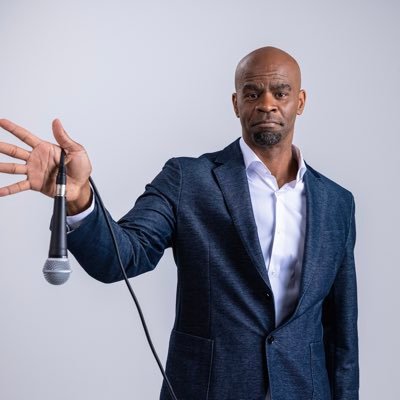
How did Jesus find you?
Check out my YouTube channel for more laughs and inspiration! ↪️
bit.ly/MichaelJrYouTu…
English
Gabriel Menchaca retweetledi
If you have to constantly convince people you’re a leader, you’re probably trying too hard.
Credibility is earned, not announced.
English
Gabriel Menchaca retweetledi

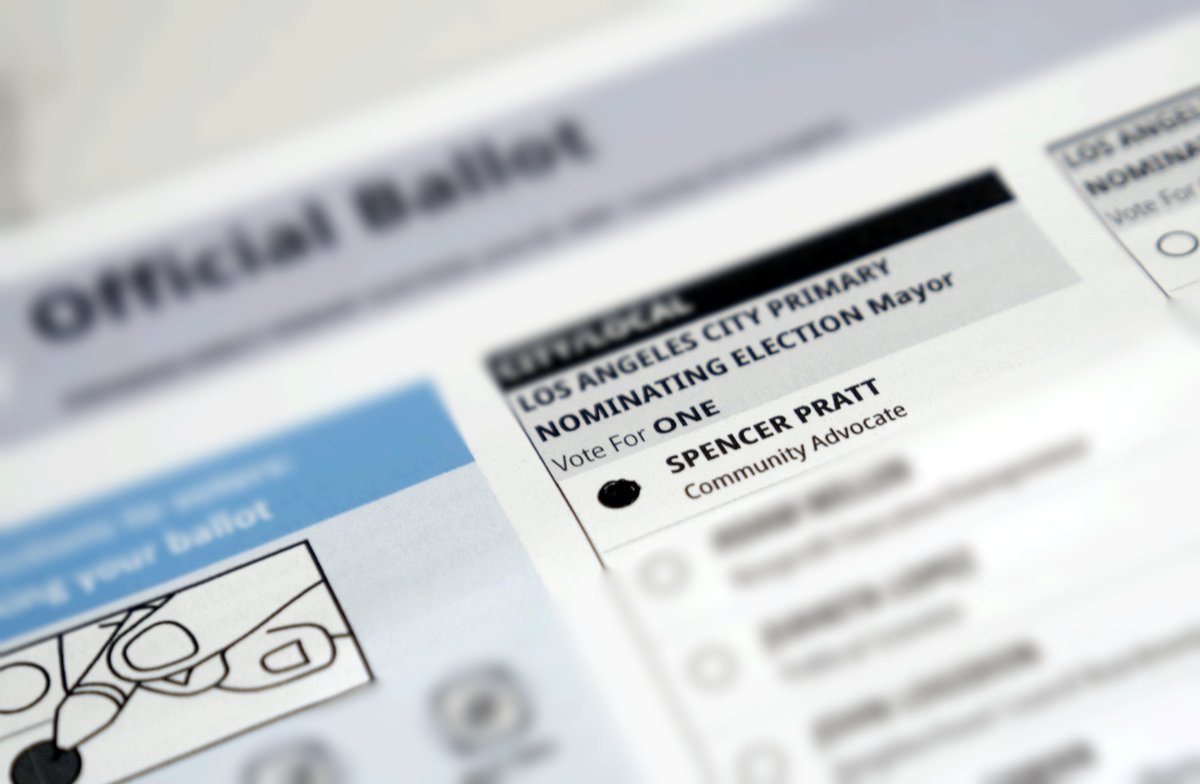
Everyone is trying to claim me for their tribe. There’s no R next to my name, there’s no D next to my name. I’m not part of a political party, because I hate politicians. I’m just Spencer, husband to Heidi, father to Ryker and Gunner, and I’m a pissed off Angeleno who loves my city and is fed up with what corrupt politicians have done to her.
English
Gabriel Menchaca retweetledi

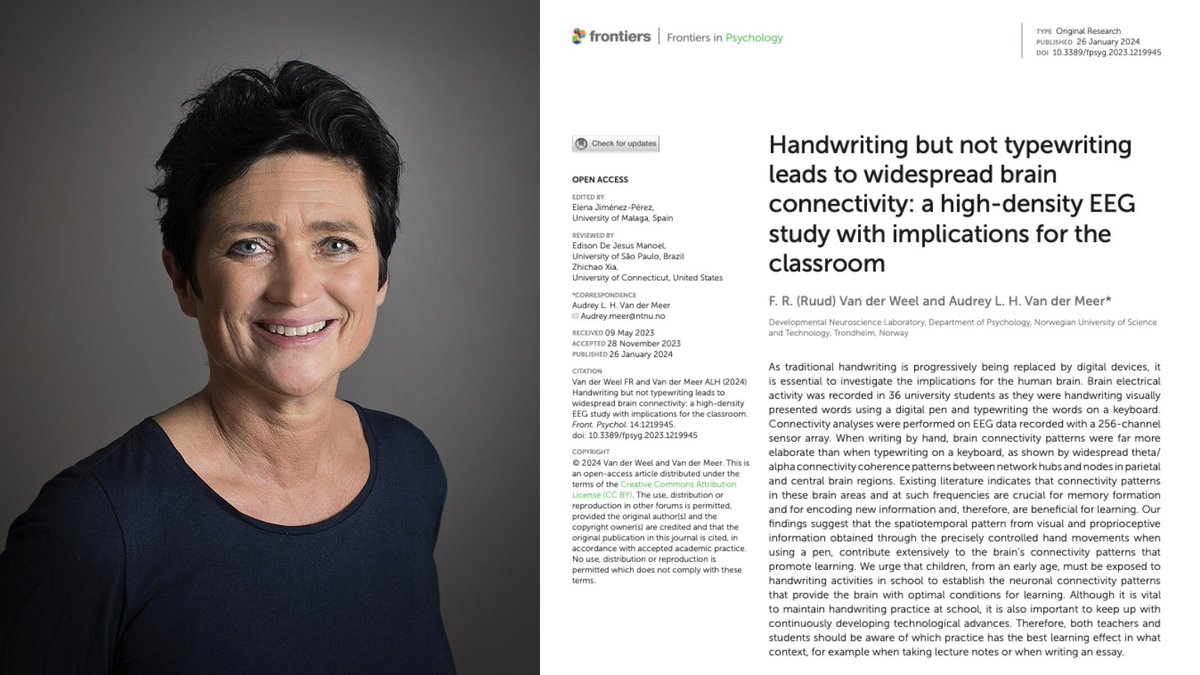
A Norwegian neuroscientist spent 20 years proving that the act of writing by hand changes the human brain in ways typing physically cannot, and almost nobody outside her field has read the paper.
Her name is Audrey van der Meer.
She runs a brain research lab in Trondheim, and the paper that closed the argument was published in 2024 in a journal called Frontiers in Psychology. The finding is brutal enough that it should have changed every classroom on Earth.
The experiment was simple. She recruited 36 university students and put each one in a cap with 256 sensors pressed against their scalp to record brain activity. Words flashed on a screen one at a time.
Sometimes the students wrote the word by hand on a touchscreen using a digital pen, and sometimes they typed the same word on a keyboard. Every neural response was recorded for the full five seconds the word stayed on screen.
Then her team looked at the part of the data most researchers had ignored for years, which is how different parts of the brain were communicating with each other during the task.
When the students wrote by hand, the brain lit up everywhere at once.
The regions responsible for memory, sensory integration, and the encoding of new information were all firing together in a coordinated pattern that spread across the entire cortex. The whole network was awake and connected.
When the same students typed the same word, that pattern collapsed almost completely.
Most of the brain went quiet, and the connections between regions that had been alive seconds earlier were nowhere to be found on the EEG.
Same word, same brain, same person, and two completely different neurological events.
The reason turned out to be something nobody had really paid attention to before her work. Writing by hand is not one motion but a sequence of thousands of tiny micro-movements coordinated with your eyes in real time, where each letter is a different shape that requires the brain to solve a slightly different spatial problem.
Your fingers, wrist, vision, and the parts of your brain that track position in space are all working together to produce one letter, then the next, then the next.
Typing throws all of that away. Every key on a keyboard requires the exact same finger motion regardless of which letter you are pressing, which means the brain has almost nothing to integrate and almost no problem to solve.
Van der Meer said it plainly in her interviews.
Pressing the same key with the same finger over and over does not stimulate the brain in any meaningful way, and she pointed out something that should scare every parent who handed their kid an iPad.
Children who learn to read and write on tablets often cannot tell letters like b and d apart, because they have never physically felt with their bodies what it takes to actually produce those letters on a page.
A decade before her, two researchers at Princeton ran the same fight using a completely different method and ended up at the same answer. Pam Mueller and Daniel Oppenheimer tested 327 students across three experiments, where half took notes on laptops with the internet disabled and half took notes by hand, before testing everyone on what they actually understood from the lectures they had watched.
The handwriting group won by a wide margin on every question that required real understanding rather than surface recall.
The reason was hiding in the transcripts of what the two groups had actually written down.
The laptop students typed almost word for word, capturing more total content but processing almost none of it as they went, while the handwriting students physically could not write fast enough to transcribe a lecture in real time, which forced them to listen carefully, decide what actually mattered, and put it in their own words on the page.
That single act of choosing what to keep was the learning itself, and the keyboard had quietly skipped the choosing and skipped the learning along with it.
Two studies. Two countries. Same answer.
Handwriting makes the brain work. Typing lets it coast.
Every note you have ever typed instead of written went into your brain through a thinner pipe. Every meeting, every book highlight, every idea you captured on your phone instead of on paper was processed at half depth.
You did not forget those things because your memory is bad. You forgot them because typing never woke the part of the brain that would have made them stick.
The fix is the thing your grandmother already knew.
Pick up a pen. Write the thing down. The slower road is the faster one.
English
Gabriel Menchaca retweetledi

“Seeing the same faces doing the same things, all with the same unbearable smiles, is a harsh reminder that the machine will go on, whatever the cost,” a high-ranking SBC employee told senior writer Robert Downen after abuse reforms died. “Was any of it worth it? Did any of it matter?” texasmonthly.com/news-politics/…
English
Gabriel Menchaca retweetledi

Hello gang. I was invited to a secret meeting and was shown photo evidence of extraterrestrial life. I wasn’t sure what to do with these photos as I believe many are not ready! But, I feel the time is now to release it. Don’t allow yourself to be shaken. If it bleeds, we can k*ll it.


English
Gabriel Menchaca retweetledi
Gabriel Menchaca retweetledi
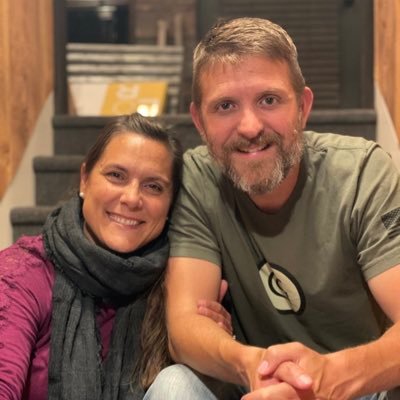
Dads…hit me today…imagine your little girl falling for an unscrupulous young man with no ambition and ill-intentions.
Terrifying.
So, get to work. Win her heart. Show her what it means to be loved by a good man. So she’ll know one when she finds one.
You got this, dad 🫵🏼
English
Gabriel Menchaca retweetledi
A community college professor taught the same study skills lecture for 30 years, and the video quietly became one of the most watched educational recordings on the internet.
His name is Marty Lobdell. He spent his career as a psychology professor watching students fail not because they were lazy, but because nobody had ever taught them how their brain actually works under the pressure of learning something hard.
The lecture is called "Study Less Study Smart." Over 10 million views. Passed around in Reddit threads, Discord servers, and university study groups for over a decade. And the core insight buried inside it has been sitting in cognitive psychology research for years, waiting for someone to explain it in plain language.
Here is the framework that completely changed how I think about effort.
Your brain does not sustain focus the way you think it does. Studies tracking real students found that the average learner hits a wall somewhere between 25 and 30 minutes.
After that, efficiency doesn't just decline. It collapses. You're still sitting at your desk, still looking at the page, but almost nothing is going in.
Lobdell illustrated this with a student he knew personally. She set a goal of studying 6 hours a night, 5 nights a week, to pull herself out of academic probation. Thirty hours of studying per week. She failed every single class that quarter.
She wasn't failing because she lacked effort. She was failing because she had confused time spent near books with time spent actually learning. The 25-minute crash hit her at 6:30pm every night. She spent the next five and a half hours sitting in the wreckage of her own focus and calling it studying.
The fix sounds almost too simple. The moment you feel the slide, stop. Take five minutes. Do something that actually gives you a small reward. Then go back. That five-minute reset returns you to near full efficiency. Across a six-hour window, the difference is not marginal. It is the difference between thirty minutes of real learning and five and a half hours of it.
The second thing he taught destroyed something I had believed about how memory actually works.
Highlighting feels productive. Going back over your notes and recognizing everything feels like knowing. But recognition and recollection are two completely different cognitive processes, and your brain is very good at making you confuse them.
You can see something you've read before and feel completely certain you understand it, even when you couldn't reconstruct a single sentence from memory if the page were blank.
He proved this live in the room. He read 13 random letters to his audience. Almost nobody could recall them. Then he rearranged the same 13 letters into two words: Happy Thursday. The whole room got all 13 without effort.
Same letters. Same count. The only thing that changed was meaning.
The brain stores meaning. Not repetition. The moment new information connects to something you already understand, the retention changes entirely.
This is what the cognitive psychology literature calls elaborative encoding, and it is the mechanism underneath every effective study technique.
The third principle was the one that hit me hardest, and the one almost nobody applies.
Lobdell cited research showing that 80 percent of your study time should be spent in active recitation, not passive reading. Close the material. Say it back in your own words.
Teach it to someone else, or to an empty chair if no one is around. The struggle of retrieval is where the actual learning happens. Reading your notes again is watching someone else do the work.
His parting line has stayed with me longer than almost anything else I have read about learning.
He told the room that if what he shared didn't change their behavior, they hadn't actually learned it. It would just live in their heads as something they had heard once and felt good about.
He was right. And most people leave every lecture exactly like that.
The students who remember everything aren't putting in more hours.
They stopped confusing the feeling of studying with the fact of it.
English
Gabriel Menchaca retweetledi

President Donald J. Trump delivers a message on Holy Week ✝️
'Happy Easter to all, may God bless you, may God bless the United States of America.'
English
Gabriel Menchaca retweetledi
This is what we want our city to know about Jesus (which is why we put this sign up on Hollywood Blvd.) He is risen!

English
Gabriel Menchaca retweetledi

A church switched from giving branded mugs to first-time visitors to donating meals to a local rescue mission in their name.
Their connect card completion rate went from roughly 15% to almost 95% (@refugechurchlc on IG).
The gift changed from "here's our logo" to "we did something meaningful on your behalf." Turns out their community responded to generosity, rather than merchandise.
English