O maior delírio coletivo nesse momento pré convocação é estarem normalizando a presença de Igor Thiago na lista final.
Não existe cogitar deixar Rayan, Endrick e até Neymar fora da Copa pra levar ele.
Introducing Alterego: the world’s first near-telepathic wearable that enables silent communication at the speed of thought.
Alterego makes AI an extension of the human mind.
We’ve made several breakthroughs since our work started at MIT.
We’re announcing those today.
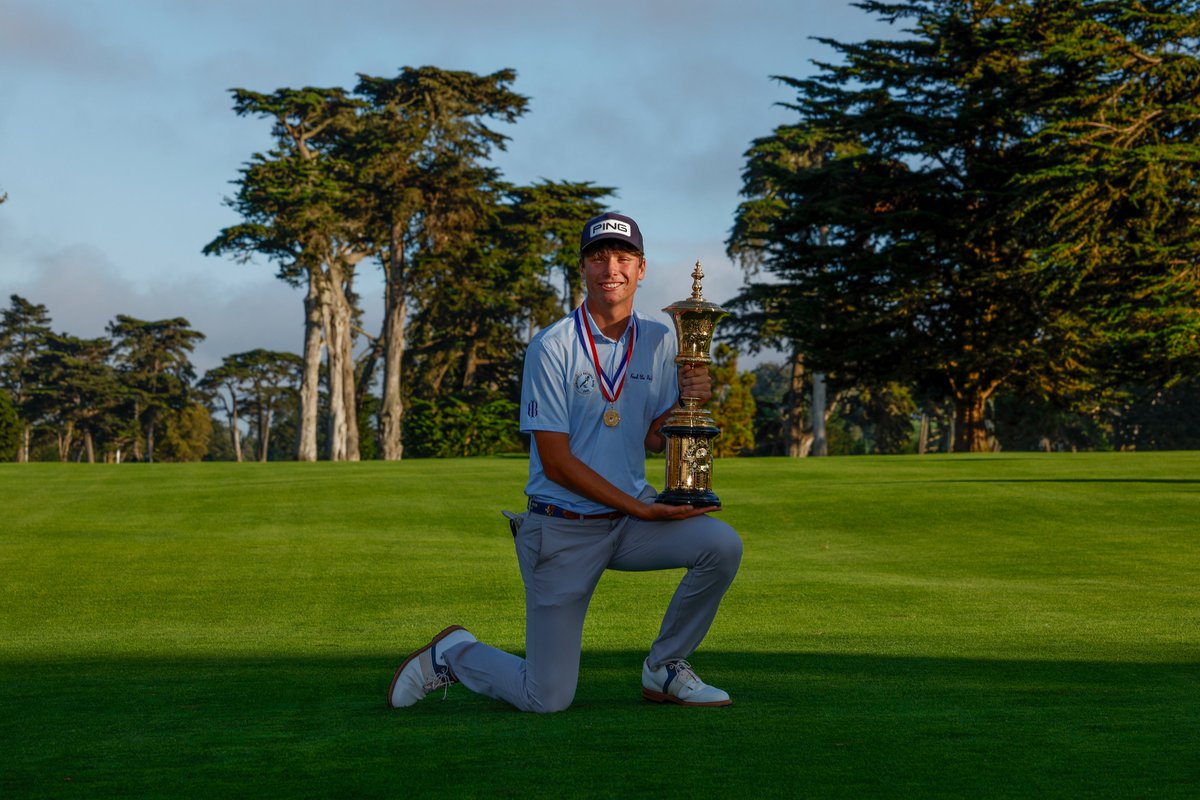
Mason Howell's father Robert was asked when he knew Mason would be good at golf and told an incredible story:
"He was 14 years old. We were living in Tallahassee at the time. He was playing his golf at Glen Arven already then, taking lessons from Bill Connelly. I take him up there to play for the day, which is on a Saturday. I tell him, your mom and I have dinner reservations with some friends tonight. I've got to pick you up, hard stop, at 5:30, whatever the time was.
"I pull up at 5:30, and he's not at the clubhouse. So I text him. He said, Dad, I'm playing with Megan Schofill, Brycen Jones, who's now playing at Alabama, Jay Sanders, who's playing at Berry College, and a couple of other kids that were really good. They're letting me play with them, and they're letting us play as a fivesome, and I shot 28 on the front. Can I finish? I'm thinking, no, we have dinner reservations.
"So I literally -- he comes to the clubhouse, and I say to Bill Connelly, who was in there, his coach, I said, Bill, Mason just shot 28 on the front. He said, what the hell are you doing? Get out there and play golf right now. I said, we have dinner reservations. He's like I'll take him home, but he's playing the back.
"I quickly cancelled the reservations, and I got to see him shoot the back, and he shoots a 15, which is our club record, and he was 14. I knew then he had the ability to go ridiculously low, and he did it in front of Megan, who was one of his idols, won the U.S. Women's Am, was about to be a pro, about to get her LPGA card. It was awesome."
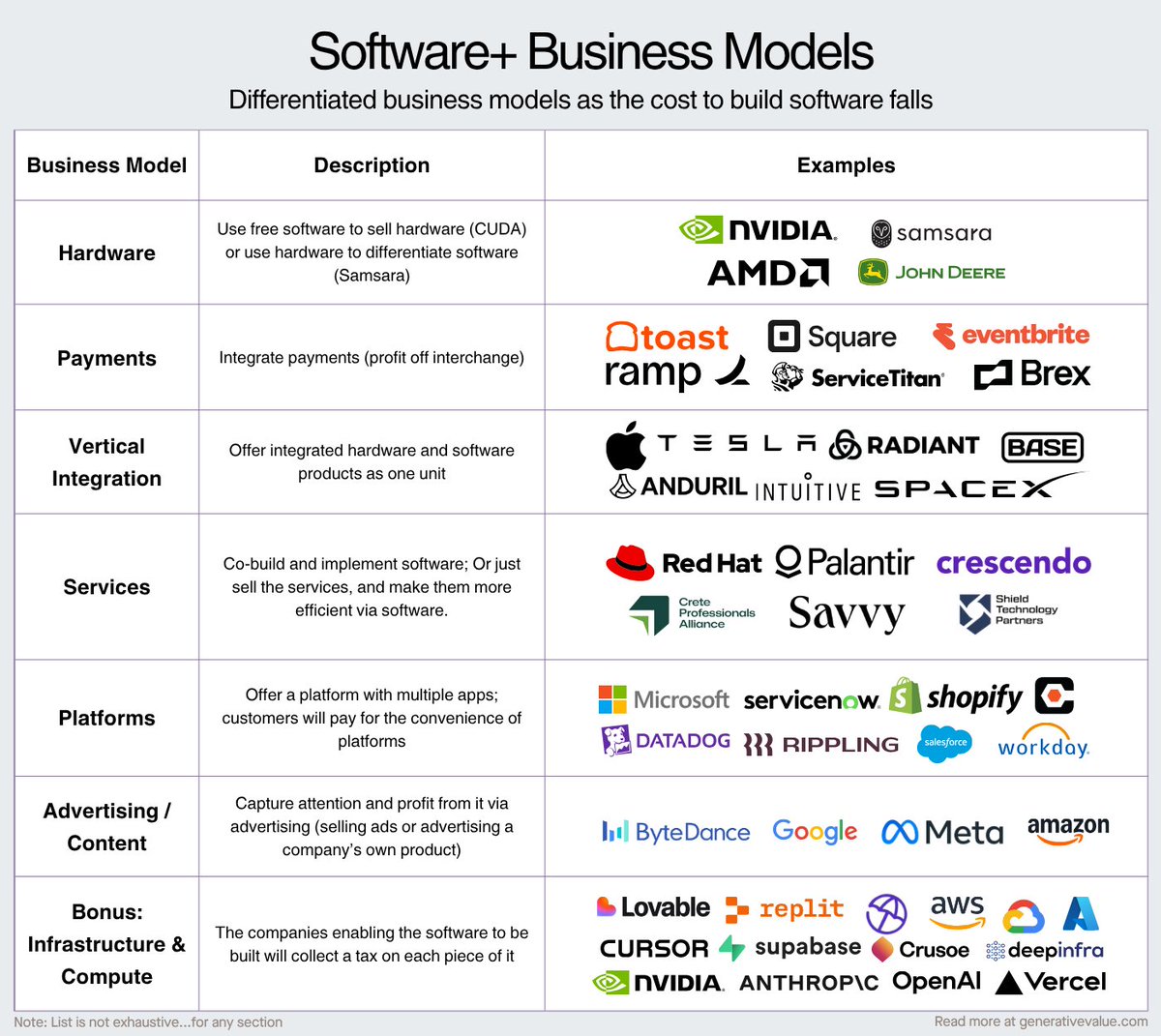
With Cursor/Lovable/Claude Code, the cost of software creation is approaching zero. I think this will fundamentally change software business models over the next decade.
Software itself will be less differentiated, meaning differentiation will have to come elsewhere; in many cases, the software itself will be "free" in order to charge for another offering.
As I see it, there are seven business models that benefit from this:
1. Hardware: Use software to sell hardware (or vice versa)
2. Vertical Integration: Offer vertically integrated hardware and software
3. Services: Charge for the work itself (accounting, legal) or offer services to integrate software into complex, custom deployments
4. Payments: Give away software, charge for interchange fees
5. Platforms: Customers will pay for the convenience of platforms, not the functionality of point solutions
6. Advertising: Software essentially becomes “interactive content.” Infinity bonus points if network effects are involved
7. Infrastructure / Compute: The platforms that enable software creation will collect their tax on each piece of it
So I’m writing a several-part series laying out a framework for business models in the age of “free software"
the last living client of frank lloyd wright, roland reisley, is 101 and has lived in his flw house for 73 years. this quote from him about it made me cry
From Sam Altman: "Adjusted for the subjective increase in how fast time passes, life is half over by 23 or 24. Don't waste time."
I'm 36 and this hits different because it's mathematically true.
When you're 5, one year is 20% of your entire existence.
When you're 50, it's 2%. That's why childhood summers felt endless and last year feels like it happened yesterday.
I can barely remember last month. But I can still taste the Kool-Aid from summer camp when I was 8.
Your brain literally experiences time differently as you age. The novelty fades. The patterns repeat. The days blur together.
Which means every year after 25 feels exponentially shorter than the year before.
Most people realize this too late. They spend their 20s "figuring things out" and their 30s climbing someone else's ladder, only to wake up at 40 wondering where the time went.
"it went by in a blink"
If you're under 25, you have more subjective time left than you'll ever have again.
If you're over 25, you have less time than you think.
Either way, the math is brutal and the message is clear:
Time is sacred. Relentlessly your ideas. Seize the day.
I look at it as a fire underneath me. As a good thing.
Time keeps us honest.
Happy building, I'm rooting for you.
Tom Fazio is one of the most accomplished architects in golf. He is responsible for 12 (!) initial designs of Top 100 courses, and has performed renovations on at least another 7 Top 100s.
If you are just getting into golf, his courses are worth putting on your short list to make a pilgrimage to or try to get on. They are very unique and will introduce you to a master architect.
Check out Fazio’s courses and see which you have played on Jogo: jogogolf.com
What if Francis Ouimet had social media in 1913?
Reimagining one of golf’s greatest underdog stories — the 1913 U.S. Open, where an unknown amateur stunned the world by beating the game’s best at the prestigious club just across the street from his home.
If you want to learn more about U.S. Open history and see which courses you have played, check out Jogo: jogogolf.com
This fictional dramatization is AI-generated. No endorsement by the USGA or the U.S. Open is implied. Francis Ouimet did not endorse this — but we like to think he would’ve been supportive of our mission.
@usopengolf
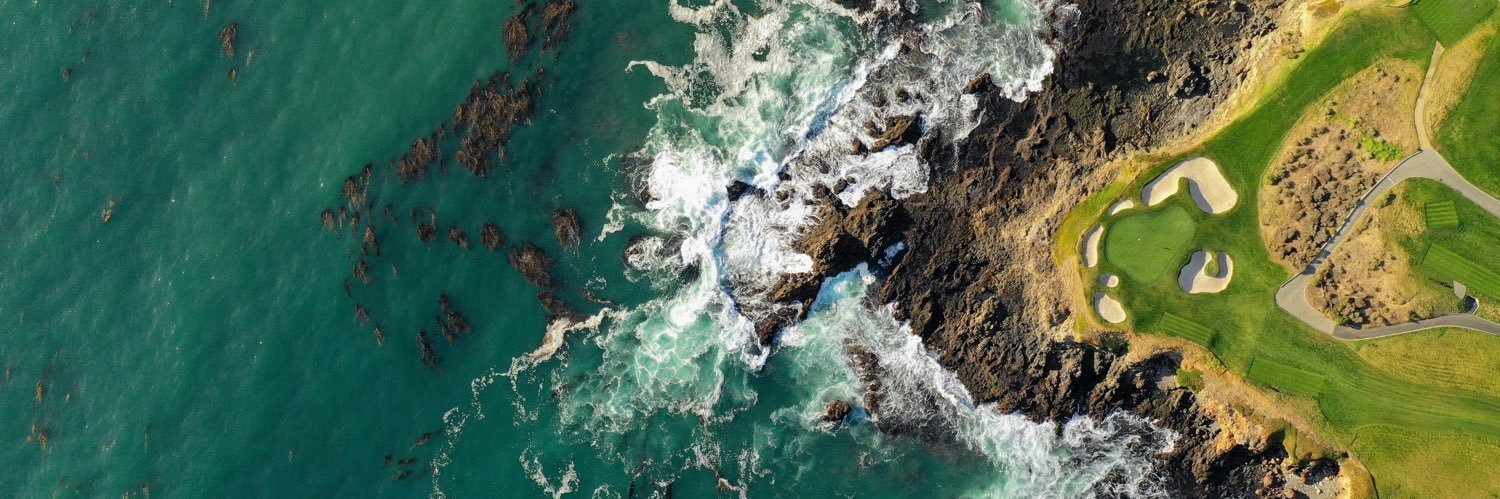
[FOUND] Rare footage of Alister MacKenzie surveying the iconic par 3 16th at Cypress Point in the 1920s.
To learn more about courses Alister MacKenzie designed and see which you have played, check out his architect profile on Jogo: jogogolf.com