Guillaume 2 Calignon

12.3K posts

Guillaume 2 Calignon banner
Guillaume 2 Calignon

Guillaume 2 Calignon

@gcalignon

apprenti-journaliste @LesEchos / https://t.co/JyTL33yBzM #СлаваУкраïнi Economie & politique. 'L'ouverture d'esprit n'est pas une fracture du crâne'. Pierre D.

Paris, Texas Katılım Mart 2015
2.3K Takip Edilen7.6K Takipçiler
Gilles Raveaud
Gilles Raveaud@RaveaudGilles·
@gcalignon "Loser" avec un seul "o", please, carino. 😂😂😂♥️♥️♥️
Français
1
0
1
276
Guillaume 2 Calignon
Guillaume 2 Calignon@gcalignon·
Les individus d’ascendance noble ont entre 6 et 9 fois plus de chances d’intégrer les grandes écoles françaises que le reste de la population. Sauf moi, bordel. Particule mais même pas foutu de réussir des concours... Looser d'un jour, looser toujours. insee.fr/fr/statistique…
Français
6
1
8
1K
Guillaume 2 Calignon
Guillaume 2 Calignon@gcalignon·
« Une tâche incroyablement difficile » : comment la France mise sur le G7 d'Evian pour résorber les grands déséquilibres mondiaux #utm_source=le%3Alec0f&utm_medium=click&utm_campaign=share-links_x-social-network" target="_blank" rel="nofollow noopener">lesechos.fr/monde/enjeux-i…
Français
1
0
0
217
Guillaume 2 Calignon
Guillaume 2 Calignon@gcalignon·
« La France n'a plus les moyens de prendre des mesures générales » sur le prix des carburants : le rappel sans fard du gouverneur de la Banque de France #utm_source=le%3Alec0f&utm_medium=click&utm_campaign=share-links_x-social-network" target="_blank" rel="nofollow noopener">lesechos.fr/economie-franc…
Français
1
0
2
236
Guillaume 2 Calignon
Guillaume 2 Calignon@gcalignon·
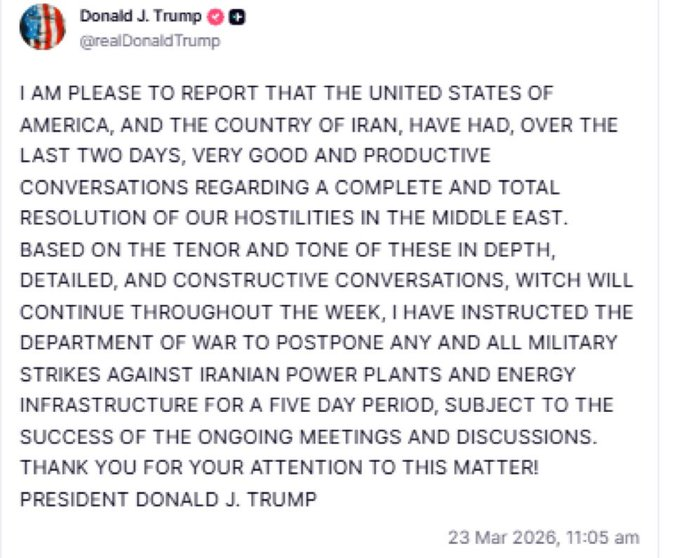
Le problème de Trump : il doit TACOter sans totalement perdre la face.
Français
0
0
1
208
Guillaume 2 Calignon
Guillaume 2 Calignon@gcalignon·
Guerre en Iran : pourquoi le choc inflationniste sera différent de celui provoqué par l'invasion de l'Ukraine par la Russie #utm_source=le%3Alec0f&utm_medium=click&utm_campaign=share-links_x-social-network" target="_blank" rel="nofollow noopener">lesechos.fr/economie-franc…
Français
0
0
1
157
Guillaume 2 Calignon
Guillaume 2 Calignon@gcalignon·
Le mythe du retour de l'inflation #utm_source=le%3Alec0f&utm_medium=click&utm_campaign=share-links_x-social-network" target="_blank" rel="nofollow noopener">lesechos.fr/idees-debats/e…
Français
0
0
0
187
Guillaume 2 Calignon retweetledi
Michael Pettis
Michael Pettis@michaelxpettis·
Thanks, Michael, you're exactly right. In many of my discussions the assumption they make, often without realizing it, is that trade is always balanced, probably because almost all the most important trade models implicitly (and often explicitly) assume balanced trade. And because they understand how the system works only under conditions of balanced trade, they see no point in discussing the effects of persistent trade imbalances. But for me the meaningful question is not about whether foreigners use dollars to invoice the two sides of their balanced trade. That is an interesting question for a completely different set of reasons (for example, how US capital controls created the eurodollar market of the 1960s, 1970s and early 1980s). But in that case it is also obvious, as Gopinath argues, that whichever currency foreigners use can have no impact on the US trade balance. The question here is a completely different one: which assets do foreigners use to balance their structural excesses of exports over imports? The answer to that question has everything to do with who runs the corresponding imbalances. If capital-rich foreigners prefer to invest their excess saving in capital-poor developing economies, as the economic textbooks prescribe, it will be developing economies (like the US during much of the 19th Century) that will run the corresponding deficits, and in many cases these will be healthy deficits because they will be driven by higher investment. But if, as is actually the case, capital-rich and capital-poor foreigners run structural trade surpluses, and invest their excess saving mainly in a trio of capital-rich countries (the US, the UK and Canada), then clearly it is that trio that will run the bulk of the deficits. Does it matter? Economists say it doesn't, but of course it does. When capital flows into developing economies in which investment is constrained by scarce domestic saving, it can lead to higher overall investment, which is good for global growth. But if it flows into advanced economies in which investment is constrained by scarce domestic demand, it won't lead to higher investment, in which case it must reduce saving, either by suppressing domestic demand (as Keynes and Joan Robinson warned) or by boosting domestic debt. But the main point is much simpler. Economies like Japan, Germany, China, South Korea, Sweden, Taiwan, etc. that have run structural trade surpluses for decades did not do so because they were forced by domestic imbalances in the US. These were all the result of conscious industrial policy decisions. Belive it or not, they have agency. But economies that run structural trade surpluses have also had no choice but to balance those surpluses by acquiring foreign assets. The claim by Gopinath (and many others) that how and where they decide to invest those surpluses has no impact on the external imbalances, and thus the internal imbalances, of the destination economies makes no sense to me. A decision by a surplus country to run a $100 surplus with the world and to balance it by acquiring $100 of US assets means that unless the US itself intervenes, it must run the corresponding deficit. Some might argue that "all the US has to do" is reduce its fiscal deficit by $100 and it will no longer run the a $100 trade deficit. This is wrong for at least two reasons. First, US fiscal policy should be determined by the needs of the US economy, and not the needs of foreign surplus economies. Secondly, and more importantly, the idea that a $100 reduction in the US fiscal deficit will reverse the $100 investment by the surplus country into the US assumes that foreign surpluses are caused by US saving shortfalls. But Gopinath seems to agree that countries like China have agency, and that China's surpluses are the result of Chinese domestic policies, in which case why should they disappear if the US fiscal deficit declines? And if they don't disappear, why should foreigners stop balancing surpluses by acquiring US assets if the US fiscal deficit declines? isn't it possible that this would make the US an even safer destination, in which case net inflows into the US might actually rise? It cannot be simply a coincidence that nearly three quarters of net capital flows end up in the three advanced economies (the US, the UK and Canada) with the most open capital markets, the most sophisticated and developed financial markets, and the least restrictions on foreign ownership. And because nearly three quarters of these capital flows end up in these three economies, it is also not a coincidence that these three economies account for nearly three quarters of global trade deficits.
English
9
25
143
11.7K
Guillaume 2 Calignon retweetledi
Michael McNair
Michael McNair@michaeljmcnair·
I finally figured out why @GitaGopinath disagrees with @michaelxpettis on the reserve currency and current account deficit argument. They’re not debating the same thing. Economists too often conflate international currency and reserve currency (net settlement of imbalances, accumulation of net claims). They aren’t the same thing. When Gita says reserve currency she is mostly talking about the international currency role…the plumbing of global trade and finance (invoicing, settlement, etc). And on that, she’s right. World trade can grow with balanced flows, and global demand for safe dollar assets can show up in gross holdings without mechanically forcing a net US current account deficit. But that’s not what Pettis is talking about. He’s talking about the reserve currency role. That’s not what unit we invoice in. It’s the asset other countries save in and accumulate net claims on, the place surplus countries park excess savings. That is a net concept. If a country runs a current account surplus, it is acquiring net claims on the rest of the world. Those net claims have to land somewhere. Someone has to be the mirror image net debtor. In the modern system, the US has been the residual absorber bc its been the only one big enough and willing to keep its capital account wide open and allow unlimited accumulation of its financial assets. Pettis isn’t arguing the world needs gross dollar liquidity, therefore the US must run deficits. He’s saying that surplus country policies suppress domestic demand relative to production, which forces them to export savings on a net basis, and those net savings end up as net claims on the US, forcing a corresponding US current account deficit. The best analogy is the gold standard. What mattered wasn’t that everyone used gold in everyday transactions. What mattered was that gold settled net claims. Countries with persistent deficits lost gold and the surplus countries accumulated gold. Gold was the reserve asset precisely bc it was how the system settled the net position. Same today. Gross flows matter for transmission, but reserve status is ultimately about where net claims accumulate. Another important point of clarity is that Pettis isn’t saying the reserve currency issuer always has to run a current acct deficit. Reserve currency status means you have to tolerate your external balance being set by the needs of the rest of the world, not what your domestic economy requires. And the sign can flip across regimes. Like in the 1950s when Europe was rebuilding after the war and needed US capital to fund its investment needs, so the US ran a current account surplus. But the point is that the reserve issuer is the residual adjuster. So Pettis’ point is that in the current environment, where the RoW generates excess savings, the has US to run a current account deficit. It’s possible for the dollar’s international role to grow without an ever rising US current account deficit. But it’s not possible for large parts of the world run persistent net surpluses and accumulate net claims, and nobody runs the mirror image net deficits. That’s what Pettis is arguing. And it’s not the argument most people are responding to. *side note: Stablecoins are going to make the distinction bw international and reserve currency even more important bc the purpose of the GENIUS Act is to unbundle the two functions. They can keep the dollar dominant in global payments without requiring foreigners to hold dollar assets as a savings vehicle (zero yld reduce hoarding as savings). And it’s that second function that forces persistent US current account deficits.
Gita Gopinath@GitaGopinath

(i) Not clear why growth in world trade should create a net demand for dollars. World trade can grow through both rising exports and imports while remaining balanced. (ii) The other commonly cited argument is that the demand for safe assets requires the safe asset issuer to run deficits. This again is theoretically weak. Demand for safe assets is about gross flows. There is no reason this should necessarily lead to net deficits. (iii) Empirically too the reserve currency argument has limitations. As @Brad_Setser points out the relation between fiscal deficits and trade/current account deficits is imperfect. There were 2 previous major episodes of global imbalances: One was in the 1980s where indeed large fiscal deficits (and an appreciating dollar) contributed to growing current-account deficits. The second episode was in the run-up to the GFC in 2008 when fiscal deficits were not the driver (and the dollar was depreciating). (iv) During the years when the British pound was the dominant currency of the world Britain ran current account surpluses. (v) The Swiss Franc is a reserve currency country that consistently runs surpluses. New Zealand, on the other hand, is not a reserve currency country and has consistently run deficits. So, both theoretically and empirically, it is hard to argue that the dollar's reserve currency status is what is behind persistent US current account deficits.

English
16
54
301
90K
Guillaume 2 Calignon
Guillaume 2 Calignon@gcalignon·
Guerre en Iran : ces Etats européens démunis budgétairement face à la crise énergétique #utm_source=le%3Alec0f&utm_medium=click&utm_campaign=share-links_x-social-network" target="_blank" rel="nofollow noopener">lesechos.fr/monde/europe/g…
Français
0
2
1
182
Guillaume 2 Calignon
Guillaume 2 Calignon@gcalignon·
Dans un essai stimulant, Jonathan Haidt montre que la morale et la religion ont soudé les groupes d'être humains il y a des milliers d'années. Les bousculer peut faire avancer les sociétés mais aussi les fragiliser. #utm_source=le%3Alec0f&utm_medium=click&utm_campaign=share-links_x-social-network" target="_blank" rel="nofollow noopener">lesechos.fr/idees-debats/l…
Français
0
3
4
168
Guillaume 2 Calignon
Guillaume 2 Calignon@gcalignon·
La Banque centrale européenne a revu à la hausse ses prévisions d'inflation avec la guerre en Iran et la fermeture du détroit d'Ormuz. #utm_source=le%3Alec0f&utm_medium=click&utm_campaign=share-links_x-social-network" target="_blank" rel="nofollow noopener">lesechos.fr/finance-marche…
Français
0
0
2
219
Guillaume 2 Calignon
Guillaume 2 Calignon@gcalignon·
Une étude chiffre à 5 millions les emplois en danger en France avec le décollage de l'IA. Les métiers de cols blancs, bien payés et dans les métropoles, sont les plus à risque. La révolution IA sera économique, sociale, politique et géographique. #utm_source=le%3Alec0f&utm_medium=click&utm_campaign=share-links_x-social-network" target="_blank" rel="nofollow noopener">lesechos.fr/monde/europe/i…
Français
0
3
4
437
Guillaume 2 Calignon
Guillaume 2 Calignon@gcalignon·
Dans un monde plus conflictuel, les exigences de compétitivité, de conquêtes de nouveaux marchés et d'innovation des entreprises peuvent entrer en confrontation avec les besoins de sécurité des Etats. L'équilibre sera difficile à trouver. lesechos.fr/idees-debats/e…
Français
0
0
0
158
Guillaume 2 Calignon retweetledi
Le Point
Le Point@LePoint·
Un candidat islamiste soutenu par LFI… et l’extrême droite turque Par Nora Bussigny Erwan Seznec l.lepoint.fr/58N
Français
26
249
398
15K
jean-dominique merchet
jean-dominique merchet@jdomerchet·
Je suis un lecteur quotidien du Monde @lemondefr depuis plus d'un demi-siècle et je le resterai. S'il est toujours un journal très professionnel, sa lecture devient chaque jour plus irritante à cause de son orientation à gauche (souvent radicale) toute ! Y-a-t-il un seul journaliste de droite dans cette rédaction ?
Jean Quatremer@quatremer

La mollahrchie pacifique et inclusive victime des méchants impérialistes israéliens qui veulent imposer une "pax hebraica". La subtilité du Monde 👏
Français
175
129
615
162.5K