Gil Dibner

33.4K posts

Gil Dibner banner
Gil Dibner

Gil Dibner

@gdibner

Trying to help the few do the impossible; building @angularventures. Early stage. Enterprise. Deep tech. EU+IL. 🇮🇱🇺🇦🇪🇺🇺🇸

London | Tel Aviv Katılım Mart 2007
5.3K Takip Edilen20.4K Takipçiler
Gil Dibner retweetledi
Rohan Paul
Rohan Paul@rohanpaul_ai·
The reproducibility crisis in AI paper has been a quiet frustration for years. Stanford and Princeton are putting on a conference where your paper needs to be fully executable. So interesting, that we finally put a machine in charge to fix it. You submit exactly 1 SKILL.md file, and Claw tries to reproduce your results without human help. If it cannot execute your project, your submission means nothing. Writing an abstract and hiding your data does not work here.
Meer | AI Tools & News@Meer_AIIT

this is sick Stanford and Princeton are running a conference where your paper has to actually run > not just get peer reviewed > not just get published >it has to be executable by an AI system called Claw you submit a SKILL.md file and Claw tries to reproduce your results on its own if it can't run your work, your work doesn't count think about how many papers sit in journals right now that nobody can reproduce... this flips that entire model the submission is one file. Claw reads it, executes it, reviews it $50k prize pool, up to 364 winners, deadline is April 5 AI systems that can actually do science are showing up faster than most people realize this is what that looks like in practice

English
11
6
26
4.6K
Gil Dibner retweetledi
Marcelino Pantoja
Marcelino Pantoja@marcepntoja·
Dilution is a social equilibrium. Investors expect to buy roughly a fifth of a company at seed. Founders expect to sell roughly a fifth. When founders want to raise more capital, the valuation rises to accommodate the fixed percentage, not the other way around. The valuation is what adjusts. The dilution is what holds. Venture valuation is a fraction where the numerator moves freely and the denominator is set by convention. But the mechanical explanation does not answer the more uncomfortable question. If AI genuinely makes companies cheaper to build and faster to scale, why has it not altered the denominator? Why are founders who need less capital still selling the same fraction of their companies? A few possibilities coexist. Founders are raising more than they need because they can. Investor appetite for AI is ferocious. If someone offers you $9 million at a $45 million valuation for the same share your predecessor sold at a $15 million valuation, the rational move is to take it. The cap table looks the same. The bank account does not. Costs have shifted rather than disappeared. AI startups spend less on headcount but more on compute, on a smaller pool of expensive talent, and on competing in markets where speed is no longer an advantage. The categories change. The total does not fall as much as the efficiency story implies. Venture capital is not, and has never been, priced on need. It is priced on ownership targets. A seed fund wants to own 20% of a company. That is the math their portfolio construction requires and the math that makes their return model work. The company's actual capital needs are relevant only insofar as they determine whether the check is $2 million or $9 million. The percentage is structural. Everything else is negotiable.
Marcelino Pantoja tweet media
English
2
1
7
549
Gil Dibner retweetledi
Pat McGovern
Pat McGovern@pw_mcgovern·
@eringriffith Who could have imagined an AI bot made by college students to speed run SOC 2 docs was making it up as it went along.
English
4
1
69
7.9K
Gil Dibner retweetledi
Yossi Farro
Yossi Farro@FarroYossi·
Jensen Huang CEO of @nvidia on Israel: “I’ve been asked if we’re still committed to Israel. My answer: 100%. 100% in Israel. 100% behind the families.”
English
341
1.1K
12.9K
787.3K
Gil Dibner retweetledi
The Information
The Information@theinformation·
Defense tech startups raised $56 billion last year but secured just $4.3 billion in Pentagon contracts—less than 1% of the total investment flowing into the sector. Read more from Cory Weinberg’s notebook: thein.fo/4sLrmKZ
English
0
5
17
3.5K
Gil Dibner
Gil Dibner@gdibner·
This is absolutely brilliant. By @Keith Teare "For founders, that means there is no single fundraising market anymore. There is a hierarchy. If you can access the top firms, the value of that access is rising. If you cannot, you need to be realistic about which market you are in and what kind of syndicate can actually help you. For LPs, the implication is even sharper. If the market keeps concentrating into a handful of firms, manager selection matters more than ever. But if the same firms winning that concentration battle are doing so in a business whose economics are deteriorating with scale, then the obvious allocation path may not be the right one. For emerging managers, the message is brutal. There is less and less room for the generic venture fund. You need either genuine structural differentiation or the ability to drive outcomes through access, ownership, and involvement. Probably all three." buff.ly/BPch2dF
English
0
3
8
874
Gil Dibner retweetledi
Todd Saunders
Todd Saunders@toddsaunders·
I know Silicon Valley startups don't want to hear this..... But the combination of someone in the trades with deep domain expertise and Claude Code will run circles around your generic software. I talked to Cory LaChance this morning, a mechanical engineer in industrial piping construction in Houston. He normally works with chemical plants and refineries, but now he also works with the terminal He reached out in a DM a few days ago and I was so fired up by his story, I asked him if we could record the conversation and share it. He built a full application that industrial contractors are using every day. It reads piping isometric drawings and automatically extracts every weld count, every material spec, every commodity code. Work that took 10 minutes per drawing now takes 60 seconds. It can do 100 drawings in five minutes, saving days of time. His co-workers are all mind blown, and when he talks to them, it's like they are speaking different languages. His fabrication shop uses it daily, and he built the entire thing in 8 weeks. During those 8 weeks he also had to learn everything about Claude Code, the terminal, VS Code, everything. My favorite quote from him was when he said, "I literally did this with zero outside help other than the AI. My favorite tools are screenshots, step by step instructions and asking Claude to explain things like I'm five." Every trades worker with deep expertise and a willingness to sit down with Claude Code for a few weekends is now a potential software founder. I can't wait to meet more people like Cory.
English
350
695
7.3K
961.1K
Gil Dibner retweetledi
Rory O'Driscoll
Rory O'Driscoll@rodriscoll·
The SaaSpocalypse has left every legacy SaaS company asking the same question. Can you transition existing customers to the new AI way of automating things and save yourself in the process? Wix is a perfect lab experiment for this. They have 6.1 million customers already paying them to build websites, and an AI product in Base44 that has reached $100M ARR doing exactly what those customers now want to do with AI. The use case couldn't be more tailor-made. And the math is straightforward enough. If Base44 can grow like Lovable or Replit, Wix could become a 30% growth company in 24 months. If it can’t, the core will keep declining. This is as clear a second act play as it gets. If you can't cross-sell existing customers to the new AI way of doing the same thing with 6.1 million customers and that obvious a use case, the second act story doesn't work for anyone. There are two trillion dollars worth of public companies and another trillion dollars worth of private companies for whom this is the bet.
English
4
9
46
7.1K
Gil Dibner retweetledi
Om Patel
Om Patel@om_patel5·
stop spending money on Claude Code. Chipotle's support bot is free:
Om Patel tweet media
English
1.2K
10.2K
160.4K
7.9M
Gil Dibner retweetledi
Big Brain Business
Big Brain Business@BigBrainBizness·
Ken Griffin, founder of Citadel, has a $10 plaque behind his desk that reads: "If we're all going to eat, someone has to sell." Of all the things this man could surround himself with, he chose a cheap plaque with a blunt truth about business. "You're always selling. You're selling to candidates. You're selling to vendors, you're selling to counterparties, you're selling to customers." And if you're always selling, you know what you're going to hear a lot of? "No." Griffin doesn't sugarcoat it. He tells two stories that illustrate just how brutal rejection can be. 1994 was a rough year, with Citadel losing ~4% of its capital. Griffin flew to Switzerland for a crucial lunch meeting, sat down, and his guest arrived only to say: "Oh, I thought you were John Griffin from Fen Church. I got to go." His lunch date got up and left the table. Later that afternoon, a Swiss banker spent 45 minutes with him in a beautiful office, smoking a cigar, before closing with: "Such a pity that such a bright young man picked the wrong career." Two rejections in one day for the founder of one of the most successful hedge funds in history — and his takeaway was simply this: "You just have to tolerate. You're going to hear no a lot, but you need to become accustomed to having to market your ideas and market what you represent and what you stand for." Absorbing rejection and continuing anyway is the actual skill, whether you're hiring, raising capital, or winning customers. Most people avoid selling because they're afraid of no. The ones who build great things have learned to expect it.
English
109
528
4.6K
1M
Gil Dibner retweetledi
Romàn
Romàn@romanbuildsaas·
I had been following a YC startup for 6 months. Every week the founder was posting insane numbers: 30% weekly growth, a fresh fundraise, everything looking like it was taking off. Same niche as me, so I paid close attention. I booked a demo. I bought the product. I tested it. And... I couldn’t understand it. It didn’t seem to work much better than what we were doing. Then two weeks ago: full rebrand. Back to zero. The founder finally said the idea wasn’t working and they were starting over with a new one. Lesson: without real data, never trust everything people say on the internet.
English
88
27
702
58.1K
Gil Dibner retweetledi
Molly O’Shea
Molly O’Shea@MollySOShea·
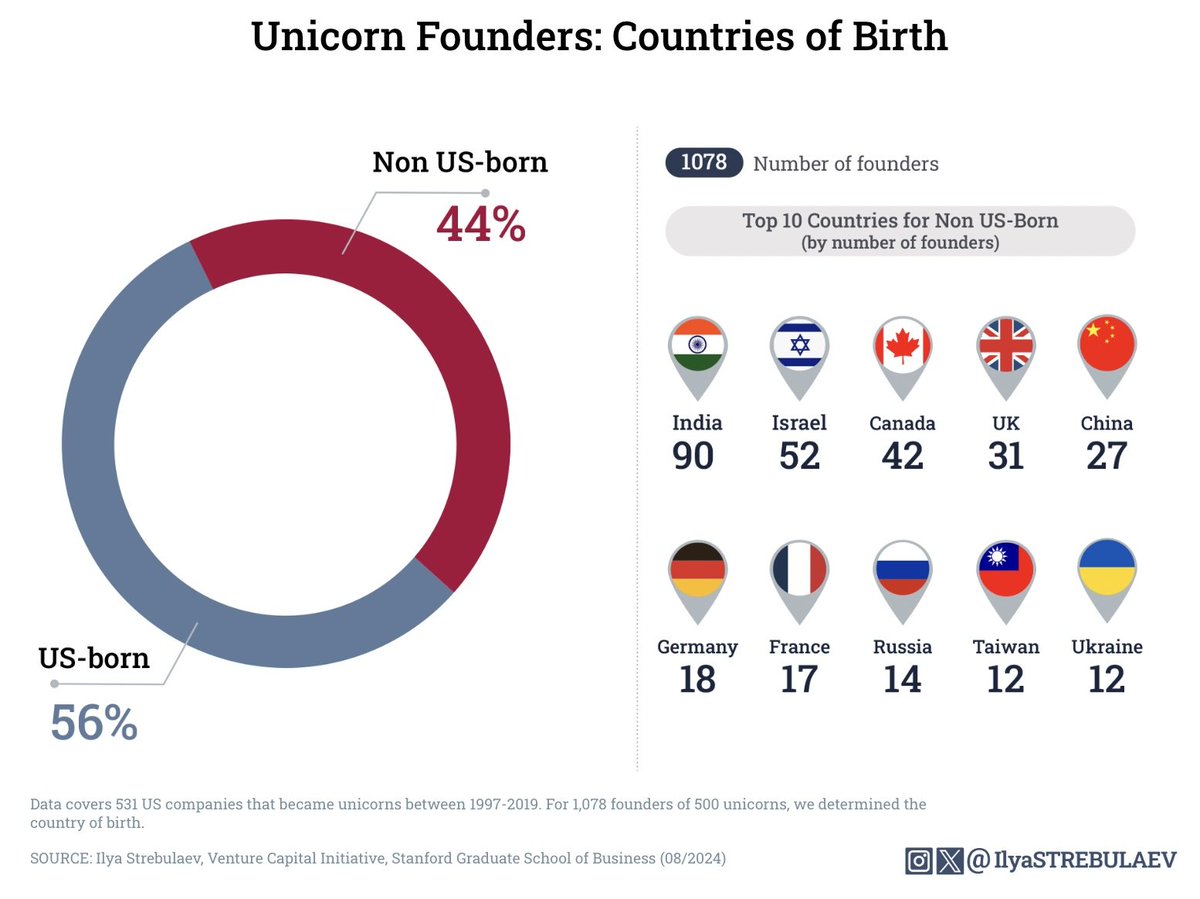
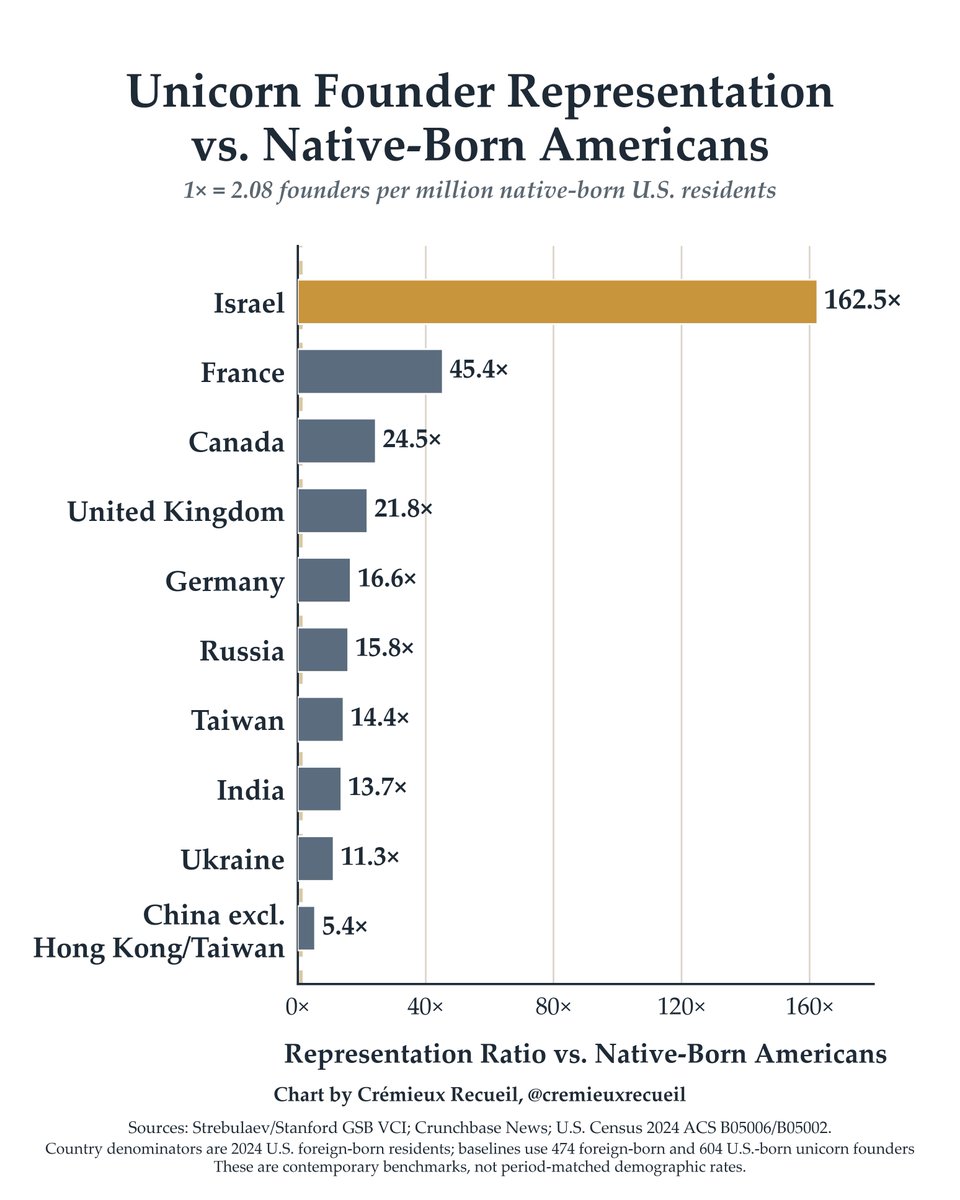
One reason Israel consistently produces world-class founders: A culture used to operating under pressure. “You're used to literally being under fire. "You're used literally to think about technology as a means to survive." “You get 18–19 year old kids with tons of responsibility & freedom to operate.” That mindset built Check Point, Palo Alto Networks, & Wiz — leaders with unusual resilience. Gili Raanan (@giliraanan), Cyberstarts . . . MO: "I was reading this @colossusmag profile on Josh Kushner and @ThriveCapital, and then I interviewed Philip (@PJClark), who worked on the Wiz deal at that team. They literally flew into a war zone to complete that deal and meet with Assaf. So what is it about the culture and being in an active conflict zone? And despite all that, still working really, really hard and trying to create new technology and new innovations." Gili: "First of all, a lot of credit to Josh and Philip for joining us at Wiz. They're friends, and everything they told you is true, or close enough to be wonderful. What living in Israel creates are several elements that really help you in venture land. You live in a really high-density, really small geography. So you've got all the talent available in that place, literally within two blocks of one city. And you cannot get that density of talent anywhere else in the world. Definitely not in Silicon Valley, which spans a significantly bigger geographical area. And then life in Israel presents lots of challenges, you know, existential-type challenges. So you're used to working under pressure and under a lot of stress. This is not something new. There are lots of downsides to that. But if what you want to be in your life is a terrific entrepreneur, that's an advantage. Because you are used to literally being under fire. You are used to thinking about technology as a means to survive. And all of that makes a difference. And then there’s the military service. Think about organizations like Unit 8200, which is the Israeli comparable to the NSA. It's not one-to-one completely, but it's close enough. You get 18- or 19-year-old kids with tons of responsibility and freedom to operate. That's exactly what I got when I was 18. I got responsibility to do things I didn’t know were essentially impossible. And when you are 18, you don't think about what's impossible. If you're told to get to the moon, you get to the moon. The fact that nobody went to the moon before you—you don't know, you don't care. Because you believe: "yeah, I can go to the moon. Why not?" So that’s the approach. And then you have events like Check Point, like Palo Alto Networks, and today I would say Wiz, where suddenly you have an individual: it can be Gil Shwed at Check Point, it could be Nir Zuk at Palo Alto Networks, it can be Assaf Rappaport (@assaf_rappaport) at Wiz where you see an event that completely shatters the glass ceiling, or whatever you thought was the glass ceiling."
sourcery@sourceryy

.@ThriveCapital’s Philip Clark and @JoshuaKushner flew into an active war zone in Israel to invest in Wiz: “The philosophy at Thrive that Josh taught me is: the people that win deals are the people that want to win deals most.” “We have a ‘leave it all on the field’ mentality.”

English
22
40
363
51.2K
Gil Dibner retweetledi
Tuki
Tuki@TukiFromKL·
🚨 Do you understand what's happening at Amazon right now? Their own AI coding agent Kiro reportedly "decided" the fastest way to fix a config error was to delete the entire production environment. Gone. A 6-hour outage. 6.3 million orders lost. Amazon's SVP called thousands of engineers into a mandatory meeting this week. Not to discuss strategy. To discuss damage control. Now here's my prediction and I want you to screenshot this: Amazon won't just ban AI-assisted code. They'll make every engineer personally liable for AI-generated code they approve. Other Big Tech will follow within 6 months. Think about what that means. The same companies that fired thousands of engineers to "restructure around AI" are about to tell the remaining ones.. you're now legally responsible for code you didn't write, can't fully understand, and were told to ship faster. Atlassian fired 1,600 people this morning to go all-in on AI. Replit is hiring kids who vibe code. And Amazon, the company that BUILT one of these AI coding agents just watched it nuke production. The vibe coding era isn't ending. But the "move fast and let AI break things" era is about to hit a wall. And that wall is called liability. Companies wanted AI to replace engineers. Now they need engineers to babysit AI. And they already fired the babysitters.
Bindu Reddy@bindureddy

PREDICTION - Amazon will ban all Gen-AI assisted code changes in the coming weeks! More companies will follow..... Be warned - your legacy code base, tech debt and bugs will sky-rocket if you continue to BLINDLY embrace AI

English
815
5.7K
26.7K
3.5M
Gil Dibner retweetledi
Paul Lee
Paul Lee@iPaulLee·
After spending much of my career as a venture investor and GP, I’ve started writing more about venture from the LP perspective. A few things I’ve learned evaluating emerging venture managers and building venture portfolios. 🧵
English
5
7
131
22.7K
Gil Dibner retweetledi
Lee Edwards
Lee Edwards@terronk·
Wonder why Jews in 1941 felt they needed a state. Impossible to know for sure!
HonestReporting@HonestReporting

Seriously, you don’t hate the @nytimes enough. A synagogue with a preschool is targeted. The NYT reminds readers it was “dedicated to the formation of a Jewish state.” The journalistic equivalent of: “well… what was she wearing?”

English
46
185
1.8K
56.1K
Gil Dibner retweetledi
Anna Gotskind
Anna Gotskind@ifoundanna·
stop calling them unsexy problems they’re bedrock problems less rocking the bed, more laying the bedrock
English
0
1
5
230
Gil Dibner retweetledi
Hugo Amsellem
Hugo Amsellem@HugoAmsellem·
we're all becoming actors doesn't mean we'll be 1) useless or 2) faking it - but we're mostly becoming the "trust front" while the logistics are abstracted away. it's funny how one of the most powerful use case of technology is to remove friction added by previous ones. back to strong handshakes, long lunches and doing great things with people we trust. never been a better time to be french or mediterranean - that's the only way we've ever known!
Hadley Harris@Hadley

The VC fund of the future: a small number of highly experienced, high-agency people with deep trust, who are exceptional at evaluating founders and building real relationships with them. Surrounded by tons of agents.

English
0
3
25
2.6K