
Gemma Cass
361 posts

@gemmafcass
Senior Lecturer in Primary Education at St. Mary’s University & iQTS Course Lead


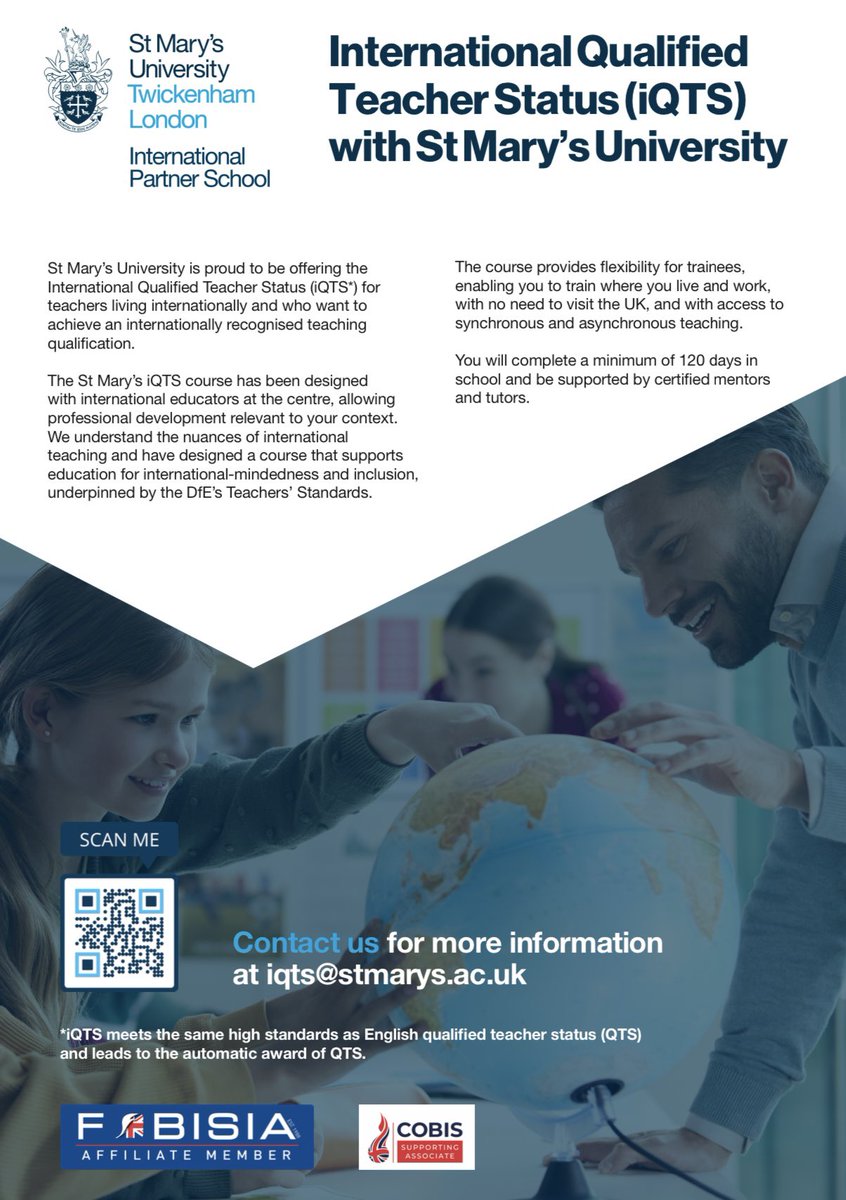
Living outside of the UK? Interested in achieving an internationally recognised teaching qualification? Our upcoming iQTS information session is for you 💻✏ Date: Wednesday 8th January Time: 9-10am GMT Venue: Zoom Sign up for free using this link: stmarys.ac.uk/events/2024/iq…

This week's In the news is out. #UON media coverage includes: ✅ Our economic impact on the town, county and further afield ✅ Why English Literature is great to study/@LJDevanny ✅ Student @BenGrundySJ discusses the headlines on @bbc5live...and more! northampton.ac.uk/news/in-the-ne…


So sure that many of the schools we work with would be thrilled to win this book bundle from the fabulous @AdrianBethune ! @TeachStMarys @janechambers04 @AnnaLiseGordon @letsjustwaitfor @Ruth_Jack88 @MissEms92 @JDavey_PriEd @gemmafcass 📚❤️ please RT!

We’re delighted to share that the School of Education at St Mary’s has once again retained its Ofsted Outstanding rating in all categories for Primary and Secondary Initial Teacher Training! Find out more at stmarys.ac.uk/news/2024/ofst… Read the report: files.ofsted.gov.uk/v1/file/502511…


See you there tomorrow. Overlooking the park where I played all through my childhood.

Do babies develop accents even before they can speak conventionally? The short answer is yes… and these linguistic markers begin even sooner than you might think. So many of you tagged me in this video yesterday featuring an infant that babbles with the same Scouse accent as his mother. Other than “no” he doesn’t speak a single conventional word, but listen to how the rhythm and intonation of his vocalizations mirror those to which he is exposed daily. As hearing becomes functional during the third trimester, infants are exposed to the distinct patterns of their mothers’ native language - with studies suggesting newborns can already distinguish (and prefer) what will become their native tongue only hours after birth. Incredibly this learning doesn’t wait until the babbling stage to evidence itself. Research suggests that even the cries of newborns reflect this preference. That’s right: babies cry with an accent. One major study on the topic showed that French babies cry with a rising intonation, while German infants favor a falling melody - both reflecting the patterns of their native languages. We’re only just beginning to understand the deep learning that begins in utero. It’s just more evidence that the period from prenatal to three is the most critical window in all of human development. This little Liverpudlian was shared to TT by iamcustardpot.