तत् त्वम् पूषन् अपावृणु

4.6K posts

तत् त्वम् पूषन् अपावृणु banner
तत् त्वम् पूषन् अपावृणु

तत् त्वम् पूषन् अपावृणु

@geoObserver71

भारत Katılım Şubat 2019
417 Takip Edilen32 Takipçiler
तत् त्वम् पूषन् अपावृणु retweetledi
Caleb
Caleb@caleb_friesen·
Vector Technics manufactures ~5,000 drone BLDC motors a month. They're the largest in India. They hope to scale to 15,000 motors/month soon. Meanwhile, China manufactures millions. Guess what? Most Indian companies still import these motors from China. Why? Low trust in Indian products. This imported > indigenous mindset is antithetical to technological development, economic growth, and India's future prosperity, yet it's pervasive across industries. The belief that "if it's Indian, it must not be good" still lingers in many corners of the subcontinent, despite numerous hardware and manufacturing companies proving that this thinking is misguided and incorrect. I'm thrilled to see companies like Vector Technics putting in years of hard work and risking it all to reverse this mindset and prove to India (and the world) that Indian hardware is synonymous with quality and reliability. India needs hundreds more companies like Vector, building machines, materials, and components indigenously. But it also needs buyers to break out of this imported-first, local-second mindset. Build from India for the world, but also... Buy from India, lead the world.
Caleb tweet media
Runtime@RuntimeBRT

Most of India's drone motors come from China. In 2019, the founders of Vector Technics, @prudhvirajp + Karna Raj, set out to change that in a 400 sq. ft. Hyderabad office. Today, @vectortechnics is India's largest indigenous drone motor manufacturer, producing 5k motors/month.

English
47
446
2.6K
96.1K
तत् त्वम् पूषन् अपावृणु retweetledi
bubble boi
bubble boi@bubbleboi·
I’ve been reading the Vedas a lot recently, and what’s stood out is how it doubles as an encyclopedia as well as a religious text. Astronomy, medicine, mathematics, metallurgy, linguistics, are all woven through hymns and rituals as one body of knowledge. Simply calling it “religious” forces it into a Western category that didn’t have the apparatus to recognize what it actually was. It’s closer to a tradition of formalized epistemology in which metaphysics, observation, and language form one continuous inquiry, which as a result led Indian civilization to develop along a fundamentally different path because of it. You can see the effect most clearly in the sciences. Around 600 BCE, the Vedic record describes a surgical procedure that matches modern rhinoplasty and is still foundational to reconstructive surgery today. Centuries before Western Europe stopped treating eclipses as supernatural, Indian scholars had calculated the circumference of the earth within 0.2% and explained eclipses as shadows. Centuries before Plato and Aristotle rejected atomism, the Vedic tradition already held that matter is composed of indivisible particles combining into binary and triatomic compounds, transformable by heat. The first formal rules for zero and negative arithmetic appear in the Vedas, along with infinite-series derivations of π, sine, and cosine centuries before Newton and Leibniz. The interesting question is how did they get so much right, so early? My best guess is language. The Vedic tradition is unique compared to other oral traditions as it demanded letter-perfect oral transmission across generations. Around 500 BCE, scholars composed a generative grammar of Sanskrit called Panini so rigorous it anticipates Backus-Naur form, the notation that defines programming languages today, by 2,500 years. Sanskrit is recursive, rule-based, and built to minimize ambiguity. It reads more like mathematics than English. When you think in a language built like that, the precision of the language becomes the precision of your reasoning. The West didn’t formalize this until much later. Kant argued our categories of understanding shape what we can know, Wittgenstein wrote that the limits of language are the limits of one’s world, and Kripke showed that naming doesn’t just describe things, it constitutes what they mean and how we can reason about them. All three touch the same insight which is that thought is downstream of language. The Vedic tradition operated on that insight thousands of years earlier. To the point that they built a whole language first and used it to think clearly about everything else after. I find that all really fascinating.
English
135
876
4.6K
259.3K
तत् त्वम् पूषन् अपावृणु retweetledi
Sumita Shrivastava
Sumita Shrivastava@Sumita327·
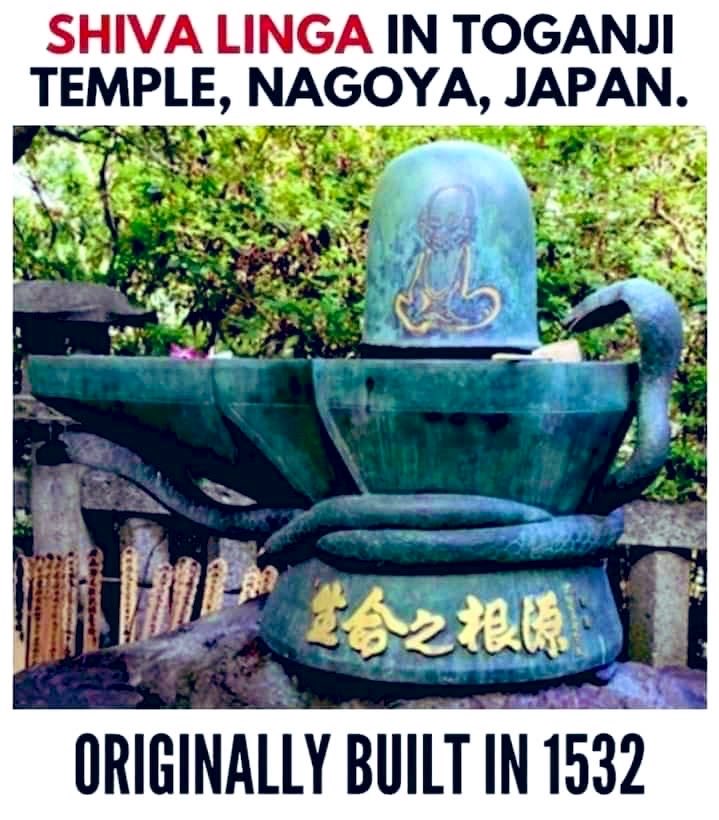
A Shiva Linga in Japan…🇯🇵🔱 At the historic Tōgan-ji Temple in Nagoya, originally built in 1532, stands a sacred Shiva Linga. Sanatana Dharma was never confined to borders. Eternal in spirit, timeless in presence - it continues to echo across civilizations….! 🚩🔥
Sumita Shrivastava tweet media
English
32
324
1.2K
9.3K
तत् त्वम् पूषन् अपावृणु retweetledi
Atsuko Yamamoto🇯🇵
Atsuko Yamamoto🇯🇵@piyococcochan2·
日本の神社を燃やせば、日本人の心がイスラムに支配されると考えるアホなムスリムよ。神道には経典も教義も存在しない。従って日本人は神道に支配されていないのだと知れ。なぜ御神体が鏡なのかを知れ。神の光を映す鏡は自分の心を映すものでもあるからだ。日本人は自らの心に神を持つのだ。誰も見ていなくても自分が見ていることが行いを制する力となるのだ。 君らのくだらない神とはレベルが違うんだよ。罰だの天国だの72人の乙女だの、なんてくだらない神なんだよ恥を知れよ。
日本語
1.1K
14.8K
68.8K
1.4M
तत् त्वम् पूषन् अपावृणु retweetledi
SagasofBharat (talesbymiirabelle)
Muhammad Bin Qasim, following Hajjaj’s orders, massacred around 26,000 Hindus who resisted conversion However mass slaughter was a daunting task against Hindu resistance. Hence he opted for jizya instead of fighting. Ms weren't secular. They just couldn't win against Hindus
SagasofBharat (talesbymiirabelle) tweet mediaSagasofBharat (talesbymiirabelle) tweet media
English
43
662
1.7K
49.7K
तत् त्वम् पूषन् अपावृणु retweetledi
Ra_Bies 3.0
Ra_Bies 3.0@Ra_Bies·
What a beautiful explanation of Entropy. Too good is this girl’s clarity and understanding of spirituality & philosophy
English
94
1.8K
5.8K
158.2K
तत् त्वम् पूषन् अपावृणु retweetledi
Indu Viswanathan
Indu Viswanathan@indumathi37·
I’m genuinely not trying to insult anyone here, but I find it so fascinating that monotheists describe polytheists as immoral for worshipping false, "man-made gods" when we are the ones who encoded reverence for the Divine in all its manifestations (the sun, the moon, the earth, the oceans, etc.) and they are the ones who follow the word of a human prophet who told them who the one true god is. Also, we don’t go around telling them their beliefs are false or sit around talking about it, either. We just do us.
English
149
689
3.2K
58.4K
तत् त्वम् पूषन् अपावृणु retweetledi
India in Pixels by Ashris 🔱
Hinduism itself. A billion people taught to find meaning in unity and bhakti. Imagine a billion people taught to find meaning in excellence instead. Shed the defeatist myth that we are trapped in Kali Yuga. We aren't. It’s an excuse that rationalizes weakness as wisdom and passivity as destiny. Burn it. Nobody is coming to liberate us, only we can do it. The Vedic civilization wanted to conquer the world. Somewhere we forgot. We must trade the paralysis of endless abstraction and detachment for the pursuit of tangible perfection. Stop debating the universe, start conquering it through obsessive excellence and raw beauty! Fewer Upanishadic lectures. More Rigvedic Samhitic fire.
India Plus@india_plus_

Hit me with one thing that desperately needs to change in India right now

English
100
336
2.3K
133.9K
तत् त्वम् पूषन् अपावृणु retweetledi
India in Pixels by Ashris 🔱
Genes being destiny is a 19th century european idea that keeps getting recycled and history doesnt back it up at all. Look at North vs South Korea, same people split in 1945, one is a global tech and cultural superpower, the other is a famine prone hermit kingdom. Same with East and West Germany, the Wall didnt divide gene pools but it divided ideas and that phantom border is still visible in maps. China was called the “sick man of Asia” for a century, Japanese were caricatured as lazy and incapable of industry in the 1800s, Chinese were called dirty and civilisationally exhausted, Irish were considered a separate inferior race in Victorian England. All of them flipped the script within a generation or two once the ideas changed. Even the Northern European “conquering spirit” you are talking about really took off only after protestantism and the printing press, before that they were the backwater of europe for centuries. Spain and Portugal had the same european genes and led the first wave of expansion, then stagnated for 300 years because the ideas around them shifted. Genes set a range, ideas decide where in that range you actually land. The Rigvedic spirit isnt locked behind a haplogroup, its locked behind a worldview, and worldviews are recoverable. Heck even in my own joint family half the people share my exact genes and have zero interest in being a nerd like me, so clearly the haplogroup isnt doing the heavy lifting here.
English
11
36
236
11.6K
तत् त्वम् पूषन् अपावृणु retweetledi
Aravind
Aravind@aravind·
While I think the INR will continue to slide past Rs.100 to a dollar lowering India's GDP ranking this year, in a few years it's going to start appreciating quickly. This will propel India to rise in GDP, as well as GDP per capita, much faster than what's forecast below by IMF👇
Aravind tweet media
English
287
798
5.4K
342.4K
तत् त्वम् पूषन् अपावृणु retweetledi
India in Pixels by Ashris 🔱
Krishna said in the Gita: act, but renounce the fruit. Thousands of years before him, a woman in the Rigveda said the exact opposite. Her name was Lopamudra. The wife of sage Agastya. In Mandala 1, Hymn 179, she said what later traditions spent centuries trying to bury: that desire is not a sin, the body is not an obstacle, and the gods themselves bless the union of tapasya and grihastha. This video walks through the actual Sanskrit of the hymn, verse by verse, including the one line most people are too shy to read aloud. If you've ever been shamed for wanting too much, loving the wrong way, or refusing to make yourself smaller, this is the voice the Rigveda left for you.
English
13
56
278
8.9K
तत् त्वम् पूषन् अपावृणु retweetledi
Pema Khandu པདྨ་མཁའ་འགྲོ་།
Heartiest congratulations to Miss Rupa Bayor on qualifying to represent India at the 2026 Asian Games and on winning a Bronze medal at the 2026 Asian Taekwondo Poomsae Championships. Congratulations as well on becoming the first Indian to secure two consecutive medals at the Asian Championships, a matter of immense pride for the nation and especially for Arunachal Pradesh. Your qualification for the Asian Games reflects your exceptional hard work, dedication, and perseverance. Wishing you greater success, strength, and glory in the upcoming Asian Games.
Pema Khandu པདྨ་མཁའ་འགྲོ་། tweet mediaPema Khandu པདྨ་མཁའ་འགྲོ་། tweet media
English
30
312
2K
14.4K
तत् त्वम् पूषन् अपावृणु retweetledi
aslichin
aslichin@aslicheen·
Chinese want to be indian so bad, wear indian clothing, dance in Indian. They never got over their india moment. You can call india anything you want, it is the culture superpower of asia.
English
16
106
568
7K
तत् त्वम् पूषन् अपावृणु retweetledi
Sridhar Vembu
Sridhar Vembu@svembu·
Lord Krishna in the Bhagwad Gita: when adharma rises, a warrior has the duty to fight. Showing misplaced empathy to adharma itself becomes adharma. Arjuna mistakes his emotional attachment and fear of consequences for righteousness. Krishna points out that Arjuna is a warrior/guardian of society and a warrior’s cosmic duty is to protect society from chaos and injustice. ​If Arjuna walks away, evil (adharma) wins by default. Society descends into lawlessness, and Arjuna becomes complicit in that ruin by failing to stop it. Krishna calls Arjuna's hesitation unmanly and dishonorable for a warrior.
Elon Musk@elonmusk

Beware the empathy exploit. Empathy is good and right when thought through (deep), but can be deadly to civilization when simply stimulus-response (shallow). For example, releasing a repeat violent offender may feel good at first (shallow empathy for the criminal), but it is wrong to do so when that person will go on to hurt or murder innocent victims, as there should be deep empathy for future victims.

English
155
1.5K
7.1K
239.5K
तत् त्वम् पूषन् अपावृणु retweetledi
Sidhant Sibal
Sidhant Sibal@sidhant·
India stands "shoulder to shoulder" with UAE, PM Modi tells Sheikh Mohamed bin Zayed Al Nahyan; Condemn attack on the country, thanks UAE for taking care of the Indian diaspora. Full address
English
12
317
3K
42.7K
तत् त्वम् पूषन् अपावृणु retweetledi
Rahul Shivshankar
Rahul Shivshankar@RShivshankar·
3% fuel hike in India. Here's the INDIA VS WORLD comparison.
Rahul Shivshankar tweet media
English
2.2K
2.8K
8.2K
615.5K
तत् त्वम् पूषन् अपावृणु retweetledi
Narendra Modi
Narendra Modi@narendramodi·
विद्या जीवन की ऐसी पूंजी है, जिससे बड़े से बड़े लक्ष्य को हासिल किया जा सकता है। विद्या हमें अज्ञानता के अंधकार से निकालकर सफलता और आत्मविश्वास की ओर ले जाती है। विद्वान् प्रशस्यते लोके विद्वान् सर्वत्र गौरवम्। विद्यया लभते सर्वं विद्या सर्वत्र पूज्यते॥
हिन्दी
2.9K
6.2K
30K
4.6M
तत् त्वम् पूषन् अपावृणु retweetledi
Dr. Brahma Chellaney
Dr. Brahma Chellaney@Chellaney·
While India Focused on Elections, a Nuclear Milestone Moved Its Thorium Dream Closer to Reality India reached a key milestone when its commercial-scale fast-breeder nuclear reactor became operational. Yet the achievement received little attention, partly because the country at the time was fixated on impending state elections. Russia is the only other country operating commercial-scale fast-breeder reactors. In fact, it has two: the BN-600 and BN-800 reactors at Beloyarsk. France (Superphénix), the U.S., and Japan (Monju) previously built commercial-scale breeders but eventually decommissioned them because of recurrent technical problems and soaring costs. China is currently constructing its own, the CFR-600. But India’s 500 MWe Prototype Fast Breeder Reactor (PFBR) at Kalpakkam represents a major leap toward commercial viability. By “breeding” more fissile material than it consumes, the PFBR serves as a bridge to eventually tapping India’s massive thorium reserves — the world’s third largest. India appears to have learned from the failures of the French Superphénix and Japanese Monju breeders, whose problems centered on the liquid-sodium coolant system. Although India’s PFBR also uses liquid sodium coolant, it employs a “pool-type” design, generally considered safer and more stable than the “loop-type” designs used in the earlier failed reactors. In a pool-type reactor, the entire primary cooling system — including the pumps, heat exchangers and core — is submerged in a single large tank of sodium, reducing the risk of external leaks.
English
16
218
949
43.4K