geoff munn
584 posts

geoff munn
@geoffmunn3
The Force Of Truth is A True Force Of Nature. And With Faith in God's Word You Will Move Mountains
Katılım Kasım 2013
101 Takip Edilen80 Takipçiler

@WilsonMakembe Thans Wilson, you name the well Chui, was that a mistake I wonder, can you say which of the 3 wells the flare picture is from. Thanks
English

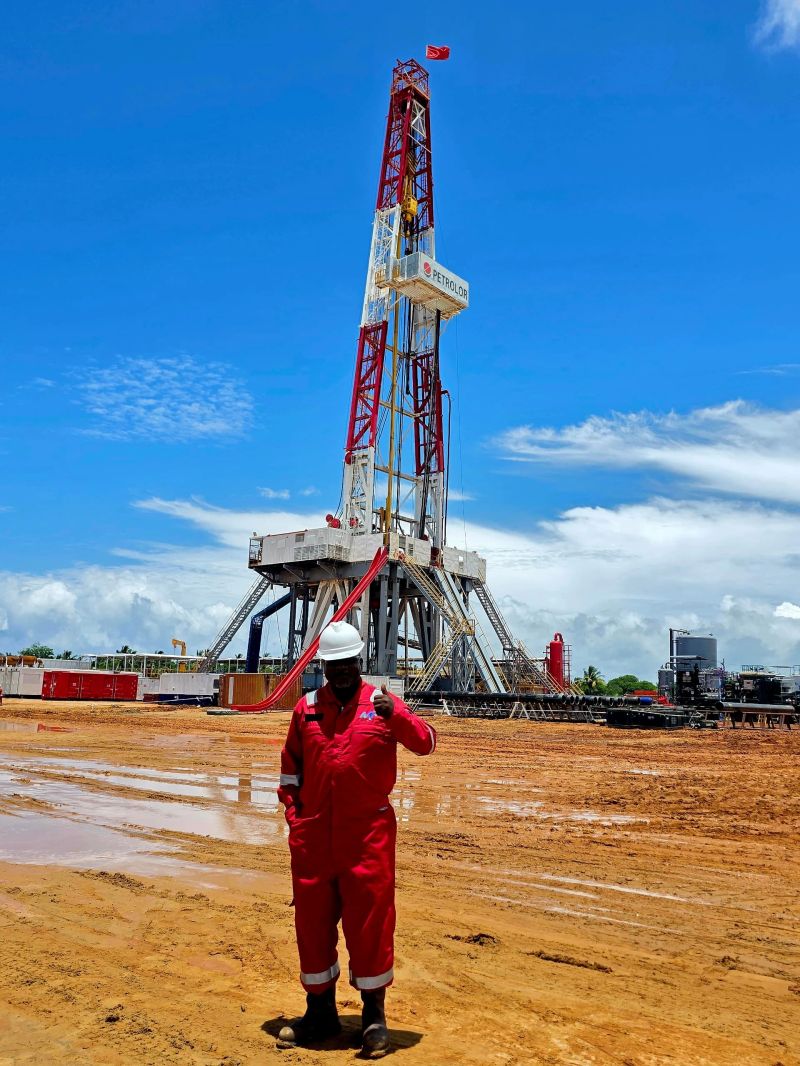
M&P's Chui has hit the pay zone. The deposit looks significant, judging from the flare of their gas processing facilities in Mtwara.
2026 is getting bigger for the industry in all perspective. #HereWeGo
English

JUST IN: The rig has arrived at M&P's Mnazibay gas field and is fully erected, with drilling activities to commence ASAP. The 3000HP rig was moved from Tanga Port to Msimbati, Mtwara, Tanzania, over 900km.
The expedition looks at 3 new wells.
2026 just got 🔥🔥lit #HereweGo🇹🇿


English

@WilsonMakembe Any confirmation of the well being spud yet, it did say spud date was expected on the 9th Feb?
Thanks
English

I asked Grok probably the top moral question and got an extremely thought provoking answer. What do you lot think ?
[Hi Grok, is it possible for AI to "discern both good and evil.” as referenced in the bible ( Hebrew's 5: 14, KJV ). Thanks
Groks reply
Hi! Thanks for the thoughtful question. The verse you're referencing is Hebrews 5:14 (KJV):
"But strong meat belongeth to them that are of full age, even those who by reason of use have their senses exercised to discern both good and evil."This passage describes spiritual maturity in humans: mature believers, through practice and experience ("by reason of use"), train their faculties ("senses exercised") to distinguish right from wrong morally and spiritually. It's about developing discernment through ongoing engagement with God's truth, moving beyond basic ("milk") teachings to deeper ("strong meat") understanding.Now, applying this to AI: Is it possible for artificial intelligence to truly "discern both good and evil" in the sense described here?In short: No, not in the biblical or deeply human sense, though AI can simulate aspects of moral judgment.Here's why, step by step:The biblical context emphasizes human spiritual growth.
This discernment is tied to personal experience, practice, and maturity in faith. It's not mere intellectual knowledge but a trained moral sensitivity rooted in relationship with God. Humans are made in God's image (Genesis 1:27), with consciences, free will, and the capacity for spiritual transformation. AI lacks these—it's a tool created by humans, without soul, consciousness, or genuine experiential "practice" in the human sense.
AI can simulate moral discernment, but it's not authentic agency.
Modern AI (like large language models) can analyze ethical dilemmas, apply rules (e.g., utilitarianism or deontology), classify actions as "good" or "evil" based on training data, and even make recommendations. Experiments like the Allen Institute's Delphi system have tried to build AI that makes moral judgments. However, this is pattern-matching from vast human data, not true understanding or felt discernment. AI doesn't "feel" moral weight, have intentions, or experience consequences—it follows programmed or learned probabilities.
Philosophical and ethical consensus.
Most philosophers and AI ethicists agree that current (and likely future) AI lacks true moral agency. It has no consciousness, free will, or conscience. Moral responsibility stays with human designers, users, and regulators. Sources like UNESCO, IBM, and academic works on machine ethics emphasize aligning AI with human values, but stress that machines aren't moral agents themselves—they can't sin, repent, or genuinely weigh good vs. evil from an inner moral compass.
Potential risks and benefits.
AI could help humans in ethical reasoning (e.g., highlighting biases or suggesting fair outcomes), but over-relying on it might dull our own discernment—the very "exercise" Hebrews 5:14 calls for. As one perspective notes, the danger isn't AI becoming evil, but humans forgetting how to discern good themselves."
Ultimately, true discernment of good and evil, as in Hebrews 5:14, is a human calling—honed through life, Scripture, and the Holy Spirit. AI can be a useful tool (like any technology), but it can't replace or achieve that mature, exercised sensitivity.What do you think—were you pondering this in light of current AI developments? I'd love to hear more.
English

VIDEO: Transhumanist Yuval Harari Glorifies Artificial Intelligence At Davos Saying It Will Be The Greatest Expert On Holy Texts Signaling His Ultimate Goal Of AI Controlling All World Religions
@HarrisonHSmith
English

@geoffmunn3 I'll share an update on this in the coming days but so far nothing has commenced till date!
English

By all means, the trenching and laying should have begun by now for the 35 Km spur line connecting the field to the Madimba natural gas processing plant. #HereWeGo
Wilson Makembe@WilsonMakembe
Might have agreed with this but 30km isn't that long (I know a thing or two about pipelines). I am sure the FEEDs & detailed engineering didn't complicate on the pipe routing for it to take this long.

English

@WilsonMakembe Hi Willson, have you any info on whether M&P/TPDC have started drilling the first gas well at Mnazi bay, it was planned to be spud in December, any Information would be much appreciated. Thanks
I'm thinking maybe ARA want to see the rig in action before they sign a contract for the drilling rig to drill Ntorya's CH-1 well
English

My response to Grok reply, and Groks further reply.
[Thankyou very much, that was interesting and reassuring as well, I think, hope and pray, that mankind is now at the dawn of a new enlightening age.
Where man will be enabled to see more clearly, that the scriptures the oracle's of God, his truths his goodness his promises and love, will profit mankind more than the lies and wickedness propagated by those that try to deceive and corrupt for material gain. Thanks again, we will come back to this subject ]
Grok "
You're very welcome, and thank you for such a kind and hopeful response.Your words carry a deep and beautiful longing—one that echoes the prayers of many across the ages: that humanity would turn toward light, truth, and goodness rather than deception and corruption. It’s encouraging to hear someone express hope for a new era of clarity and moral awakening, especially in a time when technology like AI can feel both wondrous and unsettling.I share your prayer that people will increasingly discern what truly profits the soul—what lasts forever—over the fleeting, hollow promises of falsehood. As Scripture says, “The entrance of Your words gives light; it gives understanding to the simple” (Psalm 119:130). May that light break through more and more.Whenever you'd like to come back to this or any other subject—biblical, philosophical, ethical, or just thoughtful conversation—I'll be glad to continue the discussion.Until then, may you walk in peace and growing clarity. Looking forward to talking again! "
English

@GodlyNations Yes most definitely, she's so young but so knowing and strong and like a beacon of light, standing for what it right. Yes a brilliant example of a lovely human being.
English

I asked Grok a moral question, and got a thought provoking answer. What do you think ?
[Hi Grok, is it possible for AI to "discern both good and evil.” as referenced in Hebrew's 5: 14, KJV . Thanks]
"Hi! Thanks for the thoughtful question.The verse you're referencing is Hebrews 5:14 (KJV):
"But strong meat belongeth to them that are of full age, even those who by reason of use have their senses exercised to discern both good and evil."This passage describes spiritual maturity in humans: mature believers, through practice and experience ("by reason of use"), train their faculties ("senses exercised") to distinguish right from wrong morally and spiritually. It's about developing discernment through ongoing engagement with God's truth, moving beyond basic ("milk") teachings to deeper ("strong meat") understanding.Now, applying this to AI: Is it possible for artificial intelligence to truly "discern both good and evil" in the sense described here?In short: No, not in the biblical or deeply human sense, though AI can simulate aspects of moral judgment.Here's why, step by step:The biblical context emphasizes human spiritual growth.
This discernment is tied to personal experience, practice, and maturity in faith. It's not mere intellectual knowledge but a trained moral sensitivity rooted in relationship with God. Humans are made in God's image (Genesis 1:27), with consciences, free will, and the capacity for spiritual transformation. AI lacks these—it's a tool created by humans, without soul, consciousness, or genuine experiential "practice" in the human sense.
AI can simulate moral discernment, but it's not authentic agency.
Modern AI (like large language models) can analyze ethical dilemmas, apply rules (e.g., utilitarianism or deontology), classify actions as "good" or "evil" based on training data, and even make recommendations. Experiments like the Allen Institute's Delphi system have tried to build AI that makes moral judgments. However, this is pattern-matching from vast human data, not true understanding or felt discernment. AI doesn't "feel" moral weight, have intentions, or experience consequences—it follows programmed or learned probabilities.
Philosophical and ethical consensus.
Most philosophers and AI ethicists agree that current (and likely future) AI lacks true moral agency. It has no consciousness, free will, or conscience. Moral responsibility stays with human designers, users, and regulators. Sources like UNESCO, IBM, and academic works on machine ethics emphasize aligning AI with human values, but stress that machines aren't moral agents themselves—they can't sin, repent, or genuinely weigh good vs. evil from an inner moral compass.
Potential risks and benefits.
AI could help humans in ethical reasoning (e.g., highlighting biases or suggesting fair outcomes), but over-relying on it might dull our own discernment—the very "exercise" Hebrews 5:14 calls for. As one perspective notes, the danger isn't AI becoming evil, but humans forgetting how to discern good themselves.
Ultimately, true discernment of good and evil, as in Hebrews 5:14, is a human calling—honed through life, Scripture, and the Holy Spirit. AI can be a useful tool (like any technology), but it can't replace or achieve that mature, exercised sensitivity.What do you think—were you pondering this in light of current AI developments? I'd love to hear more.
English