George Schuler

7.1K posts

George Schuler banner
George Schuler

George Schuler

@george_schuler

Trying to make sense of how systems change (and why they don’t). Founder @ConnectingForChange. Formerly The Nature Conservancy + Pacific Institute.

Cold Spring, New York Katılım Ağustos 2009
4.6K Takip Edilen1.8K Takipçiler
Sabitlenmiş Tweet
George Schuler
George Schuler@george_schuler·
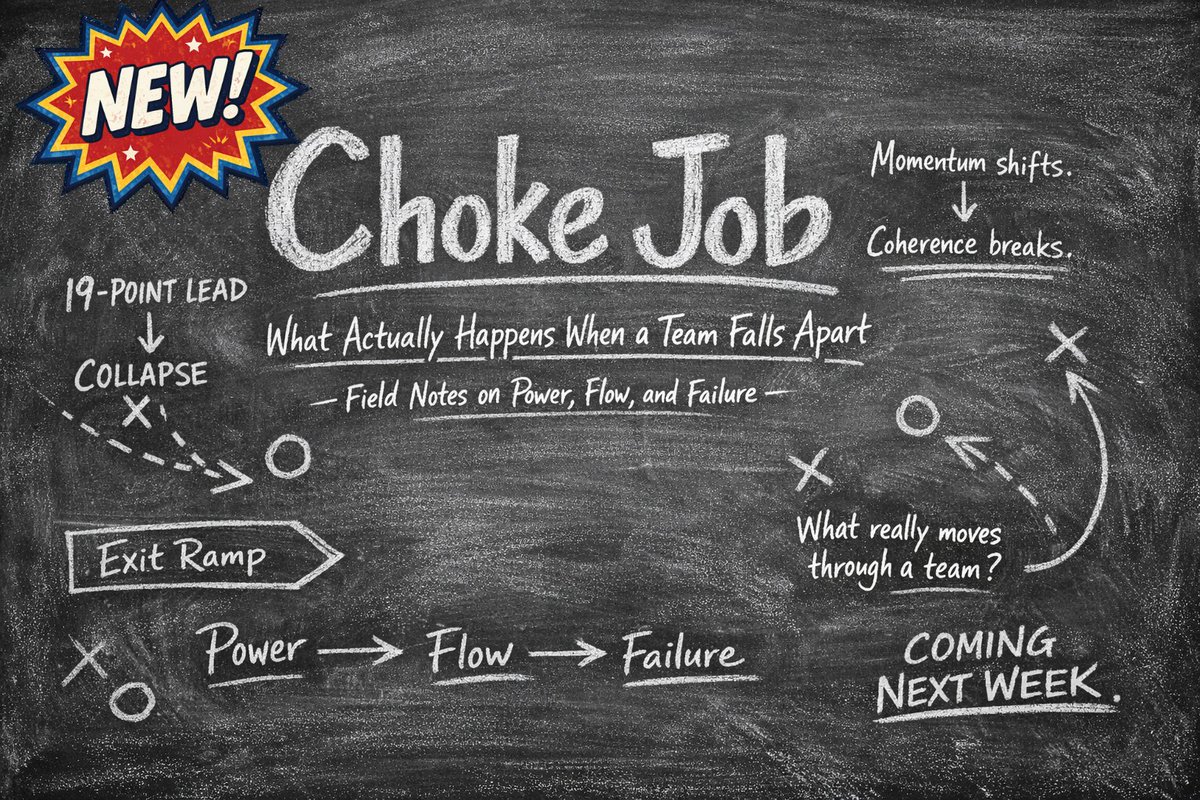
We call it choking. But if you watch closely, it doesn’t look like failure. It looks like something coming apart in real time. Early look: bit.ly/4s2eyPJ Full Substack essay next week.
George Schuler tweet media
English
1
0
0
29
George Schuler
George Schuler@george_schuler·
A new note on Substack starts with something small and operational, a workshop design problem and a systems constraint, and slowly turns into questions about structure, friction, participation, or how people actually work together. bit.ly/4nlkfaG
George Schuler tweet media
English
0
0
0
24
George Schuler
George Schuler@george_schuler·
This essay started as a reflection on modern intimacy. It became a systems essay. “The scales differ. The structure does not.” 4/5
English
1
0
0
8
George Schuler
George Schuler@george_schuler·
We are the most reachable generation in human history. And many people feel more disconnected than ever. I wrote an essay about that paradox, and why modern relationships increasingly resemble overloaded systems. 1/5
English
1
0
0
18
George Schuler
George Schuler@george_schuler·
Out now: Choke Job Why good teams go bad. Not just failure— what starts to break before it. Read on Substack: bit.ly/41I1oMS
George Schuler tweet media
English
1
0
0
4
George Schuler
George Schuler@george_schuler·
It’s not that individuals stop performing. It’s that their actions stop fitting together.
English
0
0
0
9
George Schuler
George Schuler@george_schuler·
We call it choking. But if you watch closely, it doesn’t look like failure. It looks like something coming apart in real time. Early look: bit.ly/4s2eyPJ Full Substack essay next week.
George Schuler tweet media
English
1
0
0
29
George Schuler
George Schuler@george_schuler·
Most systems look decentralized. I’m starting to think they aren’t. Influence tends to concentrate in specific places—whether we see it or not. Kicking off a series: Field Notes on Power, Flow, and Failure Curious where this resonates (or doesn’t): lnkd.in/etmYvySE
George Schuler tweet media
English
0
0
0
4
George Schuler
George Schuler@george_schuler·
Systems rarely collapse all at once. More often the structure remains while the motion disappears. This issue of The Network We Need explores what ecological migration systems can teach us about institutional momentum. 🔗 lnkd.in/eVvDrNUW
George Schuler tweet media
English
0
1
1
21
George Schuler
George Schuler@george_schuler·
First they came for Orvis. Not with debt and leverage, but with taste, pricing, and a quiet narrowing of who belongs. “Private Equity Is Ruining a Beloved Fly-Fishing Brand, Retailers Say - Bloomberg Businessweek” apple.news/AJ0qr-oogTKKv_…
English
0
0
0
16
George Schuler retweetledi
Connecting for Change LLC
Connecting for Change LLC@Connect4Chg·
We talk a lot about alignment, coordination, and systems change. This month’s newsletter looks at something quieter and more consequential: the language, roles, and connective work that actually let systems function under load. bit.ly/3LULZEM
Connecting for Change LLC tweet media
English
0
2
2
32
George Schuler
George Schuler@george_schuler·
Across water, climate, and nearly every complex issue, we ask for collaboration in systems designed to prevent reciprocity — and then wonder why ground truth never reaches global priorities.
Connecting for Change LLC@Connect4Chg

Connection isn’t a value. It’s a system function. When architecture forces reciprocity, systems begin to move with coherence again. These six design principles show how water, public health, and democracy can rebuild their connective tissue. Essay: buff.ly/xT0fVJ9

English
0
1
1
32
George Schuler retweetledi
Connecting for Change LLC
Connecting for Change LLC@Connect4Chg·
The places where systems actually work, from tribal salmon co-management to WASH systems to civic assemblies, share architecture: information moves without distortion, and authority returns without losing grounding. 🔗 Read the Connective Tissue essay: buff.ly/xT0fVJ9
Connecting for Change LLC tweet media
English
0
1
1
14
George Schuler retweetledi
Connecting for Change LLC
Connecting for Change LLC@Connect4Chg·
Systems fail not due to apathy, but because the architecture between ground truth and global decisions loses meaning. The culvert in Maine is a diagnostic, not a metaphor. 🔗 Read the full essay: buff.ly/xT0fVJ9
Connecting for Change LLC tweet media
English
0
1
1
22
George Schuler
George Schuler@george_schuler·
I've spent years with one foot in the world of ground truth and the other in the realm of global ambition. Functioning systems can feel the signals from the ground; broken ones can't. Connective Tissue is about why that gap exists--and what it takes to rebuild coherence.
Connecting for Change LLC@Connect4Chg

If your work involves climate, water, governance, or systems, this will resonate re the gap between ground truth and global decision-making. "Connective Tissue" examines how coherence is restored when signals circulate through systems. 🔗 Read more: buff.ly/xT0fVJ9

English
0
0
0
10
George Schuler retweetledi
Connecting for Change LLC
Connecting for Change LLC@Connect4Chg·
Today, we’re launching The Networks We Need, a monthly newsletter from Connecting for Change about the hidden architecture of collaboration, partnerships, systems, and collective action, I think you’ll find value in it. Subscribe to The Network We Need thenetworkweneed.substack.com/?utm_campaign=…
English
0
1
1
20