

German Castignani
358 posts

German Castignani retweetledi

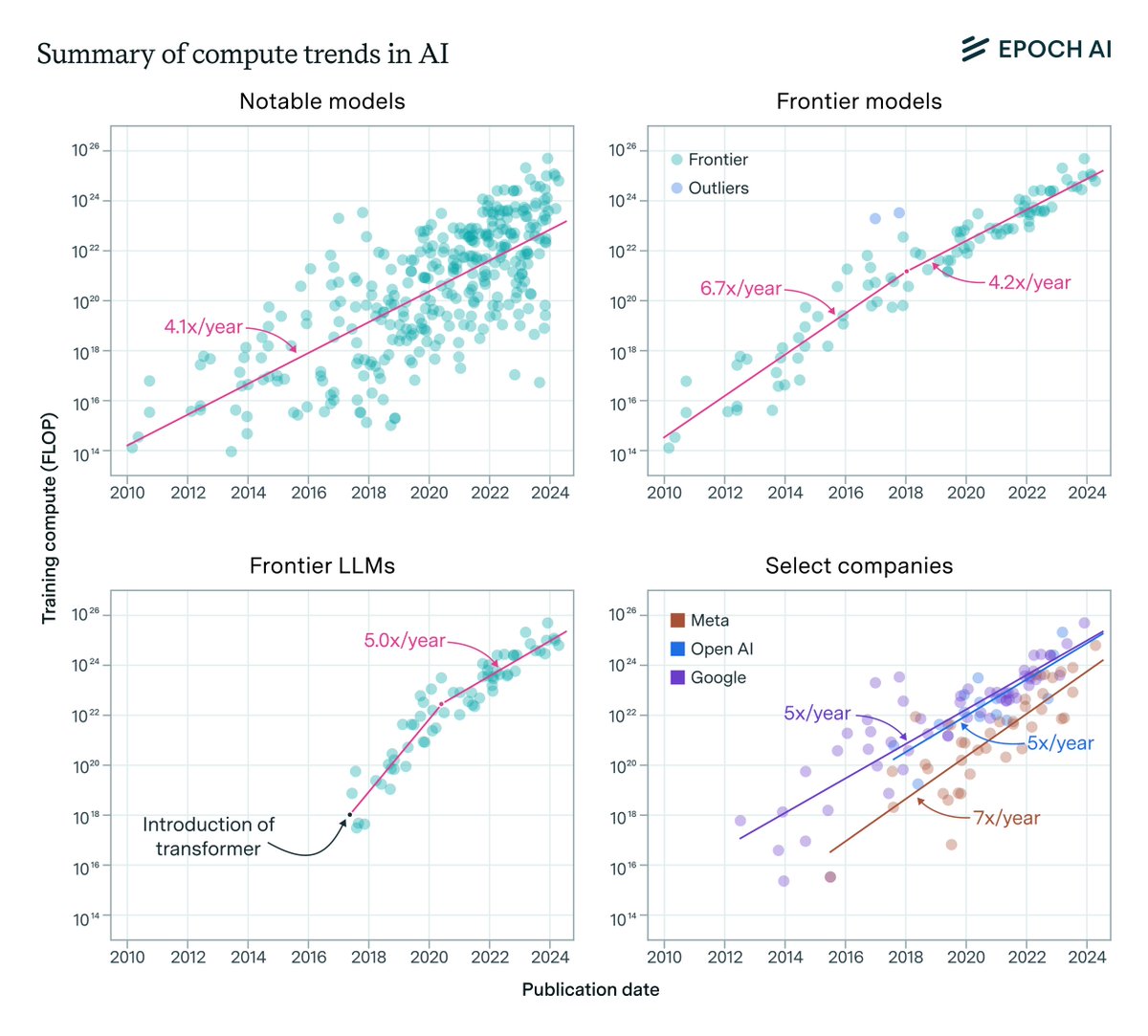
1/ How quickly are state-of-the-art AI models growing?
The amount of compute used in AI training is a critical driver of progress in AI. Our analysis of over 300 machine learning systems reveals that the amount of compute used in training is consistently being scaled up at 4-5x/year.
Highlights in thread 🧵
English
German Castignani retweetledi

German Castignani retweetledi

You were looking for Electric Paradise?
Well, look no further,
⚡️⚡️⚡️
BIENVENUE EN FRANCE 🇫🇷🇫🇷🇫🇷
⚡️⚡️⚡️
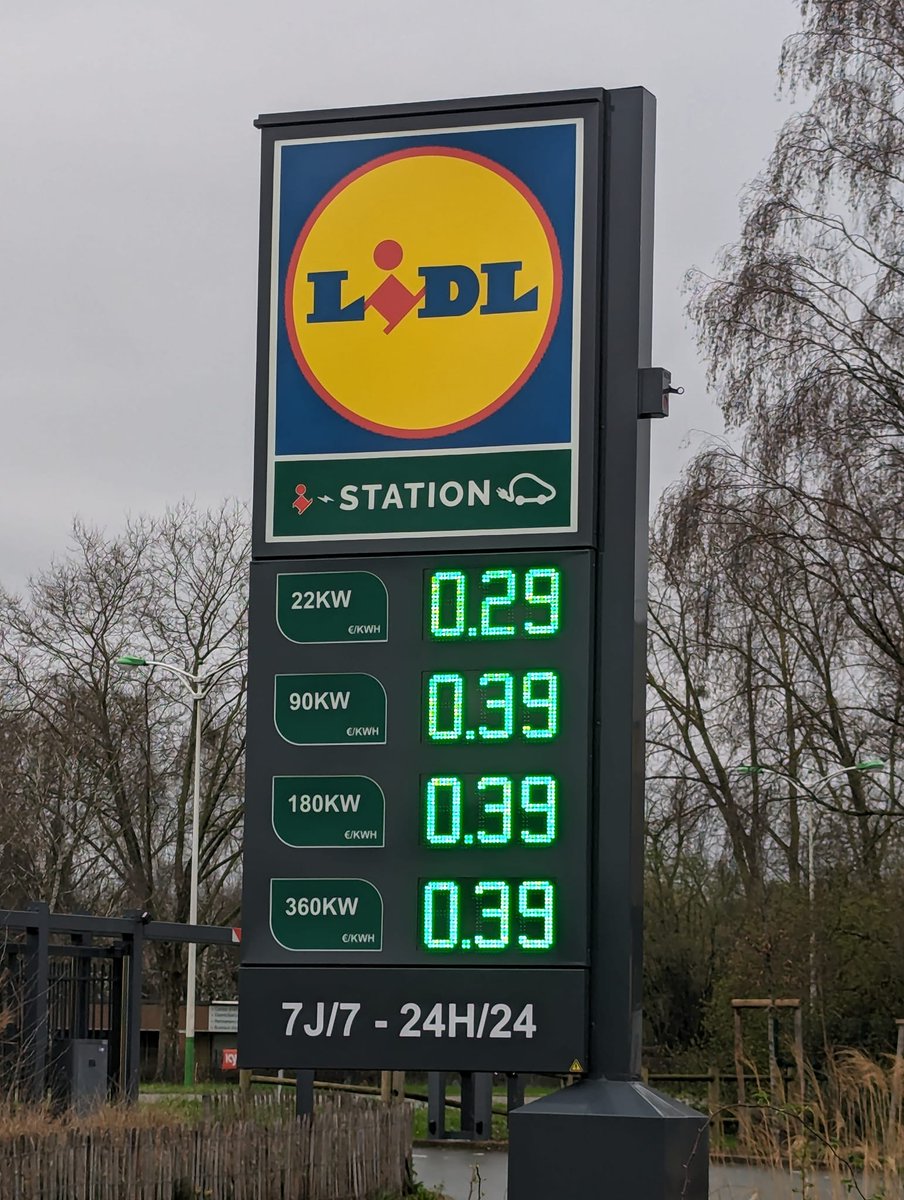
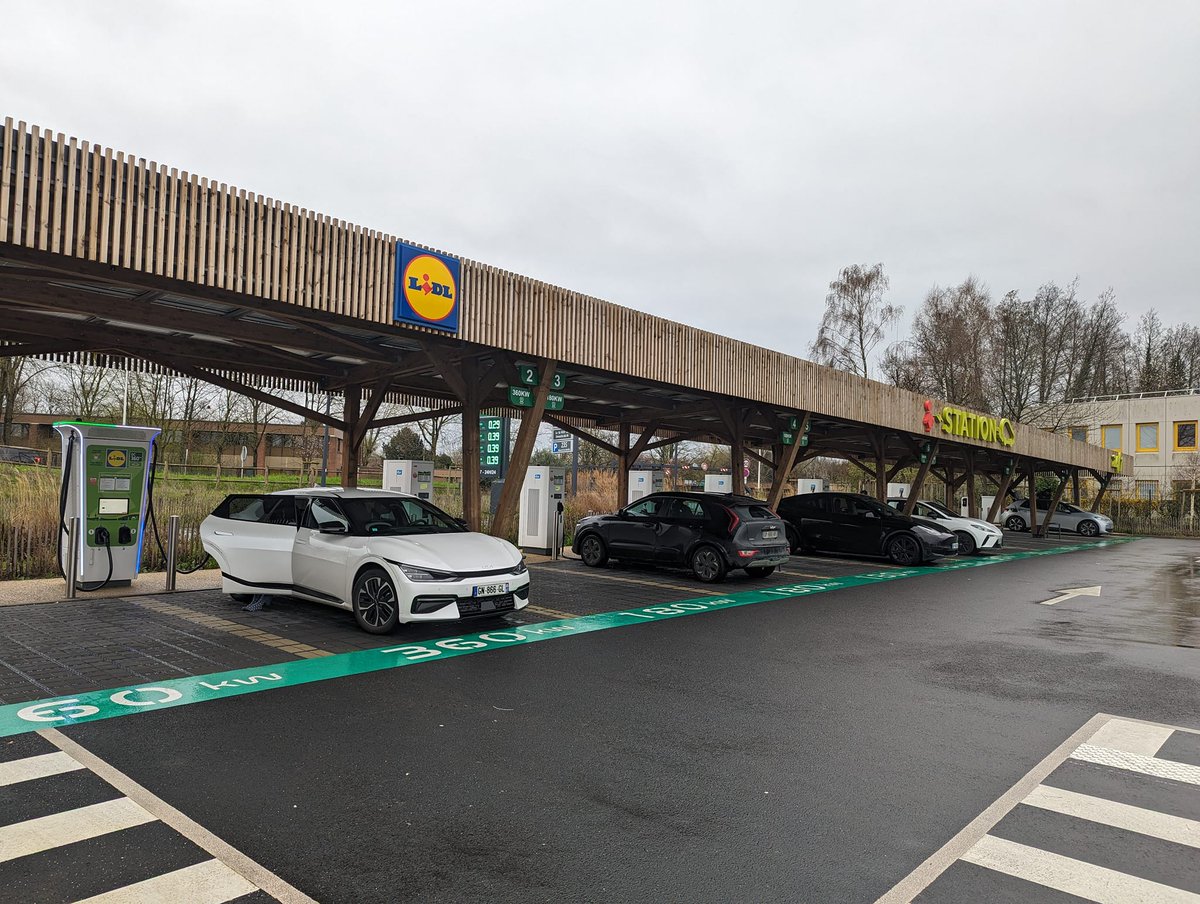
Welcome to @lidlfrance: local leaders in affordable (fast) charging
up to 360 kW (?) at € 0,39/kWh
#adhoc payment (reading this, #Deutschland?)
@BaltzliOlivier 📸
#LIDL
English
German Castignani retweetledi

If you think OpenAI Sora is a creative toy like DALLE, ... think again. Sora is a data-driven physics engine. It is a simulation of many worlds, real or fantastical. The simulator learns intricate rendering, "intuitive" physics, long-horizon reasoning, and semantic grounding, all by some denoising and gradient maths.
I won't be surprised if Sora is trained on lots of synthetic data using Unreal Engine 5. It has to be!
Let's breakdown the following video. Prompt: "Photorealistic closeup video of two pirate ships battling each other as they sail inside a cup of coffee."
- The simulator instantiates two exquisite 3D assets: pirate ships with different decorations. Sora has to solve text-to-3D implicitly in its latent space.
- The 3D objects are consistently animated as they sail and avoid each other's paths.
- Fluid dynamics of the coffee, even the foams that form around the ships. Fluid simulation is an entire sub-field of computer graphics, which traditionally requires very complex algorithms and equations.
- Photorealism, almost like rendering with raytracing.
- The simulator takes into account the small size of the cup compared to oceans, and applies tilt-shift photography to give a "minuscule" vibe.
- The semantics of the scene does not exist in the real world, but the engine still implements the correct physical rules that we expect.
Next up: add more modalities and conditioning, then we have a full data-driven UE that will replace all the hand-engineered graphics pipelines.
openai.com/sora
English
German Castignani retweetledi
This is an example of OpenAI’s new text to video product. Prompt: “Historical footage of California during the gold rush”
English
German Castignani retweetledi

Meta’s LLM for software testing work is super exciting.
This paper describes Meta’s TestGen-LLM tool, which uses LLMs to automatically improve existing human-written tests. TestGen-LLM verifies that its generated test classes successfully clear a set of filters that assure measurable improvement over the original test suite, thereby eliminating problems due to LLM hallucination. We describe the deployment of TestGen-LLM at Meta test-a-thons for the Instagram and Facebook platforms. In an evaluation on Reels and Stories products for Instagram, 75% of TestGen-LLM’s test cases built correctly, 57% passed reliably, and 25% increased coverage. During Meta’s Instagram and Facebook test-a-thons, it improved 11.5% of all classes to which it was applied, with 73% of its recommendations being accepted for production deployment by Meta software engineers. We believe this is the first report on industrial scale deployment of LLM-generated code backed by such assurances of code improvement.

English
German Castignani retweetledi

We have heard many extrapolations of Mistral AI’s position on the AI Act, so I’ll clarify.
In its early form, the AI Act was a text about product safety. Product safety laws are beneficial to consumers. Poorly designed use of automated decision-making systems can cause significant damage in many areas. In healthcare, a diagnosis assistant based on a poorly trained prediction system poses risks to the patient. Product safety regulation should be proportional to the risk level of the use case: it is undesirable to regulate entertainment software in the same way as health applications. The original EU AI Act found a reasonable equilibrium in that respect. We firmly believe in hard laws for product safety matters; the many voluntary commitments we see today bear little value.
This should remain the only focus of the AI Act. The EU AI Act now proposes to regulate “foundational models”, i.e. the engine behind some AI applications. We cannot regulate an engine devoid of usage. We don’t regulate the C language because one can use it to develop malware. Instead, we ban malware and strengthen network systems (we regulate usage). Foundational language models provide a higher level of abstraction than the C language for programming computer systems; nothing in their behaviour justifies a change in the regulatory framework.
Enforcing AI product safety will naturally affect the way we develop foundational models. By requiring AI application providers to comply with specific rules, the regulator fosters healthy competition among foundation model providers. It incentivises them to develop models and tools (filters, affordances for aligning models to one's beliefs) that allow for the fast development of safe products. As a small company, we can bring innovation into this space — creating good models and designing appropriate control mechanisms for deploying AI applications is why we founded Mistral. Note that we will eventually supply AI products, and we will craft them for zealous product safety.
With a regulation focusing on product safety, Europe would already have the most protective legislation globally for citizens and consumers. Any foundational model would be affected by second-order regulatory pressure as soon as they are exposed to consumers: to empower diagnostic assistants, entertaining chatbots, and knowledge explorers, foundational models should have controlled biases and outputs.
Recent versions of the AI Act started to address ill-defined “systemic risks”. In essence, the computation of some linear transformations, based on a certain amount of calculation, is now considered dangerous. Discussions around that topic may occur, and we agree that they should accompany the progress of technology. At this stage, they are very philosophical – they anticipate exponential progress in the field, where physics (scaling laws!) predicts diminishing returns with scale and the need for new paradigms. Whatever the content of these discussions, they certainly do not pertain to regulation around product safety. Still, let’s assume they do and go down that path.
The AI Act comes up with the worst taxonomy possible to address systemic risks. The current version has no set rules (beyond the term highly capable) to determine whether a model brings systemic risk and should face heavy or limited regulation. We have been arguing that the least absurd set of rules for determining the capabilities of a model is post-training evaluation (but again, applications should be the focus; it is unrealistic to cover all usages of an engine in a regulatory test), followed by compute threshold (model capabilities being loosely related to compute). In its current format, the EU AI Act establishes no decision criteria. For all its pitfalls, the US Executive Order bears at least the merit of clarity in relying on compute threshold.
The intention of introducing a two-level regulation is virtuous. Its effect is catastrophic. As we understand it, introducing a threshold aims to create a free innovation space for small companies. Yet, it effectively solidifies the existence of two categories of companies: those with the right to scale, i.e., the incumbent that can afford to face heavy compliance requirements, and those that can’t because they lack an army of lawyers, i.e., the newcomers. This signals to everyone that only prominent existing actors can provide state-of-the-art solutions.
Mechanistically, this is highly counterproductive to the rising European AI ecosystem. To be clear, we are not interested in benefiting from threshold effects: we play in the main league, we don’t need geographical protection, and we simply want rules that do not give an unfair advantage to incumbents (that all happen to be non-European).
Transparency around technology development benefits safety and should be encouraged. Finally, we have been vocal about the benefits of open-sourcing AI technology. This is the best way to subject it to the most rigorous scrutiny. Providing model weights to the community (or even better, developing models in the open end-to-end, which is not something we do yet) should be well regarded by regulators, as it allows for more interpretable and steerable applications. A large community of users can much more efficiently identify the flaws of open models that can propagate to AI applications than an in-house team of red-teamers. Open models can then be corrected, making AI applications safer. The Linux kernel is today deemed safe because millions of eyes have reviewed its code in its 32 years of existence. Tomorrow’s AI systems will be safe because we’ll collectively work on making them controllable. The only validated way of working collectively on software is open-source development.
Long prose, back to building!
English
German Castignani retweetledi

2 milliards d'euros pour l’usine de batteries électriques de Verkor à Dunkerque.
Avec le soutien de France 2030 et de l’Union européenne, c’est un nouveau record pour une startup française.
La France attire, se réindustrialise, décarbone son économie, crée des emplois !
Français
German Castignani retweetledi

🇩🇪German electricity⚡consumers paid €320 billion to help subsidize wind, solar & biomass operators.
Starting in 2000, the "Renewable Energy Sources Act (EEG) surcharge" was included in most consumer electricity bills to finance high feed-in-tariffs (FIT) and "premium" rates received by EEG operators. The surcharge increased electricity prices, energy poverty & income inequality (see below).
In their Coalition Agreement in 2021 the new (SPD/FDP/Greens) Government recognized the inequitable impact of these subsidies (and the negative efficiency effects of high electricity prices) and committed to speeding up the change in recovery mechanism (while maintaning the subsidies):
"In order to ensure socially just energy prices that are competitive for the economy ... we will end the financing of the EEG surcharge via the electricity price. We will therefore transfer it to the budget..."
This subsidy transfer from "rate base" to "tax base" was completed in 2022, by which time cumulative EEG costs totalled €350 billion (constant, 2022), with €320 billion coming from the EEG surcharge. For 2023-26, EEG costs are forecast at €100 billion (constant, 2022), to be financed by the federal budget. EEG costs will continue well past 2027....
For context, €350 billion was 9% of German GDP in 2022.

Edgardo Sepulveda@E_R_Sepulveda
"Does renewable electricity hurt the poor?" In Germany, YES. Yet more researchers find that the renewable support levy (EEG) paid by rate payers and used in Germany to help finance wind & solar operators resulted in higher electricity prices and was regressive: increased energy poverty & income inequality. sciencedirect.com/science/articl…
English
German Castignani retweetledi

🇪🇺⚡ Ranked: EU countries by share of #cleanelectricity in 2022
How does your country measure up?
ember-climate.org/insights/resea…

English
@augustocastign1 @CarlosMaslaton Proba Vichy Catalan, bicarbonatada
Español

@CarlosMaslaton Botella de vidrio Carlos, va muy bien. En el bar central de Ricard Camarena

Alboraya, España 🇪🇸 Español
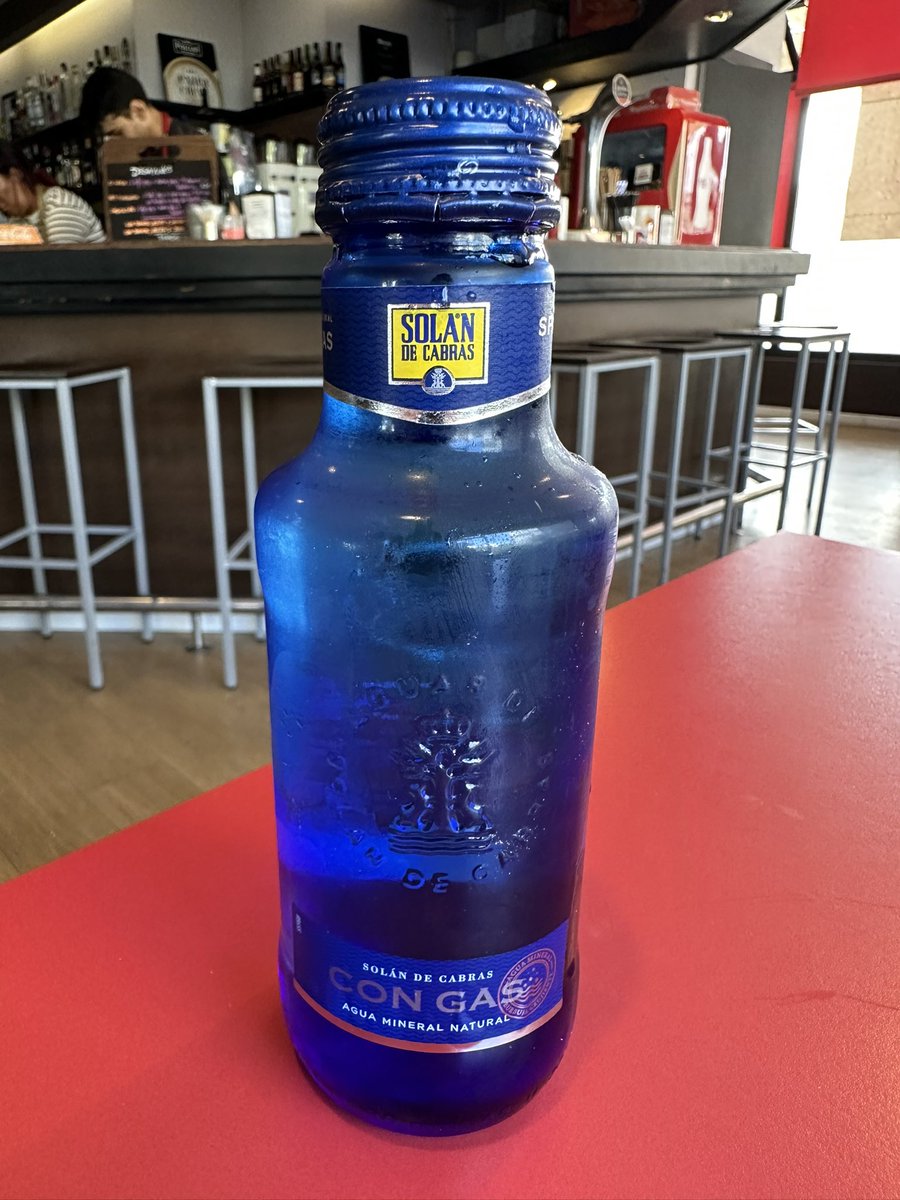
Viene cada vez mejor, la Solán de Cabras, de Beteta, Cuenca, Castilla-La Mancha. Creo que le meten más fuerte que antes el gas y la botella azul recontra fría la rompe. Arranco con dos de estas esta tarde en La Coruña, Galicia.
Español
German Castignani retweetledi

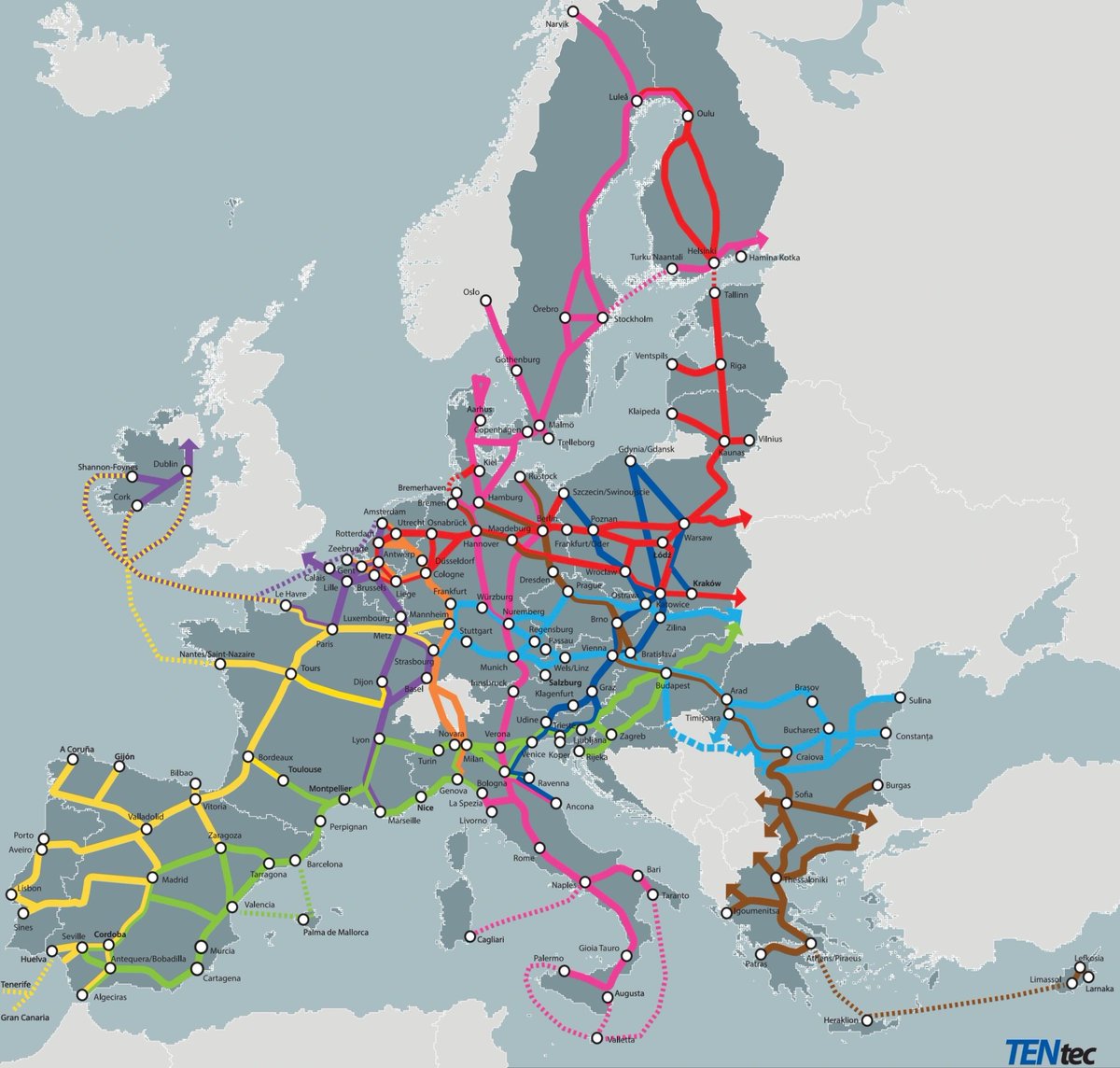
El Parlamento Europeo aprobó ayer nuevas reglas dentro del paquete "Fit for 55" destinado a reducir las emisiones en un 55% para 2030.
Europa exigirá que se coloquen cargadores con una potencia de al menos 400 kW al menos cada 60 km para 2026. En 2028, la potencia mínima aumentará a 600 kW.
Para 2027, Europa desarrollará una base de datos pública de estas estaciones de carga con información sobre disponibilidad, tiempos de espera y precios para diferentes estaciones, independientemente de la red.
También se establecen mejoras para la carga de camiones y autobuses, y métodos de pago más sencillos.
Fuente: electrek.co/2023/07/11/eur…
Español
German Castignani retweetledi


German Castignani retweetledi

🟢Las ciudades y pueblos tienen y tendrán un papel clave en el nuevo paradigma energético.
Desde Fundación Renovables ayudamos a los municipios a trazar planes y estrategias para acelerar la #transición energética⚡.
¿Quieres saber más? 👉fundacionrenovables.org/documento/como…

Español
German Castignani retweetledi

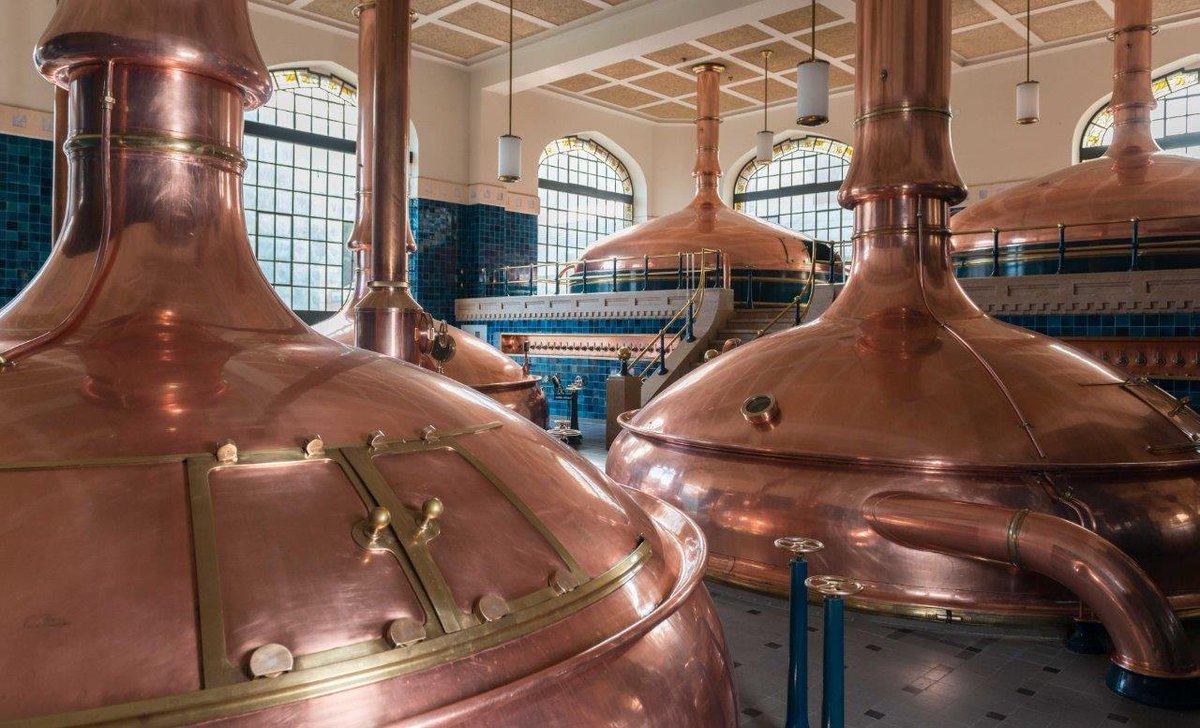
Beer made with heat pumps is becoming a thing.
Yes, that's right - a 🧵 on the electrification of beer brewing.
English
German Castignani retweetledi
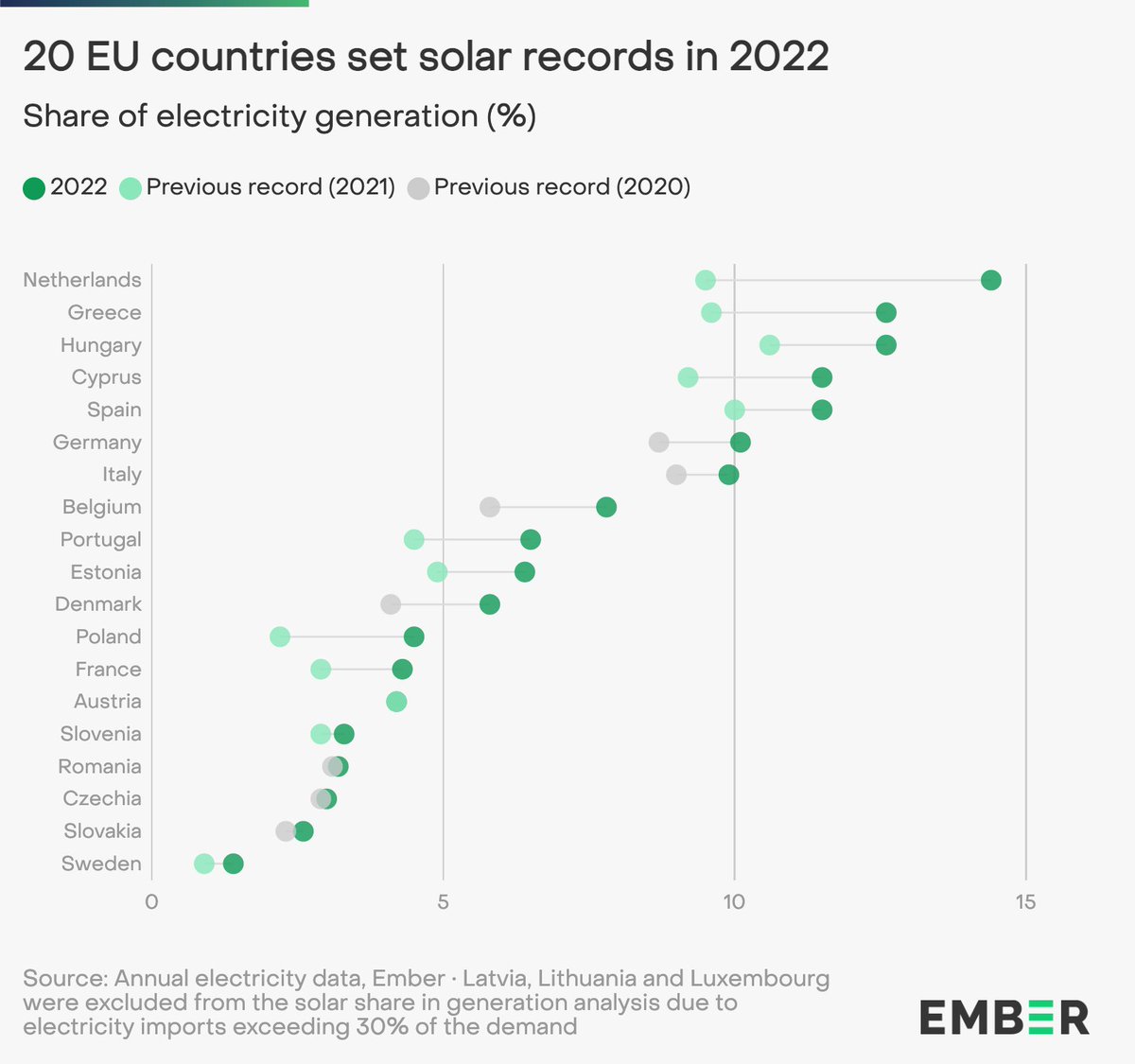
Today is #EuropeanSolarDay ☀️
Last year, solar panels produced a record 7% of EU electricity. The Netherlands led the way at 14%.
Explore EU solar trends 👉 #chapter-4-electricity-source-trends-solar" target="_blank" rel="nofollow noopener">ember-climate.org/insights/resea…
English
Estoy buscando un micrófono radial histórico con la identificación original de este de LRA del General Perón en la foto. Si alguien sabe me dice, lo compro desde luego.

Español
@RCachanosky @OficialEdesur @alecachanosky 2 centavos de dolar el kWh. Un regalo. Hoy se paga entre 20 y 30 veces mas caro en paises que cuidan la energía. Hay márgen para seguir ajustando la tarifa.
Español

UN ROBO ARMADA DE EDESUR @OficialEdesur
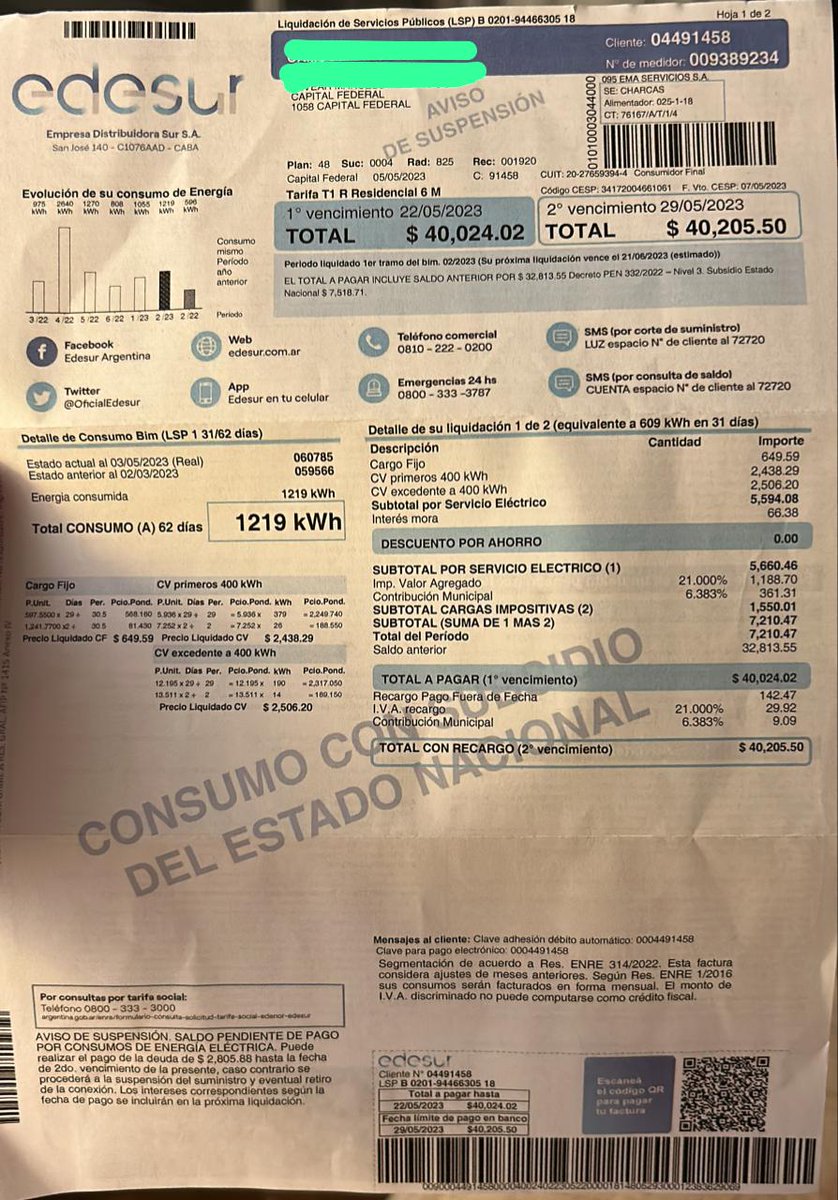
Mi sobrina @alecachanosky venía pagando $ 6.000 de luz. Este mes le llegó $ 40.000. Casi 7 veces más de factura. Vive en depto de 3 ambientes en CABA.
Llamó a @OficialEdesur y le dijeron que los $ 34.000 restantes son de consumos que ellos no facturaron en 2022, sin detallar a qué meses y consumos corresponde. Pagas o te cortamos la luz.
Le dijeron que hay un plan de pagos.
Entra al sitio de @OficialEdesur y no funciona el botón de plan de pagos
DESCARO ABSOLUTO. NO ES QUE LE QUITARON EL SUBSIDIO, ES QUE SE LES OCURRE FACTURARLE CONSUMOS QUE ELLOS DICEN QUE NO FACTURARON ANTES SIN DAR EXPLICACIONES DE QUÉ CONSUMOS SON.
UN ROBO A MANO ARMADA
Español