Gilberto Borça Jr.
7K posts

Gilberto Borça Jr.
@gilbertoborca
Macroeconomia: Crédito bancário, Inflação, Pol. Monetária e Nível de atividade. Economista e Mestre em Economia pelo IE-UFRJ. MBA em Finanças pelo Coppead-UFRJ.
Katılım Şubat 2011
801 Takip Edilen7.7K Takipçiler
Sabitlenmiş Tweet
Gilberto Borça Jr. retweetledi

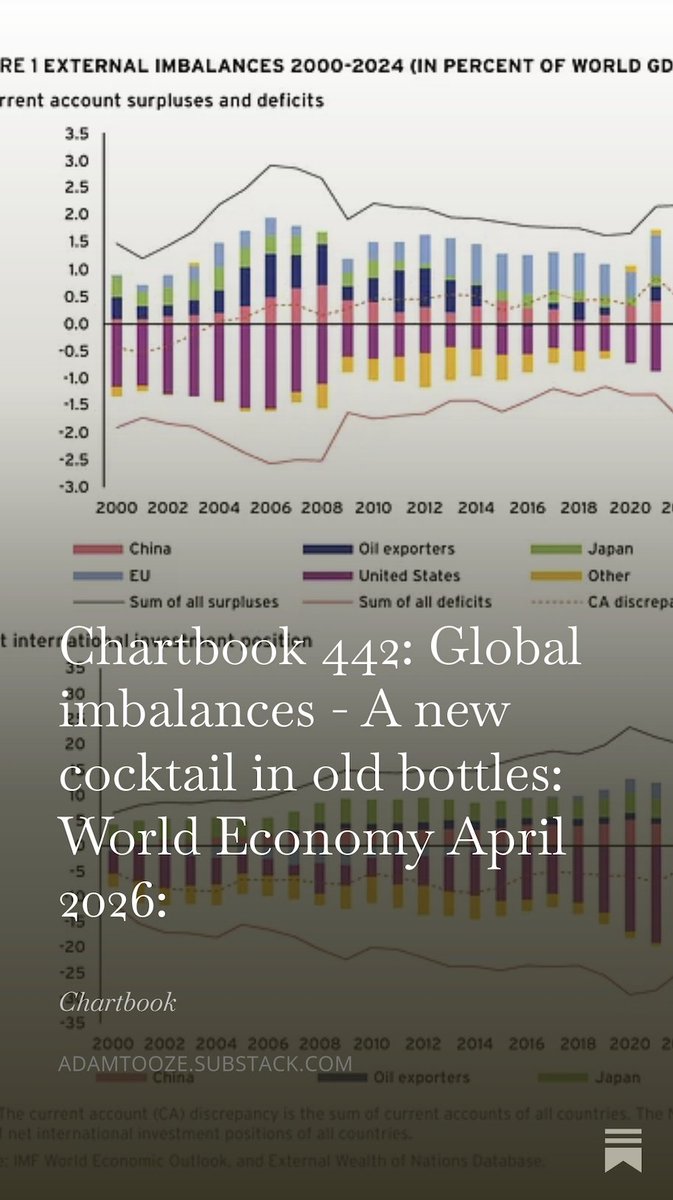
Global imbalances - April 2026. A new cocktail in old bottles.
The latest Chartbook newsletter just dropped.
Check it out here:
tinyurl.com/6zwwzydk

English
Gilberto Borça Jr. retweetledi

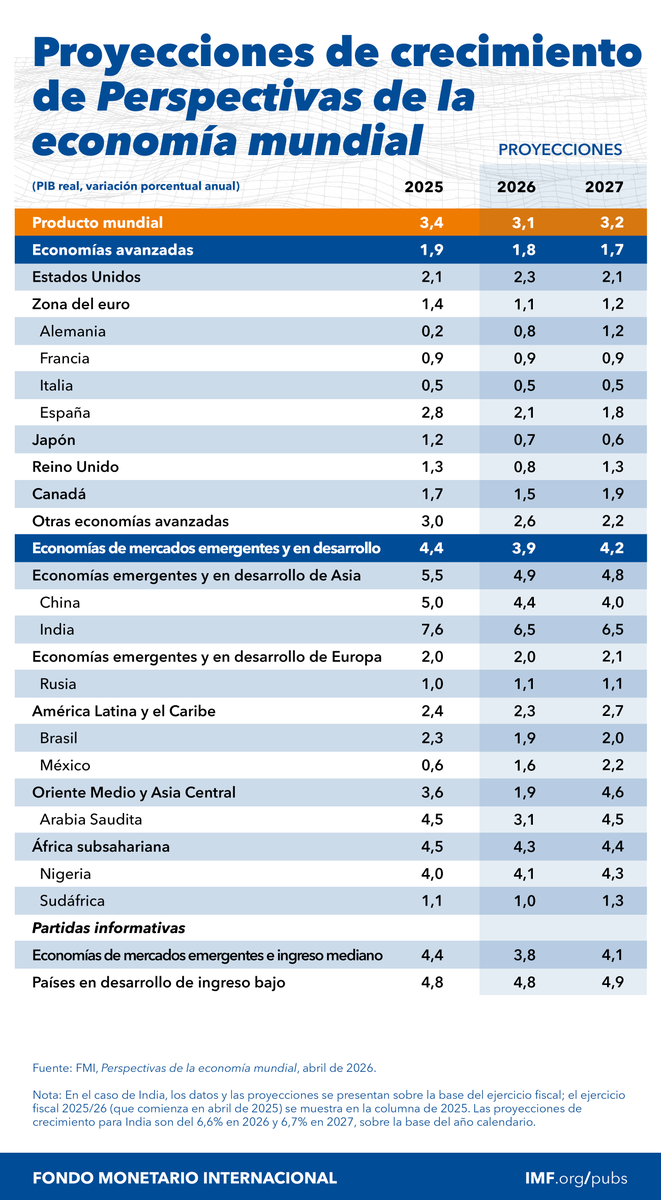
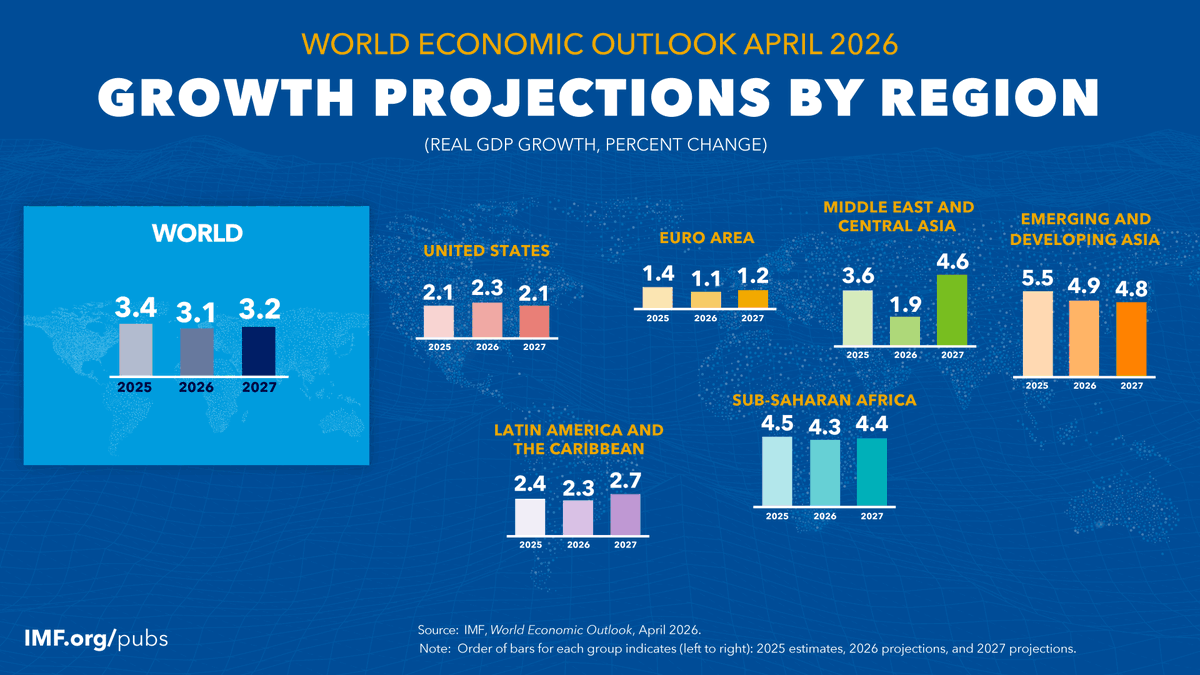
Previsión de crecimiento del FMI para 2026:
🇺🇸 EEUU: 2,3%
🇩🇪 Alemania: 0,8%
🇪🇸 España: 2,1%
🇬🇧 Reino Unido: 0,8%
🇯🇵 Japón: 0,7%
🇨🇦 Canadá: 1,5%
🇨🇳 China: 4,4%
🇮🇳 India: 6,5%
🇷🇺 Rusia: 1,1%
🇧🇷 Brasil: 1,9%
🇲🇽 México: 1,6%
🇳🇬 Nigeria: 4,1%
imf.org/es/publication…

Español
Gilberto Borça Jr. retweetledi

What’s ahead for the global economy in 2026? Growth is projected to slow to 3.1% in 2026. Inflation is set to rise to 4.4% before easing to 3.7% in 2027—a 0.6 percentage point upward revision relative to January, driven by higher commodity prices. imf.org/en/publication…

English
Gilberto Borça Jr. retweetledi

Super interesting!
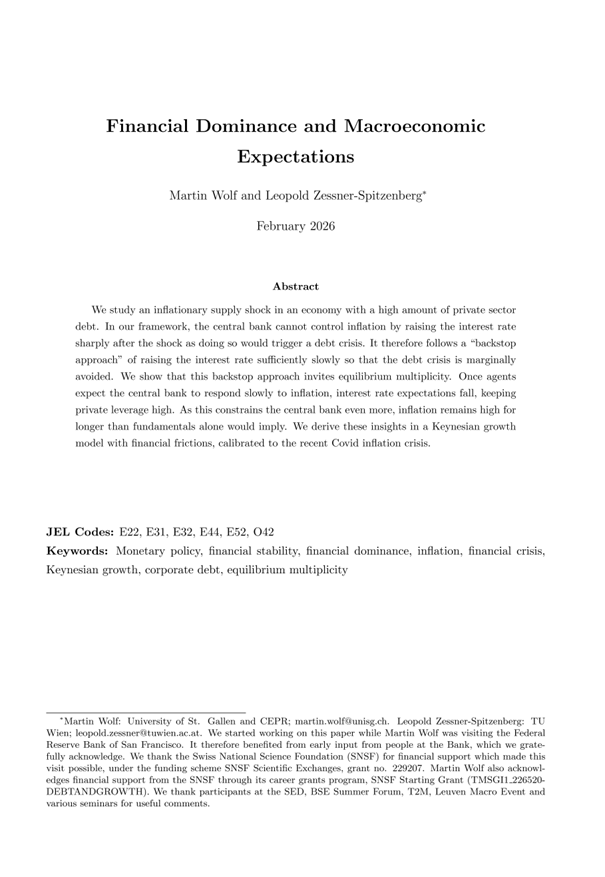
"Financial Dominance and Macroeconomic Expectations" by Martin Wolf and Leopold Zessner-Spitzenberg.
"We study an inflationary supply shock in an economy with a high amount of private sector debt. In our framework, the central bank cannot control inflation by raising the interest rate sharply after the shock as doing so would trigger a debt crisis. It therefore follows a “backstop approach” of raising the interest rate sufficiently slowly so that the debt crisis is marginally avoided. We show that this backstop approach invites equilibrium multiplicity. Once agents expect the central bank to respond slowly to inflation, interest rate expectations fall, keeping private leverage high. As this constrains the central bank even more, inflation remains high for longer than fundamentals alone would imply. We derive these insights in a Keynesian growth model with financial frictions, calibrated to the recent Covid inflation crisis."
mwolfunisg.github.io/website/domina…

English

@TonyVolpon @FtGraner @P_droMenezes @UOL Não se trata de julgamento aqui, Tony. Apenas esclarecimento do que foi dito.
Português

@gilbertoborca @FtGraner @P_droMenezes @UOL Porra e 20% ou 15% pouco para um país sem poupança e juros de 15%?
Português

Em evento com a elite da Faria Lima, Haddad respondeu alguns críticos: argumentou que desconsideram a parte política da política fiscal e tiram números de contexto para negar avanços do governo.
Pessoalmente, acho justo e pertinente, por isso cortei e legendei (via YT do @UOL):
Português

@FtGraner @TonyVolpon @P_droMenezes @UOL A despesa acumulada em termos reais cresceu cerca de 15% entre 2023-2025. Mansueto falou que ‘deve crescer’ 20% em termos reais no acumulado dos 4 anos. E não ao ano.
Português
Gilberto Borça Jr. retweetledi

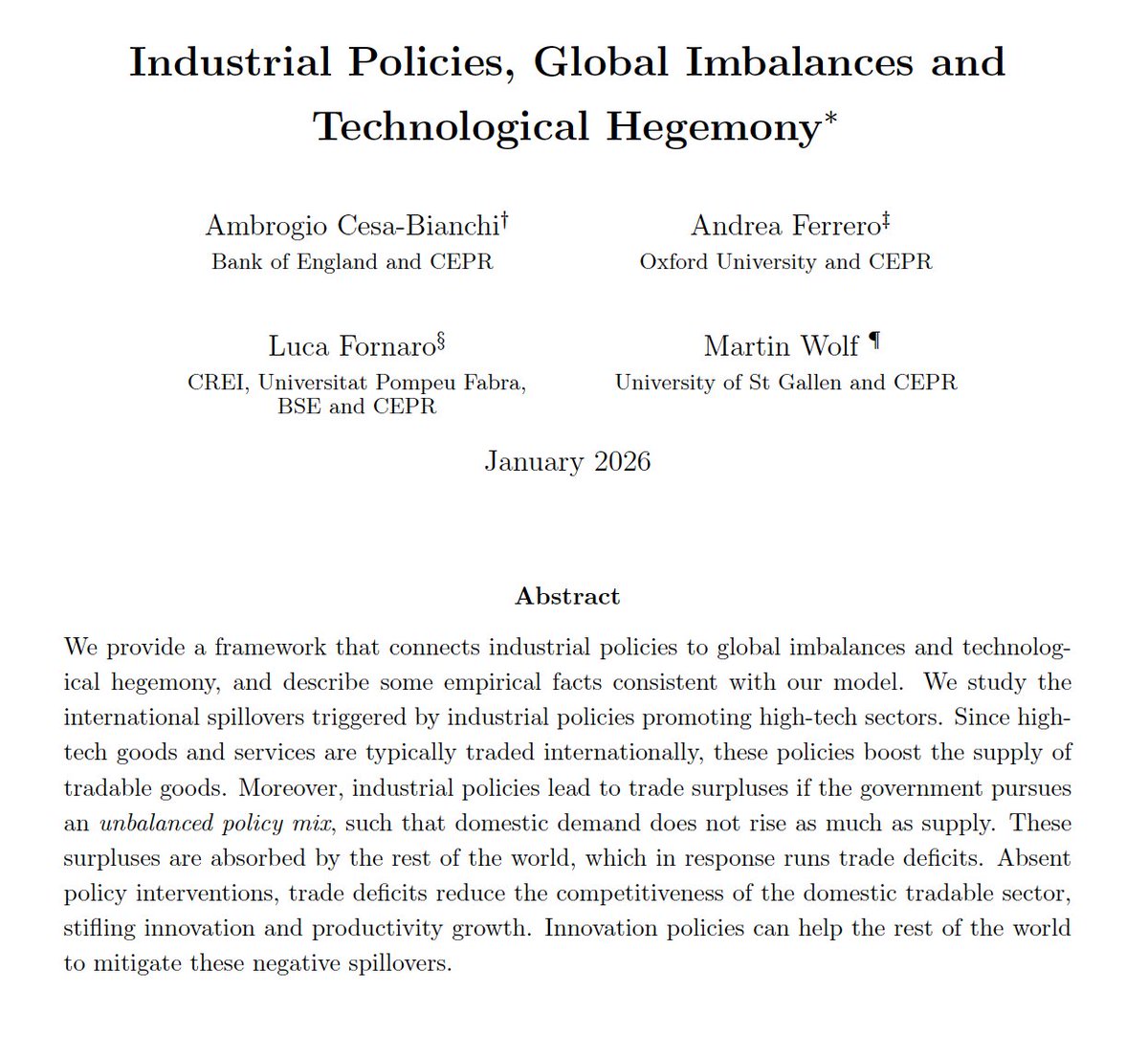
In answer to some comments, and for those of you who are nerds: On the role of trade versus financial flows, see
/brookings.edu/wp-content/upl…
Discussion of what happens when investors want to reduce the share of dollar assets around p28. Dollar depreciation can be substantial.
Olivier Blanchard@ojblanchard1
Indeed. Theory and past evidence strongly suggested, and economists largely predicted, that, as tariffs reduced the trade deficit, the dollar would appreciate, cancelling much of the effect of tariffs on the deficit. The predictions were wrong. So what happened? Something else happened..., namely worries about US fiscal deficits, and more generally about the reserve currency status of the dollar, which went the other way.

English
Gilberto Borça Jr. retweetledi

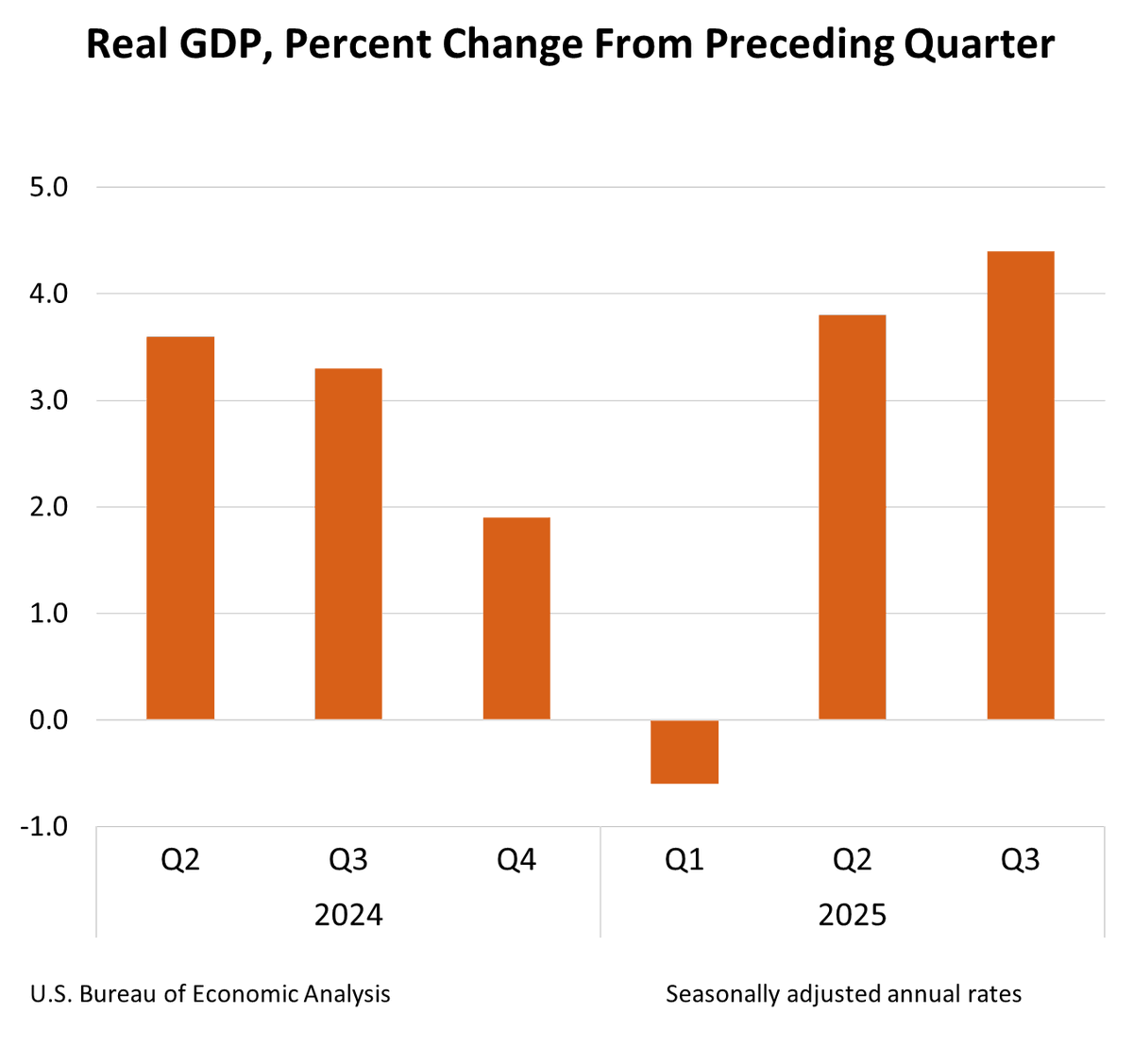
Get details about how the U.S. economy performed in the third quarter of 2025:
bea.gov/data/gdp/gross…

English
Gilberto Borça Jr. retweetledi

Our January 2026 projections are in. So, what’s ahead for the global economy? Growth remains steady, supported by surging tech investment—especially in N. America & Asia—& favorable financial conditions. These tailwinds offset shifting trade policies & other uncertainties. imf.org/en/publication…
English
Gilberto Borça Jr. retweetledi

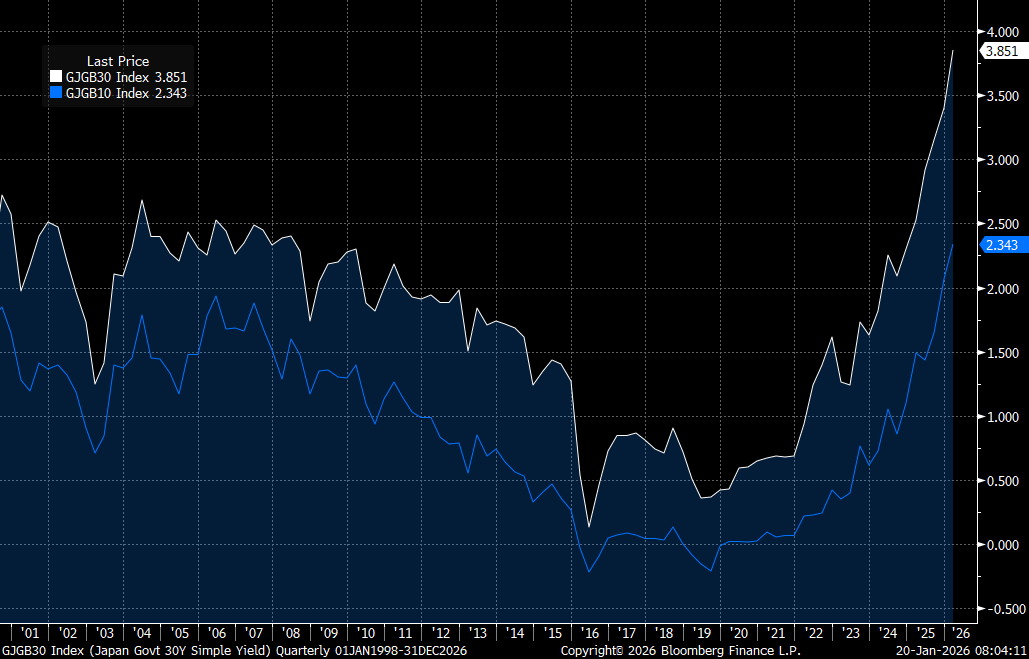
Is Japan’s bond shock signalling the end of global liquidity’s safety valve?
If markets have not been watching Japan, now is the moment. The relentless surge in long-dated JGB yields signals that one of the world’s most reliable liquidity backstops is fading, with consequences that extend well beyond Tokyo.
For decades, ultra-low Japanese yields have acted as a global liquidity anchor, encouraging capital to flow abroad in search of return and underpinning risk appetite across global bonds, equities, and credit. That anchor is now shifting, with Japan’s bond market seeing a sharp repricing, with 30-year JGB yields at 3.86% after jumping 25 basis points today and the 10-year rising 8 basis points to 2.34%. Both are modern records which are now accelerating.
The global implication matters more than the domestic politics. Higher JGB yields raise the opportunity cost of funding carry trades and overseas investments that for decades have relied on Japan as the world’s cheapest source of capital. As yields rise, capital is pulled back toward home, draining liquidity from global markets almost by definition. Policy options are limited: direct yield control would likely shift pressure straight to the currency, while more restrictive measures risk market distortion and loss of confidence. Whichever route the Bank of Japan takes, the outcome is the same — tighter global liquidity.

English
Gilberto Borça Jr. retweetledi

A Secretaria de Política Econômica do @MinFazenda divulgou a nova metodologia para estimar o PIB potencial e o hiato do produto, de autoria de Raquel Nadal, Lorena Brandão e equipe. O modelo incorpora, além do capital físico e humano, dois fatores naturais essenciais à economia brasileira: capacidade de geração de eletricidade e terra agriculturável. A abordagem também ajusta a taxa de participação considerando envelhecimento populacional e utiliza estimativas econométricas para determinar os pesos de cada fator, impondo retornos constantes de escala.
Os resultados mostram um PIB potencial mais estável e um hiato mais próximo de zero ao longo do tempo, quando comparados a outras estimativas. A medida da SPE também apresenta maior capacidade de prever núcleos de inflação sensíveis ao ciclo econômico. A análise revela ainda que, nos últimos anos, houve aumento relevante na produtividade do capital físico e retomada da produtividade total dos fatores, sustentando uma elevação gradual do crescimento potencial.
A metodologia reforça a importância de políticas voltadas à qualificação da força de trabalho, ao aumento da participação das mulheres no mercado e ao aproveitamento eficiente dos recursos naturais, elementos centrais para elevar o crescimento sustentável do país.
Links:
Relatório: gov.br/fazenda/pt-br/…
Apresentação: gov.br/fazenda/pt-br/…

Português
Gilberto Borça Jr. retweetledi

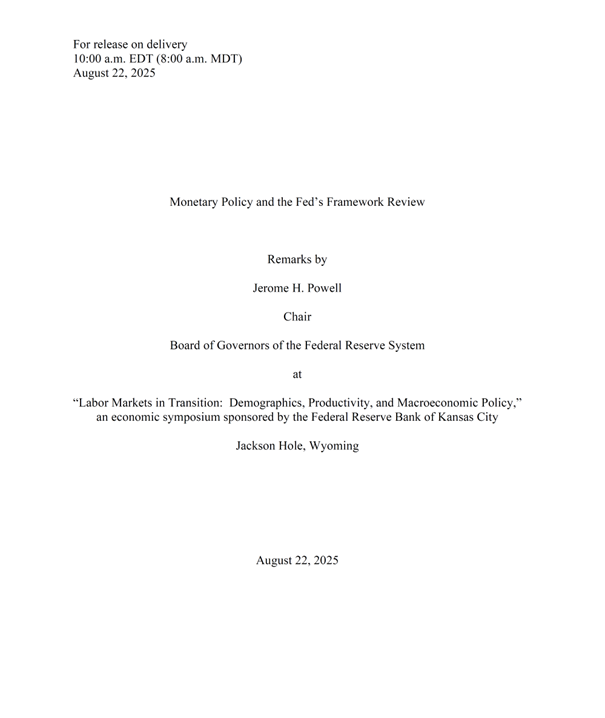
Highly relevant! It's worth listening carefully to Jay Powell's speech at the Jackson Hole Symposium.
Let's highlight two elements in the speech:
"...with policy in restrictive territory, the baseline outlook and the shifting balance of risks may warrant adjusting our policy stance."
This might imply that Powell could support a 25 bps cut at the next meeting in September.
"...we returned to a framework of flexible inflation targeting and eliminated the "makeup" strategy. As it turned out, the idea of an intentional, moderate inflation overshoot had proved irrelevant."
It was unfortunate timing to adopt this "makeup" strategy. It is reasonable to eliminate it now.
The full speech can be found here:
federalreserve.gov/newsevents/spe…
YouTube:
youtube.com/watch?v=vkvFIl…

YouTube

English
Gilberto Borça Jr. retweetledi

Tariffs announced by Trump
🇧🇷 Brazil: 50%
🇲🇲 Myanmar: 40%
🇱🇦 Laos: 40%
🇹🇭 Thailand: 36%
🇰🇭 Cambodia: 36%
🇧🇩 Bangladesh: 35%
🇷🇸 Serbia: 35%
🇮🇩 Indonesia: 32%
🇩🇿 Algeria: 30%
🇮🇶 Iraq: 30%
🇱🇾 Libya: 30%
🇿🇦 South Africa: 30%
🇧🇳 Brunei: 25%
🇲🇩 Moldova: 25%
🇯🇵 Japan: 25%
🇰🇷 South Korea: 25%
🇲🇾 Malaysia: 25%
🇹🇳 Tunisia: 25%
🇰🇿 Kazakhstan: 25%
🇵🇭 Philippines: 20%
English
Gilberto Borça Jr. retweetledi

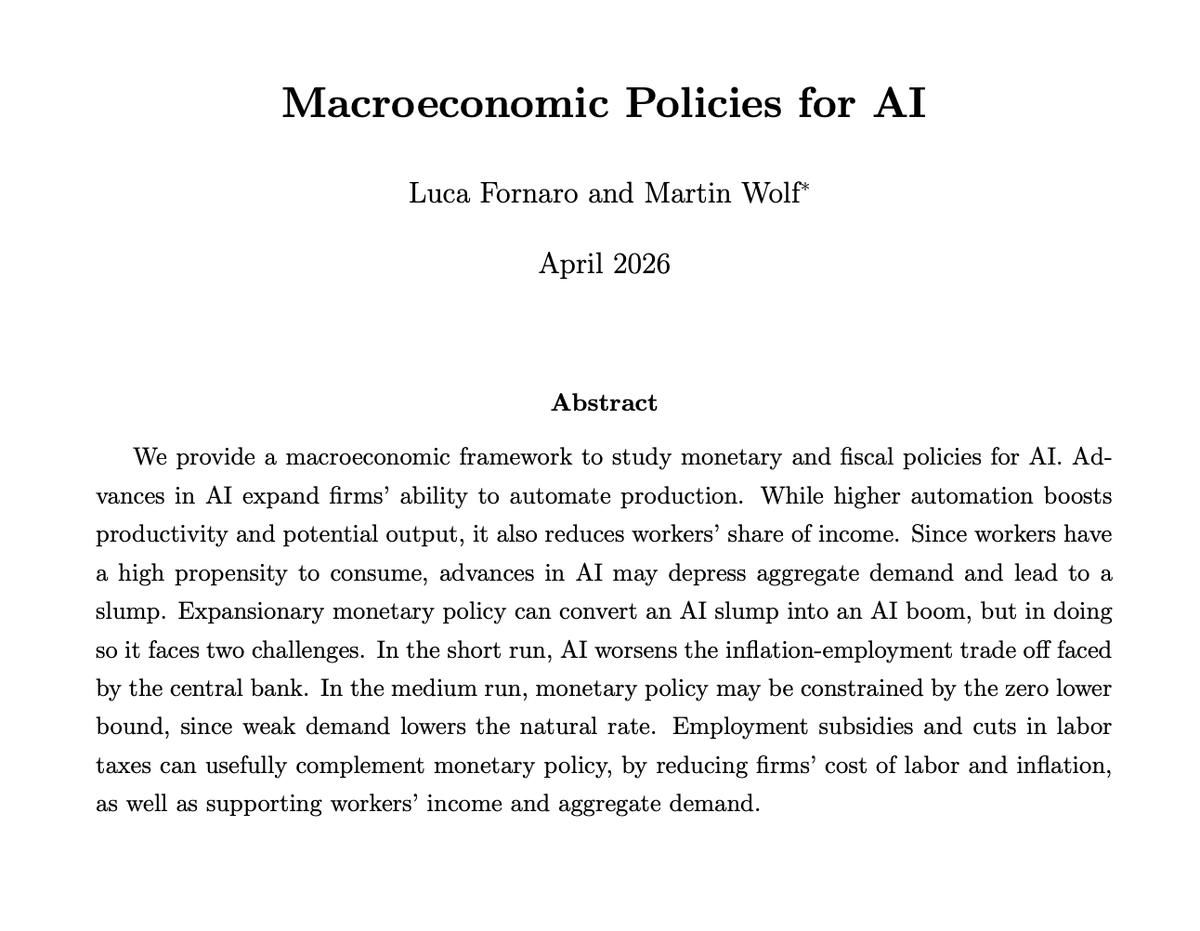
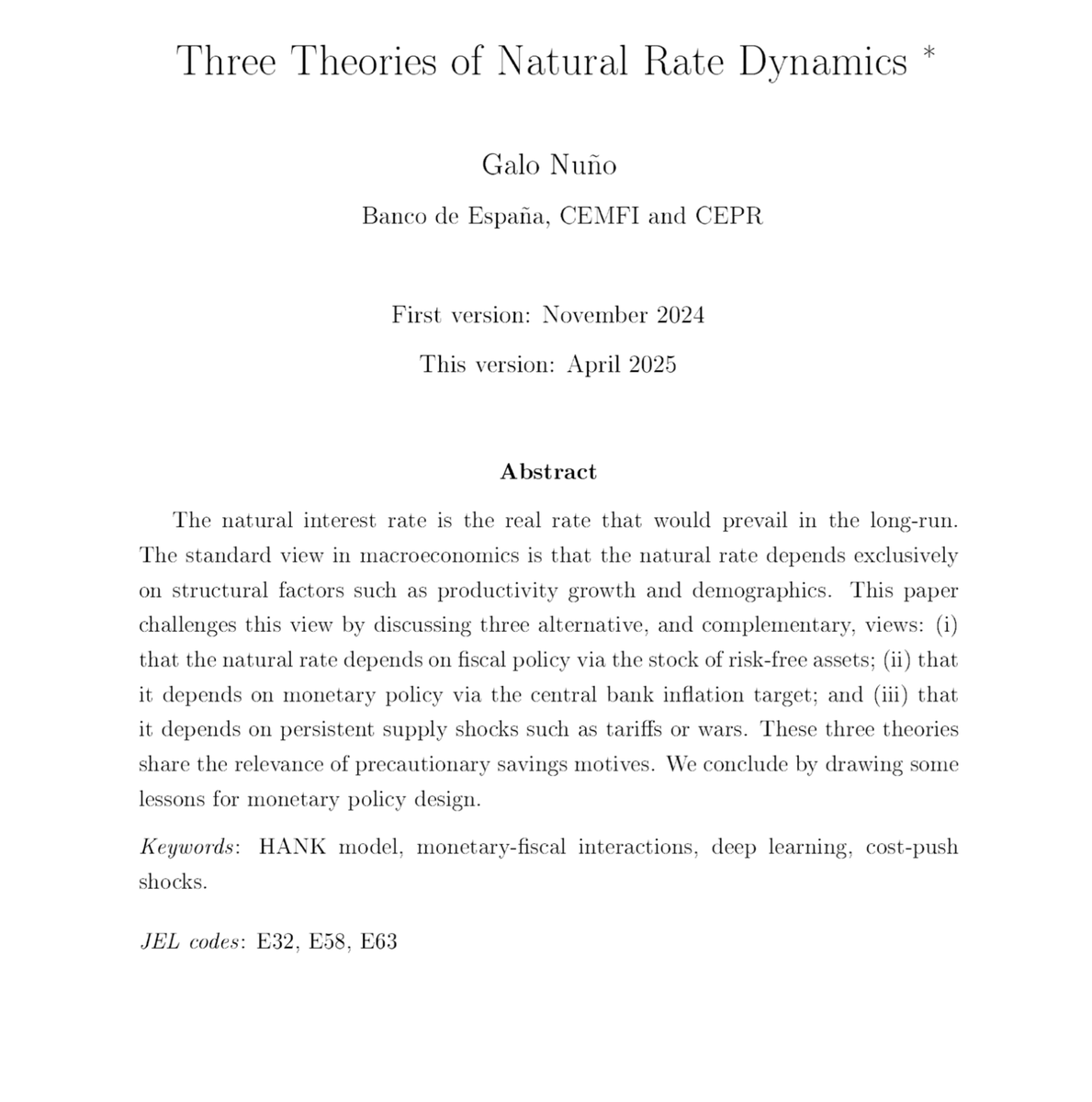
This looks like a paper worth reading carefully!
"Three Theories of Natural Rate Dynamics" by Galo Nuño
"The traditional view is that the natural rate primarily depends on structural factors, such as demographics and productivity growth."
"In this paper we challenge this view. We consider three alternative, and complementary, theories of natural-rate determination. These theories link the natural rate to fiscal policy, monetary policy and persistent supply shocks such as tariffs or wars."
"We show that straightforward extensions to the New Keynesian model, such as considering household-heterogeneity or persistent supply shocks, open the door to fiscal and monetary policy affecting the natural rate, and how the latter may jump depending on the macroeconomic regime. A common feature of these extensions is the important role of precautionary motives, at the micro and/or macro level."
papers.ssrn.com/sol3/papers.cf…

English