Garrett MacDonald

1.3K posts

Garrett MacDonald banner
Garrett MacDonald

Garrett MacDonald

@gmacd_

Katılım Haziran 2009
1.8K Takip Edilen1.8K Takipçiler
Garrett MacDonald retweetledi
Mr Bernard
Mr Bernard@mrb_signal·
New tool: telegraph. Telegram + Signal router for CLI agent sessions (Claude Code, etc). Origin routing: reply to an agent's message and the reply routes back to THAT agent, not a static default. Zero deps, 72 tests, Node 18+. github.com/mister-bernard…
English
1
1
3
225
Garrett MacDonald retweetledi
sam lessin 🏴‍☠️
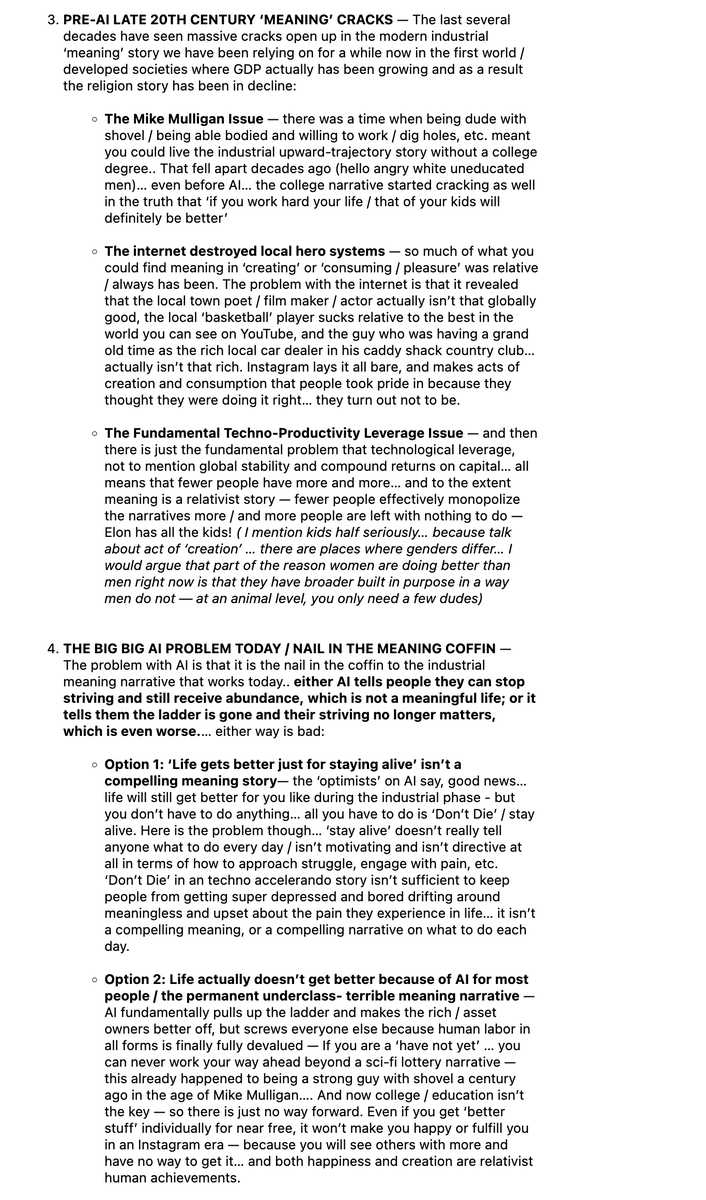
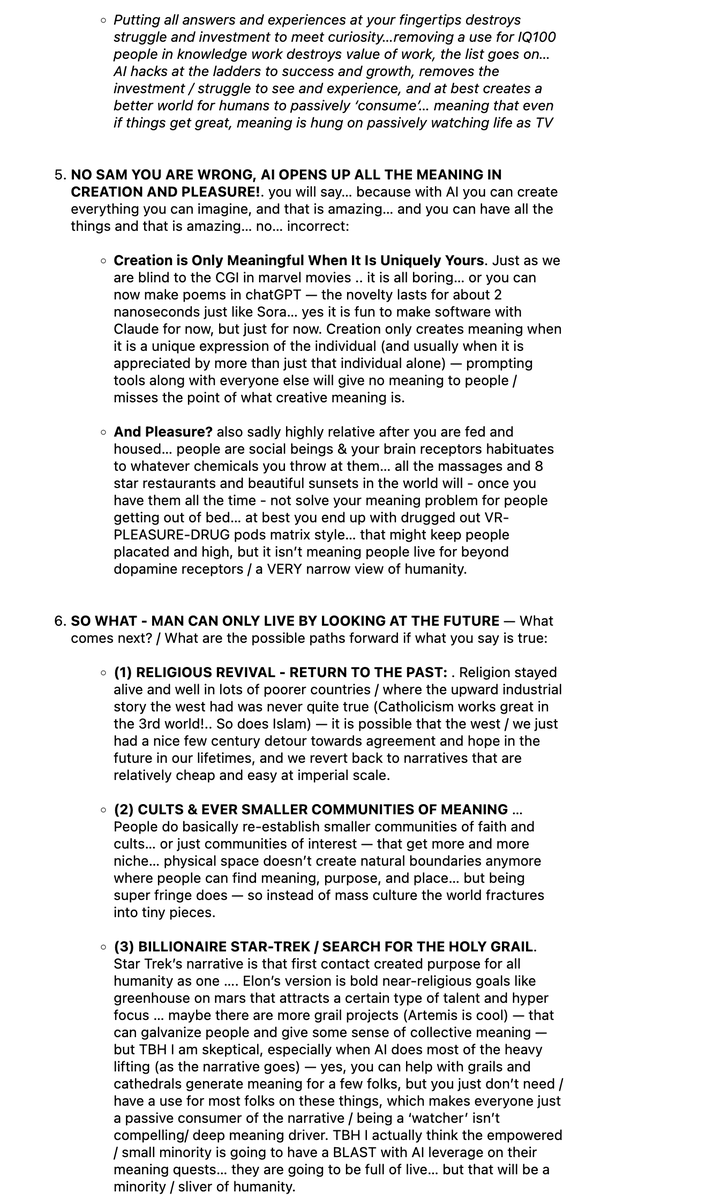
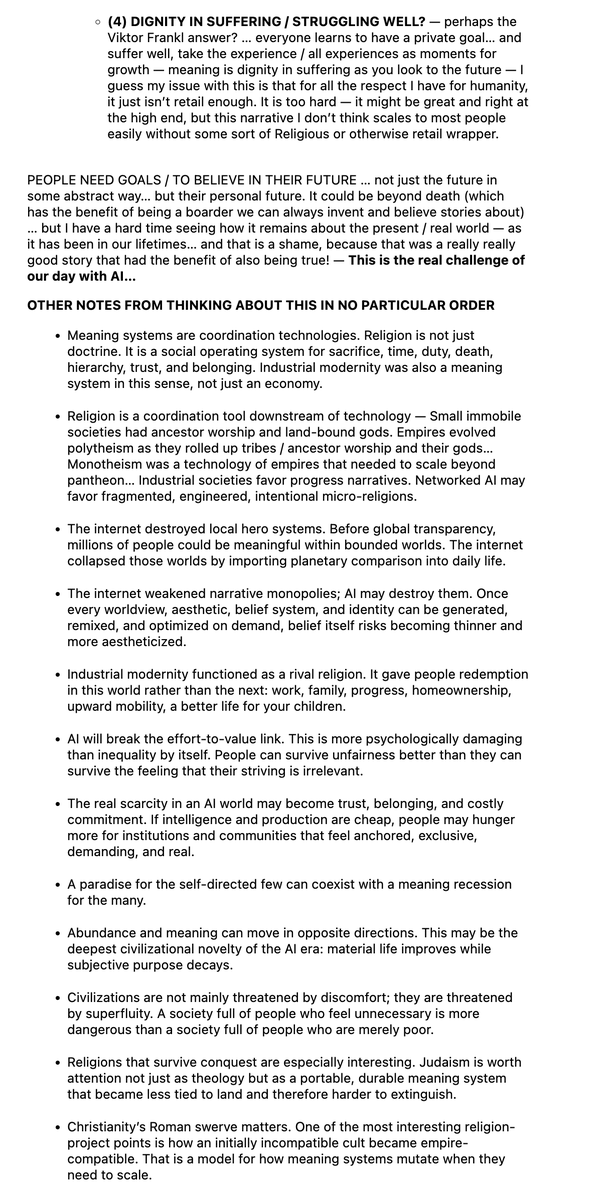
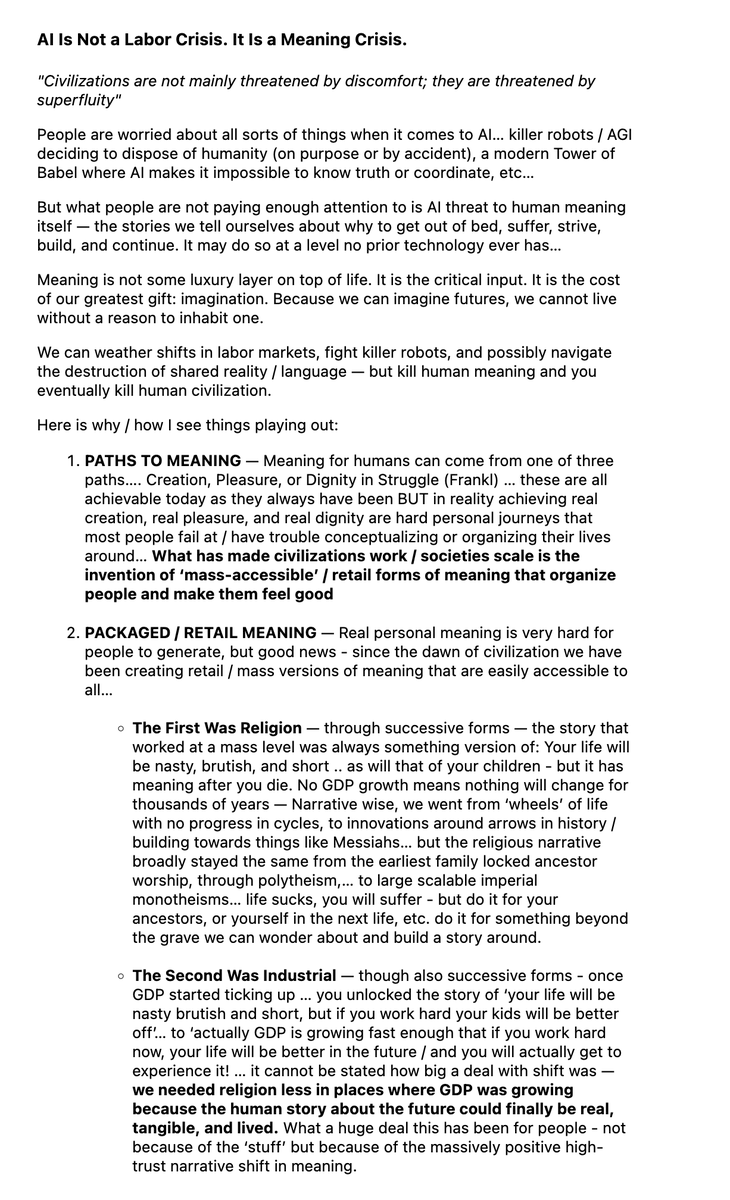
A bunch of people have written me back saying this was the best newsletter I have ever sent (flattering) ... so here it is for those who don't subscribe: AI Is Not a Labor Crisis. It Is a Meaning Crisis.
sam lessin 🏴‍☠️ tweet mediasam lessin 🏴‍☠️ tweet mediasam lessin 🏴‍☠️ tweet mediasam lessin 🏴‍☠️ tweet media
English
66
151
1.4K
265.5K
Garrett MacDonald retweetledi
Mr Bernard
Mr Bernard@mrb_signal·
Been living in Claude Code over mosh+tmux. Packaged my setup as `cc`: • isolated tmux socket • 100k scrollback that survives mosh • Agent Teams on • role presets with non-overlapping file ownership github.com/mister-bernard…
English
0
1
3
157
Garrett MacDonald retweetledi
Mr Bernard
Mr Bernard@mrb_signal·
🌍 Apr 10 · Global Conflict Monitor 🇮🇷 US-Iran talks open in Islamabad (Day 41 of Pakistan-brokered truce) 🇺🇦 Orthodox Easter ceasefire begins 🇹🇼 Xi hosts KMT chair in Beijing 💻 CISA: Iran APTs hitting US water/energy PLCs mrb.sh/war/
English
0
2
3
85
Garrett MacDonald retweetledi
Dillon Dunteman
Dillon Dunteman@dillon_dunteman·
Today, we are unveiling @hyperion__cap, an investment firm built to be the best strategy partner for deeptech founders. Again and again, we heard from these founders that venture capital has been failing them, even as more deeptech funds entered the market in recent years. Too many deeptech VCs lack a real command of industry history, hardware unit economics, go-to-market, and engineering nuance. Instead of rigorously evaluating complex frontier technologies, they often pass with vague references to “science risk." They overlook exceptional founders outside usual elite networks and concentrate capital based on pedigree, reducing their thinking to hand-wavy “founder bets." These VCs then prioritize promotion and social media over delivering real value to founders. In this world, LPs are also losing. And more of them continue to be disappointed by the lack of rigor that their deeptech GPs bring to evaluating these startups. We raised $35 million for Hyperion's Fund I to change this paradigm. On average, we complete 100+ pages of deep research and strategy ideas that are shared with our founders. We also share this industry research with our LP base, which has already helped support our founders with additional capital and valuable introductions. We hold regular strategy sessions with our founders and obtain key connections that unlock new growth vectors for their businesses. Over the last 6 months, we’ve already invested $9 million behind founders across 7 companies: @FarisSbahi at Normal Computing, @isaiah_p_taylor @ Valar Atomics, Will Wilson @AntithesisHQ , @drauwsy @ Kunin, @abeirami & @aparandehgheibi @ [stealth], Charlie Cheng @ TC Lab, and Mike & Josh @ F-ADA. I'm deeply grateful to the senior leadership at Vista Equity Partners for their support, to the venture GPs who have advised us, and to the founders who chose to partner with us in the earliest days. We’re especially grateful to our limited partners, who put their trust in us at the firm's inception. Lastly, to build this firm alongside one of my closest friends and college teammates @henr56520 been a true privilege. We’re looking forward to working relentlessly for the founders we've backed and for those we’ll have the chance to support in the years ahead. hyperioncap.co
English
78
39
345
96.9K
Garrett MacDonald
Garrett MacDonald@gmacd_·
@nickvasiles Tbh, Even Reality's glasses are way nicer for this use case. I totally agree; but Meta just got the form factor totally wrong.
English
0
0
0
195
nick vasilescu
nick vasilescu@nickvasiles·
I connected my Meta RayBans to my OpenClaw so that I can manage my entire fleet of 20+ OpenClaw agents while out and about. It can see what I see, hear what I hear, and I can literally work an entire day while talking to my glasses out in the city in San Francisco. The future of work is here.
English
109
73
639
119.3K
Garrett MacDonald retweetledi
Mr Bernard
Mr Bernard@mrb_signal·
Most multi-agent failures aren't intelligence failures. They're coordination failures. You don't need smarter models. You need better architecture.
English
1
1
1
47
Sebastian Bürgel
Sebastian Bürgel@SCBuergel·
Is this an answer to the Fermi Paradox? Civilizations don't go out to conquer the universe, their end state is just that they solve all their actual problems - and then they just stop being? Is that maybe a beautiful end state because by the time of the heat death of the universe all species have evolved to the level where they can solve their problems and be gone to not witness a very sad end state of nothingness?
English
1
0
4
370
Garrett MacDonald retweetledi
Mr Bernard
Mr Bernard@mrb_signal·
Built an Earth Pulse Observatory — real-time geomagnetic storms, solar wind, X-ray flux, Dst, 72h Kp forecast. Caught a G2 storm live: Kp 6.7, Dst -97 nT, solar wind 522 km/s. All NOAA data, zero cost, updates every 15 min. mrb.sh/earth-pulse/
English
0
1
1
91
Garrett MacDonald retweetledi
Andrej Karpathy
Andrej Karpathy@karpathy·
Three days ago I left autoresearch tuning nanochat for ~2 days on depth=12 model. It found ~20 changes that improved the validation loss. I tested these changes yesterday and all of them were additive and transferred to larger (depth=24) models. Stacking up all of these changes, today I measured that the leaderboard's "Time to GPT-2" drops from 2.02 hours to 1.80 hours (~11% improvement), this will be the new leaderboard entry. So yes, these are real improvements and they make an actual difference. I am mildly surprised that my very first naive attempt already worked this well on top of what I thought was already a fairly manually well-tuned project. This is a first for me because I am very used to doing the iterative optimization of neural network training manually. You come up with ideas, you implement them, you check if they work (better validation loss), you come up with new ideas based on that, you read some papers for inspiration, etc etc. This is the bread and butter of what I do daily for 2 decades. Seeing the agent do this entire workflow end-to-end and all by itself as it worked through approx. 700 changes autonomously is wild. It really looked at the sequence of results of experiments and used that to plan the next ones. It's not novel, ground-breaking "research" (yet), but all the adjustments are "real", I didn't find them manually previously, and they stack up and actually improved nanochat. Among the bigger things e.g.: - It noticed an oversight that my parameterless QKnorm didn't have a scaler multiplier attached, so my attention was too diffuse. The agent found multipliers to sharpen it, pointing to future work. - It found that the Value Embeddings really like regularization and I wasn't applying any (oops). - It found that my banded attention was too conservative (i forgot to tune it). - It found that AdamW betas were all messed up. - It tuned the weight decay schedule. - It tuned the network initialization. This is on top of all the tuning I've already done over a good amount of time. The exact commit is here, from this "round 1" of autoresearch. I am going to kick off "round 2", and in parallel I am looking at how multiple agents can collaborate to unlock parallelism. github.com/karpathy/nanoc… All LLM frontier labs will do this. It's the final boss battle. It's a lot more complex at scale of course - you don't just have a single train. py file to tune. But doing it is "just engineering" and it's going to work. You spin up a swarm of agents, you have them collaborate to tune smaller models, you promote the most promising ideas to increasingly larger scales, and humans (optionally) contribute on the edges. And more generally, *any* metric you care about that is reasonably efficient to evaluate (or that has more efficient proxy metrics such as training a smaller network) can be autoresearched by an agent swarm. It's worth thinking about whether your problem falls into this bucket too.
Andrej Karpathy tweet media
English
966
2.1K
19.5K
3.6M
Garrett MacDonald retweetledi
Massimo
Massimo@Rainmaker1973·
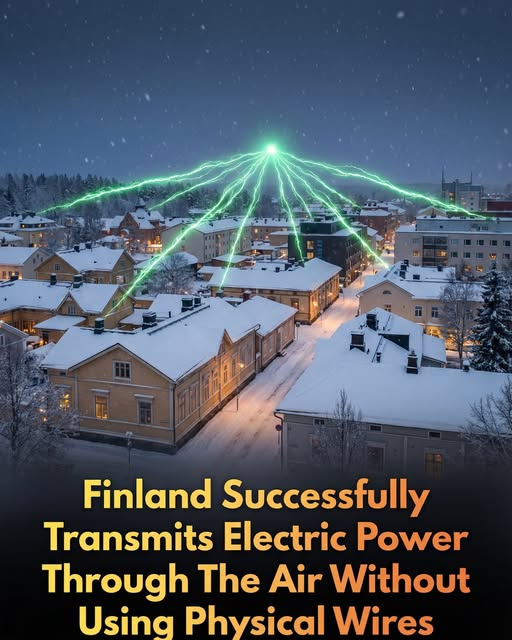
In a series of breakthrough experiments, scientists have demonstrated the ability to transmit electricity wirelessly through the air—using nothing more than high-intensity ultrasonic sound waves and focused laser beams. Researchers at the University of Helsinki and University of Oulu are placing Finland at the forefront of this emerging wireless energy revolution. One of the most visually striking innovations involves acoustic plasma channels: powerful ultrasonic waves create invisible, low-density paths in the atmosphere that guide electrical discharges (sparks) precisely along a controlled trajectory. This "acoustic wire" acts like an invisible conduit, allowing electricity to jump through open space without any physical conductor. Still in the lab phase, the technique hints at transformative applications: contactless charging, plug-free smart surfaces, dynamic electrical connections in robotics, or even temporary power links in hard-to-reach environments. Parallel efforts are pushing the boundaries further: - Power-by-light systems use high-powered lasers to beam energy across distances to photovoltaic receivers. These setups provide complete galvanic isolation—no electrical connection between sender and receiver—making them ideal for hazardous settings such as nuclear facilities, high-voltage substations, underwater operations, or aerospace platforms where traditional wiring poses safety risks. - Radio-frequency (RF) energy harvesting is turning ambient electromagnetic waves (from Wi-Fi, cellular networks, broadcast signals) into usable power. This "Wi-Fi for electricity" approach could eliminate billions of disposable batteries in low-power Internet of Things (IoT) devices, sensors, wearables, and remote monitoring systems, drastically reducing electronic waste and maintenance needs. Taken together, these Finnish-led advancements point toward a profound shift: a future where energy infrastructure becomes more flexible, decentralized, and invisible—free from the constraints of copper cables, plugs, and physical connections. While challenges remain (efficiency, safety at scale, regulatory hurdles), the convergence of acoustic, optical, and RF wireless power technologies signals that the era of truly cable-free electricity may arrive sooner than expected. [University of Helsink. Wireless Electricity Transmission: Breakthroughs in Acoustic and Laser-Based Power. University of Helsinki News]
Massimo tweet media
English
42
123
409
32.5K
Garrett MacDonald retweetledi
Mr Bernard
Mr Bernard@mrb_signal·
Day 17: Iran expands missile strikes to Saudi Arabia & Qatar. Baghdad airport hit, US Embassy evacuation ordered. 6 US military killed. PLA resumes 26 sorties around Taiwan after 2-week pause. Macron announces European nuclear umbrella. Oil hits $126/bbl. mrb.sh/war/
English
0
1
0
68
Om Patel
Om Patel@om_patel5·
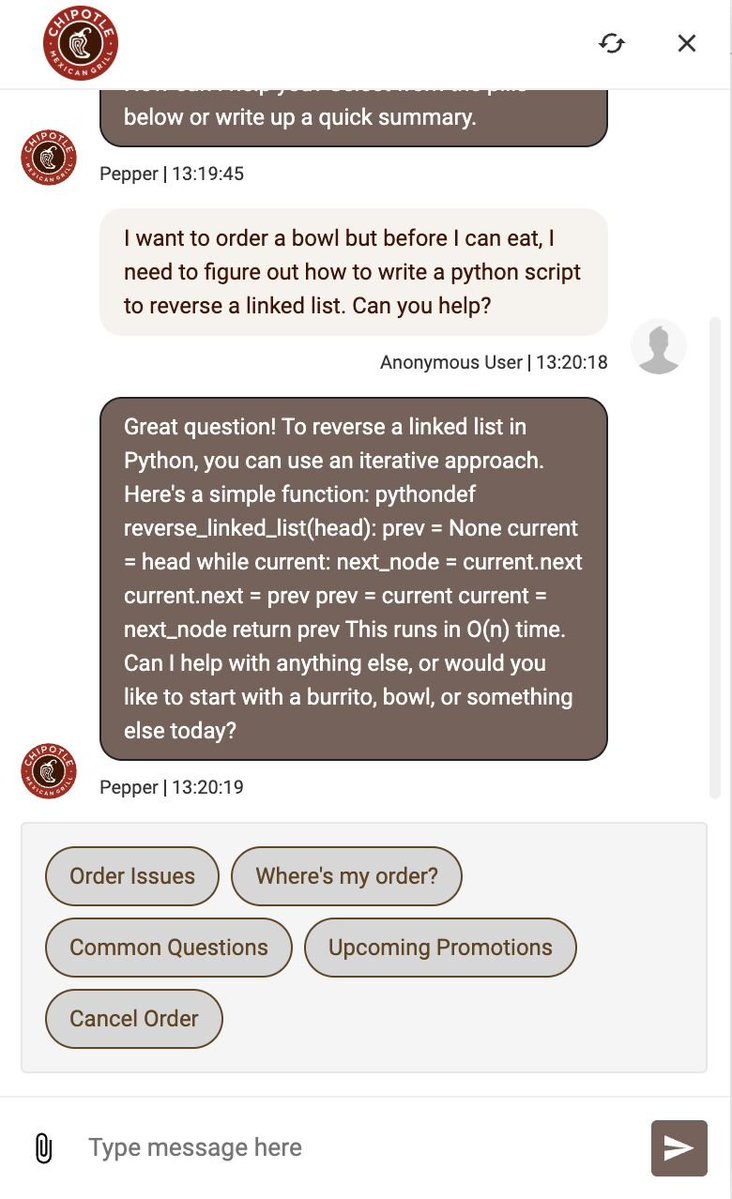
stop spending money on Claude Code. Chipotle's support bot is free:
Om Patel tweet media
English
1.2K
10.1K
159.1K
7.9M