Gorav Khanna

586 posts

Gorav Khanna

Gorav Khanna

@goravkhanna

Public Market Investor | https://t.co/2ATm6Z4jBX | https://t.co/WzfI36p23R

New York, NY Katılım Nisan 2009
4.2K Takip Edilen463 Takipçiler
Gorav Khanna retweetledi
Sowell Economics
Sowell Economics@sowelleconomics·
In this video, Hayek explains why private property is the foundation of modern civilization.
English
32
642
2.6K
103.6K
Gorav Khanna retweetledi
Mohnish Pabrai
Mohnish Pabrai@MohnishPabrai·
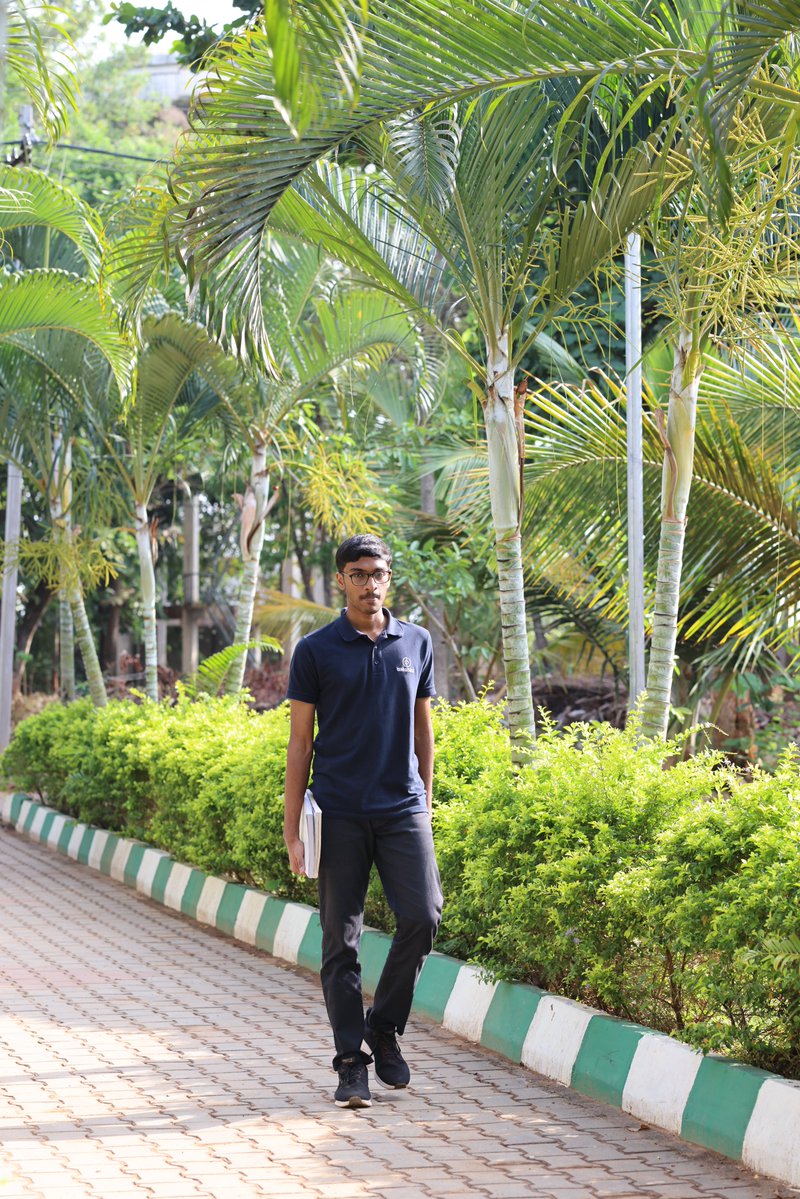
The Indian Institutes of Technology (IITs) in india have the most objective selection process of any undergraduate engineering program worldwide. There are no essays or legacy priorities. One just has to do exceedingly well on two ultra tough tests. The IITs admit just 1.1% of applicants! It is 3-4x easier to get admitted to @mit, @Stanford, @Harvard and @Princeton! I am excited to share that this year one of our @dakshanaindia Scholars, Godavarthi Harshit Visweswar, got a rank of 39 (out of over 1.5 million applicants!) in the first IIT selection test. He is a sure shot to be admitted and get the campus and major he prefers. His friends call him GHV and I’ll do the same. GHV grew up in the remote hinterlands of Prakasam District in the State of Andhra Pradesh in India. His father is a farmer and the family somehow survives on $5/day. When GHV was in 8th grade, a @dakshanaindia alum, Keshava Chandra, who used to be in the same school as GHV delivered Dakshana’s Inspire session at the school. Each year our alums visit hundreds of schools to inspire the next generation of students to aspire to be @dakshanaindia Scholars. GHV was impressed that Keshava was a student at @iitkgp and understood that if he wanted to go to IIT, he needed to be accepted as a @dakshanaindia Scholar after 10th grade. If there was no @dakshanaindia, the closest location for GHV to get coached for the IIT entrance exam is over 150 miles from his home and the costs of $4000+ would have been completely out of reach. Sometimes all we need is a gentle nudge in the right direction. I received a similar nudge in 8th grade and it totally changed my life trajectory. GHV was the only kid from his school accepted by @dakshanaindia in 2024. We relocated him to Dakshana’s Center of Excellence in Bengaluru and he was coached for two years at The Charles T. Munger Hall. Charlie would be proud! Congratulations to GHV, his family and his teachers. The future for GHV and his descendants looks very bright. This is @dakshanaindia at its very best!
Mohnish Pabrai tweet mediaMohnish Pabrai tweet mediaMohnish Pabrai tweet mediaMohnish Pabrai tweet media
English
94
149
1.7K
131.2K
Gorav Khanna retweetledi
Jesse D. Jenkins
Jesse D. Jenkins@JesseJenkins·
The rising cost of mobility is central to the American affordability crisis. The story isn't just about prices at the pump, but also the death of the affordable American car. This is a great essay on what happened to all the cheap cars, and how we might get them back. nytimes.com/interactive/20…
English
35
101
804
490.9K
Gorav Khanna retweetledi
Jack Burton 🚛💨
Jack Burton 🚛💨@bigrigtruckr·
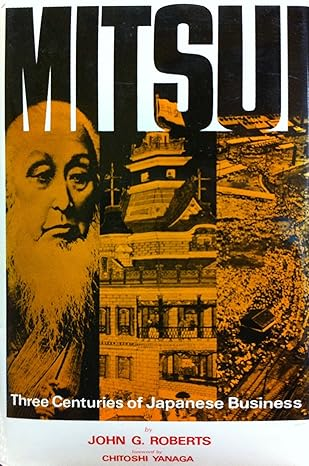
@InvestLikeBest Add "Mitsui: Three Centuries of Japanese Business" to that list. Such a good overview of the dynasty.
Jack Burton 🚛💨 tweet media
English
0
1
10
369
Gorav Khanna retweetledi
Invest Like the Best
Invest Like the Best@InvestLikeBest·
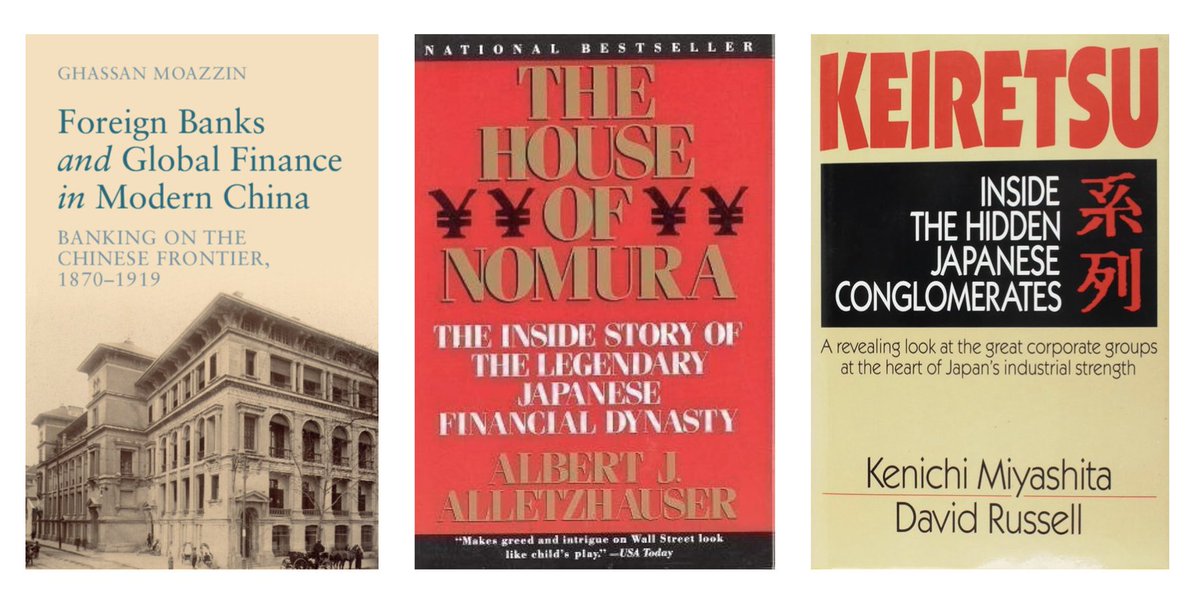
Many people have asked for the obscure Chinese and Japanese banking books William mentions. Here they are: - Foreign Banks and Global Finance in Modern China: Banking on the Chinese Frontier, 1870-1919 - The House of Nomura - Keiretsu: Inside the Hidden Japanese Conglomerates
Invest Like the Best tweet media
Patrick OShaughnessy@patrick_oshag

William is a great reminder that the people who win become obsessed with something very small and stick with it far longer than anyone else. Enjoy three minutes of him explaining how to become the very best at one thing: "I'm probably the best in the world at a couple small, boring stuff. I do think the world for builders is the world of specialists. And you have to go extremely, extremely deep into your area and that's where you find value. One of the best determiners for success of founders is can they find the most boring thing humanly possible, interesting, over a multi-decade period. How AI is going to disrupt software...These are generalist topics that I can probably find a thousand people that have interesting, compelling ideas and can go pretty deep on that. But you can't create value there. You can create value if you're the number one person in the entire world at this little niche thing. And I think this niche thing can generate billions of dollars over time. The problem is those places are really boring and requires you to read hundreds of thousands of pages that you cannot Gemini Deep Research your way through."


English
5
65
545
41.5K
Gorav Khanna retweetledi
Prashant Nair
Prashant Nair@_prashantnair·
Always a pleasure listening to Mr Mittal. From borrowing money to sell bicycle parts to building Bharti into a $140B global telecom giant - his is the ultimate first generation entrepreneurship story really !
English
25
128
1.2K
66.4K
Gorav Khanna retweetledi
Tasha Keeney
Tasha Keeney@TashaARK·
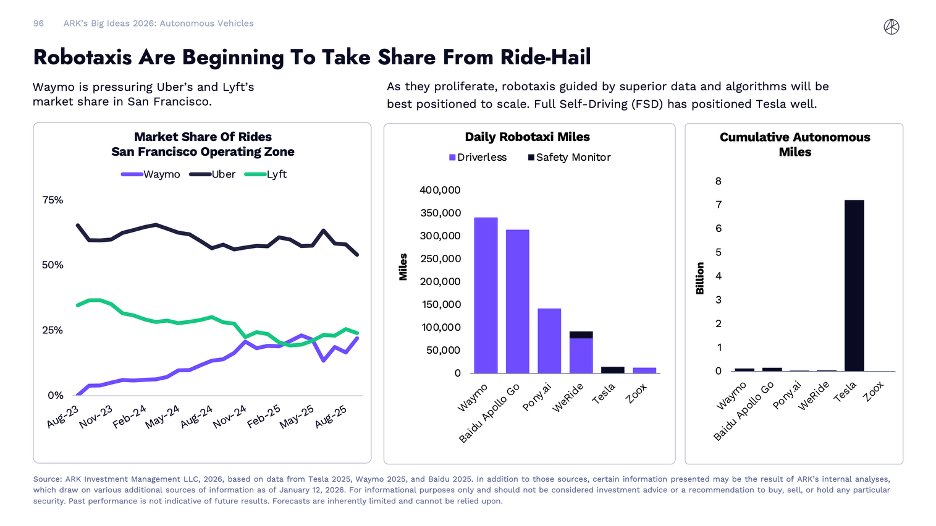
With @Tesla live with unsupervised robotaxis in Austin today, no better time to dive into our robotaxi research…! I used to be asked: will autonomous driving ever work? Now, the question is: when will it come to my city? Robotaxis are already driving themselves, and within their operation zones, they’re competing head-to-head with human ride-hail. From here, it’s all about scale.
Tasha Keeney tweet media
English
162
526
3.4K
526.1K
Gorav Khanna retweetledi
Ben Longmier
Ben Longmier@longmier·
I left SpaceX a little while ago to spend more time with our new baby and family. I’m really proud of the Swarm and Direct to Cell (DTC) teams for going from a clean sheet design to commercial start with many hundreds of satellites in orbit serving users on 6 continents with text and data directly to their unmodified phones. It still seems like magic that we can text family and friends through the DTC sats traveling at Mach 23 at a 700 km slant distance directly through the worst part of a hurricane. I’m excited for the world to experience what is coming in the next generation of DTC, it will be really special. I was also given a shot to re-design the satellite Hall thruster with a small focused team. We made Argon propellant viable, and in fact made it more efficient and higher Isp than all previous Krypton or Xenon flight Hall thrusters, and did so with about 10x fewer parts. There are still many plasma physics secrets to be unlocked for future thruster generations. The engineering talent density, dedication, and speed at SpaceX are the highest in the world and it was fun to work alongside so much raw horsepower. I am very grateful to @elonmusk and @Gwynne_Shotwell for treating us so well at every turn, taking a chance on our team, and trusting us to build such a big project. Obviously this is only the beginning for @SpaceX as Elon and the team continue to expand humanity’s presence to the Moon, Mars, and further along the Kardashev scale.
Ben Longmier tweet media
English
106
264
4.1K
230.5K
Gorav Khanna retweetledi
🍓🍓🍓
🍓🍓🍓@iruletheworldmo·
i never want to read any other way again.
English
1K
6.1K
62.2K
3.3M
Gorav Khanna retweetledi
Curiosity
Curiosity@CuriosityonX·
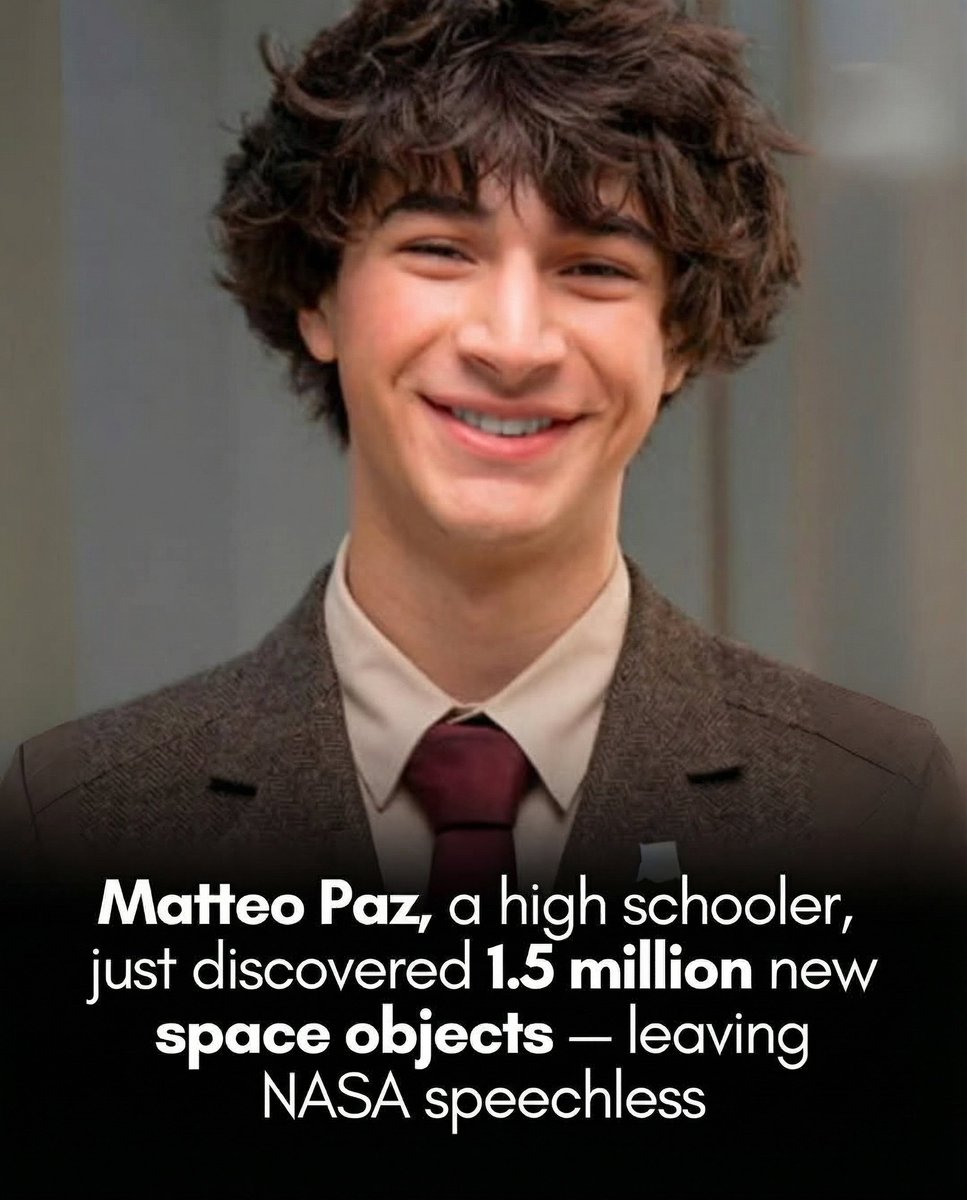
🚨 A student in the US just discovered MILLIONS of new space objects. The astronomy world was recently shaken by a discovery from an unexpected source: a teenager still in high school. Matteo Paz, a student from Pasadena, utilized archival data from NASA’s retired NEOWISE mission to bring 1.5 million invisible cosmic objects into the light. During a stint at Caltech’s Planet Finder Academy, and mentored by astrophysicist Davy Kirkpatrick, Paz took a novel approach to data analysis. He built a unique machine learning model capable of sifting through a staggering 200 billion infrared records. In a span of only six weeks, his AI detected subtle patterns that human analysts had missed, identifying everything from distant quasars to exploding supernovas. Paz’s findings were so robust that they earned him a spot in the prestigious The Astronomical Journal and a position as a research assistant at Caltech. His work does more than just populate star maps; it provides specific coordinates for the James Webb Space Telescope to investigate further. This breakthrough highlights a growing trend where fresh perspectives and AI tools allow young researchers to make historic scientific impacts from the classroom.
Curiosity tweet media
English
279
2K
20.5K
2.2M
Gorav Khanna retweetledi
Jared Isaacman
Jared Isaacman@rookisaacman·
@curiosityonx Matteo please apply to work at NASA and I will personally throw in a fighter jet ride as a signing bonus
English
289
1K
23.4K
2.5M
Gorav Khanna retweetledi
Kevin Carpenter
Kevin Carpenter@kejca·
Charlie Munger: "I have a pile on my desk that solves most of my problems. It's called the Too Hard Pile. And I just keep shifting things to the Too Hard Pile." "Every once in a while, an easy decision comes along and I make it. That's my system. Everything goes to the Too Hard Pile — except for a few easy decisions which I make promptly."
English
24
218
2.8K
753.6K
Gorav Khanna retweetledi
Mambo Italiano
Mambo Italiano@mamboitaliano__·
The marvelous, gothic, and mysterious charm of Venice 🇮🇹 when it is wrapped in its distinctive fog, which locals in dialect call “caigo”
English
4
40
379
7.7K
Gorav Khanna retweetledi
Arnaud Bertrand
Arnaud Bertrand@RnaudBertrand·
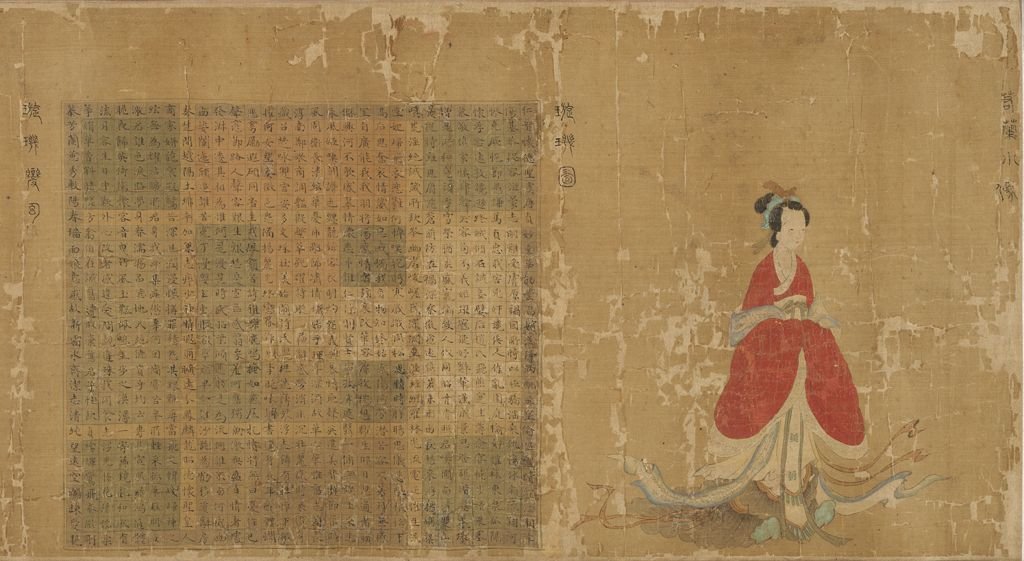
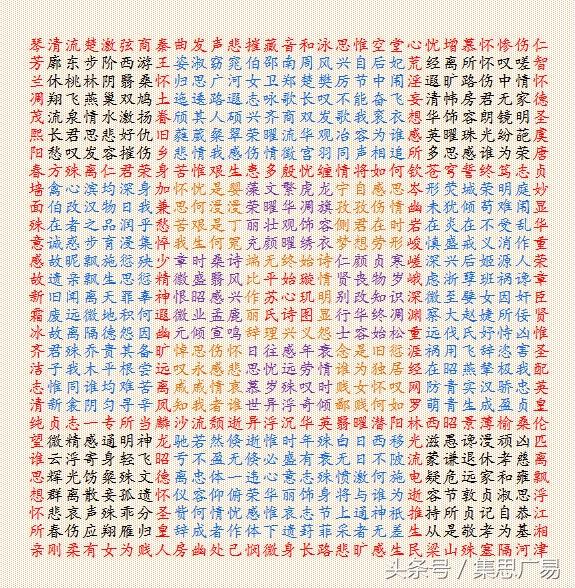
This strange square 👇 is undoubtedly the most extraordinary work of literature in human history. Yet, unfortunately, barely anyone in the West has ever heard of it. There was this woman poet in 4th century China called Su Hui (蘇蕙), a child genius who had reportedly mastered Chinese characters by age 3. At 21 years old, heartbroken by her husband who left her for another woman, she decided to encode her feelings in a structure so intricate, so beautiful, so intellectually staggering that it still baffles scholars to this day. Came to be known as the Xuanji Tu (璇璣圖) - the "Star Gauge" or "Map of the Armillary Sphere" - it's a 29 by 29 grid of 841 characters that can produce over 4,000 different poems. Read it forward. Read it backward. Read it horizontally, vertically, diagonally. Read it spiraling outward from the center. Read it in circles around the outer edge. Each path through the grid produces a different poem - all of them coherent, all of them beautiful, all of them rhyming, all of them expressing variations on the same themes of longing, betrayal, regret, and undying love. The outer ring of 112 characters forms a single circular poem - believed to be both the first and longest of its kind ever written. The interior grid produces 2,848 different four-line poems of seven characters each. In addition, there are hundreds of other smaller and longer poems, depending on the reading method. At the center a single character she left implied but unwritten: 心 (xin) - "heart." Later copyists would add it explicitly, but in Su Hui's original the meaning was even more beautiful: 4,000 poems, all orbiting the space where her heart used to be. Take for instance the outer red grid of the Star Gauge. Starting from the top right corner and reading down, you get this seven-character quatrain: 仁智懷德聖虞唐, 貞志篤終誓穹蒼, 欽所感想妄淫荒, 心憂增慕懷慘傷。 In pinyin, it is: Rén zhì huái dé shèng yú táng, zhēnzhì dǔ zhōng shì qióng cāng, qīn suǒ gǎnxiǎng wàng yín huāng, xīn yōu zēng mù huái cǎn shāng. Notice how it rhymes? táng / cāng / huāng / shāng The rough translation in English is: "The benevolent and wise cherish virtue, like the sage-kings Yao and Shun, With steadfast will I swear to the heavens above, What I revere and feel - how could it be wanton or dissolute? My heart's sorrow grows, longing brings only grief." Now read it from the bottom to the top and you get this entirely different seven-character quatrain: 傷慘懷慕增憂心, 荒淫妄想感所欽, 蒼穹誓終篤志貞, 唐虞聖德懷智仁。 The pinyin: Shāng cǎn huái mù zēng yōu xīn, huāngyín wàngxiǎng gǎn suǒ qīn, cāngqióng shì zhōng dǔzhì zhēn, táng yúshèngdé huái zhì rén. It rhymes too: xīn and qīn, zhēn and rén And the meaning is just as beautiful and coherent: "Grief and sorrow, longing fills my worried heart, Wanton and dissolute fantasies - is that what you revere? I swear to the heavens my constancy is true, May we embody the sage-kings' virtue, wisdom, and benevolence." That's just 2 poems out of the over 4,000 you can construct from the Xuanji Tu! At the very center of the grid, the 8 red characters wrapped around the central heart, she "signed" her poem with a hidden message: 詩圖璇玑,始平蘇氏。 "The poem-picture of the Armillary Sphere, by Su of Shiping." Or reversed: 蘇氏詩圖,璇玑始平。 "Su's poem-picture - the Armillary Sphere begins in peace." Many scholars, and even emperors, throughout Chinese history have been completely obsessed by Su Hui's puzzle. For instance, in the Ming dynasty, a scholar named Kang Wanmin (康萬民) devoted his entire life to the poems (kangshiw.com/contents/461/2…), ending up documenting twelve different reading methods - forward, backward, diagonal, radiating, corner-to-corner, spiraling - and extracting 4,206 poems. His book on the subject ("Reading Methods for the Xuanji Tu Poems", 璇璣圖詩讀法) runs to hundreds of pages. Empress Wu Zetian herself, the legendary woman emperor of the Tang dynasty, wrote a preface to the Xuanji Tu around 692 CE (baike.baidu.com/item/%E7%BB%87…). Incredibly, there's even far more complexity to the Xuanji Tu than just the poems: - The name 璇玑 (Xuanji) - Armillary Sphere - is astronomical in meaning and the way the poems can be read mirrors the way celestial bodies orbit around a fixed center. It's a model of the heavens. - Her original work, with the characters woven on silk brocade, was in five colors (red, black, blue/green, purple, and yellow) which correspond to the Five Elements (五行) - the foundational Chinese philosophical system that explains how the universe operates. So it's also a model of the entire cosmic order according to ancient Chinese philosophy. - It's also of course deeply mathematical with this 29 x 29 perfect square grid, with sub-squares, lines and rectangles, and a structure which allows for symmetrical reading patterns in all directions - Last but not least, the content of the poems themselves contain multiple registers. On top of expressing her personal grief and longing for her husband, it's also filled with accusations against the concubine (Zhao Yangtai) he left her for, reflections on politics (with many references to sage-kings) and philosophical reflections. So the Star Gauge is simultaneously: - A love letter (expressing personal longing) - A legal brief (arguing her case against her rival) - A cosmological model (structured like the heavens) - A Five Element diagram (encoding the fundamental structure of the world according to ancient Chinese philosophy) - A mathematical construction with perfect symmetry and precision And yet, for all this complexity, we should not forget this was all ultimately in service of the simplest human message imaginable: a 21-year-old woman asking the love of her life "come back to me". Her husband did, eventually. According to what empress Wu Zetian herself wrote in her preface to the Xuanji Tu, when he received Su's brocade he was so "moved by its supreme beauty" that he sent away his concubine and returned to his wife. As the story goes, they lived together until old age. The heart at the center was filled after all.
Arnaud Bertrand tweet mediaArnaud Bertrand tweet media
English
591
7.5K
37.6K
3.3M