
Sabitlenmiş Tweet
guilherme
1.7K posts


guilherme
@gulybyte
✝ christ 🧑💻 indie hacker
PR, Brazil Katılım Temmuz 2024
174 Takip Edilen106 Takipçiler
@puzzleheartt Liberdade, IntelliJ é paia, as ext de Java no vscode dão conta de tudo já
Português

@SrinivasanSS52 Backend: bunny magic containers || zerops
FaaS: cf workers
Frontend: cf pages
Database: neon || surrealdb || bunny database
Object storage: tigris || ultra cold: s3 glacier deep archive
AI: OpenRouter || Cf workers AI
Logs/traces/metrics/session replay: hyperdx
English

Where do you deploy your Backend
Vercel
Render
Railway
AWS
English



esse é o tipo de prompt que eu mando pro Codex antes de dormir, sempre com /goal e SEMPRE no 5.5 Low
upgrade to tailwind v4, verify no style changes, then change this whole repo to bun, thenImprove and make any suggested changes that don't change functionality
aí quando eu acordo eu reviso

English

guilherme retweetledi

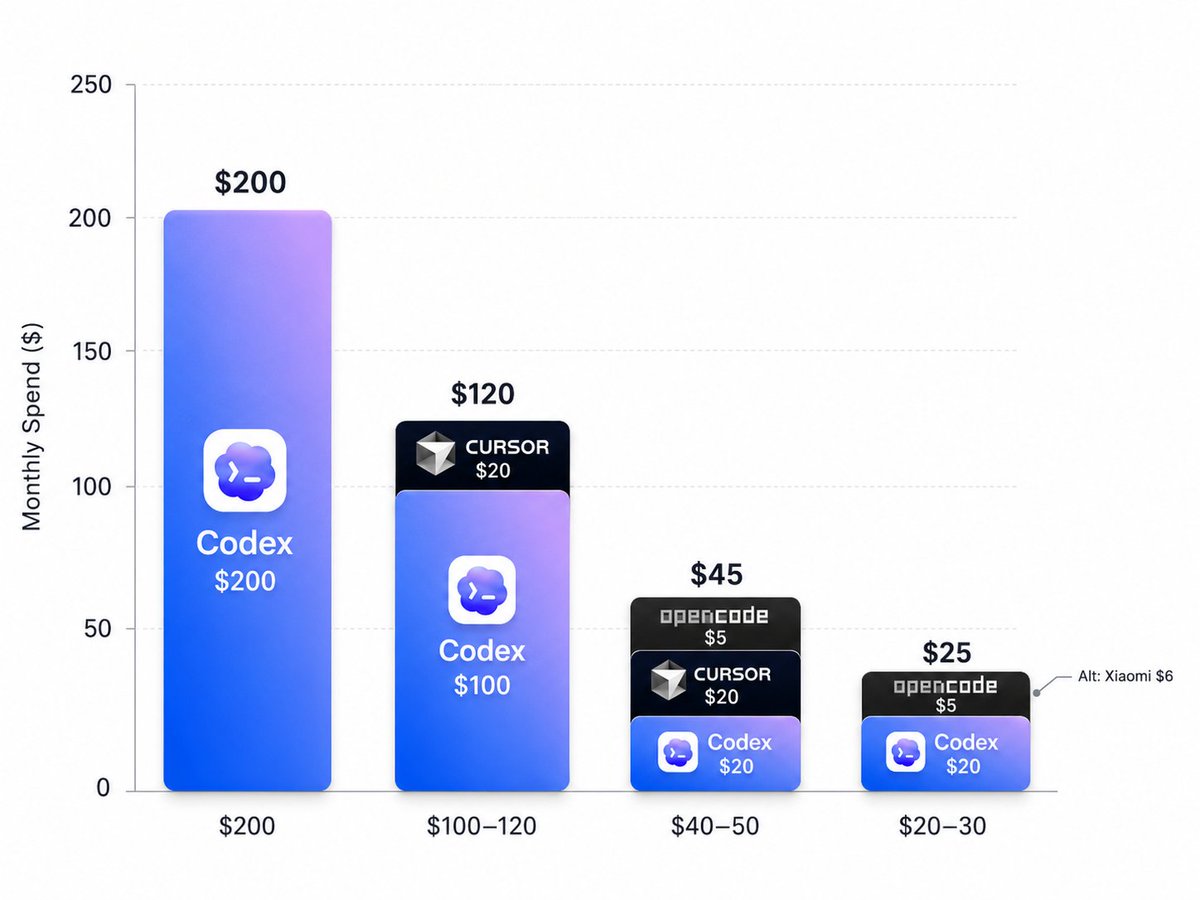
Here's the best coding plan for your specific budget
200$
Codex 200$
100-120$
Codex 100$ + Cursor 20$
40-50$
Codex 20$ + Cursor 20$ + Opencode 5$
20-30$
Codex 20$ + Opencode 5$ /Xiaomi 6$
Codex is a must've for any serious coding
while all other are swappable and cursor has become very valuable recently due to composer 2.5
English
@micaelmrsilva Caraca mano, é realmente isso? Não tem custo adicional por mensagem? Só de template, 24h de tempo sem custo por mensagem?
Português

WhatsApp pra empresa hoje é BSP caro, bot que responde "não entendi" e dashboard de 2014.
Passamos 6 meses refazendo do zero.
Brain que atende 24/7 com o tom da sua marca.
Free pra prototipar sem cartão.
SDK que integra numa tarde.
Pricing honesto do R$ 0 ao R$ 899.
Broadcasts com apenas alguns clicks.
A v2 da @ararahq tá no ar.
Tem mais caindo essa semana.
ararahq.com/?utm_source=x&…
Português

o que vcs usam para baixar dados do Aurora MySQL de Prod/Homolog pra Local de maneira anonimizada para ter um ambiente local mais fidedigno a prod?
nada? resolvem só com seed?
Português

@guilherme_grimm eu mesmo aprendi álgebra booleana brincando com redstone no mine 😃
Português

caralho minecraft realmente ensina mt coisa né, bizarro
Português


English

Vou tirar a Zumy da Railway, perdi vendas, ouvi reclamações ontem e não posso ficar a mercê de coisas assim.
Recomendações? Se optaram por vps, qual tão usando?
cc @sseraphini @acgfbr
Português
@samsantosb Quer programar em html e não entende langlands.
Aí complica né mano. 🙄
Português

Quer entrar no mercado de trabalho e não sabe Cálculo Diferencial.
Ai é foda meu parceiro
Kardashian de Software@oprimodev
O jovem quer entrar no mercado de trabalho mas não sabe nem PROCV. aí fica difícil né?
Português

guilherme retweetledi

Graph queries in Postgres 19 are the start of a journey, not a destination.
Postgres takes a pragmatic, incremental approach to adding functionality. For instance, way back in 2012, Postgres added its first JSON support. @craigkerstiens declared "we cheated" because it was just a text field with JSON validation layered on top of it. Two years later, JSONB was launched. New releases continue to add additional indexing capabilities and operators. Now, both JSON and JSONB have their place.
We expect Postgres 19's SQL/PGQ implementation to be similar. The initial release probably won't replace much workflow. It is limited to fixed-depth queries, which is already quite easy with current SQL implementations.
But, you have to start somewhere!
What is implemented?
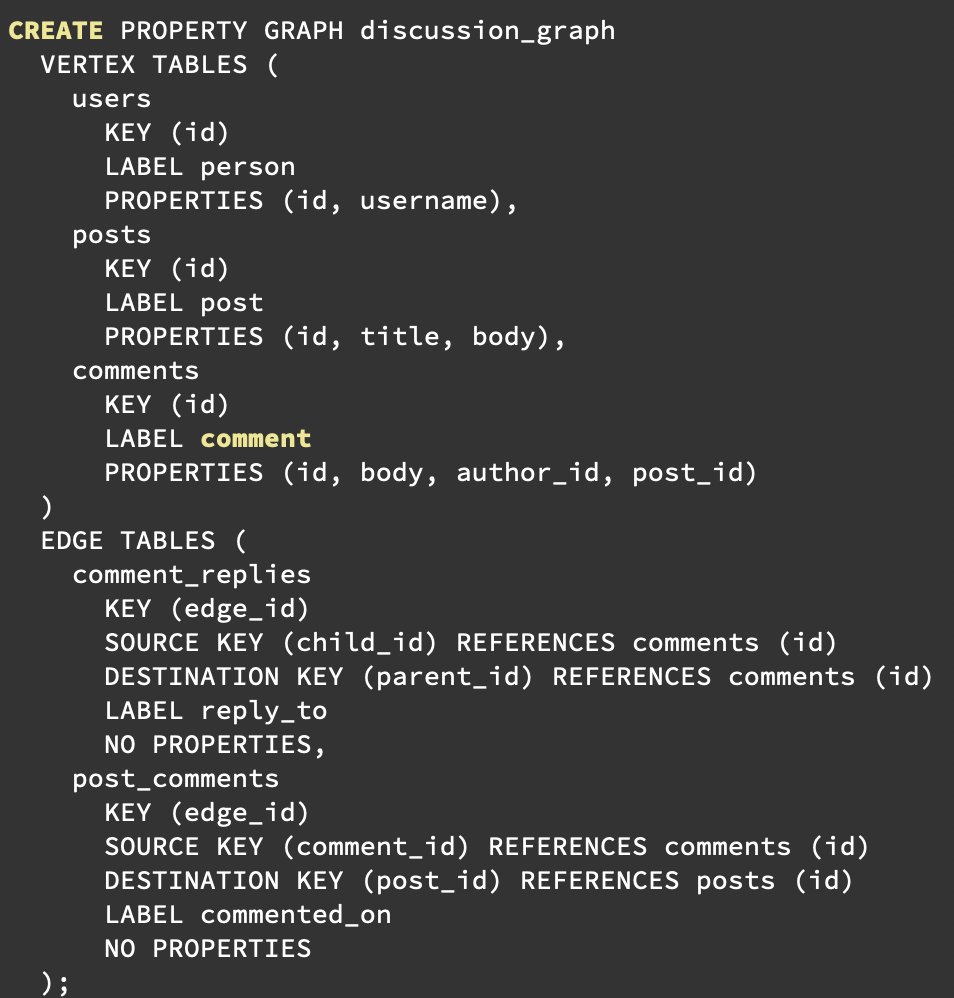
DDL definition: a graph is declared and named. `CREATE PROPERTY GRAPH org_graph` declares which tables are vertices and edges, once. Queries can reference the graph by name. Schema changes propagate automatically, clear errors if a query references a vertex/edge that no longer exists, and no dropping tables with associated graphs.
Ever written a large CTE query that no fails due to a schema change? Yeah, me, either.
Query syntax: query syntax that follows SQL:2023 standards. For instance, `(a)<-[IS reports_to]-(b)` means b reports to a.
You get the standard composability of SQL because GRAPH_TABLE behaves as a table. So, join it, filter it, aggregate it, put it in a CTE, and think of GRAPH_TABLE as a new FROM clause source.
The question answered with this implementation is: "What is the least we can build that gets us started?" The answer appears to be DDL support and supported query syntax.
What SQL/PGQ can't do yet that recursive CTEs still do better:
Variable depth: if you need all descendants at any depth, SQL/PGQ in Postgres 19 is fixed-depth only. You must spell out each hop explicitly, which means you need to know the max depth at the time you write the query, which means the query can get lengthy.
Aggregation along the path: CTEs can build up arrays, concatenate paths, compute running totals as they recurse.
The future:
As with JSON support, just wait, and you'll look up after a few releases and say "oh, now it can do that too."


English
guilherme retweetledi
