

Haider
7.9K posts

Haider
@Haider
Creator of the OKX brand. Read my personal views about crypto and what we are up to at @OKX & @Wallet.
🌎 | 🇺🇸 Katılım Mayıs 2015
2.6K Takip Edilen31.6K Takipçiler

Our risk engine continues to PROVE its superiority in the industry.
It worked effectively on the Oct 10 liquidation mystery (🧐) and it is proving its resilience in this particular case of RAVE.
Star_OKX@star_okx
OKX’s risk engine performed as designed and was not impacted during the RAVE market move. Happy to contribute an additional $25K bounty to support ZachXBT’s investigation.
English
@SpecterAnalyst @star_okx Why don’t you come and meet our compliance teams and look at our control systems? Open invite.
Or you can request chainalysis for a report on our systems and our detection, freeze and reporting capabilities.
English

Also true
Raphaël Bloch 🐳@Raph_Bloch
Hack after hack, it's becoming clear why TradFi built so many layers, controls, and safeguards over the years. Yes, that complexity can sometimes feel maddening - and part of DeFi’s original promise was precisely to strip it away. But it's also time to move past the myth of full decentralization. Much of DeFi today is far more centralized - and fragile - than many would like to admit. And not all complexity is useless. Far from it. After @DriftProtocol, @KelpDAO has now been hacked. This needs to be said clearly: these exploits aren’t going away. They’re structural. I’ve been covering crypto as a journalist for nine years. Before that - and alongside it - I covered banks and financial markets for years. I’ve seen how financial institutions operate, and there’s a reason why so many processes, controls, and safeguards exist. They weren’t built for fun - they were built after decades of failures, crises, and costly lessons. With very few exceptions, the way many protocols are organized remains alarmingly amateur. Basic processes are often missing, governance is fragile, and in the end, a small vulnerability is enough for someone to walk away with $300M - triggering chaos across the market. And at this point, what we’re seeing in parts of DeFi is no longer innovation - it’s negligence. Cutting corners on security, governance, or operational controls isn’t bold experimentation anymore. It’s risk transfer to users and the broader ecosystem. And that’s becoming increasingly unacceptable. Another structural issue: many DeFi teams are stacked with exceptional engineers - but very few people with deep financial or risk management experience. There’s often a belief that everything can be radically simplified through technology. But repeated failures - especially human ones - are showing the limits of that approach. This shift is also visible geographically. It’s no coincidence that crypto has increasingly moved from San Francisco to NYC. This is becoming less of a pure tech story and more of a financial infrastructure story - closer to Wall Street than Silicon Valley. We’ve seen this movie before. Only a handful of native DeFi players - both protocols and curators - will survive the ongoing wave of hacks. The protocols still standing in 2–3 years will likely be regulated. The same goes for curators, who will eventually be recognized for what they truly are: asset managers. Regulation in DeFi will inevitably bring baseline standards for security and organization. What we’re seeing on the ground today - from key management to permission structures - is often frankly frightening. More broadly, institutionalization is already underway. And institutionalization doesn’t happen without some form of regulation. Traditional players - banks, asset managers, fintechs - along with regulated crypto actors under MiCA or the Clarity Act, will increasingly launch on-chain products. They will demand standards. And those standards will shape the next phase of DeFi. Market forces are powerful for innovation and growth. But they have limits when it comes to security and systemic risk. Regulation is coming - and to some extent, it’s necessary. The real challenge will be ensuring it doesn’t become overly restrictive or anti-innovation. For that to happen, native DeFi players need to lead by example and build trust. Right now, behind the narratives and the marketing, there’s still a long road ahead.
English


Haider retweetledi

Haider retweetledi

Haider retweetledi

W to finally have fully regulated derivatives trading in Europe
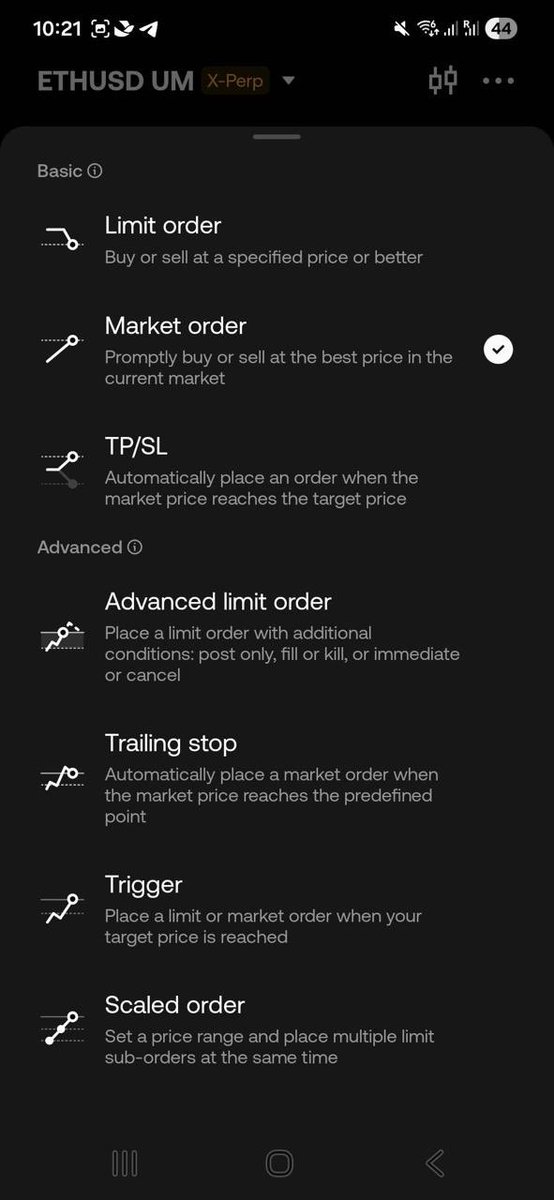
The full order type menu on @OKX X-Perps at launch: Limit, Market, TP/SL, Advanced Limit, Trailing Stop, Trigger, Scaled
A complete professional execution toolkit on a regulated European venue
OKX launched derivatives trading in Europe with the full toolkit
English
Haider retweetledi

The old choice in Europe was: pick regulated, or pick powerful.
@OKX rolled out X-Perps today across 30 EEA countries.
Regulated and powerful. The trade-off is gone.

English
Haider retweetledi


Haider retweetledi

OKX hat X-Perps in Europa gestartet. Regulierte Krypto-Derivate.
Gebühren: 0,02% Maker. 0,05% Taker.
Viele handeln bisher offshore, weil die Gebühren auf regulierten Plattformen zu hoch waren. Dieses Argument fällt jetzt weg. Die Konditionen liegen auf dem Niveau internationaler Börsen, nur eben auf einer EU-regulierten Plattform.
Bis zu 10x Hebel. Long oder Short. Hebel ist nichts für jeden. Er verstärkt Gewinne und Verluste gleichermaßen.
Zum Launch laufen zwei Aktionen für Neukunden:
🎁
36 USDC für die ersten 10.000 Nutzer, die ein Derivate-Konto eröffnen
🎁
200€ Spot-Handelsvolumen in 14 Tagen: 25€ in BTC.
1.000€ Spot-Volumen: 250€ in BTC.
Wer die Plattform ausprobieren will, nutzt meinen Link: my.okx.com/de/campaigns/e…
OKX@okx
X-Perps are now live in the EEA. Regulated access to derivatives with up to 10x leverage, multi-asset margin, and execution built for speed. First 10,000 users get a sign-up reward of €30.
Deutsch
Haider retweetledi

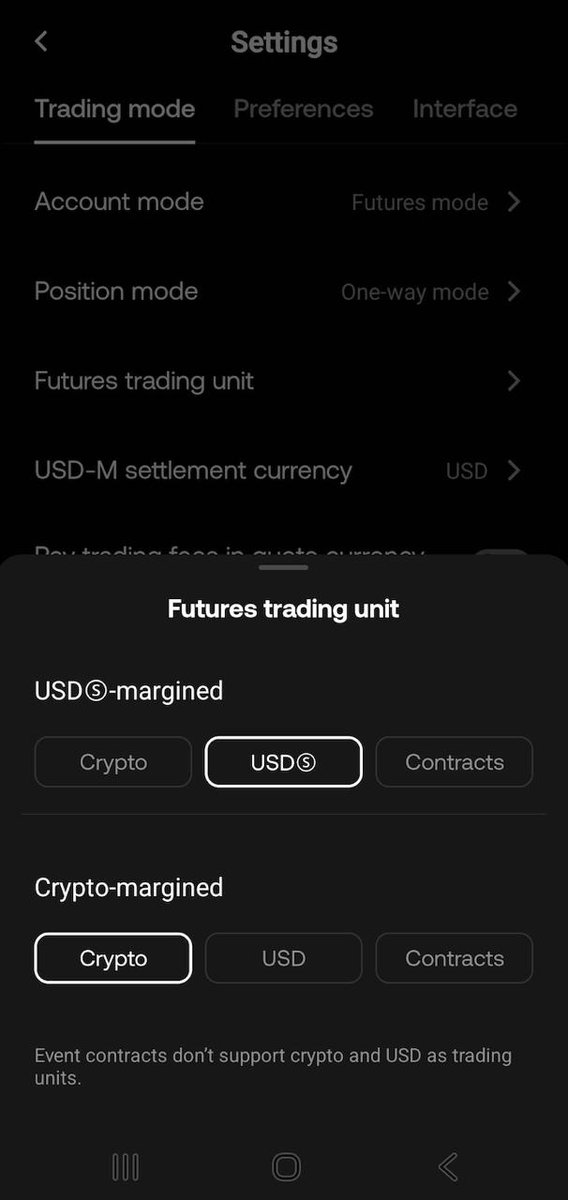
The multi-asset margin on @okx X-Perps is the detail that separates this from everything else in Europe right now. BTC, ETH, SOL, EUR, USDC, USDG, DOGE — all usable as margin. You don't have to liquidate a single position to trade. That's real capital efficiency.
English
Haider retweetledi

⚡️NEW: @OKX LAUNCHES REGULATED DERIVATIVES IN EUROPE
The new X-Perps product offers up to 10x leverage, deep liquidity with sub-3ms execution, multi-asset margin, and is fully regulated on a MiFID venue.
English

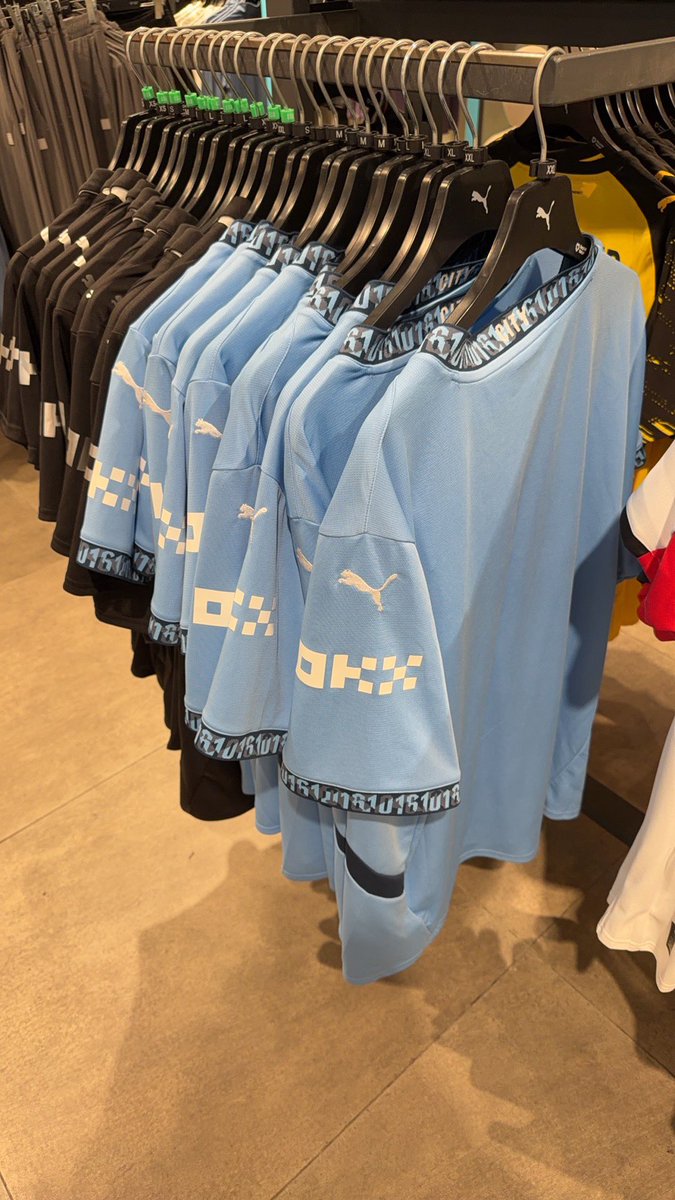
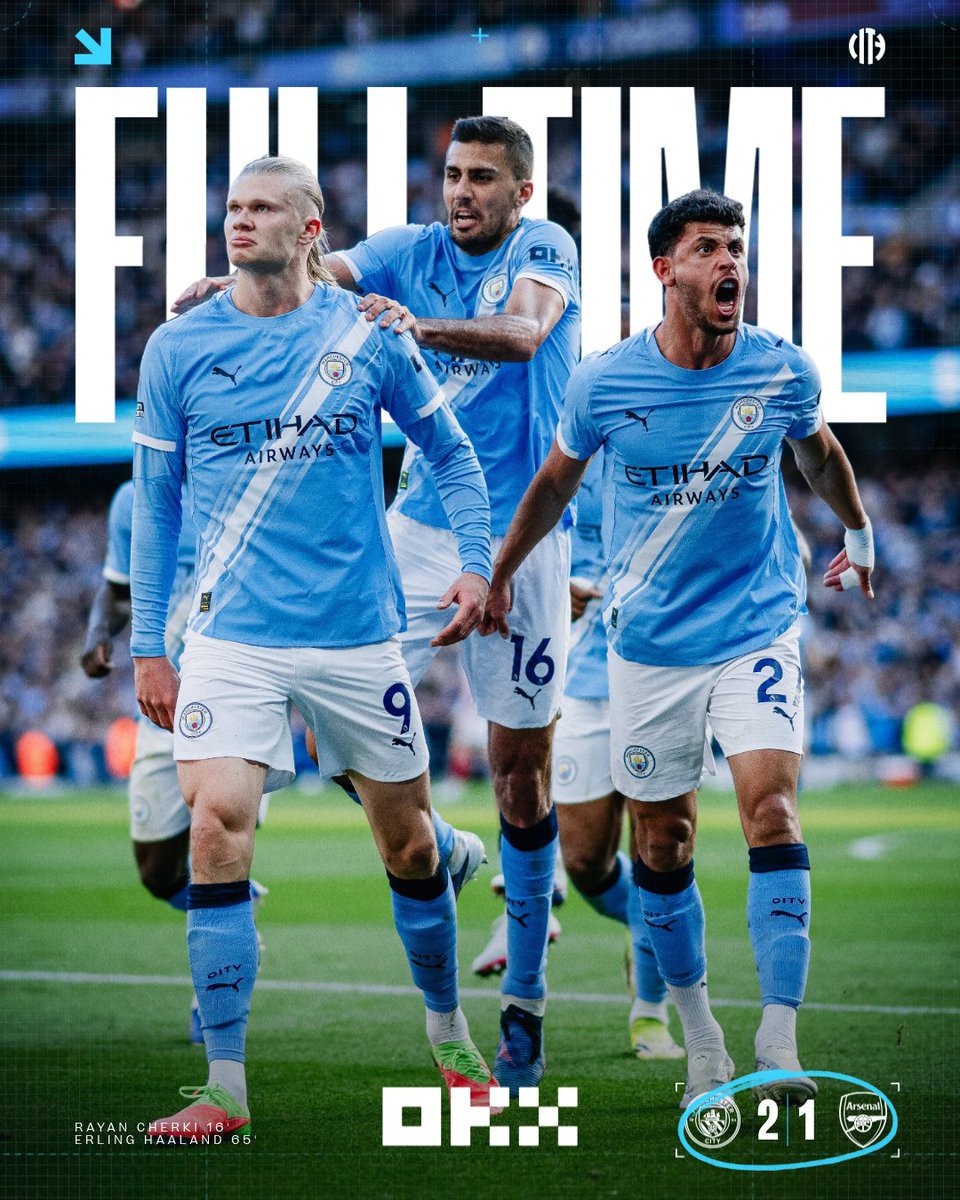
@banbendaan @star_okx It’s not a puma collab…
We are sleeve partners of @ManCity and you are looking at their official jersey.
Man city was our first brand sponsorship in 2022 when we rebranded and we have carried it since then
English

从2022年开始,OKX就与英超卫冕冠军曼城,达成长期合作关系了。
在把加密行业推到世界主流舞台这个事情上,@star_okx 一直是默默出力最多的。
彪马这个就是做的球衣印花同款T。

PPP的梦想是买一辆二手车@Web3454354
这是彪马和Okx的联名款么? 专卖店里看到的,应该不会是山寨的吧? 这我不得不批评老徐,老是闷头做大事@star_okx 。什么时候和彪马合作了也不官宣一下!
中文
Today we announced the release of our latest product (X Perps) in Europe at the Paris Blockchain Week,
We have said this before. No offshore gimmicks where regulations are clear.
Our perpetual-style crypto derivatives product for Europe brings leveraged trading under a MiFID-regulated framework available to both retail and institutional clients.
@EraldOnChain @Royvankrimpen and our Europe team are welcoming all traders to come and test the product and help us improve it.
If you are a trader in Europe, I encourage you to support regulated exchanges and know that your risk on regulated venues is far less and you know who to reach for support.
And, always manage your risk. Because the best traders are not always the ones who focus on profitable trades. Best traders are often times ones who manage their risk first.
English
🚨JUST IN: Crypto exchange Kraken has confidentially filed for an IPO, co-CEO Arjun Sethi said at Semafor’s World Economy Summit in Washington.


English