I just realized I was late to HandlPay ($HANDL).
Nevertheless, I see this project as having very interesting potential, especially because of its concept of enabling crypto transactions using only social media handles, making it much more practical and accessible.
Even though I arrived late, it's never too late to start.
I will learn, use, and maximize all of HandlPay's features to maximize its benefits and rewards.
Sometimes, time isn't the main issue; the most important thing is the determination to seize the opportunities that exist.
@HandlPay
Console Wallet beta invites are rolling out soon, can’t wait to explore those early rewards and see how it works within @CantonNetwork.
This could be the next big step for institutional grade wallets!
follow @ConsoleWallet and turn on notifications so you don't miss out.
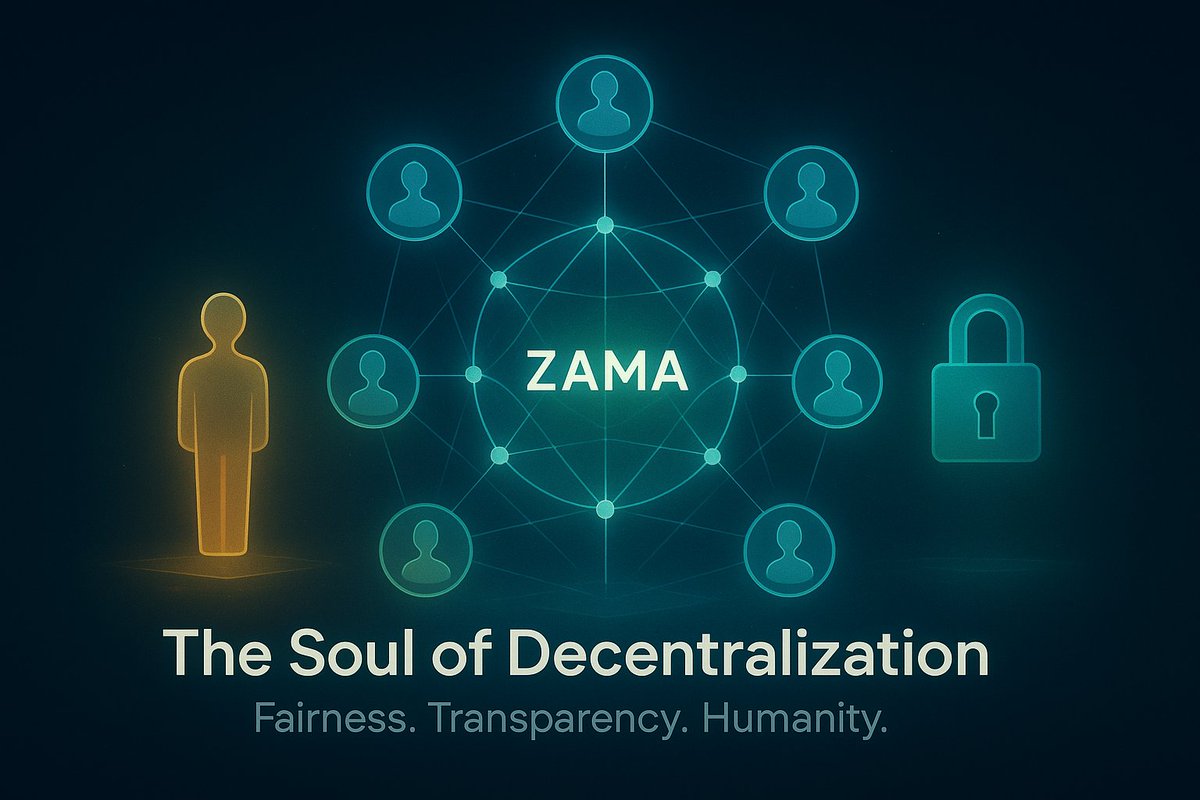
Zama is building fair, open, and resilient blockchain governance.
Behind every great technology, there's always one crucial question:
Who controls it, and how is it governed?
Zama answers that question through a conscious governance approach where transparency, reputation, and accountability are intertwined.
In the Zama protocol, security isn't just about cryptographic algorithms. It's also about the people behind the machines operators who keep the network running.
Zama calls them Key Management Service (KMS) and Coprocessor operators, selected based on reputation, experience, and real world contributions.
Interestingly, anyone can become an operator.
As long as they pass the testnet, demonstrate technical proficiency, and stake at least 0.5% of the total tokens in circulation.
In this way, decentralization isn't just a slogan, but an opportunity.
Every major change in the protocol, from fees to new chain support to mechanism updates, must pass the approval of a majority of operators.
However, Zama also provides an emergency stopgap or blacklisting mechanism, allowing operators to quickly halt threats while awaiting collective confirmation.
This balance between speed and caution is what keeps the system alive.
Meanwhile, the $ZAMA token is more than just a transaction tool. It is the lifeblood of the ecosystem, used for staking, delegation, and participation governance.
Uniquely, rewards are distributed proportionally to the square root of the stake amount, a formula designed to ensure that not only the big winners win. This system ensures that small participation matters.
All of these elements illustrate one point:
Zama is building not just a blockchain, but a new system of trust where power is distributed, decisions are made collectively, and security doesn't rely on a single party.
The protocol is still new and evolving.
But the direction is clear: creating humane governance in a world of cryptography that is often too cold and failing.
Zama views governance not as an added feature, but as the very soul of decentralization itself. If this vision is realized, Zama will not only be a technical innovation, but also a symbol of new digital justice.
@zama_fhe#ZamaCreatorProgram
Zama could be the backbone of a more secure DeFi.
DeFi was born from the grand idea of creating an open, intermediary-free financial system.
But one major unresolved issue remains: privacy.
Without privacy, "financial freedom" on the blockchain could actually be a trap.
Every DeFi transaction today is visible to anyone.
Wallet addresses, balances, history, and strategies are all open on the blockchain.
Transparency is good for audits, but bad for personal security.
Zama brings a new innovation:
Fully Homomorphic Encryption (FHE) technology.
With FHE, data can remain encrypted even while being processed. This means DeFi can run without exposing user data.
Zama built the FHEVM (Fully Homomorphic Encryption Virtual Machine), a machine that allows smart contracts to process encrypted data directly on the blockchain.
No decryption. No leaks. No compromise.
Some say, "If it's too private, what about transparency?"
The answer: FHE doesn't close the system, but filters what needs to be open and what needs to remain private.
Audits can still be conducted without revealing user identities.
Imagine DeFi like this:
Liquidity pools operate without revealing who their providers are.
Lending protocols can assess risk without knowing who the borrowers are.
Onchain strategies can't be copied by bots.
That's all realistic with Zama.
So far, DeFi has focused too much on "permissionless" and forgotten about "protection."
Yet, without security and privacy, decentralization has no long-term meaning.
Zama can restore that balance.
The main argument is clear:
If DeFi is to grow into a global financial system, it must be secure for individuals, not just transparent to the public.
And Zama's FHE is the logical foundation for achieving this.
Transparency makes DeFi possible.
But privacy makes it sustainable.
Zama could be the backbone of the next generation of truly secure and trustworthy DeFi.
@zama_fhe#ZamaCreatorProgram
FHE: a crypto technology that could change the world, and Zama is at the forefront.
Zama is developing something called the FHEVM (Fully Homomorphic Encryption Virtual Machine), a machine that allows blockchains to process encrypted data directly, without having to decrypt anything.
With FHEVM, the blockchain world can achieve high levels of privacy without losing transparency.
DeFi without public data, secure digital identities, and AI that can learn without prying eyes on user data.
Zama believes the future of Web3 is not only about decentralization, but also about trustworthy secrecy.
This technology is still very young, but its potential is extraordinary.
Many experts say FHE will be "the next big leap" after smart contracts and zero-knowledge proofs.
Zama is one of the pioneers, laying a new foundation for a more ethical and humane digital world.
And if FHE truly changes the world, don't be surprised to see Zama's name at the forefront of its history.
@zama_fhe#ZamaCreatorProgram
Zama is a bridge between data security and blockchain transparency.
Many people say, "Blockchain can't have full privacy, because its essence is transparency."
But that argument is starting to fall apart.
Zama exists to prove that privacy and transparency are not natural enemies, but rather two sides of an ideal system.
The main problem with blockchain today is simple:
If everything is public, our data can be explained to anyone.
If it's too private, public trust will be lost.
Zama offers a middle ground through Fully Homomorphic Encryption (FHE) technology.
With FHE, data can be processed without ever being decrypted.
This means that smart contracts can still run, transactions can still operate, but no one can see the actual data content. Privacy remains intact, the system remains transparent.
This is why Zama is called a bridge:
Because it doesn't reject blockchain transparency,
but rather regulates how that transparency works while respecting individuals' rights to their data.
Several privacy coin projects in the past have been abandoned, not because their ideas were flawed, but because they shied away from public audit.
Zama has learned from that mistake.
Privacy doesn't mean hiding.
Privacy means control over what is disclosed and to whom.
In the context of Web3, this is revolutionary.
We can imagine DeFi, AI, and even digital identity all operating in the public space, but with full protection of personal data.
That's the world Zama wants to create.
Data security shouldn't compromise transparency, and transparency shouldn't compromise privacy.
The two can coexist with the right cryptographic foundation.
@zama_fhe#ZamaCreatorProgram
Speed is always the first headline.
But speed is just the beginning.
Because while all other blockchains are racing to be the fastest,
@risechain is focused on being the liveliest.
#RISEUP
Ethereum is where assets will be tokenized.
@risechain is where assets will flow.
Blockchain has long been considered the "internet of value." Ethereum has proven itself as the place where digital assets are born, tokenized, and managed with nearly unparalleled security. But one thing it hasn't quite achieved yet is speed.
Ethereum is the foundation.
However, a strong foundation doesn't mean it has to be slow and one-way.
Every time an asset moves, a transaction occurs, or dApps interact, the world experiences high gas limits, long queues, and latency that feels like a thing of the past.
If Ethereum is where assets are created, then RISE is where assets move.
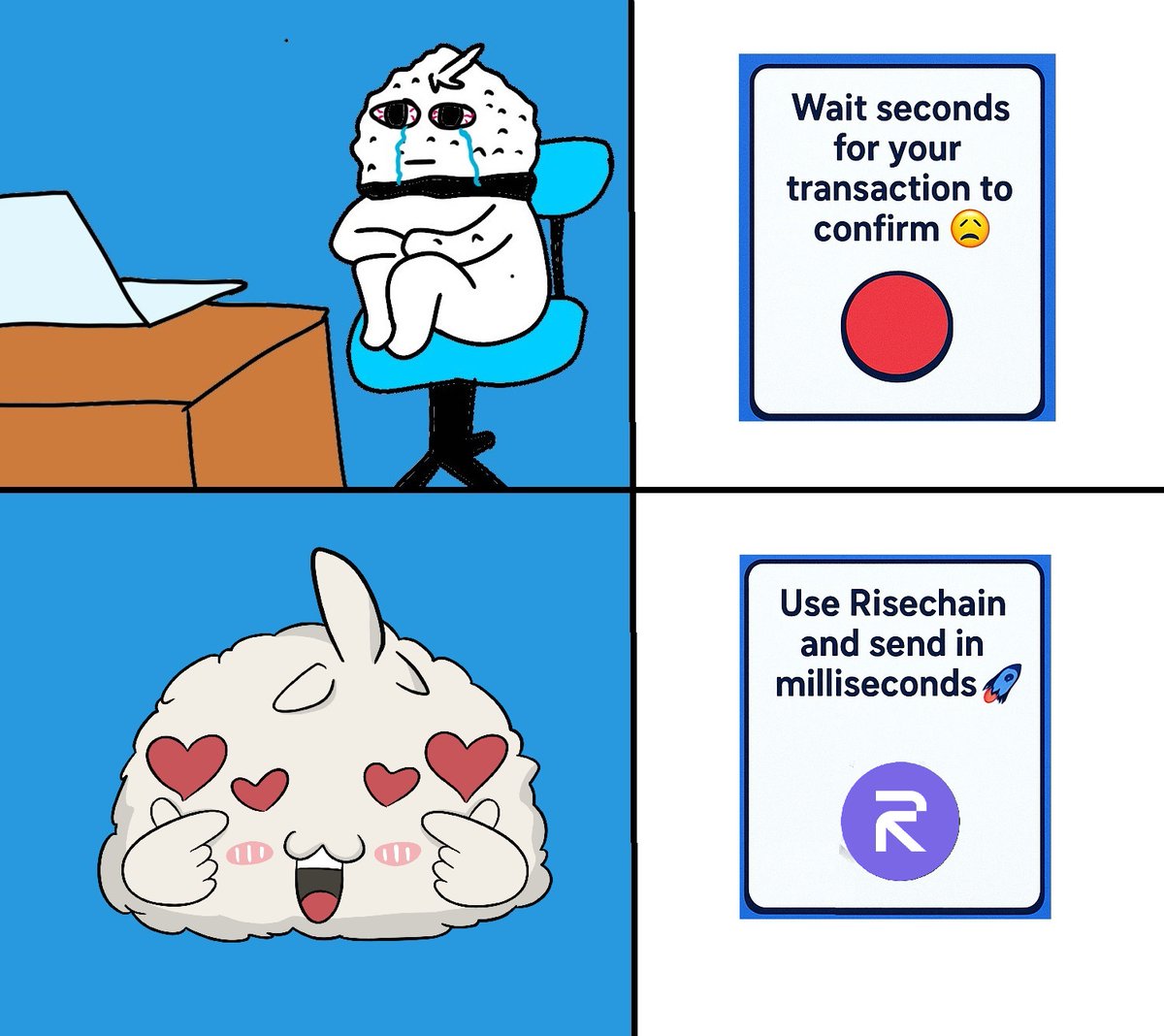
RISE acts like a circulatory system for the tokenized world, flowing value between ecosystems at millisecond speeds, while still leveraging the security strengths of Ethereum at its core.
With its Parallel EVM architecture, Risechain doesn't just mimic Ethereum it extends it.
Transactions run in parallel, not sequentially.
Each smart contract executes like a multicore processor, not a single, exhausted machine.
While Ethereum prepares the world for the tokenization of everything from stocks and real estate to personal data, Risechain offers the infrastructure where it can all move freely, quickly, and efficiently.
Ethereum's security remains its anchor.
Risechain's speed is its wings.
Perhaps this is the inevitable direction of evolution:
The base layer provides trust, the second layer provides speed.
Just as the internet protocol below ensures structure, the network above ensures experience.
Ethereum is the vault.
Risechain is the highway.
One preserves value,
the other allows it to flow.
And between the two,
the future of tokenization is taking shape.
#aRISE#grice#risechain
The Risechain testnet is a miniature version of what they're building:
an ecosystem that can execute near-instantaneous transactions, run smart contracts with high efficiency, and remain compatible with the Ethereum world.
Have you tried the Risechain testnet?
How to Join:
1. Claim a Faucet:
- faucet.testnet.riselabs.xyz
2. Try all apps: portal.risechain.com/apps
How does it feel?
@rise_ecosystem@risechain