HAZ Research

678 posts

HAZ Research

HAZ Research

@hazresearch

Research + Engineering + Business Analyst

Katılım Aralık 2024
130 Takip Edilen30 Takipçiler
Sabitlenmiş Tweet
HAZ Research
HAZ Research@hazresearch·
"risk comes from not knowing what you're doing" ~ some famous investors
English
0
0
0
91
Jake Browatzke 🚀
Jake Browatzke 🚀@jakebrowatzke·
My Investment Strategy: The Buffett-Lynch Hybrid My strategy is simple, but it's not easy. I own between one and five stocks at any given time. That's it. No options, no stop losses, no hedging. Just stock in businesses I understand deeply. I've averaged nearly 100% annualized returns since 2019 doing this, and I want to explain why it works and why most people would never be able to stomach it. Where the Idea Comes From My approach is a hybrid of two of the greatest fundamental investors who ever lived: Warren Buffett and Peter Lynch. Both were obsessed with understanding what a business is actually worth. But they expressed that obsession very differently. Buffett has said that if you find three wonderful businesses in your life, you'll get very rich. His conviction is legendary, at one point, roughly 50% of Berkshire's stock portfolio sat in a single name, $AAPL. He prefers to buy no-brainers and never sell. His concentration is extreme because his conviction is extreme. Peter Lynch ran Fidelity Magellan with over 1,400 stocks at times, which gave him a reputation for never meeting a stock he didn't like. That reputation is entirely unfair. Lynch was a master of understanding what every single company he owned was worth and actively rotating capital based on where the best opportunity was *right now*. If a stock ran up and the fundamentals hadn't improved to justify the new price, he'd sell it and move that capital into something where the fundamentals were strengthening but the price hadn't caught up yet. That discipline is what allowed him to outperform even Buffett during his time at Magellan. I take what I believe is the best of both: - **From Lynch:** The willingness to buy and sell based on present opportunity. The understanding that when a stock's price goes up without a corresponding improvement in fundamentals, your expected forward returns are shrinking and at some point, your capital is better deployed elsewhere. - **From Buffett:** The heavy concentration on only your highest-conviction ideas. If something isn't a top-five idea, it doesn't deserve my capital. How It Actually Works Everything I do comes down to one question: *Which stocks in my universe have the highest estimated forward returns over the next five years?* I'm constantly ranking opportunities. A stock earns its place in my portfolio by offering the best combination of strong or improving fundamentals and an attractive price. A stock loses its place when that equation changes - and it can change for several reasons: - The stock price has gone up significantly without the fundamentals improving, compressing forward returns. - The fundamentals have genuinely deteriorated, making the business worth less than I previously thought. - Another stock with great fundamentals has dropped substantially, creating a better opportunity than what I currently hold. - I discover a new opportunity - a company I wasn't previously tracking - that offers higher estimated forward returns than anything currently in my portfolio. I'm never selling because a stock went down. A stock dropping 30% with improving fundamentals is a *better* opportunity than it was before, that's a reason to hold or add, not to panic. This is exactly why I don't use stop losses. Stop losses are a price-based exit rule, and my entire framework is fundamentals-based. They would force me to do the opposite of what my system calls for at exactly the wrong time. I also don't sell because of macro headlines or market fear. I sell for one reason only: something else now offers a better forward return for my capital. The Returns This approach has allowed me to average nearly 100% annualized returns since 2019. I'm up roughly 300% over the last twelve months alone. Those numbers are real, but I need to be honest about what comes with them. The Downside And I Mean a Real Downside If you're going to own only a handful of stocks, you have to be willing to endure enormous drawdowns. There's no diversification cushion. When your top holdings go down, your entire portfolio goes down, and it can go down hard. Amazon dropped over 90% during the dot-com bust and has suffered at least six separate drawdowns of 50% or more on its way to becoming one of the greatest investments in history. If you owned a concentrated position in $AMZN, you lived through those drawdowns in full. That's the price of concentration. You have to be able to sit through the pain without abandoning the strategy, because the moment you panic-sell a great business during a drawdown is the moment you turn a temporary loss into a permanent one. I know this isn't theoretical, because I'm living it right now. As of this writing, I am in an 80%+ drawdown year to date. That's not a typo. Eighty percent. And no that doesn't contradict being up 300% over the past 12 months. The reason is that I have used leverage margin as a core part of my strategy since 2019, and I want to be completely transparent about how it works and what it costs. The Margin Strategy And Why I'm Rethinking It Leverage amplifies everything. It amplifies your gains on the way up, which is how I generated a 300% return in twelve months, but this return was a 10x in a single year before the drawdown I'm in now. It also amplifies your losses on the way down, and worse, it introduces a risk that can make the core strategy unworkable: margin calls. The basic principle of my strategy depends on being able to hold or buy when prices are falling and fundamentals are intact. Margin calls do the exact opposite as they force you to sell when you want to be buying. They take the decision out of your hands at the worst possible moment. So how do I reconcile using margin with a strategy that requires conviction through drawdowns? Here's how it actually works: I allow the margin calls to happen at the beginning of a drawdown. I let the broker force-sell shares on the way down. Then, once the drawdown becomes severe, I deposit fresh capital into the account, capital I've kept on the sideline for exactly this moment. That fresh capital lets me repurchase all the shares I was forced to sell, ideally at much cheaper prices than where the margin calls hit. Not all immediately, but thanks to the new capital base, I ride the entire recovery back up using margin to buy an even larger share count than I started with, supported by the fresh capital added to the account in the drawdown. This is not a strategy I recommend. It is genuinely degenerate. But the math has worked: I started with $20,000 in 2019 and grew my portfolio to $10 million in 2025. At that point, I withdrew $1 million in cash. I'm up over 300% over the last twelve months in portfolio value, that was only possible because of the withdrawals I took as the portfolio was running strong. Now here's the pain. My portfolio went from $10 million down to $1.3 million where I sit today. One million of that $1.3 million is fresh capital I deployed during the drawdown. That means the market effectively destroyed $8.7 million in portfolio value. That is the real cost of combining concentration with leverage. To make it worse, the stock I've now gone all-in on is a company I view as a potential 30X over five years, currently growing revenue 89% year over year, on the verge of EBITDA profitability within six months, with $130 million in cash and only $30 million of burn ahead before the profitability inflection, doesn't even allow margin. The market views it as too risky. So at this exact moment, I'm running the unleveraged version of the strategy for the first time in seven years. Not by philosophical choice, but by circumstance. With multiple stocks I like down 50%-80% with strong fundamentals, it feels like the exact wrong time to not be leveraged heavily into my top 5. When I reduce or remove margin from my strategy, it should happen at a moment of strength when everything is going well, not in a drawdown where all my favorite stocks are down 50%+ and my portfolio is down 80%+. What I'm Starting to Question I'll be honest: this last drawdown has been the most painful I've ever experienced, and it's the first time I've seriously questioned the strategy. The numbers still look good on paper. I've gone from $20,000 to $1.3 million in roughly seven years, even after an 80% drawdown. But I watched $10 million turn into $1.3 million. The psychological toll of that is real, and no amount of long-term compounding math makes it feel okay in the moment. Only having my real hope in Christ Jesus makes it easily barrable. Here's what I'm reconsidering: my strategy has been designed from day one to maximize annualized returns. That has been the only objective function. Everything, the concentration, the leverage, the willingness to endure enormous drawdowns, flows from that single goal. And by that measure, it has worked. But if the means of one of my eternal goals is to become a billionaire, then I think I need to weight longevity higher than I have been. A strategy that maximizes annual returns but periodically risks catastrophic drawdowns, the kind that can wipe out years of compounding completely, may not be the optimal path over a 20- or 30-year time horizon. The best annual return doesn't matter if you can't stay in the game long enough to compound it. Getting zeroed out once can turn a career of 100%+ annualized returns over decades into a complete failure. This is the opposite of how I've thought about investing for the past seven years. I'm not sure yet what the right balance is between maximizing returns and ensuring survival. But I know that the unleveraged version of this strategy - owning one to five of your highest-conviction ideas, rotating toward the best opportunity, and never selling on fear - is the foundation that actually works. The leverage was an accelerant. It made the ride faster, but it also nearly ended it. The unleveraged version of this strategy will still produce large drawdowns. Owning one to five stocks means you will, at some point, watch your portfolio drop 40%, 50%, maybe 60%. You need to be honest with yourself about whether you can handle that without making emotional decisions. Most people can't, and there's no shame in that. It just means this strategy isn't for them. But if you can endure the drawdowns, if you can hold when every emotion is telling you to sell - the math of buying great businesses at attractive prices and rotating toward the best opportunity tends to work out over time. It has for Buffett. It did for Lynch. And it has for me, even with the scars I'm carrying right now. PS: On Thursday, when the broader market was rallying hard on the peace talks, I fully deleveraged and sold out of the ridiculous 30+ stock portfolio I had built solely so I could stay maxed out on leverage while having most of my portfolio's liquid value in a margin-ineligible stock $BETR in my IBKR portfolio margin account. Borrowing into my 30th best idea is exactly the sort of idiocy I want to avoid in my investing career. This weekend is my first weekend without any margin borrowed in what feels like six years. Beyond realizing I couldn't sleep well owning 30+ stocks — way too much to be thinking about and keeping up with — the other reason for selling was to make my portfolio transfer to a new brokerage easier. I'm in a period of transition, trying to settle into the portfolio I feel has the highest upside and least downside coming out of the SaaSpocalypse, but I don't feel settled yet. I honestly don't know what I'll be doing on Monday. My #1 highest-conviction play, $BETR, being margin-ineligible is a new challenge for my strategy that I've never faced before. I'm actively trying to find a broker that will lend against this stock, because I can't justify selling any of it — my model shows $BETR with a 3x+ higher 5-year return than my next highest-conviction names like $PATH, $LMND, and $HIMS. If my model is right, being 300% net invested across those three (100% in each) would produce roughly the same returns as simply going all-in on $BETR with no leverage at all. However, my strategy really juices when I can continually buy more of a stock on margin as it rises (as long as it still shows the highest 5 year return). This creates a double compounding effect - the share price and the share count are both growing simultaneously, which makes the numbers go up unbelievably fast. Without that ability on $BETR, I could actually come out of this crash stronger being 300% invested in $LMND, $HIMS, and $PATH, since their rallies would unlock more margin buying power in a way that $BETR's rally can't. That said, I'm hopeful that once $BETR crosses a $1B market cap, margin eligibility prospects will improve. I also haven't lost faith in finding a brokerage or new account setup on IBKR that lets me margin into $BETR this week. PPS: If you've read this far, you're clearly a reader so I highly recommend picking up Peter Lynch's One Up on Wall Street and Beating the Street for a far more experienced perspective than mine.
OahuRE.com@OahuRE_com

Sorry if you posted this before, but I am new to your posts and very interested. The $1.3 million, what percentage of your portfolio is that, and do you consider any type of stop loss, or do you hold long term unless your thesis changes about the company? You might have gone over your entire portfolio, stop-loss strategy, and other topics in other posts, but I am just reading your posts now.

English
14
0
55
11.6K
HAZ Research
HAZ Research@hazresearch·
@CMDarnton0 The problem is it doesn't need AI to slow the business down substantially...which is a fact conceded by management As a shareholder, I want to call out all the insanely biased pumpers
English
0
0
0
2
Christian Darnton
Christian Darnton@CMDarnton0·
Unpopular opinion: there is no evidence that AI is disrupting Duolingo’s business, not even a single data point. $DUOL
English
9
4
61
4.9K
Jake Browatzke 🚀
Jake Browatzke 🚀@jakebrowatzke·
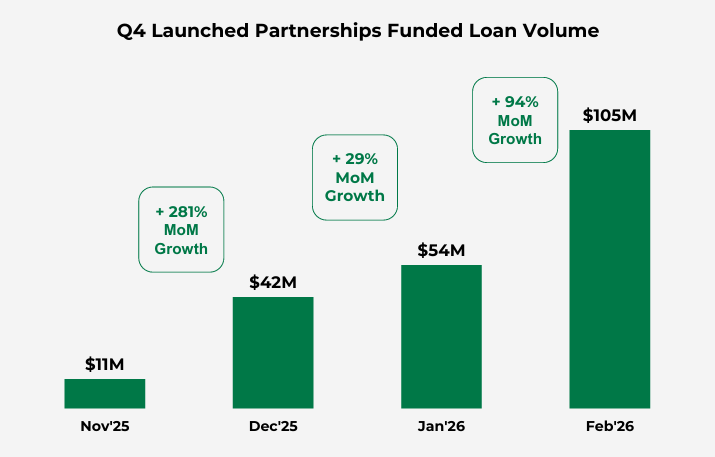
I don't know what the future holds But at this moment I believe the most likely outcome is that my $1.3M in $BETR becomes $39M within 5 years. Why? Better Home & Finance isn't a mortgage lender. It's an AI operating system for the $15 trillion mortgage industry and almost nobody has figured that out yet. Here's the core of the thesis: The Tinman Platform. Tinman is an AI-driven automated rules-based decision engine that combines a point-of-sale system, CRM, pricing engine, document engine, loan origination software, and underwriting calculation engine into one platform. Better Traditional mortgage lenders stitch together eight legacy systems. Better replaced the entire stack with a single AI-native platform. Tinman is trained on over a decade of Better's internal mortgage data, having mapped roles, tasks, rules, and decisions across more than $110 billion in funded loans, 12 million recorded customer calls, and 5 billion pages of documentation. The result? Loan officers using the Tinman AI app can fully underwrite loans in as little as 47 seconds, with a median time of about 2 minutes and 24 seconds — compared to an industry average of roughly 21 days. But here's the inflection I'm betting on — Tinman is becoming a platform sold to others. Better is pivoting from being just a direct-to-consumer lender to licensing Tinman as infrastructure for the entire mortgage industry. @vishal_better described Tinman's commercial model as being sold "by the outcome" rather than by seats or licenses, with clients paying per transaction at funding. That's a SaaS-like business model layered on top of mortgage economics. The partnerships are stacking up fast: 1. Credit Karma — this is the monster. Credit Karma has over 140 million members, and in just five months, the partnership has generated more than 30,000 mortgage pre-approvals while reaching less than 1% of its eligible member base. Pre-approvals scaled from 850 in October to 2,600 in November, 5,000 in December, 11,000 in January, and 13,000 in February 2026. That's an exponential ramp — and they've barely begun. 2. Finance of America — integrating HELOCs and home equity loans into its reverse mortgage platform through Tinman's plug-and-play capabilities. 3. ChatGPT/OpenAI integration — Better launched the first conversational credit decision engine for mortgages inside ChatGPT using a custom MCP connector, enabling lenders to underwrite loans through natural language. Within two weeks of launch, over 50 banks and mortgage brokers requested demos, including two of the three largest banks in the country. 4. A top-five non-bank mortgage originator went live starting with HELOCs, with a full enterprise rollout expected in Q2 2026. 5. A top-three personal lending fintech pilot was initiated and scaling rapidly. 6. Coinbase recently partnered with Better to offer Bitcoin backed mortgage loans via Better's Tinman. Better runs the entire mortgage stack and Coinbase custodies the coins. The deals are generating real growth. Q1 2026 funded loan volume hit $1.64 billion, up 89% year-over-year, exceeding guidance of $1.40–$1.55 billion. Tinman AI Platform funded loan volume reached $646 million in Q4 2025, comprising 44% of total volume. Better is targeting $1 billion in monthly loan volume by end of May 2026. That would mean another double from Q1 (already up 89% y/y) by Q3 2026. The NEO distribution model proves Tinman works at scale. Within six months of rolling out, NEO increased loans funded per officer by 91%, per processor by 17%, and per underwriter by nearly 50%, all powered by Tinman AI. The valuation gap is absurd. Figure Technologies trades at 11 times sales, Rocket Companies trades 3.14 time sales, while Better trades at just 2.4 times sales despite growing faster than Figure and MUCH faster than Rocket. $BETR's market cap today sits around $500–600 million. Now the math for my $1.3M → $39M. That's roughly a 30x return. With ~18.5M shares outstanding and the stock around $35, I'd need the stock somewhere near $1,000+, implying a market cap of ~$18–20 billion. For context, Rocket Mortgage sits around $41B and doesn't even have a 6% mortgage market share. If Tinman becomes one of the default operating system that banks, fintechs, and brokers plug into — charging per funded loan across a $15 trillion annual market — and if the HELOC business keeps compounding, and if Credit Karma alone converts even 5–10% of its eligible members... the revenue trajectory to support that valuation starts looking VERY plausible over a 5-year horizon. There is risk. No doubt. The company is still loosing money and they recently had to dilute shareholders to raise capital, but now I believe they have all the runway they need to reach profitability. Better is guiding to EBITDA breakeven by the end of Q3 2026. Total burn from here should not exceed $30M and they now have $130M of cash. Once profitable, the market will be forced to re-rate this from "money-losing mortgage lender" to "fast growing AI mortgage platform." The CEO, CFO, CTO, and Chairman all recently purchased additional shares on the open market — insiders are buying. Insiders sell for many reason, but they only buy to make money.
Jake Browatzke 🚀 tweet media
Jake Browatzke 🚀@jakebrowatzke

BREAKING: 10% Insider Framework Ventures Loads Up On >0.3% of All $BETR Shares Friday 👀

English
22
8
97
34.9K
HAZ Research
HAZ Research@hazresearch·
@jakebrowatzke Yes use the Lord as an excuse for degenerate gambling please...it's very entertaining What if I were to tell you that God said keep him out of your bs
English
0
0
0
4
Jake Browatzke 🚀
Jake Browatzke 🚀@jakebrowatzke·
There is not a single investment in the world with a stronger thesis or more upside than accepting Jesus Christ as your Lord and Savior ❤️🙏
English
7
4
54
11K
HAZ Research
HAZ Research@hazresearch·
@alc2022 Are you the guy in this clip who ended up getting shit on the bed?
English
0
0
10
8.8K
Antonio Linares
Antonio Linares@alc2022·
the guy who called peptides early and went long AMD at $4, Tesla at $13 and Palantir at $7 is driving around the med while most investors are staring at red portfolios. he wrote the article that explains how. read it before everyone else does.
Antonio Linares@alc2022

x.com/i/article/2042…

English
45
191
3.7K
2M
HAZ Research
HAZ Research@hazresearch·
Product is learning = they are fighting against gravity, is all im saying sure, some people learn. But fundamentally it's a lot more difficult to compete with true entertainment like Netflix and Youtube. Ok? And yes, all im saying is that the stock is already cheap for that reason. But arguing this has the potential to be like a Netflix is just naive
English
0
0
1
45
🟢 Lluís Fondevila 🟢
🟢 Lluís Fondevila 🟢@LluisFondeStock·
Of course the product is learning!! That's the mission. Founders only talk about that: education, education, education. If you don't believe that it's an education app, then it means the company is a scam. That's another issue to discuss. Humans aren't lazy, but love convinience. Just look at how many people spends hours and hours creating investing content to get just some likes and nothing else. The number of people learning is increasing every year. Statistics show that.
English
1
0
0
46
🟢 Lluís Fondevila 🟢
🟢 Lluís Fondevila 🟢@LluisFondeStock·
First, thanks @moneyflowinvest for your long bear thesis on $DUOL. I have to say that, in my opinon, there are some significant first-principles flaws in your reasoning. 1.- "This bet ignores the looming threat of improving 'Zero-Shot' capabilities and human-like sample efficiency, which threaten to render Duolingo's data-driven teaching moat obsolete by making linguistic expertise accessible to any competitor." You say input is king. That is wrong, especially for language learning. Any poliglot will stress output. Without output, input is almost irrelevant. Luis knows that, and that's why the new metric 'words spoken per Max subscriber' is key. It measures output, high cognitive workload output. You didn't even mention this metric, but it is extremely key to the thesis, since it will boost student outcomes. 2.- "the vast majority of even the 'elite' user base engages at levels that merely match the average daily usage of platforms like TikTok (58 minutes) or YouTube (48 minutes). This reveals a dual failure in the product’s promise: it is neither gamified enough to compete with social media for attention, nor effective enough educationally to justify high engagement for the masses." Nobody learning a language should spend too much time within the method itself (inside the app); instead, they should practice outside. For example, input should come from Google, Netflix, reading, listening to songs, podcasts, and newspapers. There should also be a lot of output: talking alone, talking to whomever, shadowing, and writing. It has always been like this. Learning a language effectively requires exactly that. I will be more than happy to discuss these points and any others in your long thesis.
Mike Kytka (MoneyFlow Research)@moneyflowinvest

1/ $DUOL posted another banger Q3 2025 print: Bookings: +33% YoY Revenue: +41% YoY DAUs: +36% (50M) MAUs: +20% (135M) Operating Profit: +159% YoY Net Income: +1,151% YoY Yet the market violently re-rated the stock, sending it down 25% in a single session. It now sits ~67% off its highs. The consensus narrative blames the looming threat of AI translation. I disagree. Google Translation is a red herring. The real issue is much deeper: a forensic look at user behavior reveals the "growth" is becoming economically hollow. Here is the breakdown👇

English
2
0
17
3K
HAZ Research
HAZ Research@hazresearch·
I think the point he wants to get across is if users don't spend much time in the app, then by definition the app is not very important in their media consumption ranking and therefore is dispensable The other nuance here that you haven't really addressed is that the product is learning. Humans are lazy. This is no match for instagram, but then again the valuation reflects that
English
1
0
0
41
🟢 Lluís Fondevila 🟢
🟢 Lluís Fondevila 🟢@LluisFondeStock·
And what is exactly the issue with logging off? I do not get it. It is like saying that if you are studying in an evening school, you have to sleep there. Ultimately, the core issue is the value delivered per dollar spent. Or value per minute spent, could be another metric. If one doesn't grasp the fundamentals of pedagogy, how can they formulate a compelling argument for or against a pedagogical product? It is analogous to publishing a bear case on AMD or NVIDIA while being indifferent to chip performance and remaining ignorant of chiplet architecture or CUDA. As I said, thanks for your thesis. Bear cases are important to analyze. Looking forward to discussing this further.
English
2
0
1
115
HAZ Research retweetledi
Andrej Karpathy
Andrej Karpathy@karpathy·
Farzapedia, personal wikipedia of Farza, good example following my Wiki LLM tweet. I really like this approach to personalization in a number of ways, compared to "status quo" of an AI that allegedly gets better the more you use it or something: 1. Explicit. The memory artifact is explicit and navigable (the wiki), you can see exactly what the AI does and does not know and you can inspect and manage this artifact, even if you don't do the direct text writing (the LLM does). The knowledge of you is not implicit and unknown, it's explicit and viewable. 2. Yours. Your data is yours, on your local computer, it's not in some particular AI provider's system without the ability to extract it. You're in control of your information. 3. File over app. The memory here is a simple collection of files in universal formats (images, markdown). This means the data is interoperable: you can use a very large collection of tools/CLIs or whatever you want over this information because it's just files. The agents can apply the entire Unix toolkit over them. They can natively read and understand them. Any kind of data can be imported into files as input, and any kind of interface can be used to view them as the output. E.g. you can use Obsidian to view them or vibe code something of your own. Search "File over app" for an article on this philosophy. 4. BYOAI. You can use whatever AI you want to "plug into" this information - Claude, Codex, OpenCode, whatever. You can even think about taking an open source AI and finetuning it on your wiki - in principle, this AI could "know" you in its weights, not just attend over your data. So this approach to personalization puts *you* in full control. The data is yours. In Universal formats. Explicit and inspectable. Use whatever AI you want over it, keep the AI companies on their toes! :) Certainly this is not the simplest way to get an AI to know you - it does require you to manage file directories and so on, but agents also make it quite simple and they can help you a lot. I imagine a number of products might come out to make this all easier, but imo "agent proficiency" is a CORE SKILL of the 21st century. These are extremely powerful tools - they speak English and they do all the computer stuff for you. Try this opportunity to play with one.
Farza 🇵🇰🇺🇸@FarzaTV

This is Farzapedia. I had an LLM take 2,500 entries from my diary, Apple Notes, and some iMessage convos to create a personal Wikipedia for me. It made 400 detailed articles for my friends, my startups, research areas, and even my favorite animes and their impact on me complete with backlinks. But, this Wiki was not built for me! I built it for my agent! The structure of the wiki files and how it's all backlinked is very easily crawlable by any agent + makes it a truly useful knowledge base. I can spin up Claude Code on the wiki and starting at index.md (a catalog of all my articles) the agent does a really good job at drilling into the specific pages on my wiki it needs context on when I have a query. For example, when trying to cook up a new landing page I may ask: "I'm trying to design this landing page for a new idea I have. Please look into the images and films that inspired me recently and give me ideas for new copy and aesthetics". In my diary I kept track of everything from: learnings, people, inspo, interesting links, images. So the agent reads my wiki and pulls up my "Philosophy" articles from notes on a Studio Ghibli documentary, "Competitor" articles with YC companies whose landing pages I screenshotted, and pics of 1970s Beatles merch I saved years ago. And it delivers a great answer. I built a similar system to this a year ago with RAG but it was ass. A knowledge base that lets an agent find what it needs via a file system it actually understands just works better. The most magical thing now is as I add new things to my wiki (articles, images of inspo, meeting notes) the system will likely update 2-3 different articles where it feels that context belongs, or, just creates a new article. It's like this super genius librarian for your brain that's always filing stuff for your perfectly and also let's you easily query the knowledge for tasks useful to you (ex. design, product, writing, etc) and it never gets tired. I might spend next week productizing this, if that's of interest to you DM me + tell me your usecase!

English
404
780
8.7K
1.2M
##make_no_mistakes.md
##make_no_mistakes.md@chang_change9·
@alc2022 No insider knowledge but 1. They don't have the funds for that kind of purchase 2. nor would chess com want it
English
1
0
0
264
Antonio Linares
Antonio Linares@alc2022·
Prediction: $DUOL overtakes chess dot com
English
17
2
119
17.4K
HAZ Research retweetledi
Andrej Karpathy
Andrej Karpathy@karpathy·
LLM Knowledge Bases Something I'm finding very useful recently: using LLMs to build personal knowledge bases for various topics of research interest. In this way, a large fraction of my recent token throughput is going less into manipulating code, and more into manipulating knowledge (stored as markdown and images). The latest LLMs are quite good at it. So: Data ingest: I index source documents (articles, papers, repos, datasets, images, etc.) into a raw/ directory, then I use an LLM to incrementally "compile" a wiki, which is just a collection of .md files in a directory structure. The wiki includes summaries of all the data in raw/, backlinks, and then it categorizes data into concepts, writes articles for them, and links them all. To convert web articles into .md files I like to use the Obsidian Web Clipper extension, and then I also use a hotkey to download all the related images to local so that my LLM can easily reference them. IDE: I use Obsidian as the IDE "frontend" where I can view the raw data, the the compiled wiki, and the derived visualizations. Important to note that the LLM writes and maintains all of the data of the wiki, I rarely touch it directly. I've played with a few Obsidian plugins to render and view data in other ways (e.g. Marp for slides). Q&A: Where things get interesting is that once your wiki is big enough (e.g. mine on some recent research is ~100 articles and ~400K words), you can ask your LLM agent all kinds of complex questions against the wiki, and it will go off, research the answers, etc. I thought I had to reach for fancy RAG, but the LLM has been pretty good about auto-maintaining index files and brief summaries of all the documents and it reads all the important related data fairly easily at this ~small scale. Output: Instead of getting answers in text/terminal, I like to have it render markdown files for me, or slide shows (Marp format), or matplotlib images, all of which I then view again in Obsidian. You can imagine many other visual output formats depending on the query. Often, I end up "filing" the outputs back into the wiki to enhance it for further queries. So my own explorations and queries always "add up" in the knowledge base. Linting: I've run some LLM "health checks" over the wiki to e.g. find inconsistent data, impute missing data (with web searchers), find interesting connections for new article candidates, etc., to incrementally clean up the wiki and enhance its overall data integrity. The LLMs are quite good at suggesting further questions to ask and look into. Extra tools: I find myself developing additional tools to process the data, e.g. I vibe coded a small and naive search engine over the wiki, which I both use directly (in a web ui), but more often I want to hand it off to an LLM via CLI as a tool for larger queries. Further explorations: As the repo grows, the natural desire is to also think about synthetic data generation + finetuning to have your LLM "know" the data in its weights instead of just context windows. TLDR: raw data from a given number of sources is collected, then compiled by an LLM into a .md wiki, then operated on by various CLIs by the LLM to do Q&A and to incrementally enhance the wiki, and all of it viewable in Obsidian. You rarely ever write or edit the wiki manually, it's the domain of the LLM. I think there is room here for an incredible new product instead of a hacky collection of scripts.
English
2.7K
6.6K
55.5K
19.7M
HAZ Research retweetledi
Guido van Rossum
Guido van Rossum@gvanrossum·
I think I finally understand what an agent is. It's a prompt (or several), skills, and tools. Did I get this right?
English
532
205
4.7K
570.6K
HAZ Research
HAZ Research@hazresearch·
@JJCarrell14 It's almost funny how this is surprising for some people after seeing for YEARS what we were dealing with Sad state of affairs for this country
English
0
0
0
2K
J.J. Carrell
J.J. Carrell@JJCarrell14·
What the FUCK are we doing! My son will NEVER die for a foreign country! I voted for you 3 times, took abuse and fought for you and this is what you do! You do the exact opposite of what you railed against for over a decade!
English
16.6K
14.7K
71.6K
6.3M
HAZ Research retweetledi
Bolei Zhou
Bolei Zhou@zhoubolei·
Last semester, I taught Reinforcement Learning class again at UCLA. Together with my amazing TAs Matthew and Caiyuan, we built a mini-project: MetaDrive Arena 🚗🤖 Students applied what they learned in class, trained RL agents, and competed on a live leaderboard. The results were incredible, with 94 agents, 2K submissions, and 130K matches. We saw tons of creativity, clever ideas, and real progress in learning. We’re now releasing it publicly to support RL education and experimentation. Try it out and train your own agent at 🔗 github.com/VAIL-UCLA/Meta…
English
3
44
392
24.9K
HAZ Research retweetledi
Boris Cherny
Boris Cherny@bcherny·
I wanted to share a bunch of my favorite hidden and under-utilized features in Claude Code. I'll focus on the ones I use the most. Here goes.
English
554
2.5K
23.1K
3.9M
HAZ Research
HAZ Research@hazresearch·
@jakebrowatzke Using God or Jesus or whatever as excuse to gamble and engagement farming is low of low. You deserve to be kicked down
English
0
0
0
1
HAZ Research
HAZ Research@hazresearch·
God must be like: please don't drag me into this Chris Jesus must be like: for the love of God, please stop using my name as an excuse for gambling You are a financial influencer. You get your followers when your leveraged account goes up. You influence people with "how to invest". It's only fair that you get kicked the other way down
English
0
0
0
4
Jake Browatzke 🚀
Jake Browatzke 🚀@jakebrowatzke·
The first year I ever lost $1M was 2022. In fact I lost 90% of my net worth in 2022 after 20xing my portfolio the year prior by going all-in on margin into $TSLA. My peak before that ~90% drawdown was $1.6M in 2021, built from $20k I had saved up since age 14 and first put to work in 2019. Last year, I 10x'd my portfolio to nearly $10M, again leveraged all-in — this time in $LMND. As of now, I'm down -84% YTD from that new peak. From this crash point, I see the most opportunity in the stocks that have been hit the hardest despite AI being a massive tailwind for their businesses. Namely: $PATH (currently 178% of net liquidity), $KLAR (currently 121% of net liquidity), and $DUOL (currently 38% of net liquidity). $PATH is still my highest conviction pick, but it's also in the center of the tornado — new competitor headlines drop daily, and that could keep the fear narrative alive longer than I originally expected. Not to mention the real likelihood of market share losses over time, offset (I believe) by the rapidly expanding automation market size. That's why I've added two other AI beneficiaries that are more AI-adjacent and less likely to face direct new competition from AI itself — similar to how the AI first insurance player $LMND benefits from AI without being threatened by it. I still believe my original $PATH thesis is correct. But I now think the public market may feel more comfortable bidding up these "safer" adjacent winners first — the ones that don't have major competitor announcements dominating the news cycle every week. Obviously, I hope I'm wrong. Whichever of these three starts showing momentum first, my current plan is to margin into relentlessly until my 5-year expected annualized return for it drops below 30%, or until the other two start looking far more attractive on a relative valuation basis. Here's how I think about it: I want a rocket out of this mess, so I've booked three tickets instead of one. I'll hop on the first one that's fueled and ready. Once I'm off-planet, I'll be in a position to buy seats on the ships still grounded. If all three take off at once, great. The scenario I want to avoid is holding a ticket to the only one still sitting on the launchpad as the market recovers. My current weighting reflects which stock I think is most likely to see real, fundamental AI-driven momentum in the biggest way over the next 5 years — that's $PATH. But I'll be the first to admit that predicting the ebbs and flows of public sentiment in the near term is far from a science. Both $KLAR and $DUOL are growing faster today than UiPath, and $KLAR is trading at a roughly 50% discount on an EV/look-through earnings basis compared to even $PATH, which itself is dirt cheap at 6.6x EV/look-through earnings. All three are founder-led, which is a requirement for every investment I make. Looking ahead through the prism of my short history: after December 2022, it took a few years to fully recover and hit a new all-time high. As several have observed it will take a ~500% gain to break even again on the year from my current drawdown, but with as volatile as the market has been lately, I wouldn't be surprised to see a new ATH this year or next. That said, because I'm still >300% invested with leverage, I also wouldn't be surprised if my portfolio gets cut in half again before a recovery begins. If it hasn't come across yet — I don't mind volatility. Volatility and real losses are not the same thing. A stock swinging 50% while the underlying business compounds at 40%+ annually is not a loss; it's an opportunity. If the drawdown continues, there is no point where I stop leveraging into the market. When I see people selling into cash I laugh in sadness for them as the market actually looks more and more attractive the lower it moves, not less! In a continued drawdown the next few weeks would likely take out personal and business loans to load up further as I'm admittedly out of fresh personal capital, and at these valuations the deals would be too compelling not to take equally drastic action. This is my personal risk tolerance — not a recommendation — but it's how I've played the game since day one, and it's how I became a millionaire. Still being a millionaire after an 84% YTD drawdown is a pretty wild reality for a 30 year old who grew up as a poor missionary kid who's family lived on donations. I have a plan for making my strategy more conservative as certain thresholds are hit, but now is the time to go big. My dream is donating the most amount of money possible to the poor in the name of Christ Jesus over a 1,000 year period - something I think becomes possible for the first time with trusted AI agents that can be imbedded with missions, upkeep their own infrastructure, and outlive any human, and potentially any company or government. Even if I got completely zeroed out a dozen times, I would not give up on my gracious life calling to help Jesus "wake up my church" - which is even more fundamental and valuable than my personal desires to shrink world governments, feed the poor and fund the end times church. For what good would even a trillion dollars do for a Christian church that is lukewarm? In Revelation 3 Jesus rebukes the lukewarm church of Laodicea saying "I know your deeds, that you are neither cold nor hot". This spiritual state is described as nauseating to Christ, leading to the warning, "I am about to vomit you out of my mouth". Lukewarm faith represents complacency and a lack of true love for neighbors or God, replaced by a feeling of self-reliance. "You say, 'I am rich, and have become wealthy, and have no need of anything,' and you do not know that you are wretched, miserable, poor, blind, and naked." I believe this largely describes the Western church today, and even much of my own day to day life. We MUST listen to what the creator of our simulation warns us to do! "I advise you to buy from Me gold refined by fire so that you may become rich... and eye salve to apply to your eyes so that you may see. Those whom I love, I rebuke and discipline; therefore be zealous and repent. Behold, I stand at the door and knock; if anyone hears My voice and opens the door, I will come in and will dine with him, and he with Me. The one who overcomes, I will grant to him to sit with Me on My throne, as I also overcame and sat with My Father on His throne." Perhaps volatility in worldly wealth does not bother me because even a trillion dollars looks colorless and worthless compared to that promise from my savior to share the throne with my creator. Jesus showed his love for me first by visiting earth and being crucified for my sins so that I can now stand blameless before him in a white robe, despite being naked and wretched without his cleansing grace.
Jake Browatzke 🚀@jakebrowatzke

New YTD Low. No crying. Only buying.

English
109
9
245
241K