Hellums Sports Performance

2.9K posts

Hellums Sports Performance banner
Hellums Sports Performance

Hellums Sports Performance

@hellumssports

James Hellums - Private Trainer

Katılım Haziran 2019
565 Takip Edilen127 Takipçiler
Hellums Sports Performance retweetledi
Gerry DeFilippo
Gerry DeFilippo@Challenger_ST·
“I love to be coached.” I said it once, I’ll say it again. This is what it means to coach. If you hate this, you are SOFT “I believe in you, but you have to want this moment.” Know the difference between mindless yelling & motivating someone you love & care about!!
English

107
533
6.5K
504K
Hellums Sports Performance retweetledi
Daniel Bove
Daniel Bove@DanielBove·
6 unforgettable years with the Pelicans. Through every success, every challenge, and everything in between, I’ll always remember and cherish the people who made this place truly special. Thank you, New Orleans Pelicans. I’m grateful for the memories and the growth. Now, onto the next chapter.
English
4
4
158
12.3K
Hellums Sports Performance retweetledi
William A. Wallace, Ph.D.
William A. Wallace, Ph.D.@drwilliamwallac·
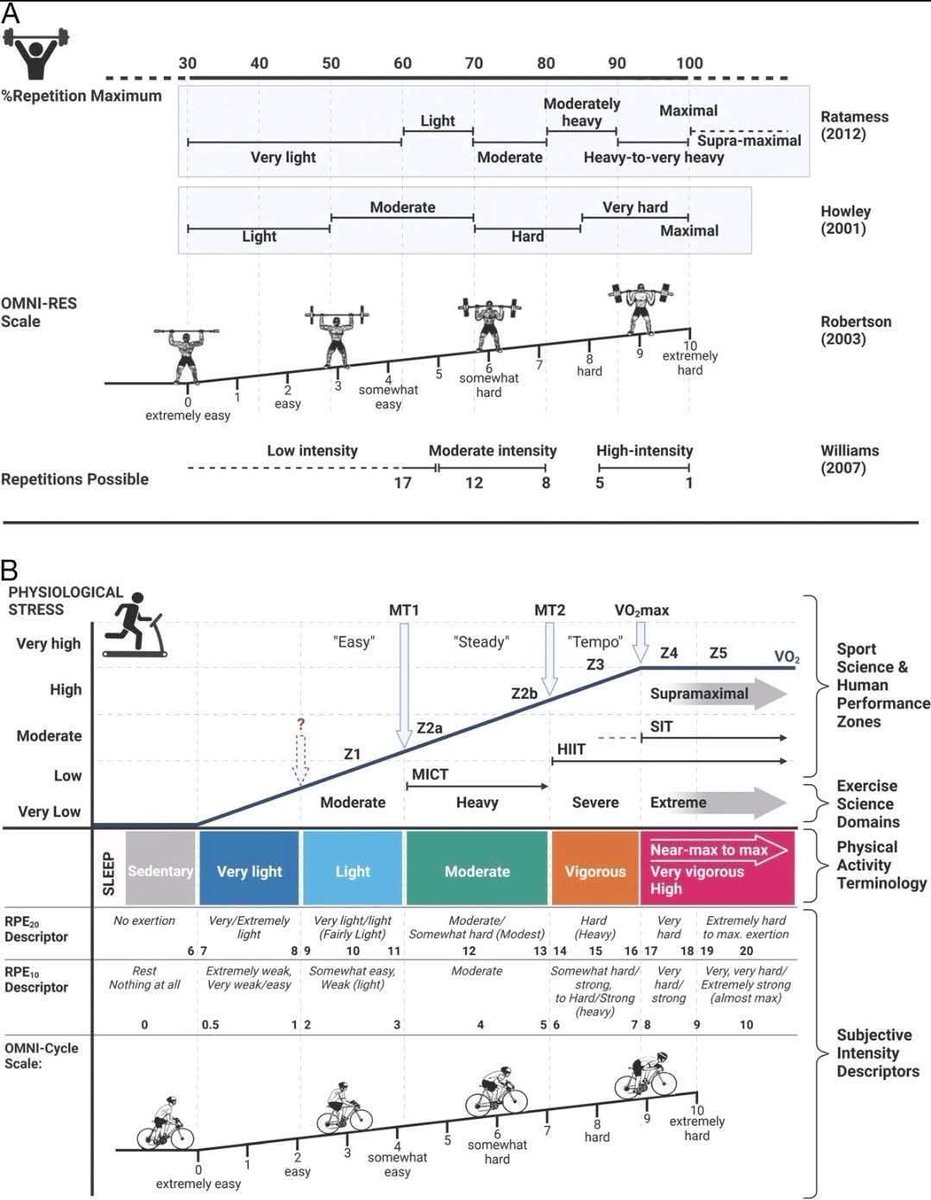
Understanding exercise intensity, effort, and physiological stress This figure integrates both resistance training and endurance training frameworks to explain how exercise intensity, effort perception, and physiological stress align across different types of activity. It connects objective performance metrics—like repetition maximums and VO₂max—with subjective effort scales such as RPE and OMNI. 1️⃣ The intensity spectrum Both resistance and endurance exercise exist along a shared continuum, from very light to maximal effort. As workload increases, so do oxygen consumption, heart rate, lactate accumulation, and perceived exertion. 🟢 Example: Low-intensity sessions (easy cycling or 30–40% 1RM lifts) promote recovery and aerobic base development, while high-intensity efforts (>85% HRmax or near-max lifts) target performance and power adaptations. 2️⃣ Resistance training zones (Panel A) Resistance intensity is commonly defined by % of one-repetition maximum (1RM) and the number of repetitions possible before failure. 🟢 Example: 30–50% 1RM allows 15–20 reps for endurance work, while 80–90% 1RM allows 4–6 reps to build strength. 🟢 Example: “Very light” corresponds to an OMNI-RES rating of 1–3 (easy, long-duration sets), while “maximal” effort (OMNI 9–10) approaches neuromuscular limits with only 1–3 reps possible. 3️⃣ Endurance and metabolic thresholds (Panel B) In aerobic training, intensity is structured around lactate thresholds: LT1: The onset of lactate accumulation (transition from easy to steady aerobic work). LT2: The point of rapid lactate buildup marking anaerobic transition. 🟢 Example: Zone 1–2 training below LT1 enhances mitochondrial density and fat metabolism, while Zone 4–5 work above LT2 improves VO₂max and anaerobic capacity. 4️⃣ Perceived effort and heart rate correlation Across both modalities, the Rate of Perceived Exertion (RPE) mirrors physiological load. Moderate work feels “somewhat hard” (RPE 12–14), while maximal efforts (RPE 18–20) represent full exertion. 🟢 Example: Strength athletes use RPE or “reps in reserve” to auto-regulate intensity, while endurance athletes use heart rate and RPE to manage training load under varying conditions. 5️⃣ Training applications and adaptations Understanding intensity zones allows for precise programming of stress and recovery to optimize adaptation. 🟢 Example: Endurance programs often follow an 80/20 structure—80% low intensity (Z1–Z2) and 20% high intensity (Z4–Z5)—while resistance programs balance heavy, moderate, and accessory work across weekly microcycles. By integrating resistance and endurance frameworks, this model unifies how both strength and aerobic systems respond to progressive overload. It shows that whether lifting or cycling, exercise intensity is governed by the same physiological principle: the body adapts best when effort and recovery are carefully balanced along the stress continuum. Bishop DJ et al. (2025). Physical Activity and Exercise Intensity Terminology: ACSM–ESSA Consensus Statement. Med Sci Sports Exerc, 57(11):2599–2613. DOI: 10.1249/MSS.0000000000003795
William A. Wallace, Ph.D. tweet media
English
12
135
619
27.7K
Hellums Sports Performance retweetledi
Sprint Science
Sprint Science@spikesonly·
Resisted Sprints- Keep the ground contact times short enough so they don't mess up the reduced air times. Remember, frequency is high with acceleration due to the shorter stride perimeter. If your GCT is harmonic (50/50 split) and your velocity is increasing, that load is better than optimal models. Those who are pushing body speed percentages are living in the ivory tower.
English
1
3
29
9.8K
Hellums Sports Performance retweetledi
Sprint Science
Sprint Science@spikesonly·
Too Weak for Your Speed or Too Slow for Your Strength?
Sprint Science tweet media
English
0
6
32
5.8K
Hellums Sports Performance retweetledi
Nicholas Fabiano, MD
Nicholas Fabiano, MD@NTFabiano·
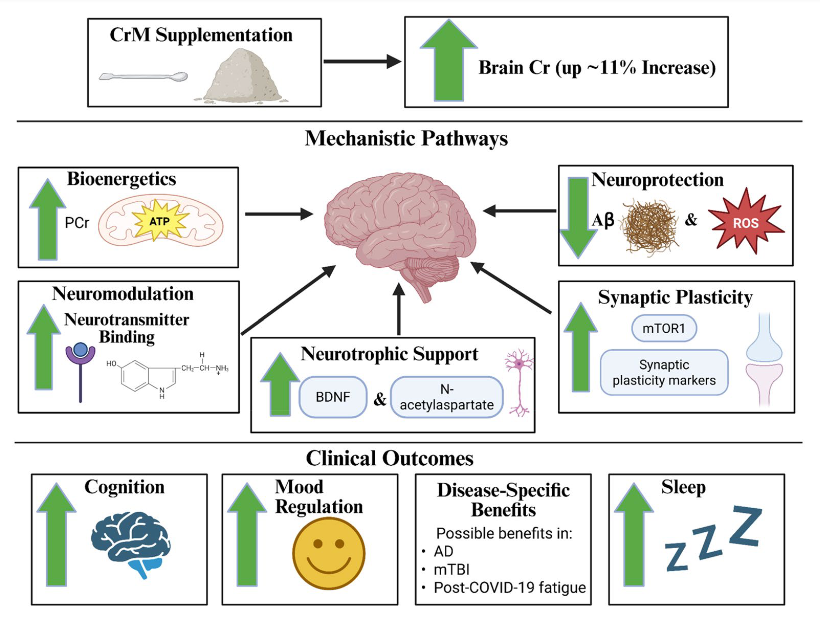
We just published the largest review of creatine for brain health. Increased brain creatine levels may function as a buffer to metabolic stress leading to neurological benefits. Doses >5g/day are likely required for brain benefits.
Nicholas Fabiano, MD tweet media
English
140
647
4.8K
1.6M
Hellums Sports Performance retweetledi
Sprint Science
Sprint Science@spikesonly·
Great frameworks don't imply great results. Important to do a parametric evaluation of seasonal trends of improvement rather than theoretical models. Good start here, hopefully a part 2 focuses on outcomes.
Specialized Training™️@Tatopek1

🆕"This review highlights the overall complexity of understanding coordination patterns in sprinting across the ACC & Vel Max phases, plus challenges the concept of an ‘optimal’ sprint technique" 👉@DylHicks et al, 2026🇦🇺 📂 @SportsMedicineJ Open Access: link.springer.com/article/10.100…

English
0
4
33
4.8K
Hellums Sports Performance retweetledi
Daniel Berglind, PhD
Daniel Berglind, PhD@DanielBerglind·
Strength first — then speed flies. Evidence from track & field research shows that sequenced training works ”best”: 1️⃣ Build muscle & work capacity 2️⃣ Increase maximal strength 3️⃣ Convert strength into power with high-velocity training sciencedirect.com/science/articl…
English
2
10
70
14.4K
Hellums Sports Performance retweetledi
Dr Sudhir Kumar MD DM
Dr Sudhir Kumar MD DM@hyderabaddoctor·
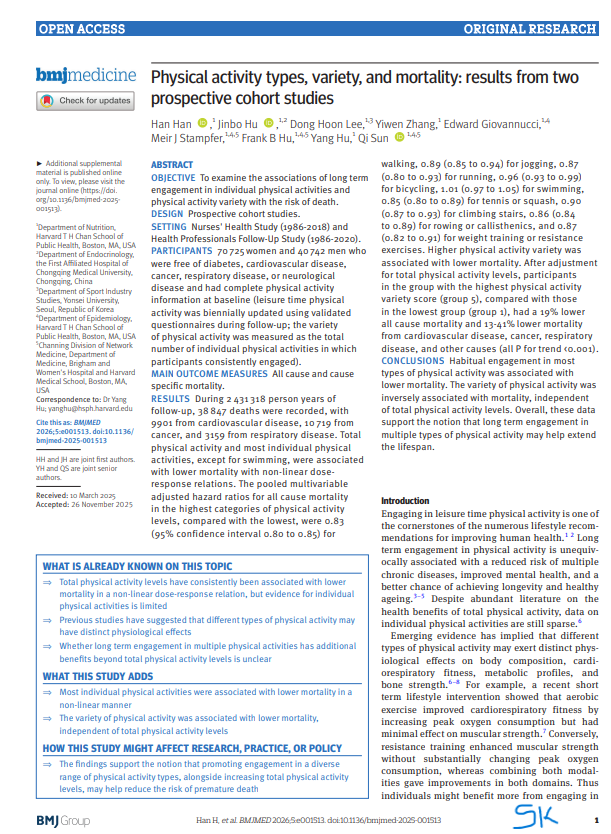
Exercise Variety Matters; Not Just Exercise Volume A large study published in BMJ Medicine shows that doing different types of physical activity is linked to lower risk of early death, even when total exercise time is the same. Key insight: People who combined activities, such as walking, running, cycling, strength training, or sports, had better long-term outcomes than those who stuck to just one type. Why does this matter? 1. Different activities challenge the heart, muscles, bones, and balance in complementary ways 2. Variety may reduce injury risk and improve long-term adherence 3. Benefits go beyond just “minutes of exercise” Take-home message: Don’t obsess over one perfect workout. Move more and move differently. Dr Sudhir Kumar @hyderabaddoctor
Dr Sudhir Kumar MD DM tweet media
English
6
39
157
10.2K
Hellums Sports Performance retweetledi
LaMonte Vaughn Jr.
LaMonte Vaughn Jr.@KoachVaughn·
Dear HS Track and Field Parents Please don’t misrepresent an offer or recruiting interest by a school or coach. College coaches know each other and we talk. We also know what the market value is and isn’t. Don’t talk yourself out of a blessing for your child.
English
1
5
28
1.9K
Hellums Sports Performance retweetledi
Danny McCray OLY
Danny McCray OLY@I_Coach_Speed·
A message from Coach K, who coaches Tate Taylor and Jake Odey-Jordan. We have to do a better job partnering with elite kids on behalf of the athlete. Like the example we originally provided around one of our athletes. The sport and dynamics are evolving.
Danny McCray OLY tweet media
English
2
4
46
4.5K
Hellums Sports Performance retweetledi
Brad Schoenfeld, PhD
Brad Schoenfeld, PhD@BradSchoenfeld·
Excessively high levels of aerobic exercise may have detrimental effects on cardiovascular health, possibly by promoting a chronic inflammatory milieu jsams.org/article/S1440-…
English
21
59
378
69.9K
Hellums Sports Performance retweetledi
William A. Wallace, Ph.D.
William A. Wallace, Ph.D.@drwilliamwallac·
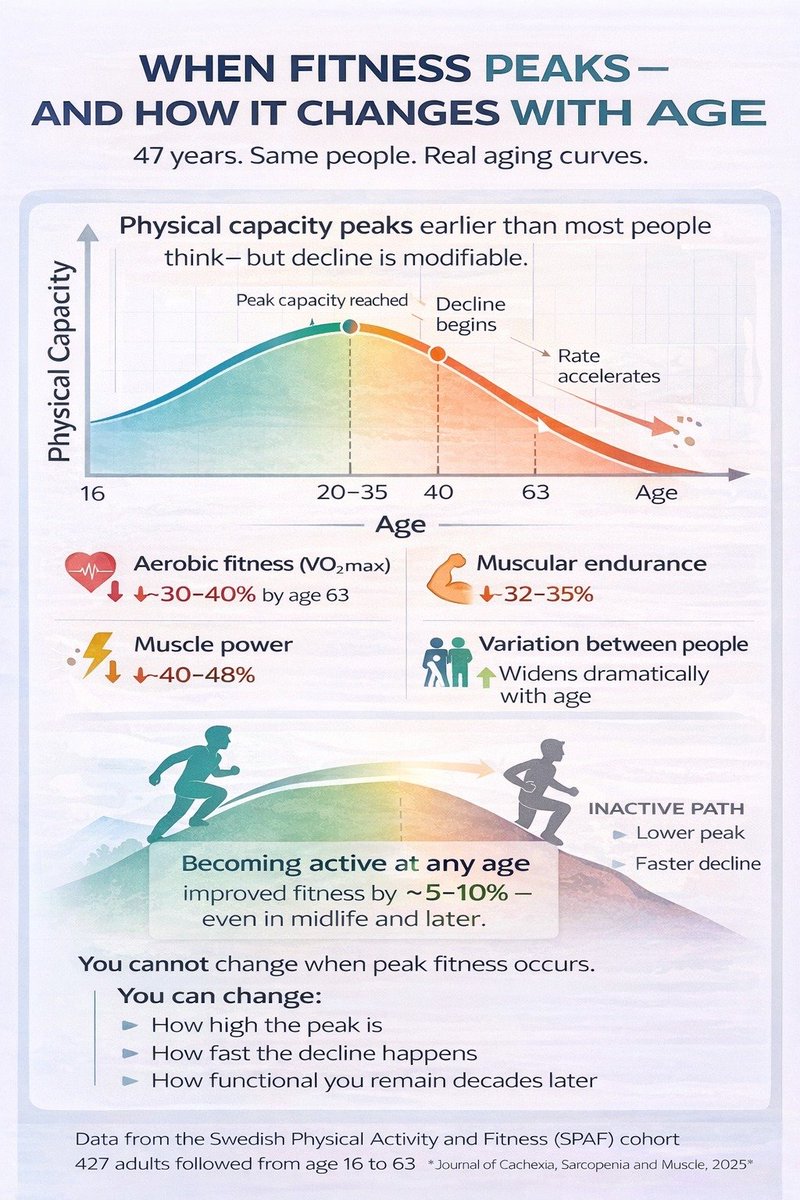
If you want to be really fit later in life, you need to be really fit early in life. A rare 47-year longitudinal study following the same people shows that peak physical capacity is reached much earlier than most expect, typically between the late teens and mid-30s. After that, aerobic fitness, strength, and muscle power begin to decline, with the rate of loss accelerating after ~40. While you can’t change when peak fitness occurs, you can change: How high that peak is How fast the decline happens How functional you remain decades later People who were fitter early in life entered aging with a larger “physiological reserve.” But there’s good news: even those who started exercising later still improved physical capacity by ~5–10%, meaning activity meaningfully reshapes the aging curve at any age. Early fitness builds reserve. Lifelong movement preserves it. That’s the difference between aging with capacity, or aging without it. Westerståhl et al., Journal of Cachexia, Sarcopenia and Muscle (2025)
William A. Wallace, Ph.D. tweet media
English
25
196
894
102.2K