hendry espina | $BEYOND
17 posts

hendry espina | $BEYOND
@hendry1993
Self-proclaimed athlete - Swims like a fish
maracaibo Katılım Mayıs 2010
0 Takip Edilen6 Takipçiler

To swim fastest, there are several important techniques and principles to adhere to:
Breathing technique: Proper breathing helps you maintain speed and efficiency while swimming. Exhaling and inhaling should be done correctly to optimize breathing and conserve energy.
Arm strokes: To swim fast, your arms need to perform strong and efficient strokes. Use both arms to push water forcefully backward.
Leg kicks: Utilize your legs to push water backward and generate propulsion. Ensure you kick your legs strongly and efficiently to create speed.
Turn technique: Turn quickly and accurately to save time and maintain your momentum.
Practice: Regular practice and adjusting your technique will improve your speed and efficiency in the water.
Remember, swimming fast requires patience, effort, and dedication to training. Focus on improving technique and building strength to achieve the best results.
English

The Youth Swimming Competition is an exciting and exciting sporting event that enables young athletes to discover and develop their talents in this sport. This is not only an opportunity to show off swimming skills, but also an emotional experience and learning from competition.
Swimming competitions help teenagers practice strength, patience and determination. Daily training sessions not only help improve swimming technique but also increase health and endurance. At the same time, the competition also creates opportunities to interact, make friends and build team spirit in the swimming community.
For young athletes, participating in swimming competitions is not only a sporting experience but also a journey of growth, helping them learn and develop time management skills, fighting spirit and self-esteem. believe in yourself. At the same time, the competition is also an opportunity for young athletes to show their commitment and passion for this sport.
Youth swimming competitions bring joy and excitement, encouraging dynamism and renewing the spirit in the community of young athletes. This is a useful and meaningful playground, contributing to creating excellent swimming talents for the future.
English

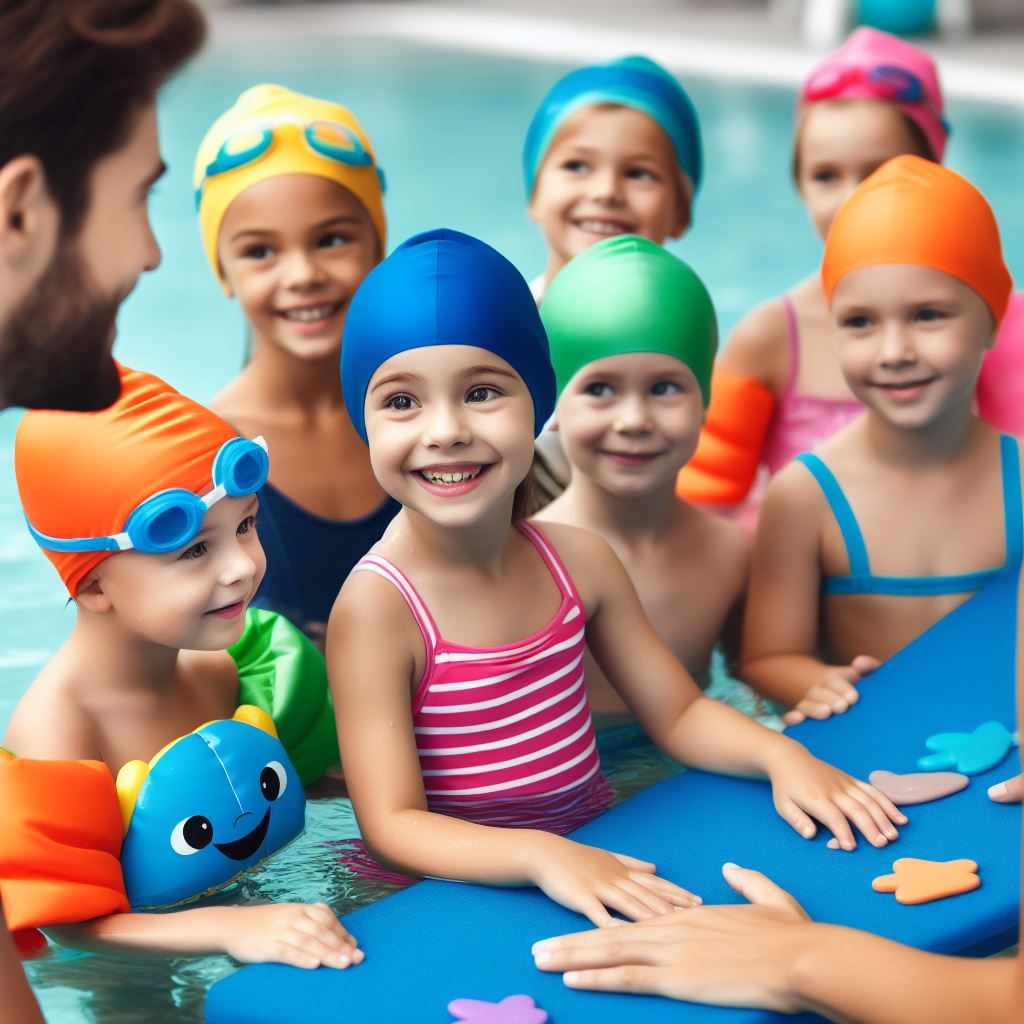
Teaching children to swim is a rewarding experience that fosters both physical and emotional growth. Witnessing their initial trepidation transform into confidence and joy in the water is truly gratifying. As an instructor, guiding them through the basics of floating, kicking, and stroking instills a sense of accomplishment and self-assurance. Beyond the technical skills, swimming lessons cultivate important life lessons such as perseverance, resilience, and teamwork. Creating a supportive and nurturing environment allows children to overcome fears and embrace new challenges. Ultimately, seeing the smiles on their faces as they master each stroke reaffirms the value of teaching swimming to young minds.

English

Becoming a free swimming teacher for children is a wonderful and meaningful act. This not only helps children learn swimming skills safely, but also helps them prevent the risk of drowning. At the same time, this also creates conditions for children to have the opportunity to play and develop their health in a positive way.
English

Mental Well-being: Swimming not only benefits physical health but also contributes to mental well-being. The rhythmic nature of swimming, combined with the soothing sensation of being immersed in water, can reduce stress, anxiety, and depression. Many swimmers find that the repetitive motion and focus required during swimming act as a form of meditation, promoting relaxation and mental clarity.
Full-body Workout: Swimming engages multiple muscle groups simultaneously, providing a comprehensive full-body workout. Unlike other forms of exercise that may primarily target specific areas, swimming promotes balanced muscle development throughout the body. From the arms and shoulders used in strokes like freestyle and butterfly to the core muscles engaged in maintaining proper body position, swimming offers a holistic approach to fitness.
Low-Impact Exercise: Swimming is a low-impact exercise, making it suitable for individuals of all ages and fitness levels, including those with joint pain, arthritis, or mobility issues. The buoyancy of water reduces the impact on joints and ligaments, minimizing the risk of injury while still providing an effective workout. This makes swimming an ideal form of exercise for rehabilitation, cross-training, or simply maintaining overall health and fitness.
Cardiovascular Health: Regular swimming sessions can improve cardiovascular health by increasing heart rate and circulation. Swimming is an aerobic activity that challenges the cardiovascular system, helping to strengthen the heart muscle, lower blood pressure, and improve overall cardiovascular endurance. Consistent swimming workouts can reduce the risk of heart disease, stroke, and other cardiovascular conditions, promoting long-term heart health.
English