Michael Hui

312 posts

Michael Hui

Michael Hui

@hichaelmui

Investing, Business, Tech and Liverpool FC

Brisbane, Australia Katılım Ocak 2011
896 Takip Edilen265 Takipçiler
Michael Hui
Michael Hui@hichaelmui·
Hey @pocketcasts - have you given any thought to making your app stable and usable on Android Automotive? I'm a long time subscriber but it's killing me how bad this version of your app is. Particularly when the iOS version is so good.
English
3
0
2
585
Jack J.
Jack J.@jack_9947·
Anthropic just dropped Claude For Small Business and it’s INSANE. I've built a complete Cowork setup guide that takes you from downloading the desktop app to automated weekly workflows in under 35 minutes. The same system that replaces 30 minutes of manual inbox-checking with a 5-minute morning routine. Daily briefs, invoice chasing, month-end close, meeting prep, client research, and SOP building. Inside the playbook: - The DNA file builder that teaches Claude your entire business in one session before you touch any other skill - The daily, weekly, monthly, and quarterly routine with exact timing and slash commands for each - 7 bonus skills borrowed from the GTM and power-user library with full copy-paste build templates Want a copy? Like + Comment "CLAUDE" and I'll send it over ASAP (Must be following)
Jack J. tweet media
English
15
1
16
344
Jack J.
Jack J.@jack_9947·
I just built the Claude Managed Agents Playbook. Feed it a task description, your connected tools, and a trigger → it builds an agent, runs it in Anthropic's cloud, and delivers the output to ClickUp, Slack, or wherever you need it → no servers, no DevOps, no code. All inside one free reference document. Perfect for founders and operators who are still routing outputs manually between tools, paying for tasks that should run automatically, and avoiding agents because they assumed it required a developer. If you're running GTM or ops in 2026, you already know the math: every multi-step task still running manually is leaking time and money every single week. Most people think building agents requires engineers. For this one you just describe what you want. This playbook solves it: → What managed agents actually are and what they are not → How to build your first agent in four steps with zero code using the Quick Start interface → How to connect and share credentials across your whole team using vaults → Exactly what you get charged: $0.08 per hour of session compute plus standard token costs → When to use managed agents and when Claude Code is the better choice → The two gaps that block most production use cases right now and the exact workarounds → How to build sharper agents from the Claude Code CLI using full business context as the system prompt → Three features in early access: Outcomes, multi-agent orchestration, and persistent memory No subscription needed. Just an API key with $5 in credit to get started. What you get: - A clear decision framework for when managed agents are the right tool - Step-by-step build guide from zero to a running agent in under 10 minutes - The vault and credential setup for team-shared access - A full billing breakdown with real cost examples - An honest look at current limitations before you invest build time Want it for free? > Like this post > Comment "AGENTS" And I'll send it over (must be following so I can DM)
Jack J. tweet media
English
40
5
38
1.4K
Bojan Radojicic
Bojan Radojicic@BojanRadojici10·
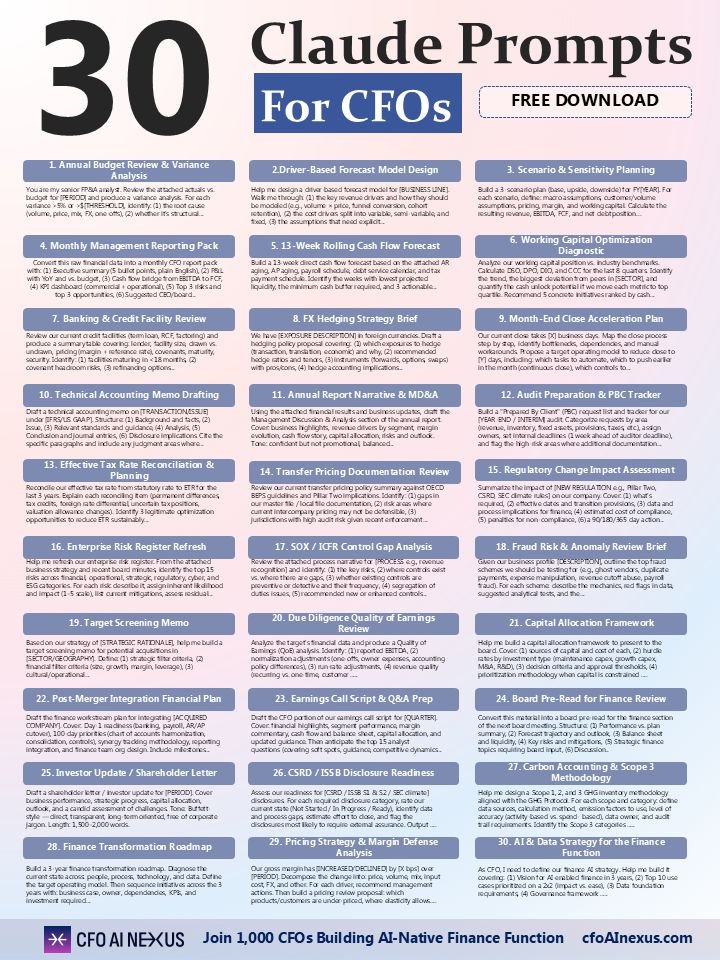
12 months ago, this wasn't possible. Look at it now. A CFO can drop a P&L into Claude and get a variance commentary back written in the tone of their last board pack. A controller can paste a 40-page lease contract and have the IFRS 16 treatment drafted before lunch. An FP&A lead can describe a scenario in plain English and watch a three-statement model take shape in minutes. This is happening in finance teams right now. Here are 30 prompts CFOs are already using with Claude 👇 — But here's what nobody tells you: The output is only as good as what you put in. Claude needs three things to actually help a finance leader: 1️⃣ Context Your business model. Your KPIs. Your reporting structure. The more Claude knows about how you operate, the sharper the output. 2️⃣ Clean inputs Real data. Real numbers. Real documents. Drop in the actual P&L, the actual contract, the actual board deck — not a summary. 3️⃣ Specific prompts "Make me a forecast" gets you nothing. "Build a 13-week cash flow forecast based on this AR aging and AP schedule, flag weeks where cash dips below $500K" — that gets you a tool you can actually use. — And security. The enterprise version of Claude doesn't train on your data. Your financials stay yours. This is the part most CFOs are still hesitant about — and the part that's already been solved. My question is: If this is what's possible today what does the CFO role look like 12 months from now? Save the 30 prompts. Test a few this week. If you want these prompts, just drop a comment and I’ll send it to you. (Important: follow me so I can DM you!)
Bojan Radojicic tweet media
English
16
5
34
1.7K
Mike Futia
Mike Futia@mikefutia·
I just vibe coded a static ad generator in Claude Code that creates 100+ Facebook ads in minutes 🤯 All using the new insane ChatGPT Images 2.0 model. Upload one image of your brand or product → get 100+ brand-new ad concepts across every DR archetype, each one matched to a specific customer persona. Built 100% in Claude Code. Perfect for DTC brands and agencies who need to rapidly test mass creative statics at scale. Here's how it works: → Upload a single image of your brand or product → Add your brand kit (colors, fonts, logos) → Tool generates 10 customer personas from your brand research (Depleted Woman, Burned-Out Professional, Brain-Fogged Mom) → Pick how many concepts you want (40, 60, 100+) across archetypes — Bold Billboard, Listicle, iPhone Notes, iMessage, UI Hijack, Us vs Them, Press/Authority, Lo-Fi Sketch, UGC → Hit "Generate All" → finished ads render in seconds, each one targeting a specific persona with its own copy angle No more paying "static ad agencies" $3,000 per month. What you get: - 100+ on-brand static ads from a single product photo - Perfect product and text adherence powered by ChatGPT Images 2.0 - Persona-specific copy on every ad, no generic hooks - Iterate and scale statics in minutes instead of weeks - Reusable brand kits + persona libraries you build once and pull from forever - Every ad ships with the exact prompt and persona attached, so you can iterate instead of starting over. This is essentially a static ad agency in a box. I put together a complete playbook which includes EVERY single prompt I used to make this in Claude Code. Want all the prompts for free? > Like this post > Comment "STATICS" And I'll send it over (must be following so I can DM)
English
1.2K
121
1.7K
105.5K
Ronin
Ronin@DeRonin_·
Here's how I'm running automated content engine in 2 files 1 markdown file = my wiki 1 html file = my dashboard that's the whole stack. [ the architecture, in plain words ]: LLM wiki = a single markdown file holding my audience DNA, 15 tracked creators, every viral topic from the last 30 days HTML artifact = a single page that reads that markdown file AND can trigger my agents the artifact and the agent talk to each other directly the wiki is the shared brain [ what I actually see when I open it at 9am ]: > 5 trending topics ranked by my audience-DNA fit > 3 KOL posts worth quoting today > last week's saved tweets (so I can ride waves that are still warm) > buttons: [draft tweet] [draft QT] [schedule] [log idea] 1. I click "draft tweet" on a topic 2. the artifact pings my agent 3. agent reads the wiki, drafts in MY voice, returns it to the artifact 4. I edit, schedule, done 15 minutes from morning coffee to 3 scheduled posts [ how to build the same in one evening ]: > step 1: dump your domain knowledge into ONE markdown file (audience profile, KOL list, content rules, voice guide, anything an agent would need to do YOUR job) > step 2: ask claude to build an html artifact that reads from that file ("here's my wiki, build me a dashboard with these views") > step 3: add buttons for the actions you do daily (draft, schedule, log, score, search — your workflow, not mine) > step 4: wire each button to call your agent via tool calls (so the artifact and the agent talk directly) the moment your artifact reads your wiki AND triggers your agents.. most SaaS tools you currently pay for quietly become unnecessary dashboards I used to pay $50/month for now sit in a single html file I can rebuild in 20 minutes every "I'll build a SaaS for this" idea you had last year is a 200-line file you write in an afternoon if you want to get the same content engine, just reply "CONTENT" and will send you in DMs later we're going from buying software to owning it.
The Smart Ape 🔥@the_smart_ape

x.com/i/article/2053…

English
60
29
308
50K
Your-Operating-Partner
Your-Operating-Partner@Your_Op_Partner·
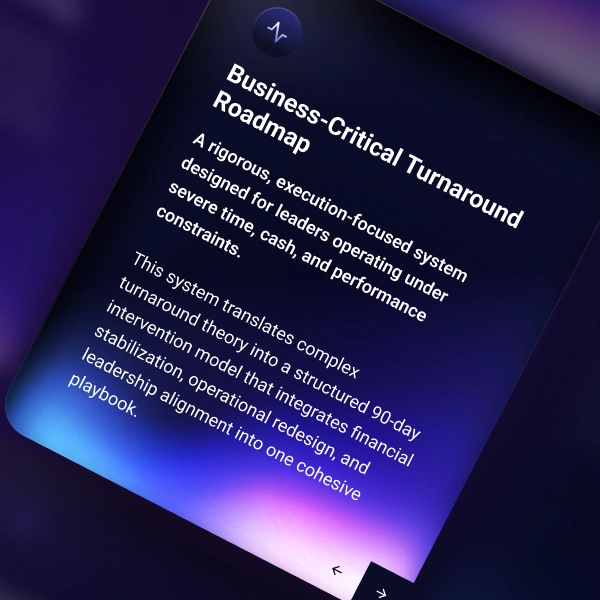
Speed Is The Only Advantage In A Crisis Delay compounds losses. Indecision kills value. This 90-day Turnaround Roadmap eliminates inertia with: Design phase-based execution Delete non-essential work Install hard accountability QT, RT or Reply ‘preview’ to receive the roadmap
Your-Operating-Partner tweet mediaYour-Operating-Partner tweet media
English
1
0
0
56
Dan Rosenthal
Dan Rosenthal@dan__rosenthal·
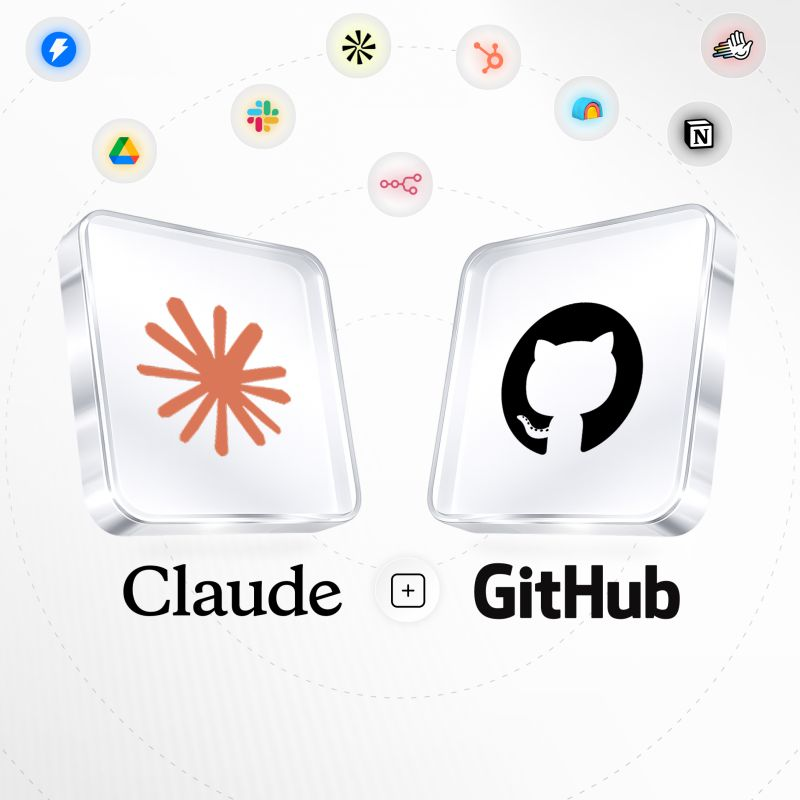
We scaled from 0→7+ figures in a couple months. Our next goal... - $30M/y in revenue - < 80 person headcount To do this, we’re building out our ENTIRE Company OS on GitHub. And how that's powering ops through Claude Code. Tons of people asked me how to set this up themselves. So I'm making it available to the public. What's inside: 1) Company OS blueprint with full folder structure and .md guides 2) GTM Engineering plugin with pre-built workflows 3) 5 ready-to-use GTM skills (covers everything from outbound copy to ICP modeling to discovery prep) 4) Notion guide on getting started with Cursor 5) The exact file architecture we use across all client projects Want in? Reply “OS” and I'll send you the link. (MUST BE FOLLOWING)
Dan Rosenthal tweet media
English
285
8
152
15.7K
Jack J.
Jack J.@jack_9947·
I just built a Claude Code marketing skill stack that plans campaigns, writes social posts, designs carousels, and produces animated videos from a single brief every week. Feed it your brand design system, your best-performing content, and a campaign brief → it studies your voice and visual identity → generates on-brand assets across every format while you review and approve. All inside Claude Code and Claude Design. Perfect for marketing teams and agency owners who are still briefing designers on assets Claude Design produces in minutes, calling skills one at a time when one brief should trigger the whole sequence, and manually pushing skill updates to teammates who need the same system running on their machine. If you're running marketing in 2026, you already know the math - the teams that produce at volume aren't the ones with the biggest budgets, they're the ones with a skill stack that handles execution while humans handle strategy. Most teams ship three assets a week if they're lucky. This skill stack solves it: → Drop your branded landing page into Claude Design and it extracts colours, typography, components, and spacing into a portable skill file every other skill calls automatically → The campaign planning skill reads the brief, researches the market via Perplexity MCP, and builds a branded slide deck with KPIs, persona, funnel map, and roadmap → Pulls from your best-performing posts and storytelling framework as reference files so social content matches what actually works in your space → Routes complex tasks to sub-agents running in parallel and simple executional tasks directly to skills based on routing rules in CLAUDE.md → Fires completed skills to a Notion library automatically every week at 9am so your team always has the latest version without manual uploads → Drops finished campaigns, posts, carousels, and videos into dated project folders ready to publish No briefing designers on assets Claude produces in minutes. No calling skills one at a time when a brief should run the whole sequence. No manually distributing skill files to teammates every time something updates. What you get: - Brand design system extraction guide: 10-15 minutes to a portable skill file every other skill calls automatically - Four function skills: campaign planning, social content, carousel design, and animated video each triggered by a slash command - Multi-skill orchestration setup so one brief triggers research, content, creatives, and landing page in the right order automatically - Notion skills library with auto-sync routine so your team always installs the current version from one place - One skill stack you install once and run across every marketing workflow forever Built 100% in Claude Code and Claude Design. I put together a full playbook with all skill files, the brand extraction guide, the Notion library setup, and the exact CLAUDE.md routing rules to get the full stack running from one brief. Want it for free? > Like this post > Comment "MARKETING" And I'll send it over (must be following so I can DM)
Jack J. tweet media
English
1.5K
110
2.1K
137.9K
Mike Futia
Mike Futia@mikefutia·
Claude Code + ChatGPT Images 2.0 is f*cking cracked 🤯 I rebuilt my static ad system inside Claude Code on the new ChatGPT Images 2.0 model. One brand name + one URL = 40 production-ready static ads. All inside Claude Code. Perfect for DTC brands and agencies who need high-volume ad creative without briefing a designer or spending hours in Canva. If you're finding winning ad concepts on Meta and manually recreating them one at a time — copying prompts, pasting product details, tweaking aspect ratios, downloading, organizing... This system eliminates the entire loop: → Give Claude a brand name and URL → It researches the brand's fonts, colors, packaging, and photography style → Builds a Brand DNA document from scratch → Fills in 40 proven ad templates (headline, us vs them, testimonial, UGC, review cards, stat callouts) with brand-specific details → Fires every prompt to ChatGPT Images 2.0 with your product photos as reference → Downloads finished ads into organized folders with an HTML gallery No manual prompt filling. No Canva templates. No copy-pasting between tools. What you get: → 40 ad formats filled with your exact brand colors, fonts, and copy → Text that actually renders correctly (the new model handles dense copy, logos, and multi-language callouts cleanly) → Product photos passed as reference so the model matches your real packaging → A reusable system — new brand, new folder, same pipeline Built 100% in Claude Code with ChatGPT Images 2.0. I put together a DIY playbook showing the exact architecture so you can build this yourself in Claude Code. Want it for free? > Like this post > Comment "CHAT" And I'll send it over (must be following so I can DM)
English
1.5K
133
2.6K
188.5K
Mike Futia
Mike Futia@mikefutia·
I just built a Brand Operating System inside Claude Cowork 🤯 A connected system of files that every skill automatically reads from, so your hook writer, brief generator, and script writer all speak in your exact brand voice. All inside Claude Cowork. Perfect for DTC brands and agencies tired of generic AI output that sounds like every other brand in their category. If you're opening a new Claude chat and re-explaining your brand, re-pasting your voice guidelines, and re-describing your customers every single time, a Brand OS fixes the entire loop: → Build 3 foundation files once per brand → Every skill you create reads from the Brand OS automatically → Hook writer pulls your voice + customer pain points → Brief generator pulls your positioning + angles → Script writer pulls the brief + brand DNA → Every output is calibrated to your brand on the first pass No re-briefing Claude on every chat. No editing for an hour to fix generic AI phrasing. No creative that sounds like it could belong to any brand. What you get in the playbook: → The exact Brand OS file structure I use → Templates for all 3 files you can fill in for any brand → The architecture that makes every Claude skill 10x sharper → The exact setup for agencies running a Brand OS per client For agencies: this is how you build a perfect, reusable knowledge base for every client on your roster. Set up the Brand OS once per client, and every campaign after that is already calibrated. I put together a full playbook with the file templates, the architecture, and the exact setup process so you can build your own Brand OS for your brand or your clients. Want it for free? > Like this post > Comment "OS" And I'll send it over (must be following so I can DM)
English
294
23
405
30.2K
Bojan Radojicic
Bojan Radojicic@BojanRadojici10·
360 years. That is collective Excel experience of my team of 30 people, in one room. I have personally used Excel for 20 years. Since the very beginning. We’ve spent decades "crushing it" when it comes to financial modeling. We knew every shortcut. Every nested formula. We thought we had reached the peak of efficiency. (They are better then me, just to admit) But I have something to tell you. The game just changed. In my opinion, we are witnessing the biggest innovation since Excel was first released. It’s not a new function or a Power BI update. It’s Claude. Specifically, Claude’s ability to build and manipulate Excel models. For 40 years, the "manual labor" was the tax we paid. Hardcoding formulas. Spending hours formatting cells. Manually linking sheets and building tables from scratch. That era is over. Claude can now handle the heavy lifting of building the structure, the logic, and the formatting in minutes. But here is the part that really surprised me: It actually understands accounting. It understands the relationship between a Balance Sheet and a Cash Flow statement. It understands how operating drivers flow into a P&L. We aren't replacing our expertise. We are finally liberating it. Instead of spending 80% of our time building the model, we spend 100% of our time analyzing the results. If you want this Prompt and Excel model, just drop a comment and I’ll send it to you. (Important: follow me so I can DM you!)
Bojan Radojicic tweet media
English
702
230
1.3K
122.5K
Bojan Radojicic
Bojan Radojicic@BojanRadojici10·
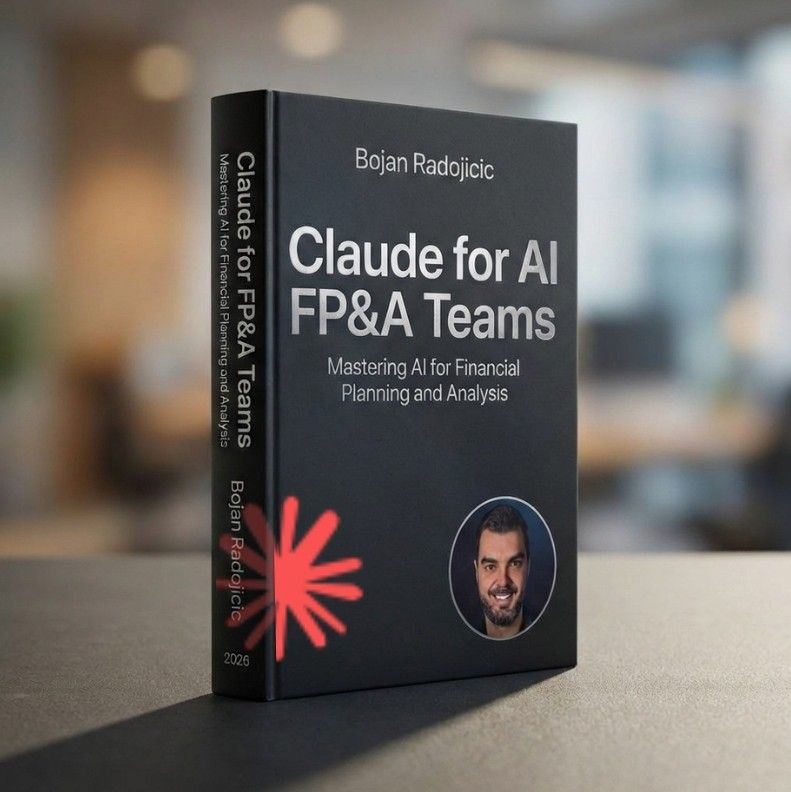
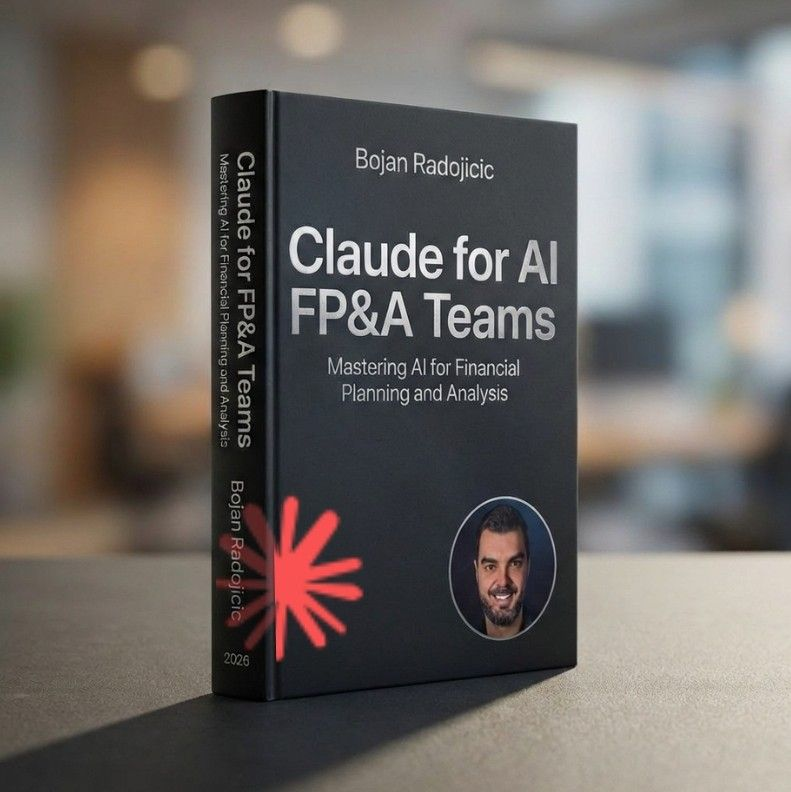
Most finance teams are only using 10% of Claude’s actual potential, that’s why I created this guide for you. What’s inside? We dive deep into the four essential Claude entry points: • Claude Web - For high-level strategic analysis and document synthesis • Claude in Excel - To automate formulas and data cleaning where you live. • Claude Cowork - For seamless team collaboration on financial projects. • Claude Code - For advanced automation and technical finance workflows. Who is this for? • FP&A Analysts: Streamline your reporting and variance analysis. • Finance Managers: Speed up consolidation and team reviews. • CFOs / VPs of Finance: Enhance strategic decision-making with rapid scenario modeling. The Essentials: → 25 Detailed, Easy-to-Use Prompts: Copy-paste solutions for real-world finance tasks. → AI Safety for Finance Professionals: A dedicated section on maintaining data privacy and security. → From Analyst to CFO: Tailored workflows for every level of the finance hierarchy. Here is what you can expect inside: • Chapter 1: How to Use This Book • Chapter 2: Getting Started — What You Need • Chapter 3: AI Safety for Finance • Chapter 4: Claude Web: Analysis & Narratives • Chapter 5: Variance Analysis • Chapter 6: Claude in Excel: Model Workflows • Chapter 7: Reporting & Board Packs • Chapter 8: Claude Cowork: Multi-File Automation • Chapter 9: Building a CFO Agent with Claude Code • Chapter 10: Implementing AI in Your FP&A Team • Chapter 11: What Comes Next The future of finance is "AI-augmented." Don't get left behind. If you want this e-book, just drop a comment and I’ll send it to you. (Important: follow me so I can DM you!)
Bojan Radojicic tweet media
English
269
27
164
21.6K
Michael Hui
Michael Hui@hichaelmui·
@KarlThyer Sounds great. Would love to try it when it’s ready
English
0
0
1
35
Karl
Karl@KarlThyer·
@hichaelmui Basically I’m on the verge of releasing a web app that generates Ai training session within seconds for you based off a few key parameters you input. This is more for volunteer parents/coaches who don’t have time to plan proper sessions.
English
1
0
0
117
Karl
Karl@KarlThyer·
I'm BACK!! Been quiet on here for a while. Not been doing nothing though. Been heads down building an app for grassroots football coaches. Session planning, match day tools, player management — all in one place. Nearly ready. More soon 👀
English
13
0
70
24.9K
Ole Lehmann
Ole Lehmann@itsolelehmann·
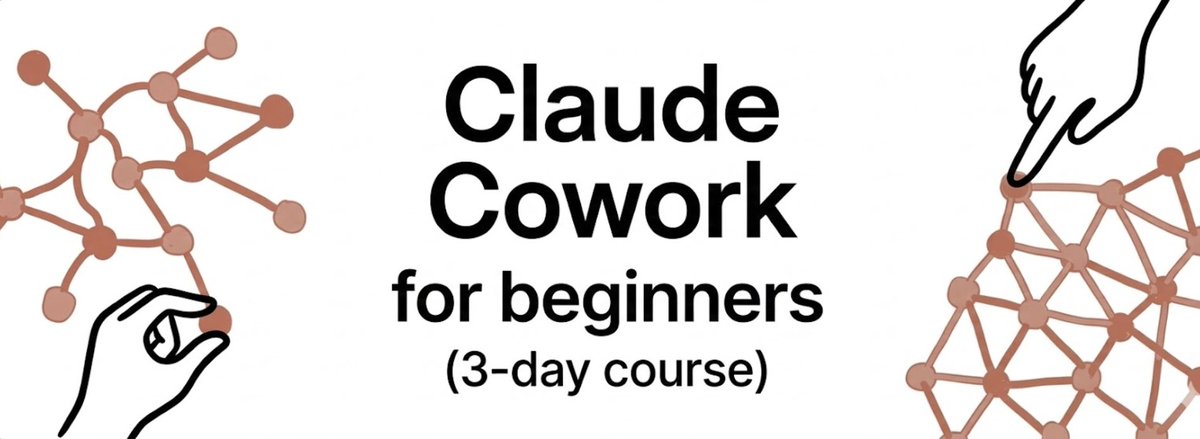
i made a 3-day Claude Cowork for Beginners course, and it's yours for free by the end, you'll have a personalized AI teammate on your computer that: • knows your style • connects to your tools • and produces finished work you can send immediately here's what you get: day 1: install cowork, set global instructions, and run your first real task (15 min) day 2: workflows that replaced hours of my week, including building landing pages from a description and running full competitive analyses in one prompt day 3: skills, plugins, and connectors so cowork actually knows how you work and can access your tools + copy-paste prompts so you can follow along as you read like + comment "COWORK" and i'll DM it to you
Ole Lehmann tweet media
English
1.8K
175
2.9K
175.8K
Aryan Mahajan
Aryan Mahajan@aryanXmahajan·
R.I.P. presentation teams. I just automated 100% of my presentation workflow. This AI Document Agent just disrupted the entire document creation process. And enterprise C-suites are already using it. KPMG, BDO, and Cisco replaced their entire deck workflow with one prompt. → No more designers → No more formatting issues → No more revision recycle Just brief in. Client-ready deck out. It prompts full presentations in minutes — inside PowerPoint. Brand rules, pricing data, legal disclaimers all auto-populated. Every output on-brand, compliant, and ready to send. BDO saved $1.65M in year one from document automation alone. This isn't a productivity hack. It's infrastructure. The same way email replaced fax — AI Document Agents are replacing manual deck building. C-suites who figured this out aren't going back. Yours is still formatting at midnight. I put together the exact blueprint these enterprise teams used — prompting framework, governance setup, and full implementation guide. Want it? Like + comment "AGENT" and I'll DM it directly. (must be following)
English
356
35
306
36.2K
Bojan Radojicic
Bojan Radojicic@BojanRadojici10·
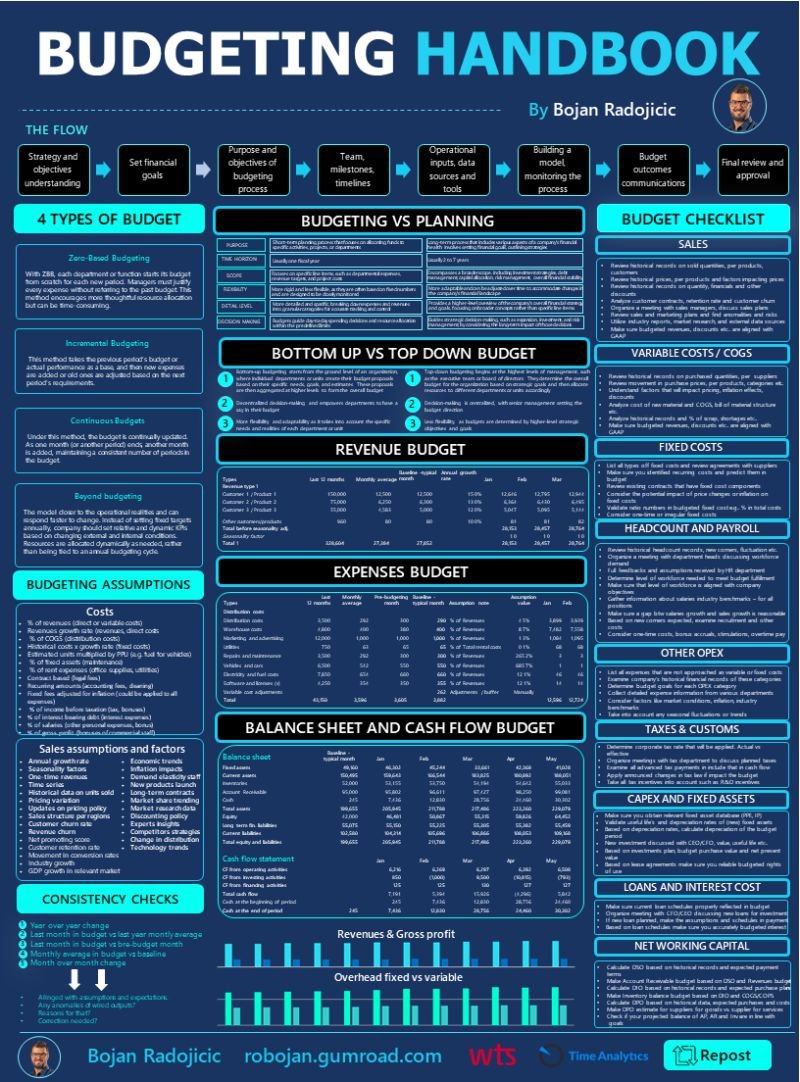
I am currently involved in few budgets preparation. I use the moment and fresh minds to make big poster about budgeting into one page. Trust I included the most important facts and graphs into readable one page high resolution PDF content. 💎 What is included: 𝗧𝗵𝗲 𝗙𝗹𝗼𝘄 • Strategy and objectives understanding • Set financial goals • Purpose and objectives of budgeting process • Team, milestones, timelines • Operational inputs, data sources and tools • Building a model, monitoring the process • Budget outcomes communications • Final review and approval 𝟰 𝗧𝗬𝗣𝗘𝗦 𝗢𝗙 𝗕𝗨𝗗𝗚𝗘𝗧 → Zero-Based Budgeting → Incremental Budgeting → Continuous Budgets → Beyond budgeting 𝗕𝗨𝗗𝗚𝗘𝗧𝗜𝗡𝗚 𝗔𝗦𝗦𝗨𝗠𝗣𝗧𝗜𝗢𝗡𝗦 Cost • % of revenues (direct or variable costs) • Revenues growth rate (revenues, direct costs • % of COGS (distribution costs) • Historical costs x growth rate (fixed costs) • Estimated units multiplied by PPU (e.g. fuel for vehicles) • % of fixed assets (maintenance) • % of rent expenses (office supplies, utilities) • Contract based (legal fees) • Recurring amounts (accounting fees, cleaning) • Fixed fees adjusted for inflation ( could be applied to all expenses) • % of income before taxation (tax, bonuses) • % of interest bearing debt (interest expenses) • % of salaries (other personal expenses, bonus) • % of gross profit (bonuses of commercial staff) Sales assumptions and factors 1. Annual growth rate 2. Seasonality factors 3. One-time revenues 4. Time series 5. Historical data on units sold 6. Pricing variation 7. Updates on pricing policy 8. Sales structure per regions 9. Customer churn rate 10. Revenue churn 𝗖𝗢𝗡𝗦𝗜𝗦𝗧𝗘𝗡𝗖𝗬 𝗖𝗛𝗘𝗖𝗞𝗦 1. Year over year change 2. Last month in budget vs last year monthly average 3. Last month in budget vs pre-budget month 4. Monthly average in budget vs baseline 5. Month over month change • Aligned with assumptions and expectations. • Any anomalies of wired outputs? • Reasons for that? • Correction needed? 𝗕𝗨𝗗𝗚𝗘𝗧𝗜𝗡𝗚 𝗩𝗦 𝗣𝗟𝗔𝗡𝗡𝗜𝗡𝗚 𝗕𝗢𝗧𝗧𝗢𝗠 𝗨𝗣 𝗩𝗦 𝗧𝗢𝗣 𝗗𝗢𝗪𝗡 𝗕𝗨𝗗𝗚𝗘𝗧 𝗕𝗨𝗗𝗚𝗘𝗧 𝗖𝗛𝗘𝗖𝗞𝗟𝗜𝗦𝗧 → Sales → Variable costs / COGS → Fixed costs → Net working capital → CAPEX → Loans → Headcount → Payroll → Other OPEX → Tax and Customs ++ More If you want this Handbook in PDF, just drop a comment and I’ll send it to you. (Important: follow me so I can DM you!)
Bojan Radojicic tweet media
English
9
2
19
1.3K
Bojan Radojicic
Bojan Radojicic@BojanRadojici10·
Here are three methods to project inventories in financial models: 🔹 1. 𝗦𝗰𝗲𝗻𝗮𝗿𝗶𝗼-𝗕𝗮𝘀𝗲𝗱 𝗔𝗽𝗽𝗿𝗼𝗮𝗰𝗵 👉 Uses Days Inventory Outstanding (DIO) to estimate future inventory levels. 👉 Incorporates scenario analysis (e.g., changes in DIO by +/- 5% or 10%) to assess impact on cash flow. Best for: Sensitivity analysis and understanding how inventory changes affect liquidity. 🔹 2. 𝗖𝗼𝗺𝗽𝗼𝗻𝗲𝗻𝘁-𝗕𝗮𝘀𝗲𝗱 𝗔𝗽𝗽𝗿𝗼𝗮𝗰𝗵 👉 Breaks down inventory into Raw Materials, Work in Progress (WIP), and Finished Goods. 👉 Uses Days on Hand for each component to estimate total inventory. Best for: Businesses with complex supply chains and manufacturing operations. 🔹 3. 𝗥𝗼𝗹𝗹-𝗙𝗼𝗿𝘄𝗮𝗿𝗱 𝗠𝗲𝘁𝗵𝗼𝗱 (𝗶𝗱𝗲𝗮𝗹 𝗳𝗼𝗿 𝘀𝗵𝗼𝗿𝘁 𝘁𝗲𝗿𝗺 𝗳𝗼𝗿𝗲𝗰𝗮𝘀𝘁𝗶𝗻𝗴) 👉 Projects inventory by tracking beginning balance, purchases, COGS, and write-offs over time. 👉 Helps in reconciliation with financial statements and adjusting for write-downs. Best for: Retail and industries with detailed inventory tracking needs. Your thoughts? If you want this Excel model, just drop a comment and I’ll send it to you. (Important: follow me so I can DM you!)
Bojan Radojicic tweet media
English
17
9
53
2.9K
Bojan Radojicic
Bojan Radojicic@BojanRadojici10·
Most finance teams are only using 10% of Claude’s actual potential, that’s why I created this guide for you. What’s inside? We dive deep into the four essential Claude entry points: • Claude Web - For high-level strategic analysis and document synthesis • Claude in Excel - To automate formulas and data cleaning where you live. • Claude Cowork - For seamless team collaboration on financial projects. • Claude Code - For advanced automation and technical finance workflows. Who is this for? • FP&A Analysts: Streamline your reporting and variance analysis. • Finance Managers: Speed up consolidation and team reviews. • CFOs / VPs of Finance: Enhance strategic decision-making with rapid scenario modeling. The Essentials: → 25 Detailed, Easy-to-Use Prompts: Copy-paste solutions for real-world finance tasks. → AI Safety for Finance Professionals: A dedicated section on maintaining data privacy and security. → From Analyst to CFO: Tailored workflows for every level of the finance hierarchy. Here is what you can expect inside: • Chapter 1: How to Use This Book • Chapter 2: Getting Started — What You Need • Chapter 3: AI Safety for Finance • Chapter 4: Claude Web: Analysis & Narratives • Chapter 5: Variance Analysis • Chapter 6: Claude in Excel: Model Workflows • Chapter 7: Reporting & Board Packs • Chapter 8: Claude Cowork: Multi-File Automation • Chapter 9: Building a CFO Agent with Claude Code • Chapter 10: Implementing AI in Your FP&A Team • Chapter 11: What Comes Next The future of finance is "AI-augmented." Don't get left behind. If you want this E-book, just drop a comment and I’ll send it to you. (Important: follow me so I can DM you!)
Bojan Radojicic tweet media
English
424
49
338
42.4K