Himanshu Ahuja

23 posts

Himanshu Ahuja

Himanshu Ahuja

@himahuja8

learner, etc. breaking down things mostly, but sometimes it works. neuroscience PhD student transitioning to climate action

Rochester, NY Katılım Ağustos 2019
144 Takip Edilen29 Takipçiler
Himanshu Ahuja retweetledi
Michael Thomas
Michael Thomas@curious_founder·
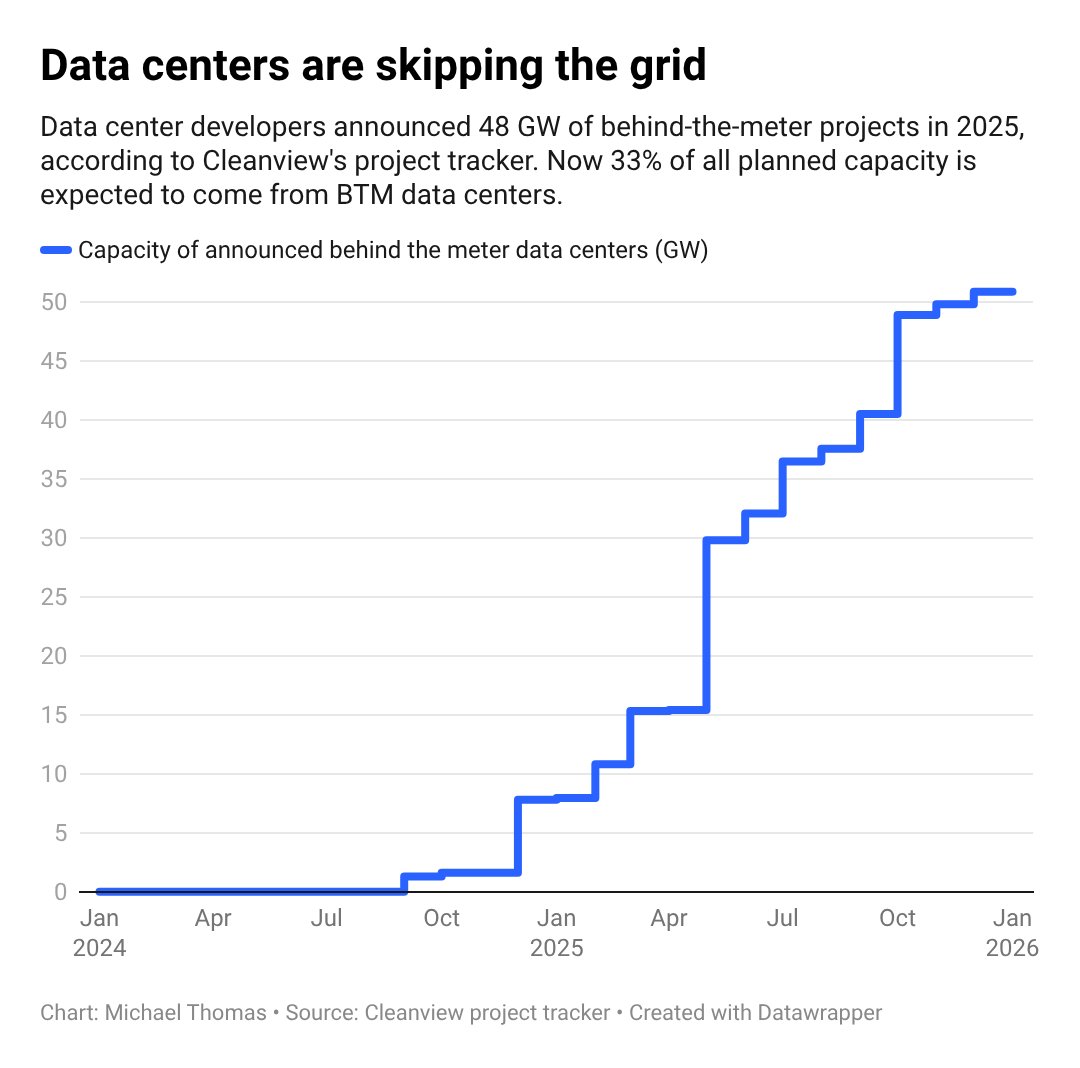
I'm working on a report about data center developers building their own power plants and this data shocked me: 48 GW of proposed data centers—roughly 33% of all planned capacity—now plan to skip the grid by building "behind-the-meter" projects. This is a very new trend. A little more than a year ago, virtually all data center developers planned to use the electric grid to power 100% of their projects. In December 2024, there was less than 2 GW of planned behind-the-meter data center capacity, according to our data center tracker at Cleanview. Then in 2025, developers announced roughly 40 projects that planned to skip the grid partially or entirely. Some of these projects will soon be home to America's largest fossil fuel power plants, like Homer City Energy Campus in PA—a proposed 4 GW+ natural gas plant that will send all of its power to an onsite data center. Other projects will use a combination of technologies—everything from solar, wind, batteries, and even nuclear. Natural gas is by far the most common, though. 72% of projects plan to use it. All projects are motivated by the same goal: getting their data center online as soon as possible. It can take as long as 7 years to connect a hyperscale data center to the grid in a place like Virginia. Building behind the meter power in a red state with lax regulations can get that time down to less than 2 years. But speed comes with a cost. Homer City's 4 GW project could soon become one of the largest single sources of carbon emissions in the country. At Cleanview we're tracking more than 30 projects that plan to use onsite gas with a combined 48 GW of capacity.
Michael Thomas tweet media
English
123
370
1.7K
657.7K
Himanshu Ahuja retweetledi
James Evans
James Evans@profjamesevans·
Delighted to share new work led by the remarkable @JunsolK, with @ShiyangLai, @ninoscherrer, and @blaiseaguera Blaise Agüera y Arcas—now on arXiv. We asked a simple question: What happens inside models like OpenAI's o-series, DeepSeek-R1, and QwQ when they reason? The answer surprised us. These models don't simply compute longer. They spontaneously generate internal debates among simulated agents with distinct personalities and expertise—what we call "societies of thought." Perspectives clash, questions get posed and answered, conflicts emerge and resolve, and self-references shift to the collective "we"—at rates hundreds to thousands of percent higher than chain-of-thought reasoning. There's high variance in Big 5 personality traits like neuroticism and openness, plus specialized expertise spanning physics to creative writing. The structure mirrors collective intelligence in human groups. Moreover, toggling conversational features causally toggles this capacity—beneficial cognitive behaviors like verification become more likely when they can "inhabit" different personas. What makes this remarkable from a complex systems perspective is that these societies weren't designed. They emerged from reinforcement learning rewarding only correct answers. The models discovered that distributing cognition across diverse, conflicting perspectives is an optimal strategy for distinguishing truth from error. Self-organization in service of reasoning. Even more striking: training on a simple arithmetic task (the Countdown game) produced conversational reasoning that transferred to detecting political misinformation—suggesting the generality of collective deliberation as a reasoning architecture. When we stage models with personas from the start, they learn faster. The emergent "cast of characters" is fascinating: one detailed and algebraic, another intuitive and exploratory, a third who reconciles diverse opinions. Of course, single-channel conversation can't search all collective configurations—no natural hierarchies or networked organizations—pointing toward scaffolding that explores larger spaces of social organization. Our findings resonate with Mercier & Sperber's social origins of reason and complexity research on diversity-enabled collective intelligence. Proud to pursue this work with collaborators at @Google's wonderful Paradigms of Intelligence team (thx for amazing suggestions from Blake Richards, Roberta Rocca, and Rif Saurous), UChicago Knowledge Lab (@KnowLab), and the Santa Fe Institute (@sfiscience), where long-standing work has inspired us about how complex collectives solve problems individuals cannot. Paper: arxiv.org/abs/2601.10825
James Evans tweet media
English
2
24
102
12.6K
Himanshu Ahuja retweetledi
Sam Greene
Sam Greene@samagreene·
Authoritarians don't win because they control the guns or the media or the courts or the streets. Authoritarians win because they control imaginations. Because they make it impossible for citizens to imagine solidarity. To imagine justice. To imagine victory. /7
English
1
579
3.1K
93.9K
Himanshu Ahuja
Himanshu Ahuja@himahuja8·
@YouTube why do I have to be punished to listen to Beyond the Beat because I was curious to know what AI commentary sounds like. #dontpushAIonme
English
0
0
1
15
Eras Tour Resell
Eras Tour Resell@ErasTourResell·
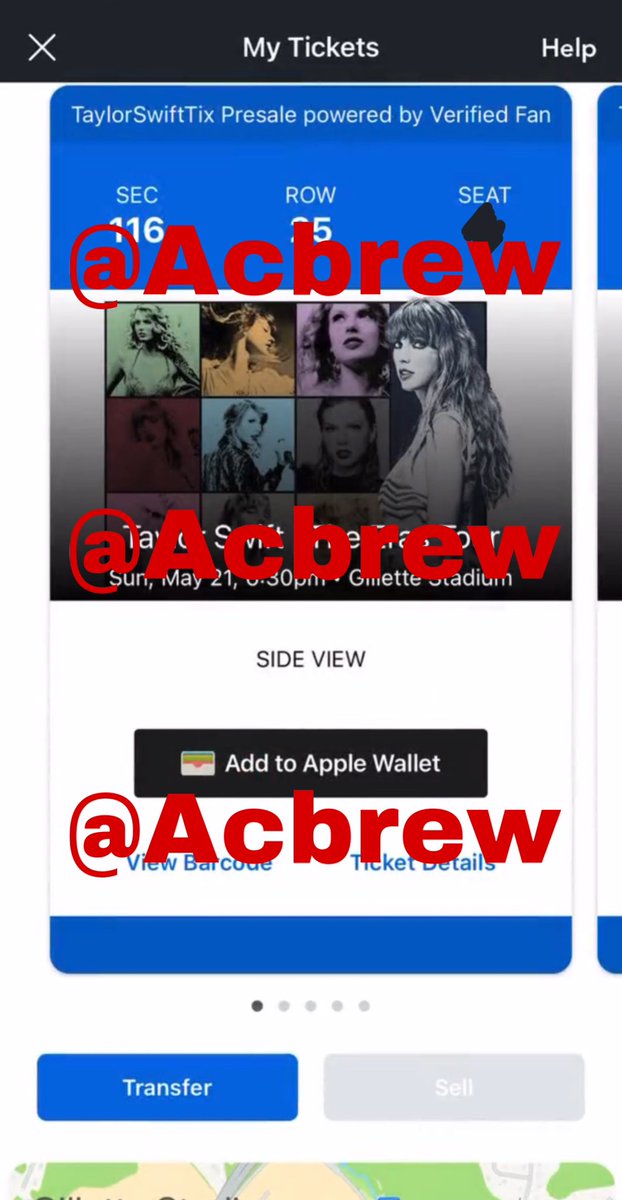
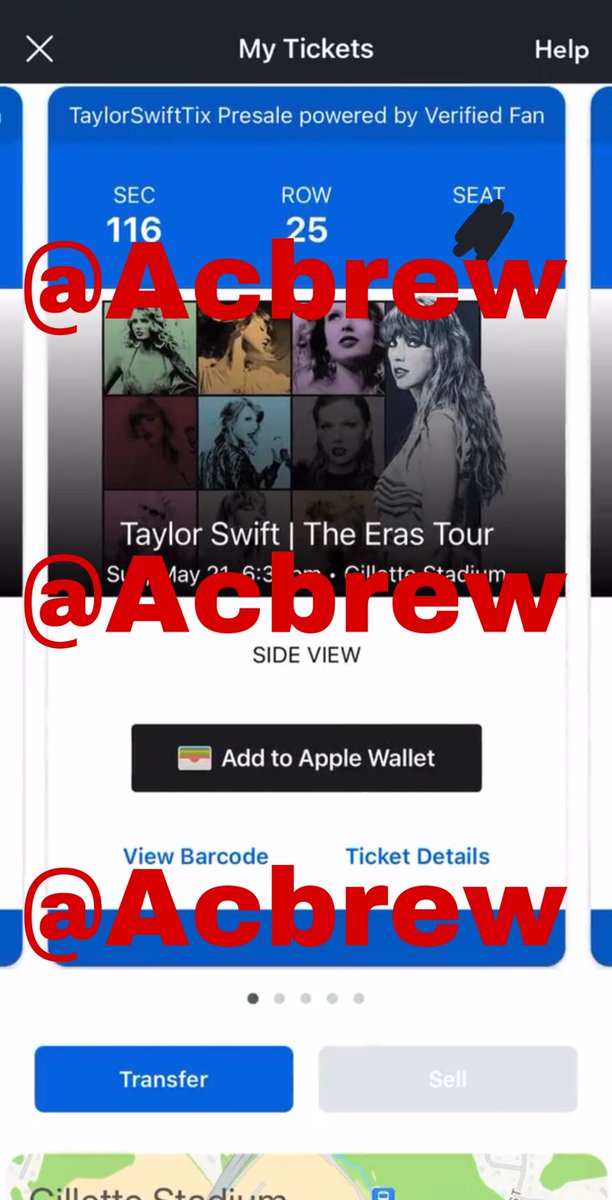
Selling THREE (3) SIDE VIEW LOWER BOWL ticket to the show in Foxborough at Gillette Stadium TONIGHT 5/21 💌 Selling for $1,005 TOTAL 💌 DM @acbrew if interested (tickets and price have been verified) 💌 ONLY USE PAYPAL G&S‼️ 🏷 Eras Tour, Taylor Swift
Eras Tour Resell tweet mediaEras Tour Resell tweet mediaEras Tour Resell tweet media
English
409
20
404
424.8K
Himanshu Ahuja retweetledi
Adrienne Fairhall
Adrienne Fairhall@alfairhall·
Good news for the youth: the Washington State Minimum Wage Act has set starting postdoc salaries at $65,484 from Jan 2023. It’s a good start to addressing life affordability at this critical stage. Come west! @UW_PBIO @uwcnc @UW
Adrienne Fairhall tweet media
English
4
72
472
0
Himanshu Ahuja
Himanshu Ahuja@himahuja8·
@RochesterNYPD My car was broken into last night and my 911 call was placed on hold for more than hour with no one to pickup on the other end. I was able to track the location of the stolen item, so I called again. no respondent for 45mins. Is this the usual wait time expected?
English
0
0
0
0
Himanshu Ahuja
Himanshu Ahuja@himahuja8·
@multiamory hello can you share the BSERQuestionnaire from episode 358. Have been looking for 10 minutes and thought it was time to tweet them
English
1
0
0
0
Cali Calarco
Cali Calarco@calilarco·
@HenryYin19 Digital stereotaxes! Easy to train people, saves SO much time, makes targetting multiple brain regions bearable
English
3
0
16
0
Yin lab
Yin lab@HenryYin19·
Systems neuroscientists, is there any piece of equipment you really like and recommend? Nothing too expensive please so don’t say 2P.
English
29
12
70
0
Himanshu Ahuja retweetledi
The Haptic Perception Lab
The Haptic Perception Lab@HapticThe·
Come see Haptics Lab members Dr. Manuel Gomez- Ramirez, Michael DuHain, Himanshu Ahuja, Hector Baez, Emily Murphy and summer student Catalina Feistritzer present work at the 2021 virtual SFN conference next week.
The Haptic Perception Lab tweet media
English
0
3
4
0