Strategy for Value Investors
Buffett: More people now in gambling mood than ever
Paul T. Jones, Howard Marks: 10-yr fwd S&P returns: Zero
India: Probability of 20% fall higher than 20% rally
It's easy to laugh at billionaires. But their ruthless discipline is...
RISK-REWARD:
Nifty 50: Pros & Cons
PROS:
Retail SIPs are pumping in nearly ₹30,000 crore monthly. This liquidity creates a "price floor" that didn't exist in the previous market cycles in history.
CONS:
a. Urban consumption struggling (household debt nearly 40% of GDP)
b. Net FDI has dwindled to just $6.5B in FY26.
c. FIIs have pulled out $23B in the first 4 months of 2026.
d. 30% of IT sector dollar revenues under threat from AI “price deflation”: ICICI report
e. High oil import bill, inflation risks, weakening rupee (hurts both FDI and FIIs)
Risk-Reward Ratio (Nifty)
RISK: 20% downside
REWARD: 20% upside
Which probability looks higher?
a. If the probability of a 20% gain in the Nifty from here looks higher than the risk of a 20% decline, stay invested.
b. If not, consider moving 50% to cash, or at least stop deploying fresh capital and start building a cash reserve.
What Is Buffett Doing?
a. Selling, Not Buying: Berkshire Hathaway has been a net seller of equities for 14 straight quarters (3.5 years). Even this quarter, they sold a net $8 billion.
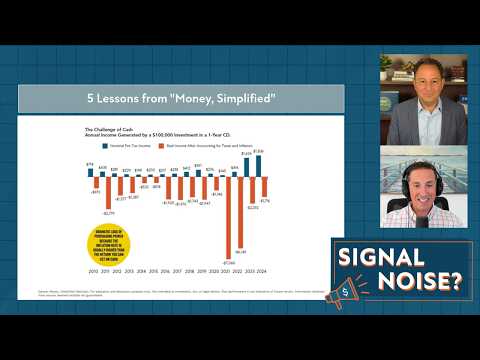
b. Building a Mountain of Cash: Berkshire’s cash now stands at $397 billion, mostly parked in US Treasuries earning 4% risk-free. With US inflation around 2%, they are generating positive real returns.
c. Risk-Reward Ratio: Berkshire believes the risk in equities currently outweighs the reward due to overvaluations. So why risk permanent capital loss? What if the S&P delivers flat or negative returns over the next decade?
d. Opportunity Loss: The S&P has rallied over the past 3.5 years while Berkshire has been selling. They are fine with that, for two reasons:
Reason 1: They are exiting positions at strong profits, at prices they consider overvalued. This is called disciplined selling, which is mentally a very tough thing to do.
Reason 2: They expect to more than recover any “missed upside” when mean reversion happens in the markets. Historically, that is when Berkshire has made its biggest gains.
e. Core Investing Philosophy: Buffett’s current approach matches with his lifelong investing discipline: Rule #1: Don’t lose money; Rule #2: Don’t forget Rule #1.
f. Why Small Investors Cannot Follow Buffett: For an average investor, it is not humanly possible to be so ruthlessly patient. Doing nothing when others are chasing insane dreams is psychologically the hardest thing to do.
What are Billionaires Saying?
a. Warren Buffett [CNBC, May 2, 2026]: The time to buy is when [fund managers] with their wonderful trading departments will not answer their phones. Just try them out. When markets are collapsing, they won’t answer their phones.
b. Paul Tudor Jones [Colossus Podcast, Apr 28, 2026]: Leverage is the underlying reason of all big market accidents in history. And we’re so over-leveraged in equities right now. If a friend asks me for investing advice, I can’t tell him: “Invest in S&P 500 for 20 years at these valuations.”
c. Howard Marks [MFM Podcast, 8 Aug, 2025]: Historically, if you bought the S&P 500 when the P/E ratio was 23, in every case without exception, your annualized return over the next 10 years is between +2% and -2%. [NOTE: Current S&P 500 P/E ratio is 27.5]
Endpiece
Billionaires become billionaires because they do not play for emotional victory. They play for money. The average investor does not have even a tiny fraction of the kind of respect billionaires have for money.
@arabicatrader
📌 Essential MINDSETS of the most SUCCESSFUL PEOPLE.
🔸️ Clarity — know exactly what you want
🔸️ Ownership — take full responsibility
🔸️ Discipline — act regardless of mood
🔸️ Focus — prioritize what matters most
🔸️ Resilience — grow through setbacks
🔸️ Growth — keep improving daily
🔸️ Confidence — trust your ability to adapt
🔸️ Patience — think long-term
🔸️ Execution — turn ideas into action
SUCCESS starts in the MIND before it shows in results 💪
👉 Follow @BetterYouSkills for Actionable Tips on Soft Skills + Growth.
#Mindset#Success#HighPerformance
Most Large-Cap MFs Fail to Beat the Market!
A new AMFI study shows that most large-cap mutual funds have struggled to create “alpha” (extra returns) over the last 10 years.
Even top funds like Nippon, ICICI Prudential, and HDFC Large Cap have mostly trailed their benchmarks in both regular and direct plans.
Active large-cap funds are not delivering the extra performance they promise.
I prefer Benchmark ETFs and Sectoral ETFs because they are simple, low-cost, and track the market properly.
I completely avoid Thematic ETFs and Direct Mutual Funds. I manage my stock specific SIP and ETF SIP on my own & my SIP is weekly & not Monthly.
What about you?
📌 Soft Skills that set HIGH PERFORMERS apart.
🔸️ They communicate with clarity
🔸️ They adapt quickly to change
🔸️ They think critically under pressure
🔸️ They build strong relationships
🔸️ They take ownership consistently
Soft skills turn good PERFORMANCE into exceptional IMPACT 💪
👉 Follow @BetterYouSkills for Actionable Tips on Soft Skills + Growth.
#SoftSkills#HighPerformance#Leadership
I spent 6 months learning Generative AI the hard way.
Jumped between random tutorials.
Watched 100+ YouTube videos. Still felt lost.
Then I realized — I didn't need more content. I needed a clear roadmap.
So I built one.
This is everything I wish someone had shown me on day 1. No fluff. No PhD-level theory. Just the exact path from "I don't get AI" to building real things.
Here's the breakdown:
[1] Start with Foundations Understand what Generative AI actually is. How it differs from regular AI. Learn transformers, embeddings, and neural network basics. (Sounds scary — it's not.)
[2] Master Core Concepts Tokenization, attention mechanisms, prompt engineering. This is where you stop being a user and start being a builder. Learn context windows, temperature settings, and when to use fine-tuning vs RAG.
[3] Go Advanced Agents, MPC, vector databases, Edge AI, LoRA fine-tuning. This is where things get powerful.
[4] Apply It (The Most Important Part) Build prompts that work. Chain them together. Use function calling. Add safety guardrails. Actually ship something.
[5] Tools Worth Learning OpenAI, Claude, Gemini for models. Hugging Face, LangChain, LlamaIndex for building. AWS Bedrock or Replicate for deployment.
[6] Real Use Cases Chatbots, content systems, summarization tools, business automation, AI agents.
The truth? You don't need to learn everything at once.
Pick one path. Build one project.
Learn what you need as you need it.
That's how you actually get good at this.
What's stopping you from starting today?
Do share your thoughts in the comments section.
If you enjoyed this post:
1. Follow me @ahuja_priyank for more of these
2. RT the Tweet to share with your audience
#investing#growthmindset
Your mindset is your greatest asset. The way you think, learn, and use your time decides your financial future. Stay focused, make smart choices, and be patient—real success is built step by step. Invest in yourself first, and the results will follow.