ArchaeoHistories

76.5K posts

ArchaeoHistories banner
ArchaeoHistories

ArchaeoHistories

@histories_arch

History is an unending dialogue between present and the past, that's why few pages of history give more insight than all the metaphysical volumes. (99)

Katılım Ocak 2022
21 Takip Edilen274.4K Takipçiler
ArchaeoHistories retweetledi
Archaeo - Histories
Archaeo - Histories@archeohistories·
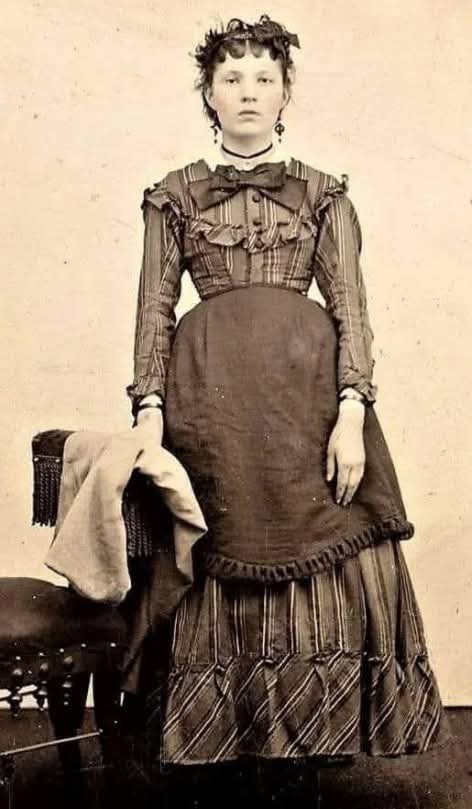
Portrait of a barmaid in Texas, 1885 (certainly not the Hollywood depiction of what a saloon girl looked like).... This 1885 portrait shows a far more realistic glimpse of frontier life than the glamorous “saloon girl” stereotype often portrayed in Western films. Women who worked in saloons across the American West were typically responsible for serving drinks, managing customers, and helping keep order in busy establishments that often operated late into the night. Their clothing usually reflected the modest fashion of the late Victorian era, rather than the theatrical costumes later popularized by Hollywood. Saloons were central social hubs in frontier towns. By the 1880s, cities such as San Antonio and Fort Worth could have dozens of them clustered around cattle trails and railroad depots, serving cowboys, railroad workers, gamblers, and travelers. In many frontier towns, women working in saloons were required to register with local authorities or obtain special permits, and some cities imposed strict curfews or dress codes to distinguish barmaids from professional entertainers or prostitutes who also worked in saloon districts. © Old Historical Photos #archaeohistories
Archaeo - Histories tweet media
English
0
3
16
821
ArchaeoHistories retweetledi
Archaeo - Histories
Archaeo - Histories@archeohistories·
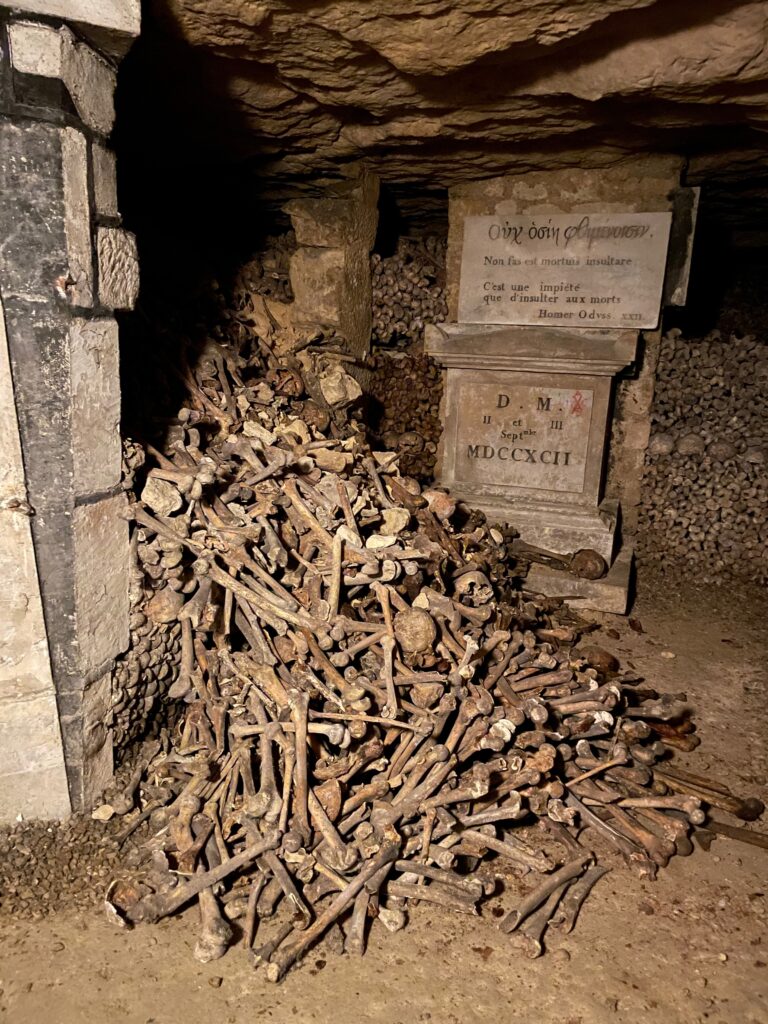
Only one person has died so far in the Catacombs of Paris 🇫🇷 In 1793, a man died in the catacombs. It is thought that he lost his light source and was left to die in the darkness. In 1804, 11 years later, his body was found, a few meters from a staircase that led to an exit Beneath Paris lies a vast underground network known as the Catacombs of Paris, holding the remains of an estimated 6 to 7 million people. Originally limestone quarries dating back to Roman times, they were repurposed in the late 18th century when overflowing cemeteries created a public health crisis. The story often told, of a man who entered in 1793, lost his light, and died in the darkness, is tied to a hospital worker named Philibert Aspairt. His remains were reportedly found in 1804, just a short distance from an exit. While widely repeated, it’s worth noting that documentation from that period is limited, and some details remain uncertain. What is certain is how disorienting the space can be. The tunnels stretch for over 200 miles (320 km), most of them unlit, unmapped for the public, and restricted. Even experienced explorers can lose their bearings without proper guidance. Today, only a small, curated section, about 1 mile (1.5 km), is open to visitors. The rest remains off-limits, monitored due to safety risks and preservation concerns. In 18th-19th Centuries, the bones were not just stored, they were arranged in deliberate patterns, with skulls forming decorative facades, turning the catacombs into both a burial site and a carefully constructed monument to mortality. #archaeohistories
Archaeo - Histories tweet media
English
0
3
7
1K
ArchaeoHistories retweetledi
Archaeo - Histories
Archaeo - Histories@archeohistories·
45 years ago, Saudi Arabia built a 1,200-kilometer oil pipeline from the Persian Gulf to the Red Sea, just in case the Strait of Hormuz ever got blocked.... In late 1970s and early 1980s, amid rising geopolitical tensions in the Gulf, Saudi Arabia quietly built one of the most strategic pieces of energy infrastructure in the world: the East–West Pipeline (Petroline). Stretching roughly 1,200 kilometers (750 miles) from Abqaiq to Yanbu, it allows crude oil to bypass the vulnerable Strait of Hormuz entirely. That chokepoint handles about 20% of the world’s oil supply, roughly 17–20 million barrels per day in recent years, making it one of the most strategically sensitive passages on Earth. Any disruption there, whether from conflict or blockade, would ripple instantly through global markets. The pipeline was designed as a contingency, and it worked. Today, it has a capacity of around 5 million barrels per day, giving Saudi Arabia a critical alternative export route to the Red Sea and onward to Europe and beyond. It’s a rare example of long-term planning on a national scale: infrastructure built not for immediate need, but for a scenario that might never come, yet remains entirely plausible. During periods of heightened tension in the Gulf, Saudi Arabia has actually rerouted significant portions of its exports through this pipeline, proving its value isn’t theoretical, it’s operational insurance. © Reddit #archaeohistories
Archaeo - Histories tweet media
English
1
8
18
1.3K
ArchaeoHistories retweetledi
Archaeo - Histories
Archaeo - Histories@archeohistories·
In 1991, 86-year-old billionaire oil tycoon J. Howard Marshall met 23-year-old Anna Nicole Smith at a Houston strip club. Three years later, they married, and within 14 months, his death set off one of the most infamous inheritance battles in U.S. history.... Their meeting at a Houston gentlemen’s club became one of the most sensational stories of the 1990s. J. Howard Marshall II, who had built his fortune through his early investment in Koch Industries, was already among the richest men in America when he met the young model and dancer known then as Vickie Lynn Hogan. She soon rose to fame as a Playboy model and Guess spokesperson. Their marriage in 1994, when he was 89 and she 26, drew enormous public scrutiny. When Marshall died the following year, Smith was left out of his will entirely. What followed was a decades-long legal battle that reached the U.S. Supreme Court twice, as Smith fought her late husband’s son for a share of the billion-dollar estate. The case raised questions about the limits of federal jurisdiction and the cultural obsession with wealth, youth, and celebrity in modern America. Anna Nicole Smith’s legal battle lasted longer than her marriage itself. She died in 2007, still without ever receiving a definitive share of Marshall’s fortune. © Reddit #archaeohistories
Archaeo - Histories tweet media
English
1
3
10
1.3K
ArchaeoHistories retweetledi
Archaeo - Histories
Archaeo - Histories@archeohistories·
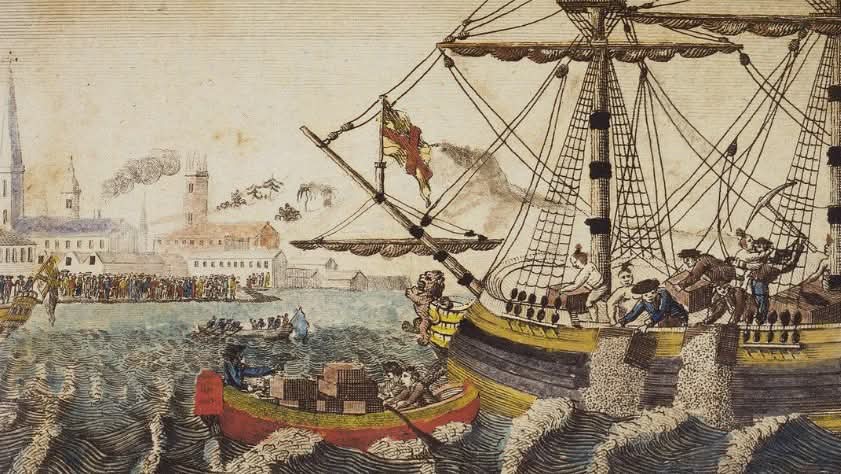
The tea ruined at the Boston Tea Party had a value in 1773 equivalent to $2.3 Million USD in today's money.... On the night of December 16, 1773, American colonists boarded British ships in Boston Harbor and dumped 342 chests of tea into the water, cargo owned by the British East India Company. The destroyed tea was valued at about £9,659 at the time, which translates to roughly $2–3 million in today’s money, depending on the method of calculation. But the significance wasn’t just financial. The protest targeted the Tea Act of 1773, which allowed the company to sell tea directly in the American colonies, undercutting local merchants while still enforcing a tax. For many colonists, this wasn’t about tea, it was about representation and control. The participants, many linked to the Sons of Liberty, disguised themselves and worked methodically, ensuring only the tea was destroyed while avoiding damage to the ships. The British response was swift. In 1774, Parliament passed the Intolerable Acts, closing Boston Harbor and tightening control over the colony, measures that directly escalated tensions and helped set the stage for the American Revolution. The tea dumped weighed over 90,000 pounds (about 45 tons), enough to brew more than 18 million cups of tea. © Reddit #archaeohistories
Archaeo - Histories tweet media
English
0
7
8
1.1K
ArchaeoHistories retweetledi
Archaeo - Histories
Archaeo - Histories@archeohistories·
This woman was described as ‘the meanest woman’ when she was pictured (left) in March 1942, before the lobotomy. In the second picture two weeks later she is described as ‘giggling a lot’ but has lost much of her hair. Although I am unable to identify this woman when doing research, it is not an uncommon tale in the 1940s. Lobotomies were promoted as a breakthrough treatment for mental illness. Developed by Portuguese neurologist António Egas Moniz in 1935 (he later won the Nobel Prize in 1949), the procedure involved severing connections in the brain’s frontal lobes. In the United States, Dr. Walter Freeman popularized a quicker “ice-pick” technique that could be performed in minutes. Between the late 1930s and early 1950s, an estimated 40,000–50,000 lobotomies were performed in the U.S. alone. Many patients were women. They were institutionalized for reasons that today would range from depression to defiance, trauma, or simply not conforming to social expectations. Outcomes ranged from temporary calm to permanent cognitive damage, personality changes, seizures, and death. “Improvement” was often defined as compliance or quietness. We have come a long way baby...Thank God. By the mid-1950s, the introduction of antipsychotic medications like chlorpromazine led to a rapid decline in lobotomies, and the procedure is now considered one of the most controversial chapters in psychiatric history. © Historical Photos #archaeohistories
Archaeo - Histories tweet media
English
3
4
8
870
ArchaeoHistories retweetledi
So Real Foods
So Real Foods@sorealfoods·
Fresh fish with sauce... © rommelpigon
English
6
3
17
7K
ArchaeoHistories retweetledi
So Real Foods
So Real Foods@sorealfoods·
Japanese Matcha Shaved Ice 🇯🇵🍧 © or_and
English
1
9
38
12.1K
ArchaeoHistories retweetledi
So Real Foods
So Real Foods@sorealfoods·
The viral Siri-Paye (cow head-trotte) from Peshawar 🇵🇰 © kpfooddiaries
English
4
5
32
8.4K
ArchaeoHistories retweetledi
So Real Foods
So Real Foods@sorealfoods·
Japanese Gateau Chocolat 😋 © japanese.foods_
English
1
5
29
4.4K
ArchaeoHistories retweetledi
So Real Foods
So Real Foods@sorealfoods·
Tacos 🌮😋 © elrincondelchinoo
Eesti
3
10
83
11.3K
ArchaeoHistories retweetledi
So Real Foods
So Real Foods@sorealfoods·
Cheese with Pasta 🍝😋 © deliciousmartha
English
4
9
47
10.7K
ArchaeoHistories retweetledi
Dr. M.F. Khan
Dr. M.F. Khan@Dr_TheHistories·
Three nuns are depicted observing the painting "The Three Graces" (1797-98) by Jean-Baptiste Regnault. The photograph was taken in the Louvre Museum in Paris by photographer Alécio de Andrade in 1970. Alécio de Andrade was a Brazilian photographer renowned for his series documenting the daily interactions between visitors and art within the Louvre. © Historic Photographs #drthehistories
Dr. M.F. Khan tweet media
English
0
3
21
2.2K
ArchaeoHistories retweetledi
Dr. M.F. Khan
Dr. M.F. Khan@Dr_TheHistories·
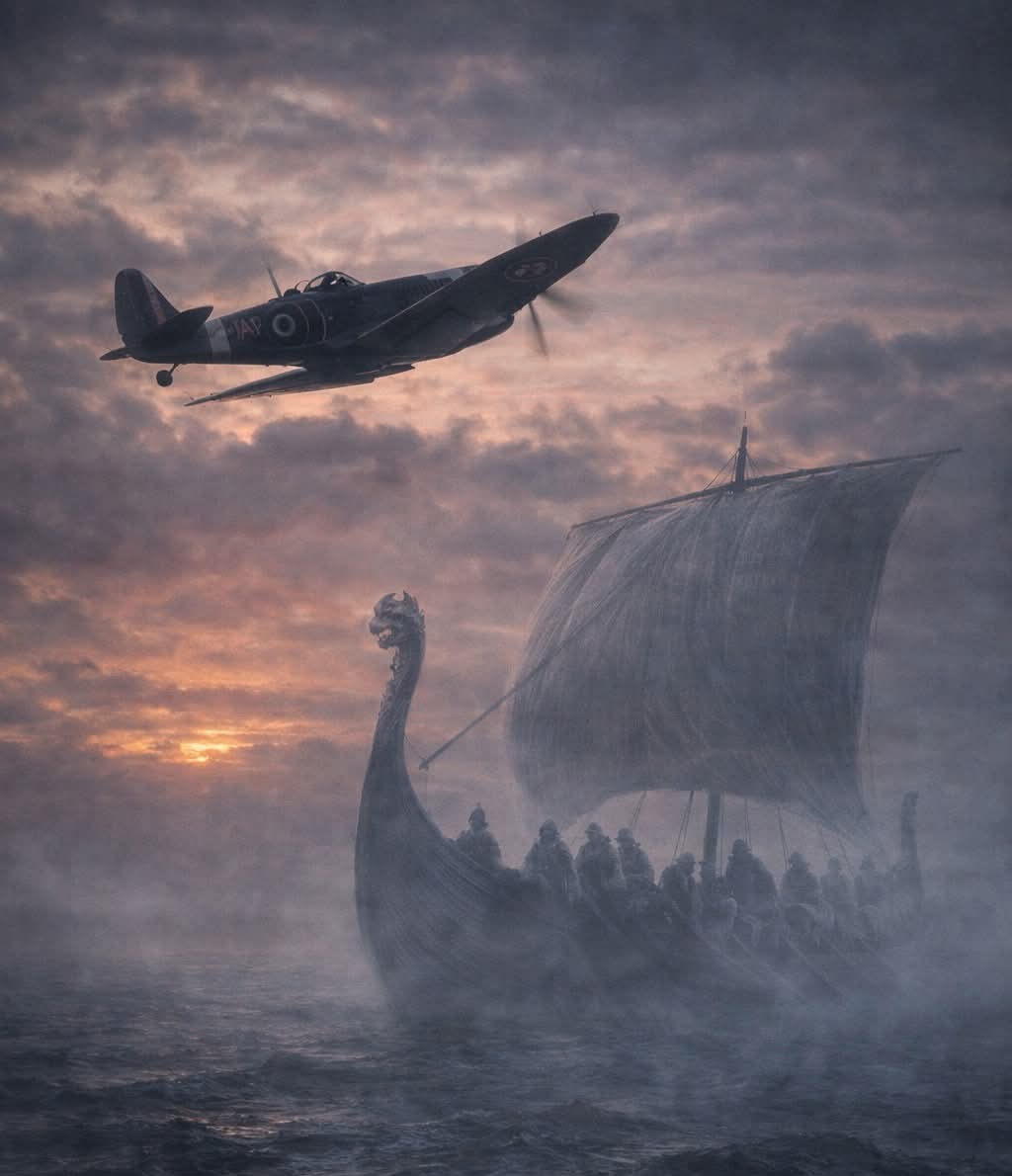
In 1941, a strange report came from the skies above the English Channel during WWII... A Spitfire flying on patrol from RAF Manston was diverted to an area near the Goodwin Sands to investigate what was believed to be an enemy vessel. The young flying officer later reported that what he saw did not look like any modern ship. Instead, he claimed it resembled a Viking longship! The pilot made a firing pass, but the vessel did not change course. According to his report, it continued steadily across the sands as dusk began to fall. Another aircraft was scrambled and a Royal Navy launch headed to the area. Both the naval crew and the pilot of the spotter aircraft later reported seeing what appeared to be a long, narrow vessel in the mist and gloom. The spotter aircraft flew low enough for the pilot to say he could see what looked like men rowing the ship, dressed in what he described as Viking-style clothing. No wreck, vessel or explanation was ever found. Whether it was an illusion in fading light, a misidentified boat, or simply one of those strange wartime sightings, the story has remained one of the more curious tales connected with the waters off Kent. A ghostly invasion perhaps... or just a trick of the sea and the evening mist. © MedievalHistoria #drthehistories
Dr. M.F. Khan tweet media
English
2
16
105
7.1K
ArchaeoHistories retweetledi
Dr. M.F. Khan
Dr. M.F. Khan@Dr_TheHistories·
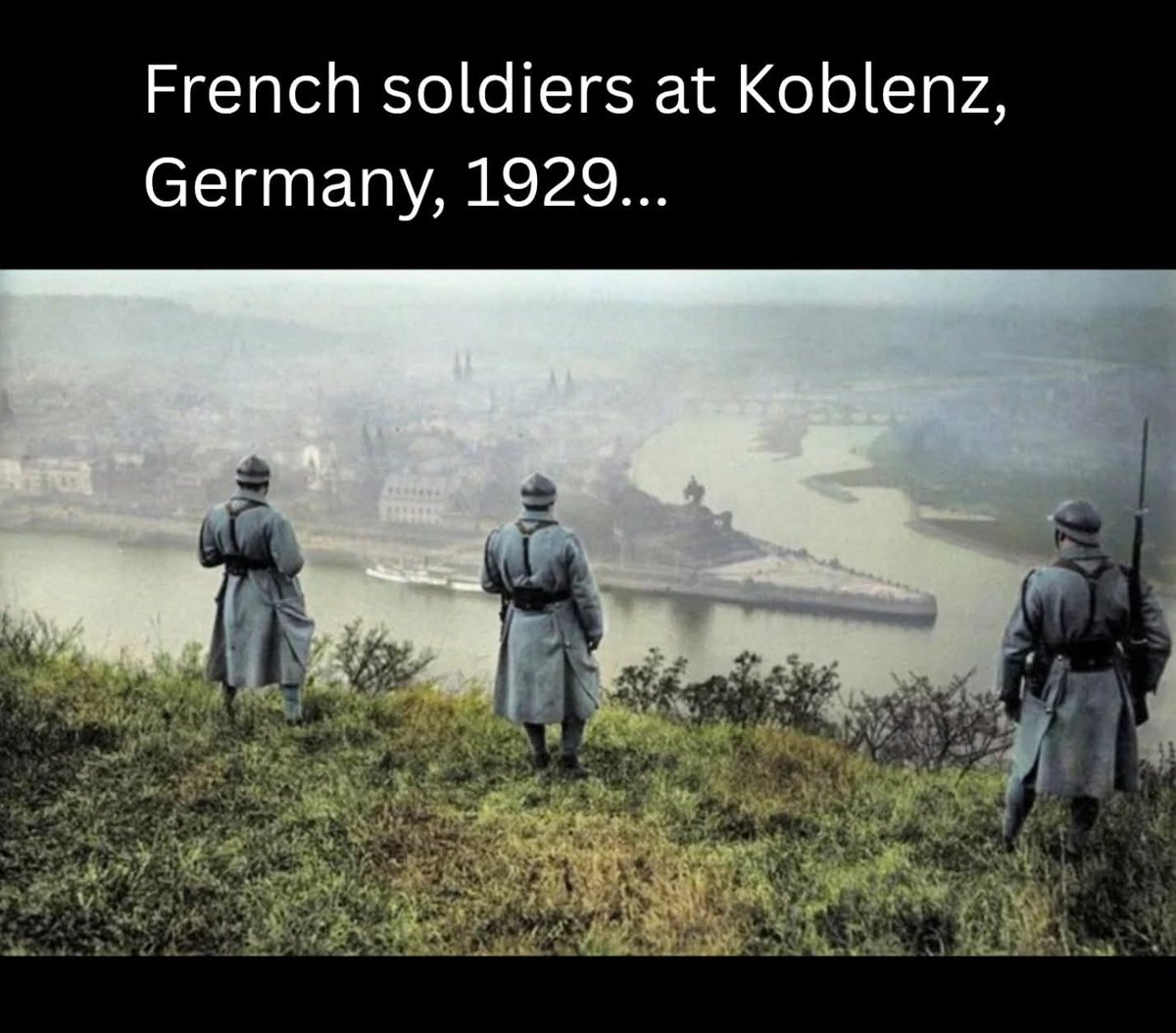
They are standing at Ehrenbreitstein Fortress on the east bank of the Rhine River, looking west toward France. While this might seem close to a frontier, it was not actually near the border. After WWI, the Rhineland was placed under strict demilitarization by the Treaty of Versailles. Germany was forbidden from stationing troops or building military fortifications there, creating a buffer zone meant to protect France from future invasion. To enforce this, Allied forces occupied key positions along the Rhine. Koblenz became one of three major “bridgehead” cities, alongside Mainz to the south and Cologne to the north. These locations were chosen because they sat on major river crossings, allowing Allied troops quick access deeper into Germany if needed. Each bridgehead extended roughly 30 km from the Rhine’s east bank, forming controlled zones where Allied troops were stationed for years after the war. Koblenz, for example, was occupied primarily by American forces in the early 1920s. Even by 1929, although some forces had withdrawn, the Rhineland was still officially demilitarized and under international oversight. This situation lasted until Remilitarization of the Rhineland in 1936, when German troops were sent into the region in violation of the treaty. That move marked a major turning point in European tensions leading up to WWII. #drthehistories
Dr. M.F. Khan tweet media
English
0
5
26
2.6K
ArchaeoHistories retweetledi
Dr. M.F. Khan
Dr. M.F. Khan@Dr_TheHistories·
In the years following Napoleon’s defeat, Europe entered an uneasy period of restoration and diplomacy. Monarchies returned to power, armies were reorganized, and former enemies often found themselves sharing the same courts and ceremonies. Yet beneath the formal politeness, old rivalries still simmered. Paris in particular became a strange meeting place for victors and the defeated. British commanders who had fought Napoleon were sometimes invited to French social events hosted by the restored Bourbon monarchy. These gatherings were meant to signal reconciliation after years of war. But not everyone in the room was ready to forgive. Many French military officers had spent their careers fighting against Britain. Seeing the man who had helped crush Napoleon was not an easy experience. At one Parisian reception, several French marshals deliberately ignored the guest of honor. They refused to greet him, turning their backs in silent protest. © Reddit #drthehistories
Dr. M.F. Khan tweet media
English
3
8
37
3.5K
ArchaeoHistories retweetledi
Dr. M.F. Khan
Dr. M.F. Khan@Dr_TheHistories·
A 2001 United States Postal Service (USPS) Eid Greetings commemorative stamp... The stamp features gold Arabic calligraphy on a royal blue background, designed by calligrapher Mohamed Zakariya. It commemorates the two major Islamic festivals, Eid al-Fitr and Eid al-Adha. The stamp has a denomination of 34 cents and was first issued on September 1, 2001. As a vintage postage item from a popular holiday series, this stamp is considered a collectible. 📷© USPS © Reddit #drthehistories
Dr. M.F. Khan tweet media
English
0
5
36
2.7K
ArchaeoHistories retweetledi
Dr. M.F. Khan
Dr. M.F. Khan@Dr_TheHistories·
Princess Fatemeh Khanum "Esmat al-Dowleh", a prominent member of the royal Qajar dynasty in 19th Century Persia... She was a princess of the Persian royal family and the daughter of Nasser al-Din Shah. In 19th-century Persia, facial hair on women, such as a mustache, was considered a symbol of beauty and distinction among the upper class. While popular internet memes have sometimes misidentified the individual in such images or created false narratives, this photograph is a genuine historical portrait of a Qajar princess. As widely circulated online claim that she was considered the "ultimate symbol of beauty" in Qajar Persia, so much that thirteen suitors killed themselves upon her rejection, has been disproven. Her life and image provide insights into the royal fashions, social structures, and aesthetic standards of the Qajar court during that era. © Reddit #drthehistories
Dr. M.F. Khan tweet media
English
19
12
56
13.7K
ArchaeoHistories
ArchaeoHistories@histories_arch·
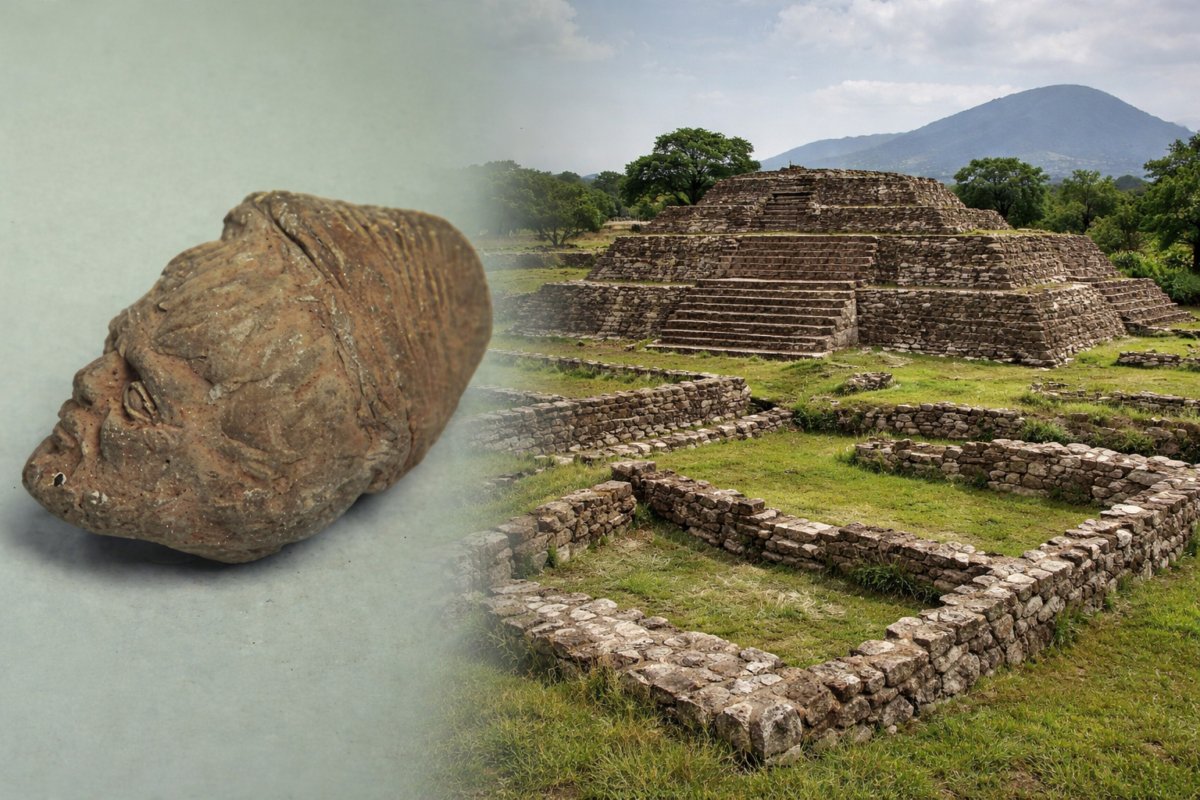
In 1933, a small terracotta head depicting a bearded man with distinctly European features was discovered inside a sealed pre-Hispanic tomb near Tecaxic-Calixtlahuaca, Mexico. The artifact was found beneath multiple intact floor layers within the burial, suggesting the site had not been disturbed since the object was placed there. German archaeologist Bernard Andreae examined the piece in the 1960s and concluded it was undeniably Roman, linking its hairstyle and beard to the Severan period of the Roman Empire, roughly 193 to 235 AD. Thermoluminescence dating of the ceramic further supported its ancient origins, placing its creation well before European contact with the Americas. The burial itself has been dated to the late 15th century, just years before Hernán Cortés arrived in Mexico, making the artifact's presence deeply puzzling. Many archaeologists remain skeptical, noting that no Roman ships, settlements, or supporting artifacts have ever been found in the Americas. Critics have also pointed to gaps in the original 1933 excavation records led by José García Payón, noting that Payón was not always present on site, leaving open the possibility the head was planted. Others suggest the object may have arrived during the early colonial period through trade or accidental transport rather than direct Roman contact. A competing theory proposes that ancient Mediterranean vessels may have been carried across the Atlantic by ocean currents such as the Canary Current, drifting ashore in the Americas entirely by accident. Under that scenario, the artifact could have been recovered by indigenous peoples, traded inland over generations, and eventually incorporated into burial practices. Supporters of authenticity counter that the sealed, undisturbed context of the burial makes a later introduction extremely difficult to explain. The debate echoes the long-dismissed idea that Europeans reached the Americas before Columbus, a claim that gained credibility when Norse settlements at L'Anse aux Meadows in Newfoundland were confirmed. To some researchers, the Tecaxic-Calixtlahuaca Head represents a similar historical anomaly, one that may only be resolved through new discoveries or more advanced scientific analysis. If the artifact is genuinely Roman and genuinely pre-contact, it would fundamentally rewrite what we know about ancient transatlantic exploration. For now, it remains one of archaeology's most tantalizing and unresolved mysteries. The discovery of the Tecaxic-Calixtlahuaca Head has forced archaeologists and historians to seriously reconsider the boundaries of pre-Columbian transatlantic contact, challenging the long-held assumption that the Americas remained entirely isolated from the Old World until the late 15th century. While the artifact alone is insufficient to overturn established history, it has energized ongoing research into accidental or deliberate ancient seafaring, contributed to broader academic debates about anomalous archaeological finds, and underscored how a single object — if authenticated — can destabilize centuries of accepted historical narrative in the same way the Norse settlements at L'Anse aux Meadows once did. #archaeohistories
ArchaeoHistories tweet media
English
1
13
82
5K
ArchaeoHistories
ArchaeoHistories@histories_arch·
The death of Hook Nose at Beecher Island on September 17, 1868, marked a decisive turning point in the Plains Indian Wars on the southern and central plains. Without his battlefield leadership and the spiritual authority he commanded among the Dog Soldiers and allied warriors, Cheyenne resistance lost much of its cohesion and momentum. Within less than a year, the Dog Soldiers suffered a crushing defeat at the Battle of Summit Springs near Sterling, Colorado, in July 1869, where Tall Bull was killed and the last major organized Cheyenne fighting force on the plains was effectively broken. Hook Nose's refusal to compromise, his skill at tactical innovation, and his ability to inspire warriors from multiple bands had made him uniquely dangerous to U.S. military operations; his absence left a leadership vacuum that the Cheyenne could not replace, and the expansion of Euro-American settlement into their ancestral territories proceeded with far less resistance in the years that followed.
English
0
0
5
880
ArchaeoHistories
ArchaeoHistories@histories_arch·
Hook Nose, also known as Roman Nose, was a Northern Cheyenne warrior of the Suhtai band, born around 1823 and killed on September 17, 1868, at the Battle of Beecher Island. His birth name was Môséškanetsénoonáhe, meaning "Bat," and he later took the warrior name Wokini, which Euro-Americans rendered as Roman Nose. Despite widespread belief among whites, Hook Nose was never a chief and never held a formal leadership position within the Cheyenne nation. He was a member of the Crooked Lance Warrior Society and repeatedly refused offers of chieftaincy, preferring to dedicate himself entirely to warfare. Physically imposing at over six feet tall, he made a memorable impression on U.S. Army surgeon Isaac Coates, who described him as a "fine specimen" who appeared armed and dangerous and entirely unconcerned with whether the encounter ended in talk or bloodshed. Following the Sand Creek Massacre of November 1864, Hook Nose emerged as a leading figure in retaliatory strikes against Euro-American settlements along the Platte Road, in Nebraska, western Kansas, and eastern Colorado. Native American author and physician Charles A. Eastman wrote that no other warrior attacked more emigrants along the Oregon Trail between 1860 and 1868. One of his signature battle tactics was to ride back and forth in front of U.S. Army lines within rifle range, drawing fire and forcing soldiers to waste their ammunition before a real assault. Hook Nose opposed every treaty with the U.S. federal government and aligned himself with the Cheyenne Dog Soldiers in defending the Smoky Hill River country and Republican Valley against expansion. He was deeply spiritual and spent considerable time in prayer, ceremony, and medicine preparation before battle, which many believed explained his seemingly supernatural survival in combat. A sacred warbonnet crafted by the medicine man Ice, later known as White Bull, was central to his protection, but came with strict conditions: he could never shake hands in the Euro-American manner, and he could never eat food that had been touched by any iron implement. Several days before the Battle of Beecher Island, Hook Nose visited a Sioux camp and unknowingly ate fry bread that had been removed from the cooking pan with an iron fork, violating the conditions of his medicine. When he learned of the violation before battle, he acknowledged that he would likely be killed if he fought, saying the bread he had eaten had been touched by iron and that he could not survive the day. He did not initially participate in the fighting at Beecher Island on September 17, 1868, watching from a distance because he had no time to perform the cleansing ceremony needed to restore his protection. After being publicly shamed by an elderly warrior named White Contrary for standing aside, Hook Nose donned his war clothes and warbonnet and led a direct charge on the island position held by General Forsyth's command. He was shot at close range during that charge and died near sunset on the same day. His death at Beecher Island effectively removed the most feared and respected war leader from the Cheyenne resistance, accelerating the collapse of organized opposition on the southern plains. #archaeohistories
ArchaeoHistories tweet media
English
4
7
52
4.2K