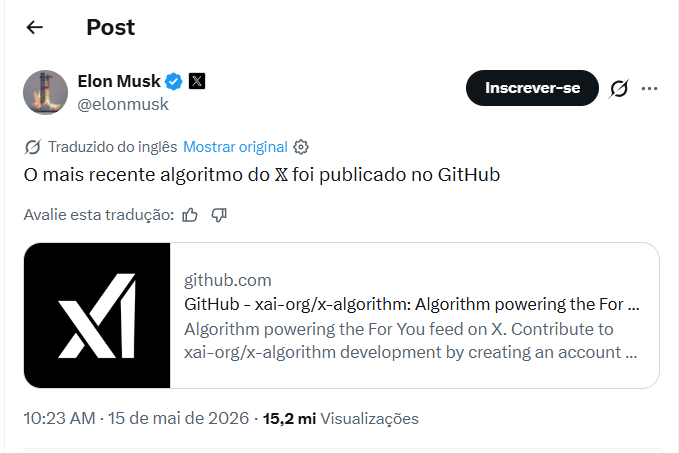
A post "decoding" X's new algorithm has gone viral. It tells you what's dead, what wins, and to screenshot it. X open-sourced the entire algorithm on GitHub, so I downloaded it and checked the claims against the real code. Most of it doesn't hold up. What the post got WRONG: → "Small accounts get a 3x boost from out-of-network reach." It's the opposite. One part of the code (a file called oon_scorer) exists purely to turn DOWN posts from people you don't follow. Its own comment says "prioritize in-network." The thread printed the algorithm backwards. → "Media gets 2x the weight." There's no 2x. The code just records whether a post has an image. It's a plain yes/no without any multiplier attached. → "Posting 4+ times a day triggers a penalty." There's a real rule that stops one person flooding your feed. But here's the deal: it only spaces out how often you show up in a single scroll. There's no daily count, and no number 4. That was invented. → "Closers like 'what do you think?' get you flagged." There is no engagement-bait detector anywhere in the code. → "Long 4,000-character posts get boosted." I searched the whole codebase for "4000." Nothing. What it got RIGHT (one thing): → Replies really are judged by WHO replies, not just how many. The code has a setting for whether a large account joined your thread. Credit where due. The irony? The repo ships a file that scores post quality. One thing it measures is literally called a "slop score" — X built a tool to detect low-effort filler. A recycled "what's dead / what wins" thread is exactly that. The takeaway? X's algorithm is public. Anyone can open it, but almost nobody does. Instead, they reshare a thread that summarized a blog that paraphrased a tweet. When a post hits you with confident numbers, ask the one question that matters: did they actually open the file?