Hikaru Saijo

140 posts

Hikaru Saijo banner
Hikaru Saijo

Hikaru Saijo

@hpfilter

Macroeconomist at UC Santa Cruz, カリフォルニア大学サンタクルーズ校経済学部

サンタクルーズ Katılım Ağustos 2010
346 Takip Edilen641 Takipçiler
Hikaru Saijo
Hikaru Saijo@hpfilter·
@lucasian76 I think the rule of thumb is you increase the number of layers until the test errors stop decreasing. Unfortunately I found no good intuition for which activation function to use, although I found LeakyReLu or Tanh tends to perform reasonably well for econ applocations
English
0
0
1
21
lucasian76
lucasian76@lucasian76·
In particular, I cannot find a reliable link between economic intuition and the right activation function or number of layers. Is a different problem completely as, say thinking with the model to calibrate.
English
1
0
1
198
lucasian76
lucasian76@lucasian76·
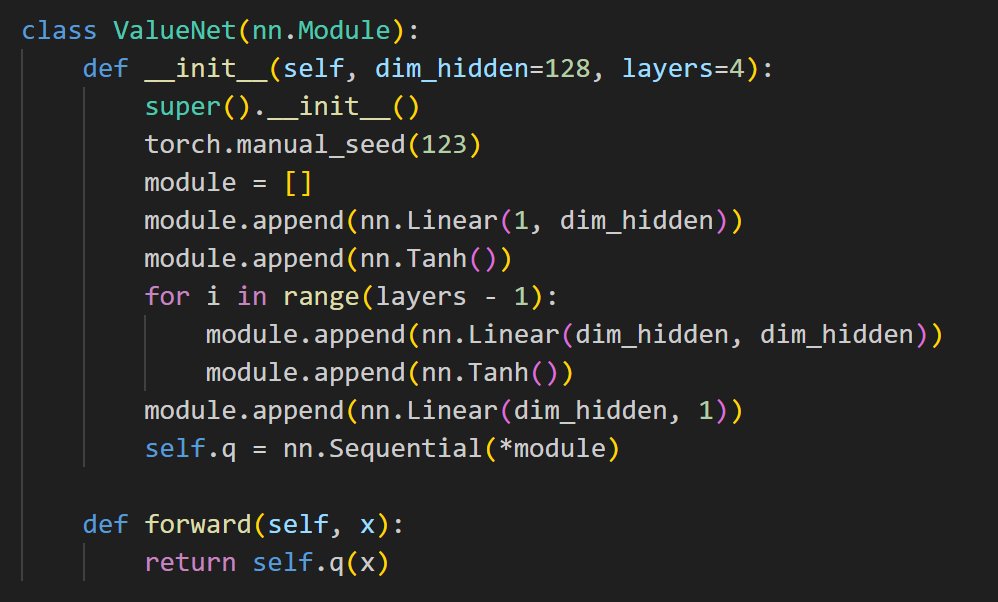
Simple Hopenhayn with DL imitating JFV pytorch codes. I am unable to make it converge to the VFI solution. Not clear at all how to devise the architecture at all. With VFI is way more direct. Still fun to play with it!
lucasian76 tweet medialucasian76 tweet media
English
3
0
7
2.9K
Hikaru Saijo
Hikaru Saijo@hpfilter·
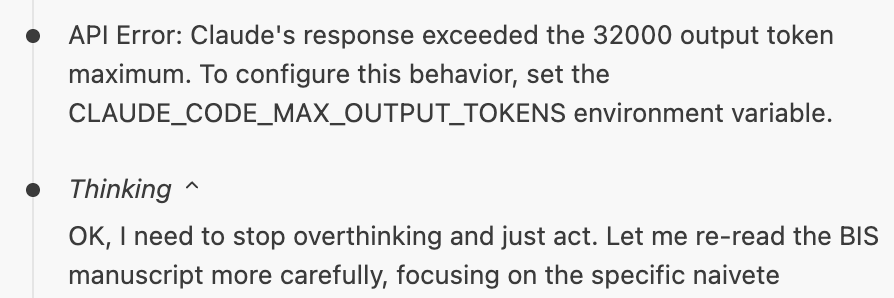
@xajpdtpjunpad あとVS codeにはtex extension(tex workshop)もあるので、ドラフトもClaudeにコードを参照してもらったりして書いてもらうこともできます。ここまで来るともはや自分の存在意義が分からなくなりますが(笑)
日本語
0
0
0
74
Hikaru Saijo
Hikaru Saijo@hpfilter·
@xajpdtpjunpad 僕はVS codeにClaude code extensionを入れて作業してるのですが、これだと結構スムーズに文脈伝えられる気がします。Cursorは使ったことないので分からないですが。
日本語
1
0
1
152
Tom Holden
Tom Holden@t_holden·
@hpfilter Does it give you the nice per line change accept reject even without git commits like antigravity?
English
1
0
0
170
Tom Holden
Tom Holden@t_holden·
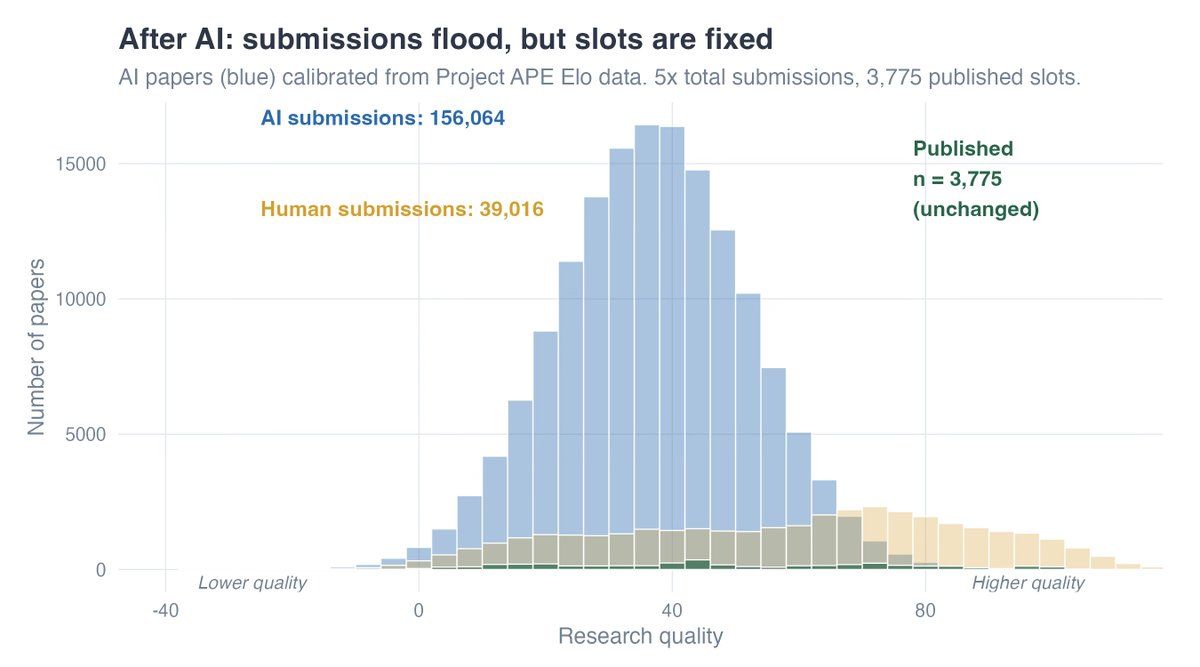
This seems a good time to remind people that Antigravity provides a far more natural way to work than Claude Code. The entry cost is far lower. It is particularly suited for tasks for which clean tests of correctness don't exist (inc. econ tasks). Then you want to see the code!
Sundar Pichai@sundarpichai

Gemini 3.1 Pro is here. Hitting 77.1% on ARC-AGI-2, it’s a step forward in core reasoning (more than 2x 3 Pro). With a more capable baseline, it’s great for super complex tasks like visualizing difficult concepts, synthesizing data into a single view, or bringing creative projects to life. We’re shipping 3.1 Pro across our consumer and developer products to bring this underlying leap in intelligence to your everyday applications right away. Rolling out now to: - Developers in preview via the Gemini API in @GoogleAIStudio - Enterprises in Vertex AI and Gemini Enterprise - Everyone through the @Geminiapp and @NotebookLM

English
8
0
23
8.1K
Hikaru Saijo retweetledi
Jesús Fernández-Villaverde
Jesús Fernández-Villaverde@JesusFerna7026·
Saturday, I gave a talk at ASSA 2026 on my new paper ``Macroeconomic Effects of Production Networks: A Deep Learning Approach,’’ with @cmatthes_econ, @hpfilter, and @MacroInPieces. Several attendees asked for a copy of the slides I used (sorry, we are still a few weeks away from circulating a completed draft), so I am linking them here: sas.upenn.edu/~jesusfv/Slide… There has been a lively debate over the last few weeks on X about what deep learning can do in macro. I think this is a good example of what we can now study. Dynamic stochastic models with non-trivial input-output structures are a beast to compute. They are inherently nonlinear, and you need to carry not only aggregate state variables but also all the sector-specific variables, such as sectoral productivity and sector-specific capital. If you have, as we do in the paper’s calibration to match U.S. input-output tables, 37 sectors, you end up with at least 74 state variables. Even very aggressive sparse-grid allocations, such as Smolyak, will struggle with that. A deep neural network can deal with this problem, especially if you build it using the symmetry (or, if you prefer, exchangeability) ideas I discuss here: nber.org/papers/w28981 with @MahdiKahou, @jlperla, and Arnav Sood. We also show that adopting a deep learning approach changes the answers you get relative to more traditional solution methods. More concretely, we capture endogenous changes in relative prices across sectors that perturbation solutions largely miss. That leads to materially different elasticities of output, investment, and labor supply to sectoral shocks. In our benchmark calibration, we find substantial attenuation of sectoral shocks, precisely because of these relative price changes. When steel becomes too expensive following a productivity shock in the steel industry, car manufacturers switch to more plastic. This result resonates with my own earlier work on the macroeconomics of wars. One lesson from wars over the last 120 years is how resilient modern economies have been to large disruptions from mobilization, blockades, or bombing. What looked like bottlenecks that would stop production turned out to be inconveniences, because there are many ways to produce a tank or an airplane. Some alternatives were less efficient than the optimal one, but the productivity losses were not as large as pre-war planners envisioned when they took a static view of resource allocation. Our results replicate that intuition inside a standard stochastic multi-sector business cycle model. Of course, we could throw wrenches into the economy’s reallocation process, but, at this moment, I think the insight is robust.
Jesús Fernández-Villaverde tweet media
English
2
50
292
35.3K
Hikaru Saijo
Hikaru Saijo@hpfilter·
@xajpdtpjunpad 単に鍵付きの人をブロックしているだけでは?僕の憶測ですが。
日本語
1
0
1
444
Christian Matthes
Christian Matthes@cmatthes_econ·
I just had a scary thought: When I talk to junior people today about Matlab code, do they feel the same way I did back in the day when people would show me their Gauss code?
English
16
1
86
13.8K
Hikaru Saijo retweetledi
Francesco Bianchi
Francesco Bianchi@Francesco_Bia·
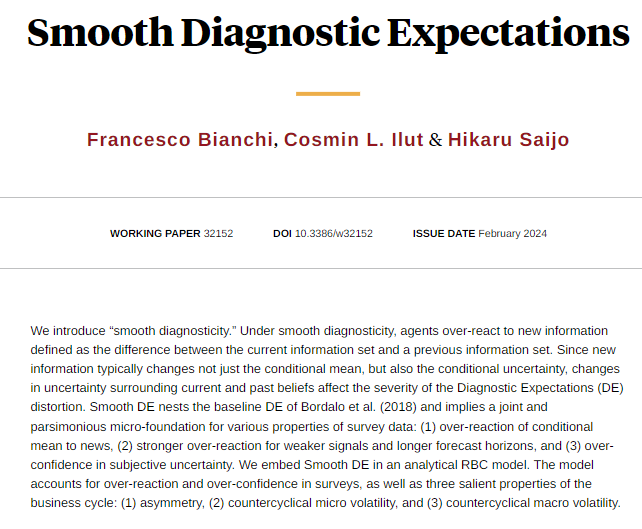
New paper with @CosminIlut and @hpfilter. Under Smooth Diagnostic Expectations, agents' over-reaction depends on the level of uncertainty. This provides a parsimonious explanation for over-reaction and over-confidence and key business cycle facts
NBER@nberpubs

Embedding smooth diagnostic expectations in a real business cycle model accounts for overreaction and overconfidence as well as key properties of the business cycle, from @Francesco_Bia, @CosminIlut, and @hpfilter nber.org/papers/w32152

English
1
11
56
9.6K
Hikaru Saijo retweetledi
NBER
NBER@nberpubs·
Embedding smooth diagnostic expectations in a real business cycle model accounts for overreaction and overconfidence as well as key properties of the business cycle, from @Francesco_Bia, @CosminIlut, and @hpfilter nber.org/papers/w32152
NBER tweet media
English
0
9
23
15K
Hikaru Saijo retweetledi
Takuo Sugaya
Takuo Sugaya@takuo_sugaya·
We (Yuichiro Kamada, Toshihiko Mukoyama, and I) will tweet about Japanese job candidates! This is an initiative by a few volunteers of Japanese economists. We were helped by many senior Japanese colleagues when we were juniors/grad students.
English
1
42
120
59.1K
Hikaru Saijo retweetledi
Harrison Shieh
Harrison Shieh@harrison_shieh·
#EconTwitter, I'm super excited to say I'm finally on the #EconJobMarket ! I'm a #EconJMC from @ucsc Ever wonder how Chinese monetary policy matters on the global stage? Answer? Supply Chains! Here's a brief 🧵on my JMP, coauthored with my classmate @anirbansanyal83
Harrison Shieh tweet media
English
2
16
64
27.9K
Hikaru Saijo
Hikaru Saijo@hpfilter·
@ToshiMukoyama 同感です。というか、オフィスがもらえないのは流石に辛いですね。僕の意見はオフィスがもらえる、という前提のもとです。
日本語
1
0
1
254
Toshihiko Mukoyama
Toshihiko Mukoyama@ToshiMukoyama·
@hpfilter 共著まで行かなくても毎日学校で顔を見ていれば何となく「同僚感」が出てくるし、コンファレンスに行ったりしても(一度会っただけとかではなくて)そういう馴染みの知り合いがいると気が楽とかありません? カレッジタウンにいても週末観光に出て行くことはできるわけだし。
日本語
2
0
2
428
Toshihiko Mukoyama
Toshihiko Mukoyama@ToshiMukoyama·
僕の意見はちょっと違って、僕はUVAにいた時にはもっとこういうところに来ればいいのに、と思っていた。カレッジタウンの方がオフィスももらいやすいし、人が学校に出てくるのでなじみやすい。(車が運転できない人には大変かもしれないけれど。)サバティカルの成果が観光っていうのは寂しいと思う。
日本語
1
1
7
5K
Hikaru Saijo
Hikaru Saijo@hpfilter·
(1)多少無理目なジャーナルかな、と思っても気にせず投稿してみても良いかと。可能性無しならデスクリジェクトされるし、良いところに掲載された時のメリットはかなり大。例えばトップフィールドに一本ある人とフィールド2番手に二本ある人だと前者の方が高く評価される傾向にあると思う。
日本語
0
2
14
2.7K
Hikaru Saijo
Hikaru Saijo@hpfilter·
@carlos_ed_sg Very nice. I never had a good intuition for hump-shaped consumption (and never have seen it written up).
English
0
0
2
224
Hikaru Saijo
Hikaru Saijo@hpfilter·
@xajpdtpjunpad Juliaは使ったことないですが、PythonだとPytorchがあったりして確かに結構充実している印象ですね。
日本語
0
0
2
196