
Kyle Hunt | Agency Operations Expert

4.8K posts

Kyle Hunt | Agency Operations Expert banner
Kyle Hunt | Agency Operations Expert

Kyle Hunt | Agency Operations Expert

@huntkyle

7-Figure Agency Exit | 8-Figure Agency Advisor | Want to Scale Your Agency, Without Being The Bottleneck? Go Here: https://t.co/BeNf35cmRZ

South Florida, USA Katılım Mayıs 2009
369 Takip Edilen16K Takipçiler
Sabitlenmiş Tweet
Kyle Hunt | Agency Operations Expert
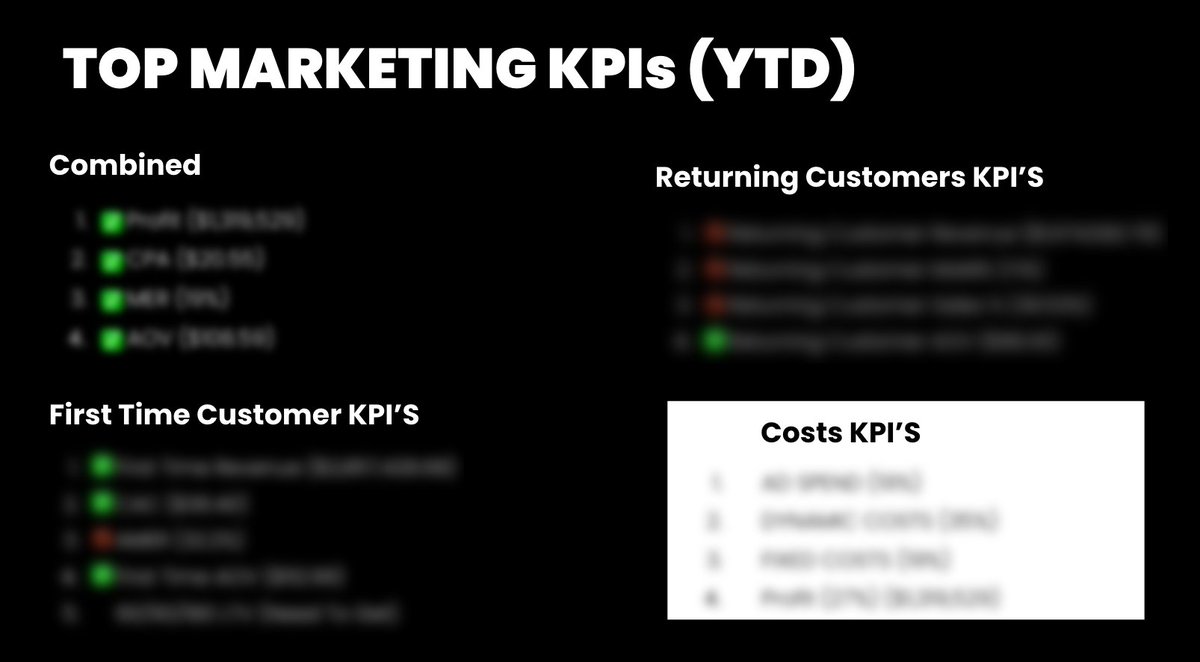
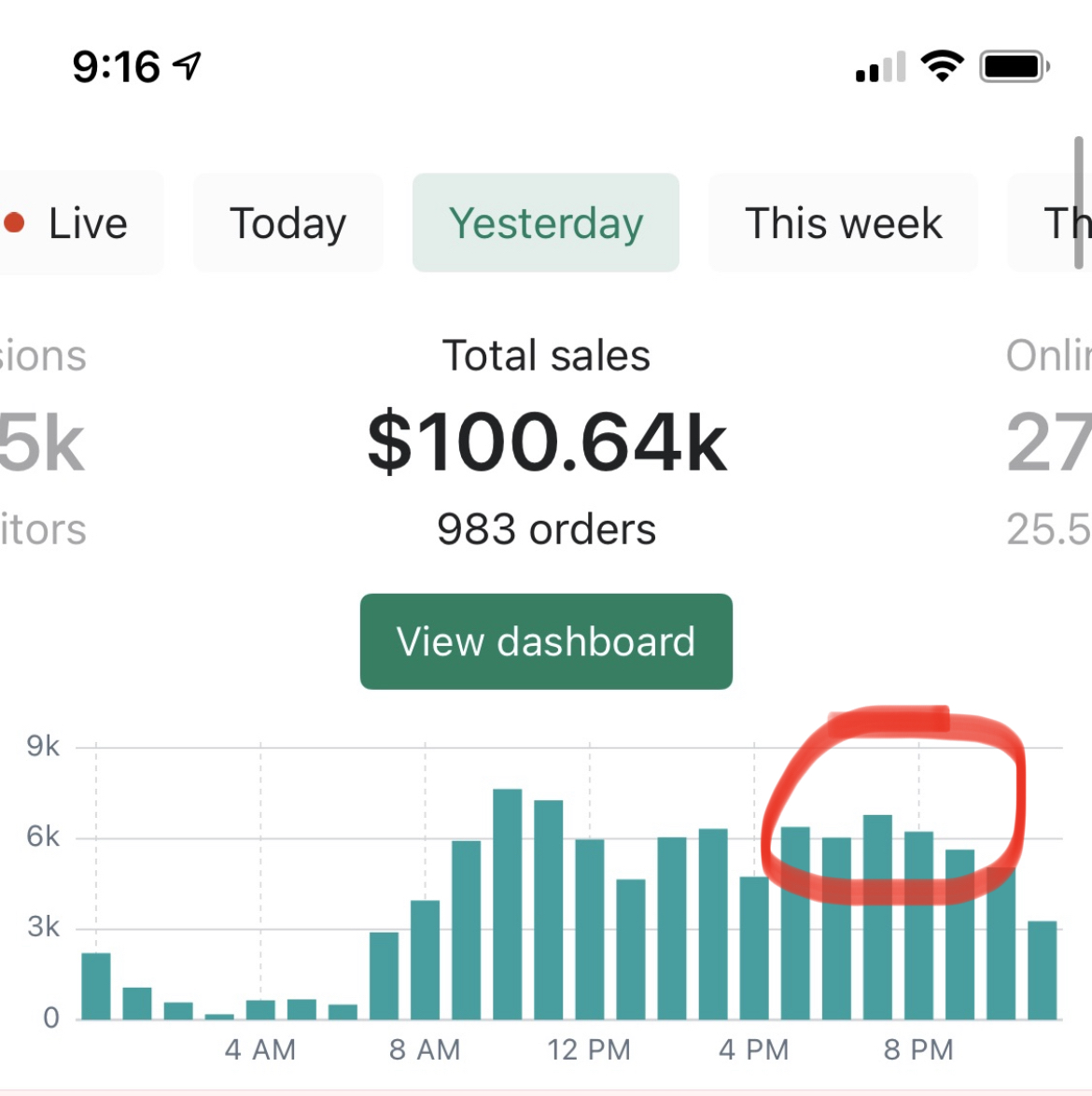
I scaled my own e-commerce brand from $0 to $27.6 million in 12 months. Here are the 5 necessary beliefs you will 100% need to do the same:
Kyle Hunt | Agency Operations Expert tweet media
English
67
106
825
0
Kyle Hunt | Agency Operations Expert
I'm the ex-COO of an 8-figure agency. I've also scaled 3+ agencies to $500k/mo+. Most agencies hit $30-50k/month and get stuck because revenue goes up but profits go down, the team is drowning, and the founder works 70 hours a week just to stay afloat. These look like sales problems but they're really OPERATIONS problems. I've watched agencies do $2M/year and take home $100k. I've also watched agencies do $1.5M/year and take home $600k with the founder working LESS. Same market. Completely different operations infrastructure. The 9-phase blueprint: Phase 1: Foundations Phase 2: Pod Model Phase 3: Team-Led SOPs Phase 4: Workflow Optimization Phase 5: Leading Metrics Phase 6: Pricing and Profitability Phase 7: Team Alignment and Compensation Phase 8: Client Onboarding Phase 9: AI Integration This is how I helped agency owners remove themselves from daily operations and STILL keep 40%+ profit margins. Like + Comment "SCALE" and I'll send over the full blueprint (must be following so I can send it btw).
Kyle Hunt | Agency Operations Expert tweet media
English
11
0
19
625
Kyle Hunt | Agency Operations Expert
The delegation system that lets agency owners work 20 hours per week while hitting $200k/month follows a framework most founders will resist because it feels like giving up control. "The Four Bucket Method" Track every task you do for one full week, and I mean EVERY single fucking task down to the smallest thing you touch Not categories like "client work" or "admin" but specific granular tasks that you can point to and say "I spent 8 minutes doing this exact thing." "Responded to client slack message about revision request." "Updated project tracker." "Reviewed deliverable before sending." "Sent invoice." Granular Detailed Everything At the end of the week, sort every task into four buckets. Bucket one: only I can do this. High level strategy that requires your specific expertise and judgment built over years of experience, final sign-off on major deliverables where your reputation is on the line, sales calls with qualified leads who need to trust the person running the company, relationship management with top clients who expect face time with the founder etc. This should be 20% of your time maximum. Bucket two: someone can do this with training. Most delivery work falls here, the stuff that feels like only you can do it but really just requires someone who understands the context and has been shown the right way once or twice. Client communication. Quality control on routine deliverables. Project management. This is where your first real hire takes over. Bucket three: someone can do this with a checklist. Scheduling. Invoicing. Posting content. Updating trackers. Sending reminders. Anything with clear right/wrong answers where judgment isn't required and the task is the same every single time. SOPs / Playbooks make someone VERY effective in days here. Bucket four: shouldn't be done at all. Meetings that accomplish nothing but make everyone feel productive, over communication that creates more work than it solves, perfectionism on details clients don't notice and wouldn't pay more for, tasks you do because you've always done them and never stopped to ask why. Delete these entirely. Now build the infrastructure. For every bucket two and three task, create a loom video showing exactly how to do it from start to finish with your screen recorded and your voice explaining the why behind each step, A checklist confirming every single action so nothing gets missed even when the person doing it is tired or distracted, And an escalation rule that defines exactly when to ask you versus handle it themselves so you don't become the bottleneck. One process per week In 12 weeks you have an operations manual that would take most agencies years to build. Hire for bucket three first. It's the lowest risk with the clearest outcomes. They pay for themselves within a month by taking 15 hours of low-value work off your plate, and the freed up time lets you focus on sales and strategy which actually moves the needle. Then hire for bucket two. It takes longer to train and more judgement is required But now you're only doing bucket one tasks and your capacity to take on clients expands without your hours expanding with it. The founders stuck at $30k are "too busy" to build this so they stay busy forever lol The founders at $200k built it once and bought their time back permanently.
English
1
0
10
423
Kyle Hunt | Agency Operations Expert
Agency owners are spending 10+ hours per week on tasks a $20/hour assistant could do (probably better too) And then they wonder why they can't scale. Track every task for one week. sort by "only I can do this" versus "anyone could do this with a checklist." Once you do this, most founders discover 70% of their week is in the second bucket. That's not a time problem That's a DELEGATION problem and you'll stay stuck until you build the Playbook and make the hire. The work to build the system feels like a waste of time but the freedom on the other side is so fucking worth it. Trust me, I know.
English
2
0
6
410
Kyle Hunt | Agency Operations Expert
The client management system that agencies doing $500k+ per month use fires clients automatically before they become problems. It sounds harsh but here's why it works... I call it the "the ruthless client filter" When a new client signs up, they get told exactly what's expected Not vague "we'll work together to grow your business." Specific. "We'll book you 20-30 calls per month. But if you no-show twice without notice, you're out. If you don't close any deals and blame lead quality instead of your sales process, you're out. If you go dark for 2 weeks and then complain about results, you're out." In writing In the contract Before they pay Most agencies would never do this because they're scared shitless of bad reviews, chargebacks, and confrontations lol Here's what happens when you're too nice: Client signs up You book them calls They no-show half of them They close zero deals They blame you They churn They leave a bad review They ask for a refund You just wasted a whole month and damaged your reputation. But here's what happens with the filter: Client signs up You book them calls They no-show twice You send one warning They no-show again You fire them immediately and refund nothing It's in the contract Four things happen: It filters out time-wasters before they waste time It makes serious clients take it seriously It protects your reputation (bad clients = bad results = bad testimonials) It trains clients that your time is valuable The agencies doing $500k+ have fired more clients than the agencies stuck at $20k have ever signed. Bad clients don't just cost you their retainer. They cost you the attention you could've spent on good clients. They cost you case studies you could've built They cost you referrals you could've earned You have to protect your winners by cutting your losers, ruthlessly.
English
1
0
5
354
Kyle Hunt | Agency Operations Expert
"Sign 10 clients at $15k" sounds simple until you're 3 months in, drowning in delivery, working 80 hour weeks, and realizing you built a job that owns you instead of a business that pays you. Here's the operational infrastructure that makes this actually work... I call it the "The AI agency cash flow system" Step one: Productize before you sell. Most people start an AI agency and say yes to everything. "We do AI automation." Cool That means something different to every client. Custom scope Custom delivery Custom headaches lol Pick 3 specific deliverables: AI content system. AI lead research. AI customer support automation. Whatever tf you want Each one has a fixed scope. Fixed deliverables. Fixed timeline. Fixed price. Now you can systemize delivery because every client gets the SAME thing. Step two: Build the delivery machine before you need it. Most agency owners wait until they're drowning to systematize but by then it's too late. You're putting out fires instead of building infrastructure. Before you sign client #1, document the entire delivery process. Onboarding flow What information you need How you collect it Where it lives Delivery checklist Every step from kickoff to completion Every tool you use Every output you produce QA process How you check work before it goes to the client What "done" looks like. Etc. Create a Playbook for it with the team. Someone new can review it and execute without asking questions. This takes 2 weeks to build and saves like 20+ hours per week once you have 5+ clients. Step three: Payment structure that protects cash flow. Most agencies do monthly retainers collected at the start of the month. That works until a client churns mid-month and you've already spent the labor. Better structure: 50% upfront before any work starts. 50% on delivery. For project work. For retainers: Quarterly payments with 10% discount. Or monthly with payment due before the month starts, not after. Agency owner can switch from monthly after to quarterly prepaid and go from constantly chasing invoices to $180k sitting in the bank before Q1 even started. Cash flow changes everything You make better decisions when you're not desperate. Step four: Capacity math before you scale. Every deliverable has a time cost. AI content system takes 8 hours to deliver. AI lead research takes 5 hours. Whatever your numbers are. Track them. Your capacity = Team hours available ÷ hours per deliverable. If you have 160 hours/month of capacity and each client takes 15 hours of delivery, you can handle 10 clients max. Sign client #11 and quality drops. Deadlines slip. Clients churn. When you hit 80% capacity, start hiring. Not 100%. Not 120%. 80% gives you buffer for scope creep and time to train properly. Step five: The "only I can do this" audit. After 90 days, track every task you personally touch for one week. Sort into two buckets: "Only i can do this" versus "Anyone could do this with a checklist." Most agency owners discover 60-70% of their time is in the second bucket. That's your hiring roadmap. Delegate bucket two and keep bucket one. The founders who skip this stay stuck at $30-50k/month working 70 hours. The founders who build this infrastructure hit $150k+ working 30. $1.8M/year is possible. $1.8M/year while working 20 hours a week requires operations most people are "too busy" to build because they're drowning in delivery they refuse to systematize. BTW, this post will work for any agency.
Jeremy@Jeremybtc

You could literally – Buy ChatGPT Plus – Start a business and call it an AI agency – Charge $15K per month – Sign 10 clients That’s $1.8M a year Why is nobody doing this

English
1
0
4
306
Kyle Hunt | Agency Operations Expert
Agency owners grinding to hit $500k/month are chasing 120 clients at $4k each while other agencies hit the same number with 50 clients at $10k each... it's the same revenue but completely different business which results in a completely different life (much better btw) I'm going to break down exactly why moving upmarket changes everything. Here's the playbook for how to actually do it: First, you need to understand why small clients keep you stuck. Every client has a baseline operational cost regardless of what you charge them. onboarding communication revisions check-ins invoicing project management overhead A $5k client and a $20k client take almost the same operational bandwidth and sometimes the small client takes more because they're less sophisticated and need more hand holding. so when you have 30 small clients you have 30x the communication threads. 30x the onboarding processes. 30x the revision requests. 30x the "quick questions" that eat 3 hours of your day. and 30x the invoices to chase. The math on profit margin gets destroyed by volume. Here's how to move upmarket without starting over: step one: audit your current client roster. Rank them by how much profit they generate per hour of your team's time. not revenue profit per hour some of your biggest clients by revenue are your WORST clients by this metric. step two: identify what your best clients have in common company size industry specific problems how they found you etc. This becomes your new targeting criteria. step three: raise prices on all new clients immediately. not 10% but double or triple it Sure you'll lose some leads. that's the point. the leads you lose were NEVER going to be profitable anyway. step four: build case studies specifically for the upmarket buyer They don't care that you helped a solopreneur get more followers. they care about business outcomes. revenue generated. costs reduced. time saved for their team. step five: upgrade your positioning. "social media management" is a commodity "revenue operations for B2B companies doing $5M+" is a SPECIFIC solution for a specific buyer who has budget. step six: fire your worst clients not all at once but every month, and identify your lowest profit per hour client and either raise their rate 50% or let them go. they'll either become profitable or leave. both outcomes are good for you. The agency owners who figure this out go from 40 clients and chaos to 10 clients and calm. same revenue FRACTION of the operational load actual profit margins instead of fake revenue that disappears into overhead. most agency owners are scared to raise prices because they think they'll lose everyone. you'll lose some but the ones you lose are the ones keeping you stuck. The clients who pay premium always cause fewer problems (funny how that works), respect your expertise more, and stay longer. the clients who negotiate you down cause the most issues, question everything, and churn in 3 months anyway. It's always the broke ones who pay you less that cause trouble You need to filter for clients who actually let you do your job.
Alex Hartsuff@AlexHartsuff

Took 2 years to scale my agency to 1M with small clients And 2 years to 5M with Enterprise Clients Here’s how it happened: November 2021, we hit 113K/m Everyone on the outside was congratulating us Meanwhile I was locked in a bright red office from 5:30am to 10pm every single day managing 40 clients who all paid between 2-4K/m I saw my girlfriend 7 times that entire year for a total of 9 days I was taking home 1K personally from a 113K/m agency I was miserable One day I'm sitting in that office thinking about what it would take to get to 200K/m If I'm at 113K with 40 clients, I'd need 80 clients to hit 200K To hit 300K I'd need 120 clients To hit 400K I'd need 160 clients In that moment I realized the math ain't mathin That path was only going to make my life more and more miserable And that was the opposite of why I started the agency in the first place So I made a decision Instead of trying to get more people to pay me money, I was going to get people to pay me more money I needed to understand if this was even possible So I called a competitor, pretended to be a prospect, went through their whole pitch They were charging 30K for 3 months for the exact same service I was selling for 3500 I felt so stupid in that moment But it proved something important… The market existed Here's what I didn't understand back then that I understand now: Working with Enterprise Clients isn't just about making more money It's about being able to do better work You can hire actual A players, invest in the right tools, build real systems Your clients get better outcomes because you can finally afford to deliver at the level you always wanted to But there's something even more important than the money… Enterprise Clients are fundamentally easier to work with Small clients are in survival mode, so every dollar feels like life or death to them They message you at 2am They ghost invoices They question every single recommendation you make They panic over one bad month and churn out Enterprise Clients operate completely different They've got finance teams that handle payments automatically They forecast in quarters and years instead of 30 day windows They trust your expertise because that's why they hired you in the first place So in January 2022 I stopped taking small clients Revenue dropped from 113K/m to 85K/m and that was terrifying But I stuck with it and started closing deals at 10-30K/m with Enterprise Clients August 2023 we sold the agency at 426K/m 19 months after making the shift The only thing that changed was who I sold to and what I charged If you’re not charging as much as you should It's because you're selling to the wrong people at the wrong price You don't need more clients You need better clients who pay you enough that you can actually deliver the results they're paying for Once you do so, your business will change forever This is the exact system Im teaching in the 5-day intensive workshop January 5-9 How I identified which clients to fire + which to keep How I built offers that justify 10K-30K/m pricing How I positioned to attract Enterprise Clients instead of small businesses How I closed 217 Enterprise Clients with paid ads + outbound How I pre-handled objections so price was never an issue The complete playbook from 1M to 5M If you're doing 500K-2M right now but stuck with too many small clients this is your path to 5M+ enterpriseclients.com/workshop Any questions? Drop them below + Follow me @AlexHartsuff for more content like this

English
0
0
1
344
Kyle Hunt | Agency Operations Expert
EVERY single process in your agency should have a Playbook, a checklist (in your Project Management System), and a "when to escalate" rule. The Playbook shows exactly how to do it. Someone new can read it and execute it without asking questions. The checklist confirms every step was completed. Nothing gets forgotten Nothing gets skipped Quality stays consistent even when you're not watching The escalation rule defines exactly when to ping you versus handle it themselves. "if client requests something outside scope, escalate. If revision is minor, handle it." You build this for one process with the team. And another. Then another and within 3 months you have an operations manual that lets you hire someone and have them fully functional in 30 Days, instead of 3 months of hand holding bullshit.
English
0
0
0
240
Kyle Hunt | Agency Operations Expert
The client onboarding system that agencies doing $500k+ per month are running looks NOTHING like the "hop on a kickoff call and figure it out" approach most agency owners use. Here's the exact flow... Before the kickoff call even happens, client fills out an intake form. Not some basic questionnaire but a detailed document asking for brand guidelines, logins, past campaign data, target metrics, competitor examples, and anything else you'd normally spend 3 calls extracting from them piece by piece. The kickoff call is 30 minutes max. not an hour of rambling. You're confirming what they submitted, clarifying gaps, and setting expectations for communication cadence. That's it. Everything else was handled by the form. Within 24 hours of kickoff, the client gets access to their dashboard with one place to see deliverables, timelines, results, and leave feedback They never have to ask "what's the status" because the status is always visible. it kills 80% of the back-and-forth emails that eat your team's time. The first deliverable ships within 72 hours of kickoff. Not perfect. Not final. But something tangible that SHOWS momentum and lets them give feedback early before you've gone too far in the wrong direction. Week one check-in is scheduled automatically. Not "we should catch up soon." A calendar link sent during onboarding with a specific date already booked. Every single step templated Every single asset pre built Every single timeline standardized When a new client comes in, your team executes the checklist without asking you anything. You find out a new client started when you see the first deliverable in the review queue. Most agency owners spend the first two weeks of every client relationship reinventing the wheel with custom processes. Custom timelines. Custom everything. And they wonder why they can't hire because "nobody can do it like me." Nobody can do it like you because you never wrote down how you do it.
English
0
0
0
534
Kyle Hunt | Agency Operations Expert
Agency owners at $100k/month are doing delivery work for 6 hours a day and wondering why they can't grow. The ones at $500k/month spent those SAME 6 hours documenting every single process with their team until someone else could do it without asking questions. Boring Playbooks Checklists Loom videos explaining exactly how to handle every situation It took months and felt like a waste of time while they were doing it. But now they work LESS hours at 10x the revenue because they built a machine instead of a job.
English
0
0
3
275
Kyle Hunt | Agency Operations Expert
I've watched agency owners who work 70 hour weeks, close clients, deliver results, and STILL can't figure out why they've been stuck at $100k/mo for the past 18 months... The problem is never the tactics. It's that they built an agency with no foundation underneath it and now every decision feels like guessing because there's NO system telling them what actually matters. Most agency owners are so fucking deep in client work and putting out fires that they never stop to ask why the fires keep starting in the first place. They're obsessed with the next hack, the next outreach strategy, the next funnel tweak, while the actual structure of their business is held together with duct tape and hope lol I've scaled 3 agencies past $100k/mo and the ones who scale all have the same 6 things locked in while the ones who stay stuck have zero of them. This shit isn't some theory. these are the exact foundations that scaled my OWN agency to 7 figures and all these other agencies to multiple 6 figures a month I created a doc with these exact frameworks and foundations you'll get: - the 6 non negotiable foundations every scalable agency needs - mission and vision templates that actually drive decisions (not motivational posters collecting dust) - how to find your ICP based on LTV data, not gut feeling = the 4 part strategy breakdown (offer, lead gen, ops, people) - priority setting method so your team focuses on ONE thing that moves the needle This is exactly how i've helped agencies break through $1M to $2M plateaus and scale with clarity and not chaos. Like, rt and comment "STRATEGY" and I'll send it over to you (must be following so i can send it)
Kyle Hunt | Agency Operations Expert tweet media
English
1
0
2
208
Kyle Hunt | Agency Operations Expert
There's a ceiling MOST agency owners hit around $30k- to $80k/month and no matter what they try they can't break through it... and the reason has nothing to do with their service quality or their marketing or how many cold DMs they send. It's that they built an agency that requires them to do everything. Here's the mechanism behind why this keeps people stuck: When you start an agency you do all the work yourself because you can't afford to hire and you want to keep margins high. It makes sense at first. You're trading time for money but at least you're keeping most of the money. The problem is you accidentally build a business model that has a hard ceiling based on how many hours exist in a week. you're doing sales you're doing delivery you're doing client communication you're doing admin you're doing revisions you're doing onboarding you're doing everything and every single task that lands on your plate is another brick in the wall that keeps you trapped. I've seen agency owners working 70 hours a week making $60k/month while other people work 25 hours making $100k because they understood something most people figure out WAY too late Your job isn't to do the work Your job is to build systems that MAKE the work happen without you. The agencies breaking $200k, $300k, $500k/month all have the same structure. the founder does sales and high level strategy. everything else is handled by people or systems that don't require their attention. Client onboarding is templated and runs the same way every time Delivery is handled by people who know exactly what to do without asking questions. Revisions have a clear process. Communication happens in systems that don't require the founder to be in every conversation. that's what an ACTUAL business looks like versus a bullshit freelance job you gave a fancy name to. The hard part is most agency owners are addicted to being involved in everything because it feels productive and important and like they're "building something" when really they're just building a prison that pays them less per hour than a mid level corporate job lmao. The founders who break through understand that removing themselves from delivery is the only path to real growth, and every hour they spend doing work a $20/hour contractor could do is an hour they're not spending on the things that actually scale. most people will read this and keep doing everything themselves because letting go feels like losing control. that's why most agencies stay stuck.
English
3
0
2
320
Kyle Hunt | Agency Operations Expert
I talked to an agency owner a few months back doing $1.8M/year in revenue and barely clearing 20% margin after everything shakes out on paper the business looks fine. revenue is growing clients are paying team is busy all the shit that usually mean things are working. but the owner is working more hours than last year and taking home roughly the same money he can't figure out why scaling feels so hard when the revenue keeps going up asked what his ideal client looks like. got some vague answer about ecom brands doing $5M+ in revenue. the kind of thing that sounds specific enough but actually means NOTHING because it's just a revenue threshold without any of the stuff that actually determines whether a client is good or not. then I looked at his actual client roster. half of them were doing $2M or less three clients were paying 30% below standard rates because he cut deals to close them when he was hungry for revenue. and his team was spending 60% more time on these accounts than projected because smaller clients always need more hand holding, more calls, more questions, more exceptions to the normal process. this is always why agencies get stuck. every client below your ideal profile doesn't just reduce revenue it breaks your entire operating model in ways that don't show up on any report. your delivery processes were built for a certain type of client. workflows templates communication cadence account management structure all of it designed around serving a specific kind of business with specific needs at a specific price point. (specific is key here if you don't get that by now lol) when you accept clients who don't fit, those processes do NOT work anymore. client needs more calls than your model accounts for. more revisions. more hand holding because they're earlier stage and don't know what they want yet. they push back on pricing because the value prop doesn't land the same way for a business doing $1M as it does for a business doing $10M. your team gets frustrated delivery quality drops. your best people start looking elsewhere because they signed up to do great work, not babysit clients who don't belong here. and you end up back in the weeds solving problems that wouldn't exist if you just said no the agencies printing money at $3M+ aren't doing more than the agencies stuck at $1M. they're doing less. they just do it for the RIGHT clients. clients who actually fit their model. who pay full price. who don't require constant exceptions that slowly destroy margins over time saying no to revenue feels wrong when you're trying to grow. it feels like you're leaving money on the table. feels like you should take whatever you can get because what if the pipeline dries up. but every bad fit client you say yes to makes it harder to service the good fit clients who actually matter. and those are the ones who refer other good fit clients. who pay on time. who make your team enjoy their jobs. your ICP isn't a marketing exercise you do once and put in a deck somewhere. it's the foundation that determines whether everything downstream works or slowly falls apart while you wonder why growth feels so much harder than it should
English
2
0
0
682
Kyle Hunt | Agency Operations Expert
agency owners always ask me how to grow revenue like that's the thing that's going to change their life lol wrong f*cking question i've seen $3M agencies where the owner works 70 hours a week and takes home LESS than a $1.2M agency with better margins and systems that don't require them to be involved in everything. the question isn't how do I grow revenue. the question is how do I grow profit while working less hours and not hating my life revenue is the number you tell people at conferences. profit is the number that actually MATTERS. free time is the thing you're actually trying to buy with all of this. most people get the order backwards and spend years building something that makes them miserable.
English
1
0
1
271
Kyle Hunt | Agency Operations Expert
agency owners making $1M/year check their numbers once a month and pray everything works out. agency owners making $10M/year are looking at inputs EVERY single day and catch bs problems before they turn into disasters that require emergency meetings and burned out teams scrambling to fix something that was avoidable two weeks ago. I see this with every agency owner stuck between $500k and $3M... and it's so predictable at this point that I can tell you exactly how the month is going to end based on how they track their numbers. they set targets at the beginning of the month maybe revenue goals maybe deliverable goals maybe some vague sense of "we need to close more deals this month" without any specifics attached then they go heads down and work. client calls deliverables putting out fires just handling whatever lands on their desk that day. the usual chaos that feels productive because you're busy. then day 28 rolls around someone finally pulls up the dashboard and realizes they're COMPLETELY off track. revenue is short, deliverables are behind, and that client they were supposed to close ghosted two weeks ago and nobody followed up because nobody was watching now it's panic mode. they try to cram four weeks of work into three days. push the team harder. everyone stays late. stress goes through the roof. maybe you hit the number, maybe you don't, but either way your team is BURNED tf out and resentful and already dreading next month this cycle repeats forever until something breaks. usually it's your best employee quitting because they're tired of the constant chaos. the agencies running smoothly at $5M+ do something so simple it almost feels stupid to talk about. they track daily inputs that create weekly outputs that hit monthly outcomes not monthly check-ins. daily visibility into the numbers that actually matter. how many sales calls happened today how many proposals went out how many deliverables got completed how many clients got their weekly check-in stuff like that when everyone can see how they're doing in real-time, they adjust before things spiral. you catch the problem on day 3 when it's easy to fix instead of day 28 when it's already a disaster. your team knows if they're on track without you having to ask. no more "emergency meetings" because someone finally looked at the numbers and realized everything was falling apart. you stop being the chief problem solver who has to step in and save the month every single time lol your agency starts running ITSELF because everyone has visibility into what's happening and accountability is built into the system instead of dependent on you micromanaging everything. the agencies at $10M just know what's happening inside their business every single day instead of finding out once a month when it's already too late to do anything about it.
English
0
0
0
289
Eddie Maalouf
Eddie Maalouf@imakeBADads·
I sold this ClickUp training for $5K to 40 agency owners last year. Now you're getting the (condensed) version for free. - How to manage 200+ employees - Run $1B+ in client rev - Never lose track of a single task Like + COMMENT "CU" and I’ll DM it to you (Must be following)
GIF
English
570
24
604
67.1K
Kyle Hunt | Agency Operations Expert
Want the complete $500k/mo Agency Operations Blueprint? Connect with me Comment "SYSTEM" P.S. - First 50 comments get priority access (closing in 48 hours)
English
5
0
1
204
Kyle Hunt | Agency Operations Expert
This exact system has: ✅ Scaled 5 agencies past $500K/mo ✅ Maintained 40%+ profit margins ✅ Freed owners from daily operations ✅ Reduced team burnout by 60%
English
1
0
1
203
Kyle Hunt | Agency Operations Expert
I helped scale an agency to 8-figures as COO. Now I'm giving away the exact operations playbook that made it happen. (This blueprint has generated $48M+ in additional revenue for agencies I've worked with)
Kyle Hunt | Agency Operations Expert tweet media
English
6
0
4
565