
Heather Wadia retweetledi
Heather Wadia
1.5K posts

Heather Wadia
@hwadia
Hiker. Outdoors adventurer. Science lover. Advocate for science education, health, the environment, art, and cultural heritage. (she/her)
Portland, OR Katılım Aralık 2008
713 Takip Edilen223 Takipçiler

Makes me so happy! For anyone visiting PDX, Langbaan is DELISH! America’s most ‘outstanding’ restaurant is a few hours from Seattle, according to James Beard Awards seattletimes.com/life/food-drin… via @seattletimes
English
OMSI President Erin Graham welcomed guests from around the country to Portland, shared how @omsi is promoting science learning in our region and beyond, and encouraged attendees to ponder “What is the lesson?” as they embark on a jam-packed conference. @SciTalk24 #SciComm
English
Heather Wadia retweetledi

.@potus @joebiden If America can deliver aid by boat to Gaza, building a port without putting boots on the ground, when at the same time USA has cut funding to @unrwa with all their logistics and Infraestructure, who will pick up and organize the goods on the beaches? Who?….and Palestinians are rightly very upset with the USA government…best response should be a coalition of Arab countries!
English
Heather Wadia retweetledi

Heather Wadia retweetledi

Posting this today because it’s my birthday and this video makes me laugh. 🥳😂😁
English
Heather Wadia retweetledi

How to draw a 3D star
📹Howard Lee
twitter.com/Xudong1966/sta…
English
Each one more beautiful. I want to visit them ALL!
The Culturist@the_culturist_
The world's most beautiful towns and cities at Christmas - a thread 🧵 1. Dresden, Germany 🇩🇪
English
Heather Wadia retweetledi
@jesmimi Wonderful! If you come West on future dates, please include Portland, OR. Many fans here.
English

On October 24th, I’m going on tour for Let Us Descend, and I’m in conversation with some of my favorite writers and booksellers. Come through.


English
“My goal with public service is to help indigenous people to actually have the power to narrate their own stories.” 👏Everyday Heroes: Portlander wins Voyager Scholarship from Obama Foundation katu.com/features/every…
English
Looks like I now have fun weekend plans! Hmmm, which to try…? 30 Excellent Recipes From Eric Ripert foodandwine.com/chefs/eric-rip… via @foodandwine
English
Oregon Science Festival Science Extravaganza this weekend at @OMSI! Sat and Sun 9:30am - 5:30pm. So much science fun for all ages!! Come on out! 🔬🧪🧬🚀🤖🦖🌿🦦🦈🪐
English
Heather Wadia retweetledi

Calling all friends of the 🦦 #seaotter in #Corvallis to come out on Tuesday 9/12 to @Block15Brewing in support of #oceanconservation 🌊! All you have to do is dine in/dine out 🍽️ that day.
@HatfieldMSC @OregonState @oregonstate @MSI_OregonState @OregonStateBand @OregonStateExt

English
@MikeKATU We are so lucky to have Washington Park, Forest Park, and so many others nearby. Beautiful sights, smells, and yes, sounds! Love this.
English
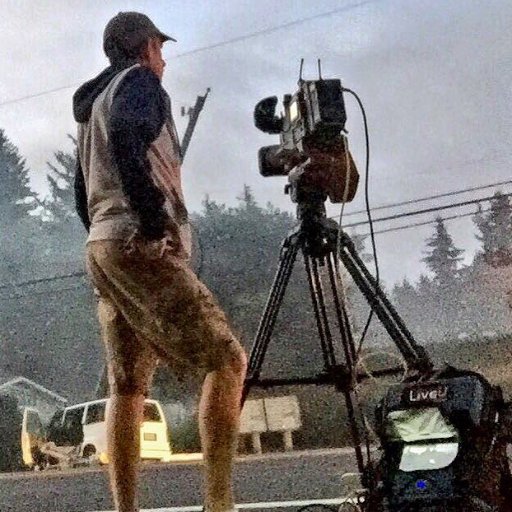
PEACEFUL… here’s 30 seconds of some much needed rain falling on leaves in Washington Park this morning. People pay good $ for these relaxing sounds, but I got your back at no charge 😬. Have a nice rainy day, and be safe out there #LiveOnK2 #rain #Portland #thursdaymorning
English
Oregon's habitat protections for wildlife and salmon are at risk. Please contact the Board of Forestry to oppose the resolution to amend the boundaries of the HCA and support the passage of the State Forest Habitat Conservation Plan Alternative 3.
audubonportland.org/take-action/ur…
English
Powerful front page. I can immediately see (and feel) the messages from parents trying to lovingly keep their children calm and reassured … even though their “kids” are young adults, far away, and there is absolutely nothing else that they can do. Just text. #terrifying
Caitlyn Yaede (she/her)@caitlyn_yaede
The front page of tomorrow's @dailytarheel – I shed many tears while typing up these heart-wrenching text messages sent and received by UNC students yesterday. Our campus was on lockdown for more than three hours. Beyond proud of this cover and the team behind it.
English
It’s never a bad idea. #moretreesplease
The Cultural Tutor@culturaltutor
12 Reasons Why Cities Need More Trees: 1. Temperature Control One large tree is equivalent to 10 air conditioning units, and the shade they provide can reduce street temperature by more than 30%. 2. Noise Reduction Trees can reduce loudness by up to 50%. In urban areas filled with the sound of cars, construction, sirens, aeroplanes, and music, trees are essentially the best way to block noise and keep cities — along with the homes and workplaces in them — quieter. 3. Air Purity Trees remove an astonishing amount of harmful pollutants and toxins from the air. In urban areas air quality is often disastrously bad — with severe consequences for our health. Trees make the air we breathe much cleaner. 4. Oxygen And, while absorbing all those pollutants, trees also put more oxygen back into the urban environment. Oxygen levels are significantly lower in cities compared to the countryside; trees help to solve that problem. 5. Water Management Trees do more than just shelter us and our buildings from rain — which is, in fact, extremely important. They also absorb huge quantities of water, reduce run-off, neutralise the severity of flooding, and make flooding more unlikely altogether. Not to forget that their roots absorb pollutants and prevent them from feeding back into a city's water supply. 6. Psychological Health Studies have proven what we instinctively know to be true: that human beings are significantly happier when surrounded by nature rather than sterile urban environments. Our emotions, behaviour, and thoughts are shaped by the places we spend time — and trees have a profoundly positive effect on our psychology. The consequential benefits of being happier and more peaceful — as individuals and as a society — are immense. 7. Physical Health Beyond all the other ways in which trees improve air quality and the urban environment, much to the benefit of our health, they also encourage people to go outside. Cycling, running, and walking are all more common in urban areas with plenty of trees. A knock-on effect of people spending more time outdoors is also social integration and stronger communities. 8. Privacy A simple point, but not inconsequential, is that trees provide privacy. 9. Economics The total economic benefit of urban trees is hard to calculate. There are costs, of course, including the repair of infrastructure damaged by roots and maintaining the trees themselves. But the total economic benefit — a consequence of everything else in this list and more — far outweighs the expenditure. Trees make cities wealthier. 10. Wildlife Trees are miniature cities all of their own, serving as a habitat for hundreds of different species, including birds and mammals and insects. 11. Light Pollution Trees don't only block the light shining down, therefore keeping us and our cities cooler — they also disrupt light shining up, from street lighting, cars, houses, and billboards. Skies are clearer in cities with more trees. 12. Aesthetics And, finally, trees are beautiful. They break up the potential monotony of urban environments — the sharp geometry, the greyscale roads and buildings, the endless rows of cars — with their trunks, boughs, canopies, and flowers. Just think: the gold and red of falling leaves in autumn, the white and pink blossom of spring, the vast green canopies of summer, and the branches lined with hoar-frost in winter. Every single tree is a myriad of intricacy and texture, of colour and scent, of dappled light on the pavement, mottled bark, knotted roots, of clustered leaves and delicate petals and stern boughs. Few streets would not be improved by the kaleidoscopic aesthetic delights of a tree, not to mention the many different species of tree, all over the world, whether willow, oak, lime, cherry, aspen, maple, birch, horse chestnut, dogwood, hornbeam, ash, sycamore... the list goes on. There are some drawbacks to urban trees, most of them context-specific, and they are not — of course — universally appropriate. But it seems fair to say that many cities would benefit from at least a few more trees here and there.
English