
Mukesh Bansal

1.9K posts

Mukesh Bansal banner
Mukesh Bansal

Mukesh Bansal

@iamukeshb

Freelance developer - React

Katılım Ekim 2018
129 Takip Edilen80 Takipçiler
Mukesh Bansal retweetledi
Govardhana Miriyala Kannaiah
Govardhana Miriyala Kannaiah@govardhana_mk·
Cloud Disaster Recovery Strategies 👇 Any DR strategy starts with finalizing: 𝟭. 𝗥𝗧𝗢 (𝗥𝗲𝗰𝗼𝘃𝗲𝗿𝘆 𝗧𝗶𝗺𝗲 𝗢𝗯𝗷𝗲𝗰𝘁𝗶𝘃𝗲): How much downtime one can accept ? 𝟮. 𝗥𝗣𝗢 (𝗥𝗲𝗰𝗼𝘃𝗲𝗿𝘆 𝗣𝗼𝗶𝗻𝘁 𝗢𝗯𝗷𝗲𝗰𝘁𝗶𝘃𝗲): How much data loss one can accept ? Disaster Recovery Strategies: 𝟭. 𝗕𝗮𝗰𝗸𝘂𝗽 𝗮𝗻𝗱 𝗥𝗲𝘀𝘁𝗼𝗿𝗲: Creating copies of data and systems periodically to be used for recovery in case of a disaster Typical, 𝘙𝘛𝘖: Several hours to days 𝘙𝘗𝘖: Can vary from several hours to the last successful backup 𝟮. 𝗣𝗶𝗹𝗼𝘁 𝗟𝗶𝗴𝗵𝘁: Maintaining essential components in a standby state to quickly scale up the infrastructure during a disaster Typical, 𝘙𝘛𝘖: Mins to a few hours 𝘙𝘗𝘖: How frequently data is synchronized 𝟯. 𝗪𝗮𝗿𝗺 𝗦𝘁𝗮𝗻𝗱𝗯𝘆: Preparing a partially operational environment with up-to-date data to minimize downtime during recovery Typical, 𝘙𝘛𝘖: Mins to a few hours 𝘙𝘗𝘖: Within the last few minutes or hours 𝟰. 𝗛𝗼𝘁 𝗦𝗶𝘁𝗲 / 𝗠𝘂𝗹𝘁𝗶 𝗦𝗶𝘁𝗲: Running a fully redundant, active production environment in parallel with the primary system, ensuring continuous business operations Typical, 𝘙𝘛𝘖: Near-zero or a few minutes 𝘙𝘗𝘖: Very minimal, often within the last few seconds 55K+ read my TechOps Examples newsletter: techopsexamples.com/subscribe What do we cover: DevOps, Cloud, Kubernetes, IaC, GitOps, MLOps 🔁 Consider a Repost if this is helpful
Govardhana Miriyala Kannaiah tweet media
English
2
139
593
47.6K
Mukesh Bansal
Mukesh Bansal@iamukeshb·
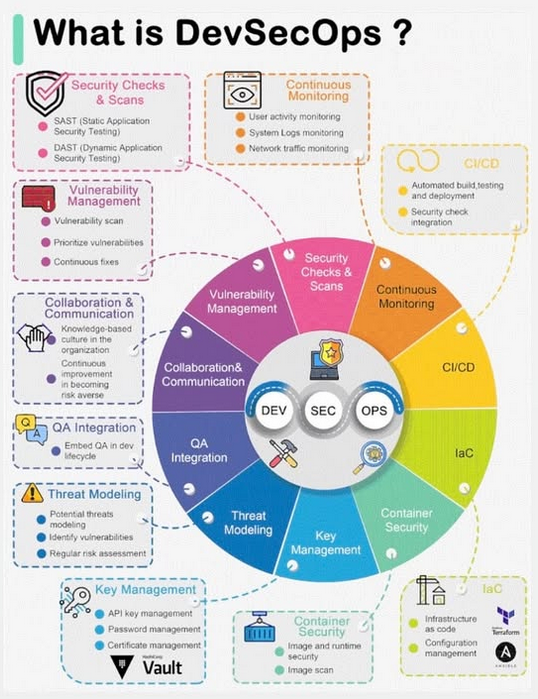
@Python_Dv This is a great visual breakdown of how security is woven into every phase of the DevOps lifecycle. DevSecOps isn’t just a practice—it’s a mindset shift. By integrating security from code to production, teams build faster and safer. Kudos for highlighting the full spectrum.
English
0
0
0
18
Mukesh Bansal
Mukesh Bansal@iamukeshb·
@xmodulo A solid grasp of the Linux boot process is essential for every system administrator and DevOps engineer. This infographic breaks it down clearly — from BIOS to systemd — making complex internals easy to visualize. Appreciate the effort behind this!
English
0
0
0
23
Dan Nanni
Dan Nanni@xmodulo·
When you power on a Linux computer, a series of behind-the-scenes steps take place during the boot process before you reach the login screen Here is the Linux boot sequence 😎👇 #sysadmin #devops Find pdf books with all my #Linux related infographics at study-notes.org
Dan Nanni tweet media
English
9
37
161
8K
Mukesh Bansal
Mukesh Bansal@iamukeshb·
@devopscube Theory is important — but hands-on experience is where real DevOps skills are forged. Thanks for putting this together!
English
0
0
0
10
DevopsCube
DevopsCube@devopscube·
Want to get better at DevOps? Don’t just learn it --> build it. Here’s a curated list of DevOps projects that will help you build real-world foundations 𝗗𝗲𝘁𝗮𝗶𝗹𝗲𝗱 𝗟𝗶𝘀𝘁: devopscube.com/devops-project… ♻️ PS: Retweet and share it with the learning community! #devops #practicaldevops
DevopsCube tweet media
English
3
29
150
5.7K
Mukesh Bansal
Mukesh Bansal@iamukeshb·
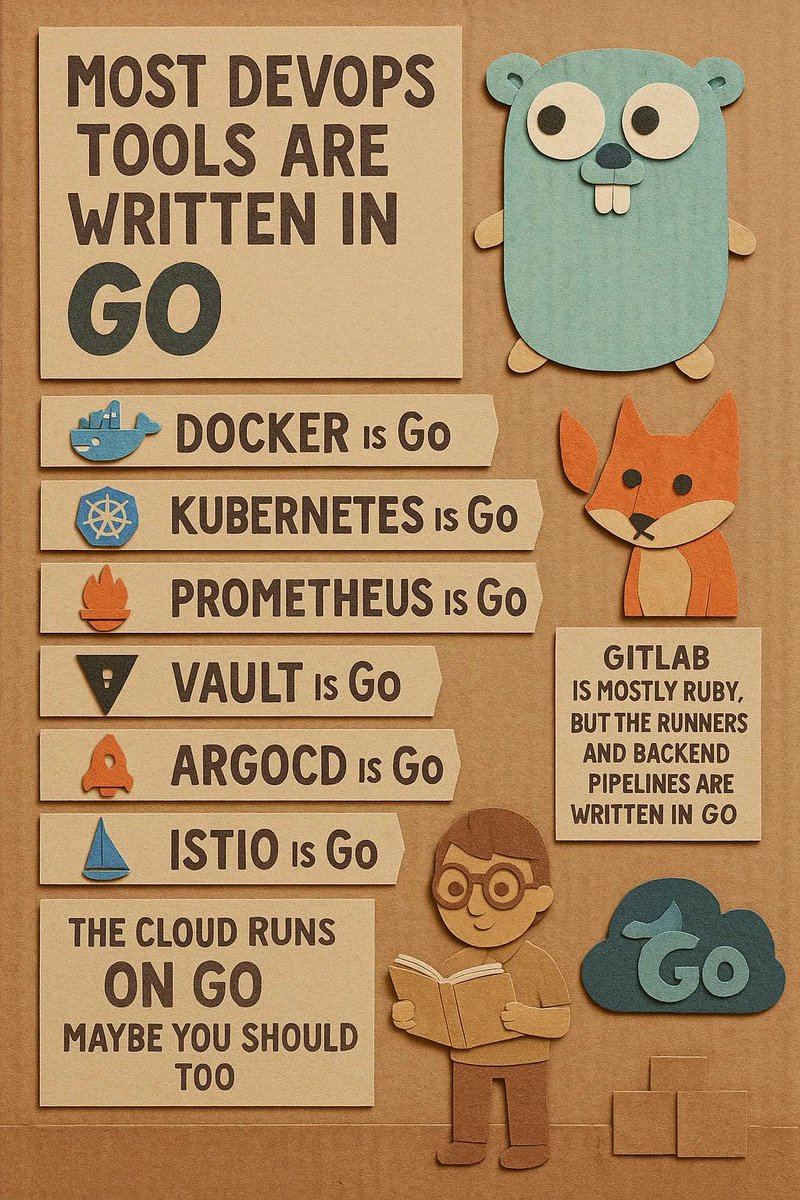
@devops_tech It’s no surprise Go has become the backbone of modern DevOps tooling — its simplicity, performance, and strong concurrency support make it ideal for building scalable, reliable systems.
English
0
0
1
45
Rakesh Jain
Rakesh Jain@devops_tech·
Most DevOps tools are built with Go — not Python, not Java. 🐋Docker? Written in Go ☸️Kubernetes? Go again 🛠️Terraform? Yep, Go 📈Prometheus? Also Go 🔐Vault? Go 🚀ArgoCD? Go 🛡️Istio? Go 🦊Even GitLab runners & parts of the backend? Go too But why is #Go the go-to for #DevOps?
Rakesh Jain tweet media
English
10
36
184
10K
Mukesh Bansal
Mukesh Bansal@iamukeshb·
@lloydtheophilus Absolutely love how this roadmap breaks things down into clear, actionable phases! From Linux basics to cloud and Terraform – it's a perfect guide for anyone starting their DevOps journey in 2025. Bookmark-worthy and totally beginner-friendly!
English
0
1
3
239
Lloyd 👨‍💻
Lloyd 👨‍💻@lloydtheophilus·
🔥 The Plan: 10 Steps to DevOps Mastery ⏩ Start Here: Foundation Phase (20 days) 🖥 Linux Basics - Learn to use the terminal: cd, ls, mkdir, rm, etc. - Understand permissions, users, file systems. - Practice on Ubuntu or CentOS (use a VM or cloud instance). 🔧 Git & GitHub - Learn version control: git clone, commit, push, pull, branch, merge. - Create your own project, push code to GitHub. 🌐 Basic Networking - Understand IP, DNS, HTTP/S, TCP/UDP, firewalls, ports. - Tools: ping, curl, netstat. 📜 Bash or Python Scripting - Start with Bash for automation (if, for, while, functions). - OR learn Python for broader use and tool scripting. 🔥 Core DevOps Tools Phase ( 30-40 days) 🐳 Docker - Learn to containerize applications. - Concepts: Images, Containers, Volumes, Networks. - Commands: docker build, run, ps, exec. ⚙️ CI/CD (GitLab CI/CD or Jenkins) - Build pipelines: Code → Build → Test → Deploy - Write .gitlab-ci.yml or Jenkinsfile - Automate test & deployment steps. ☸️ Kubernetes (K8s) - Understand Pods, Deployments, Services. - Try minikube or kind for local practice. - Learn kubectl commands and yaml configs. 🔧 Helm Charts - Package K8s apps using Helm - Understand values.yaml and chart structure. 🌍 Cloud & Infra as Code Phase (20-30 days) ☁️ Cloud Platforms (AWS or GCP) - Basics: EC2, S3, IAM, VPC (in AWS) or GCE, Cloud Storage, IAM (in GCP). - Practice using free-tier. 🛠 Terraform (IaC) - Learn to define infra in .tf files. - terraform init, plan, apply, destroy. - Manage infra across environments.
Lloyd 👨‍💻 tweet media
English
14
103
539
36.7K
Mukesh Bansal
Mukesh Bansal@iamukeshb·
@codek_tv This is gold! A super clear and practical roadmap for anyone looking to break into DevOps in 2025.
English
0
0
0
16
Code Geek
Code Geek@codek_tv·
DevOps Roadmap for 2025
Code Geek tweet media
English
6
116
603
48.4K