Dozie
7.9K posts

Dozie retweetledi

Now a Disgraced Country Indeed
Today, as the world marks World Health Day, we must pause for honest reflection.
Nigeria, a nation of over 200 million people, continues to grapple with one of the weakest healthcare systems in the world. Our primary healthcare structure is almost comatose. We now record worse infant mortality outcomes than India, a country with a larger population, while health insurance coverage in Nigeria remains below 5%. These are not just statistics; they are a painful indictment of our priorities.
Recent disclosures by the Honourable Minister of Health show that out of the ₦218 billion appropriated for healthcare capital expenditure, only about ₦36 million has been released. This is deeply troubling.
At the same time, the Independent National Electoral Commission (INEC) has projected over ₦135 billion for legal expenditures.
Let us reflect on this.
The amount earmarked for election-related litigation is far higher than what has been made available for primary healthcare, the very foundation of a nation’s wellbeing. This is the same primary healthcare system expected to serve millions of Nigerians and support critical institutions such as:
1. University of Benin Teaching Hospital, Benin City
2. University of Calabar Teaching Hospital, Calabar
3. University of Abuja Teaching Hospital, Gwagwalada
4. University College Hospital, Ibadan
5. Obafemi Awolowo University Teaching Hospital, Ile-Ife
6. University of Ilorin Teaching Hospital, Ilorin
7. Irrua Specialist Teaching Hospital, Irrua
8. University of Nigeria Teaching Hospital, Ituku-Ozalla, Enugu
9. Jos University Teaching Hospital, Jos
10. Aminu Kano University Teaching Hospital, Kano
11. Lagos University Teaching Hospital, Lagos
12. University of Maiduguri Teaching Hospital, Maiduguri
13. Nnamdi Azikiwe Teaching Hospital, Nnewi
14. University of Port Harcourt Teaching Hospital, Port Harcourt
15. Usmanu Danfodiyo University Teaching Hospital, Sokoto
16. University of Uyo Teaching Hospital, Uyo
17. Ahmadu Bello University Teaching Hospital, Zaria
18. Federal Teaching Hospital, Abakaliki
19. Abubakar Tafawa Balewa University Teaching Hospital, Bauchi
20. Federal Medical Centre, Yola
These institutions represent hope for millions. Yet, they remain underfunded, overstretched, and burdened by systemic neglect.
A nation that prepares more for electoral disputes than for the health of its citizens is a nation that has lost its way.
We must begin to ask the difficult but necessary questions: What are our true priorities? What kind of nation are we building? And for whom?
Healthcare and education are not optional; they are the foundation of national development. Any country that neglects them undermines its own future.
Nigeria must urgently reorder its priorities. We must invest in the health and wellbeing of our people, strengthen our institutions, and build a system that works for all, not just a few.
A new Nigeria is POssible. -PO
English

@Towchukwu @EsquireMagic Everything about this government is counter intuitive policy
English

Benchmark for this budget was $65 per barrel of crude. Brent crude is selling today for $110, a 70% windfall. But deficit is widening.
Nairametrics@Nairametrics
FG raises 2026 borrowing plan to N29.20 trillion as deficit widens nairametrics.com/2026/04/06/fg-…
English

Dozie retweetledi

Let us reflect, sincerely and without sentiment.
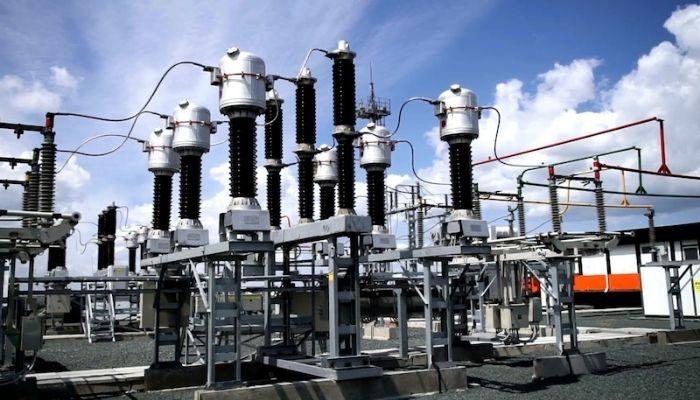
In the past few days, the President has reportedly approved ₦3.3 trillion as a “full and final” payment for debts in the power sector. Yet, this is not the first time such approvals have been made.
On May 17, 2024, ₦3.3 trillion was approved for the same purpose. On July 25, 2024, another ₦4 trillion bond was approved to settle similar debts. There have also been other approvals in between, all targeted at addressing the same power sector liabilities.
This raises a fundamental question: were the previous approvals mere announcements without execution?
₦3.3 Trillion Again? Nigeria’s Power Crisis Without End
During the 2023 campaign, President Bola Ahmed Tinubu made a clear promise: that if he failed to deliver stable electricity, Nigerians should not re-elect him. Today, the reality is that power supply has worsened, to the extent that there are even discussions about disconnecting the Presidential Villa from the national grid.
Each time legitimate concerns are raised, what we see appears more like policy pronouncements than measurable progress.
Now, again, we are confronted with another ₦3.3 trillion approval to settle power sector debts.
These debts were largely accumulated under successive administrations of the All Progressives Congress between 2015 and 2025. This raises serious concerns about accountability, transparency, and effectiveness in public financial management.
It is important to note that government institutions and agencies, including the Presidential Villa owe a significant portion of these debts. Year after year, budgets were made and funds appropriated. Why then were these obligations not settled when due? And from what source will this new payment be made? Are we resorting once more to borrowing to service inefficiencies?
Key questions remain unanswered: How did the debt accrue? What is the actual total debt in the power sector? Which components of the debts are due to operators’ inefficiency and should be borne by them? Why have previous approvals not translated into tangible improvements? Who are the real beneficiaries of these repeated payments?
Is the ₦3.3 trillion approved on April 6, 2026, the same as the ₦3.3 trillion approved in May 2024, and how does it relate to the ₦4 trillion bond approved in July 2024?
Nigeria must move beyond recycled announcements and confront the power sector crisis with sincerity, transparency, and decisive reforms.
Until we do so, we will remain trapped in a cycle of debt and darkness.
But with discipline, accountability, and the right leadership, a new Nigeria is still possible. -PO
English

My response to Peter Obi’s media people:
I wonder why all these incompetent politicians are turning President Bola Tinubu into their favourite whipping boy. The President has nothing to do with Obi’s abandonment of the Labour Party or the jam he appears to have run into in the ADC.
After using the Labour Party to vie for the highest office in the country, Obi dumped it in a classic case of use-and-dump. He failed to demonstrate leadership in resolving the party's crisis.
Instead, he went to the embrace of his IPOB base, the so-called Obidient movement, which is more active online. You would think the man would transform the movement into a political party. But no, he didn't do any such thing. He is just incapable of building an organic party of his own.
Because he knows he needs a political structure to realise his doomed dream of winning the presidency, he shopped for a cooked soup to partake in the ensuing party. The peripatetic politician moved to the hijacked ADC, an SPV bought by Atiku Abubakar from Ralph Nwosu. No due diligence appeared to have been conducted by the new owners, and thus, the nightmare they are confronting today.
What is the connection of Tinubu with the ADC crisis? Absolutely none. Whatever problem they have is self-inflicted. Obi and his co-travellers need to get their acts together, clear the mess in their new party and then compete for the presidential ticket. Let them go and settle with Nafiu Gombe and other disenchanted ADC members. As of now, Obi, without being made a candidate, is inconsequential for 2027. The fact that he came third in 2023 does not mean he will have the same showing in 2027, if he ever becomes a candidate of any party. 2023 is not like 2027. President Tinubu is an incumbent with many achievements to flaunt, most of which Obi has been blind to acknowledge. First things first. Let the man become a candidate first. All this blackmail against the President is sheer baloney, a very unfair attempt to besmirch his democratic credentials.

English

STATEHOUSE PRESS RELEASE
PRESIDENT TINUBU APPROVES N3.3 TRILLION PAYMENT PLAN TO RESTORE RELIABLE ELECTRICITY
President Bola Tinubu has approved the payment plan to finally settle the outstanding debts under the Presidential Power Sector Financial Reforms Programme.
The debt repayment plan followed the final review of the legacy debts that have beset the power sector for more than a decade.
The long-standing debts accumulated between February 2015 and March 2025. Following verification, ₦3.3 trillion has been agreed as a full and final settlement, ensuring a fair and transparent resolution.
Implementation has begun, with 15 power plants signing settlement agreements totalling ₦2.3 trillion. The Federal Government has already raised ₦501 billion to fund these payments. Out of the amount, N223 billion has been disbursed, with further payments underway.
What this means for Nigerians: With payments reaching the power value chain, generation will be more stable. With power plants supported, electricity reliability will improve.
And as the sector stabilises, more investment, more jobs, and better service will follow.
“This programme is not just about settling legacy debts. It is about restoring confidence across the power sector — ensuring gas suppliers are paid, power plants can keep running, and the system begins to work more reliably," explained Olu Arowolo-Verheijen, Special Adviser on Energy to President Tinubu.
“It is part of a broader set of reforms already underway — including better metering and service-based tariffs that link what you pay to the quality of electricity you receive.
“The government is also prioritising power supply to businesses, industries, and small enterprises — because reliable electricity is critical to creating jobs, supporting livelihoods, and growing the economy.
“The goal is simple: more reliable power for homes, stronger support for businesses, and a system that works better for all Nigerians," she added.
President Tinubu has commended all stakeholders who supported efforts to resolve the legacy issues in the power sector. He has also confirmed that the next phase (Series II) will begin this quarter.
Bayo Onanuga
Special Adviser to the President
(Information and Strategy)
April 5, 2026


English

@GazetteNGR It seems the work schedule of this one is to drop stupid two cents every Eke market day.
English

Present hardships are temporary, Shettima tells Nigerians at Easter
gazettengr.com/present-hardsh…
English
Dozie retweetledi

Tinubu in Jos Confirms ‘Don't Vote for Me’ Prediction on Power Supply
During the 2023 campaign, President Tinubu made a clear electoral promise: “If I don’t give you constant electricity in four years, don’t vote for me for a second term.”
When he took office in 2023, Nigeria had a power supply of over 4,000 megawatts and lower tariffs. Today, the electricity power supply is less than 4,000 megawatts on the average, and Nigerians are paying higher tariffs. Nigeria currently has the lowest per capita electricity consumption in the world, with a rate below 30% of the African average. Africa’s average is 617kwh, Nigeria’s is 144 kWh. This means that Nigerians consume least electricity than other Africans.
In a glaring display of disregard for promises and a lack of trust, President Tinubu, during a brief airport stopover to visit grieving families of the Jos attack on Thursday, April 2, 2026, stated that one of the reasons for his 10-minute stay was that the airport had no electricity. “You have no light here I fly out in ten minutes” At a time when Nigerians are enduring days without power, our leaders cannot even stay a few minutes without it.
Now is the time to stop incompetent leaders—those lacking the capacity and compassion—who prioritise their own comfort over the well-being of the people and make empty promises.
A new Nigeria is POssible. -PO
English
Dozie retweetledi