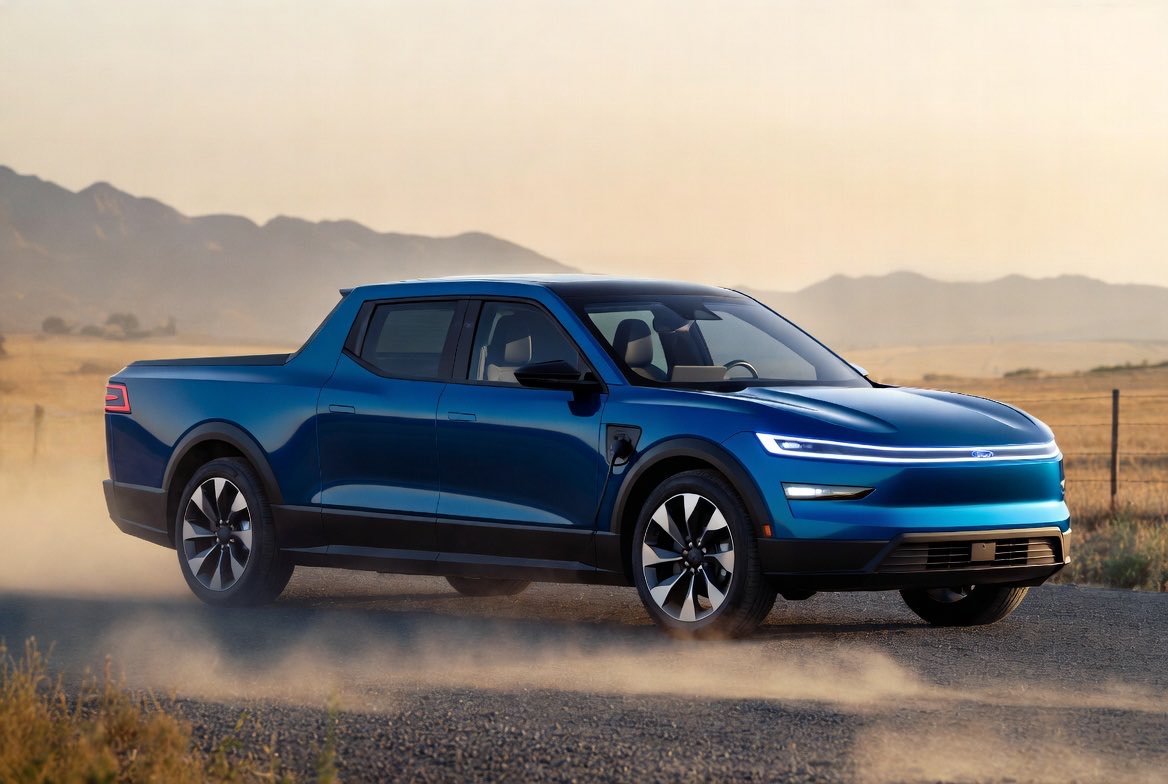
@Johnny_Recruits @Ford Likely. The projected coefficient of drag is slated under 0.3, a tad less than Rivian R2 at 0.29. Will need to be more Formula One than F-150 cc @alanpaulclarke
English
clive boulton
18.8K posts
@iC
Software company advisor. Engineering trained in AI from get-go. Interests in ERP. Be excellent to each other #certacito
There is no substitute for bestie @DavidSacks … showed up black-shirted, caffeinated, & fully armed with enough crazy. Besties talked future of enterprise, AI agents that actually work (not just hype), and @chamath has enough truth China bombs to trigger all the Besties. Zero filter. Brilliant El Niño insight from @friedberg. I wasn’t ready for @Jason and neither was the group chat. Buckle up. This one’s XX spicy. 🌶️ 🚀 Check out the full episode here → youtu.be/jJRAvZNGUvI







Reporting here is Mittal's, Grousbeck were the only signatures on a letter of interest submitted to Allen & Company, the Paul G. Allen Estate's investment banking team leading the sale process. That would make this the 1st apparently verified interest in buying the #Seahawks


How important is fixing climate change to this person? Well funny you should ask, it's so important that Washington state lawmakers are utilizing approximately $550 million to over $1 billion in revenue from the Climate Commitment Act (CCA) pollution auctions to help patch a $2.3 billion state budget deficit. This proposal, supported by Governor Bob Ferguson, diverts funds originally intended for environmental projects towards the Working Families Tax Credit and general expenses. So when you pay you're outrageous power bill, or spend 200 dollars for 30 gallons of gasoline so you can get to work and afford to pay your property tax remember, they almost used it for a good cause and your money was almost needed to save the environment. KEEP VOTING BLUE YOU WINDOW LICKERS, ELECTIONS HAVE CONSEQUENCES AND YOU REAP WHAT YOU SOW!!
I'm absolutely sickened by this story. Yesterday I saw a Citizen post, which I've attached below, about some poor teenage girl who got dragged into the woods and sexually assaulted. I had my suspicions, but I let the story go because I couldn't find out anymore information about it then. Then today I see this KOMO story: tinyurl.com/4jryzerc Turns out the assault actually happened in Northgate, just east of Kraken Community Iceplex, and near the community center there. It was a couple of hours later that they arrested the guy on Aurora, close to the Home Depot. They caught this dirtbag while he was shitting in the middle of the street. I'm going to go way out on a limb here and assume he's one of our precious "houseless neighbors:" "About two hours after the reported assault, firefighters who had treated the victim earlier spotted a man matching the suspect’s description defecating in the street near Aurora Avenue North and North 115th Street, leading to his arrest." But here's the really infuriating part: "King County Jail records show he had been released from custody last week in connection with a separate case. He also has multiple active warrants from Snohomish County and Puyallup Municipal Court. His record includes more than a dozen prior arrests, including robbery, shoplifting, domestic violence assault, and drug possession, though none resulted in felony convictions. According to the King County Prosecuting Attorney’s Office, a recent drug possession case involving the suspect had been routed into a therapeutic alternative diversion program, which likely would not have resulted in jail time even if he had been convicted." I wonder what program that was? LEAD? And why wasn't he rewarded with a free apartment? So we had this guy. But because we were refuse to lock these scumbags up and repeatedly release them, now some poor girl has had her life shattered. She will never be the same again. Wash, rinse, repeat.




Unbelievable. Washington State Supreme Court has stripped the people of Washington State their people's veto by referendum. We now understand this a kangaroo court. The argument that the state income tax was an emergency doesn't hold any water. @AGOWA argued this was required because it was a revenue bill. But for 20 years, Washington lawmakers almost never used the referendum-blocking clause on tax bills. Then, in 2025, every single emergency-clause tax bill used it — and the practice carried into 2026. This is a sham. thereflector.com/stories/washin…