

Anish Acharya
3.7K posts
Anish Acharya
@illscience
🦞AI Apps investing @ A16Z; A1111; Boards of Krea, Deel, Clutch, Titan, Arc Boats, Untitled, Happy Robot + more; If you’re not at the table, you’re on the menu
San Francisco Katılım Mart 2009
2.7K Takip Edilen29.5K Takipçiler
the "profitable apathy" arb is closing - the industry that brought you the efficient market depends on an inefficient consumer to eat, and this week's agentic launches from robinhood, coinbase & mercury are the first steps
spoke with @NYSE about what happens next:
0:20 -- what is "profitable apathy" and why consumer finance is built on it
1:02 -- the knowledge gap & a better informed society
1:45 -- an agent can save an average family $1,000/month
2:33 -- a family office for everyone: services vs. products
3:36 -- senior citizens, loneliness, and the prosocial case
5:18 -- zero marginal cost of digital work
7:30 -- luxuries becoming commodities
English
@rohanbchopra @a16z Congratulations guys!! Super excited to be in business together.
English

We’re announcing a $38M Series A led by @a16z.
1 million hours of automated work behind us. Millions more ahead.
The future belongs to the 100x operator.
English

This guy can’t fool me. He’s three overweight cats in a trench coat.
Brian Hall@IsForAt
Umm, some personal news? interesting timing for me to become CMO of Mistral this week. They make AI, it is not from the US, and it is open weights (among other things). The kinda stuff companies and governments will find really interesting to bet on right now... more info over on linkedin: linkedin.com/posts/brhall_h…
English

@illscience likewise, as a lab we’ve been testing stuff along those lines.
x.com/charmlama/stat…
lama 📿@CharmLama
Nice to finally have a name for something sitting in our R&D logs since Nov 2024 - Fable-5 level outcomes with Fusion as OpenRouter calls it ( Concept of Multi LLM harness for better output) Btw “Harness” term didn’t exist publicly until few months later.
English
Been saying for a bit that this compound architecture makes sense for both aggregators and labs:
- Model consumers want the right capability / cost controls on a per task and perhaps even per token basis
- Labs need to protect otherwise depreciating model assets and one way to do it is selectively expose new features via specific token paths, eg I’ve long thought /ultracode was a Mythos class model exposed via 4.X
- The compound workflow matches the way many of us work which is using adversarial models to generate / review / iterate / test
More generally where this is all going feels like it will be labs vertically integrating to sell capabilities so that they can capture the downstream economics from their models without exposing them to distillation.
OpenRouter@OpenRouter
Introducing the Fusion API, the smartest compound model in the market. Fusion achieves Fable-level intelligence at half the price. How it works 👇
English

everything - but the most impressive things have been:
1. calculation engine optimizations - it one shotted a quadratic algorithmic issue we missed in a new calculation service
2. frontend memory pressure optimizations - it one shotted a 33% reduction in frontend memory pressure that no other human or agent found after a year of working on it
3. automated oncall resolution - it is an extremely capable and reliable SRE. i've had an automation trying to do this before but it was never very good, now it's at or above human performance
English
@blader Incredible man … do you think that most of these were unlocked by sheer intelligence (reading the code) or by tool use / other aspects of the model ?
English
So far Fable feels like more of a leap forward in model intuition versus model intelligence - I’m impressed with the creativity around problem-solving and approach versus the nitty-gritty of solution design.
As we cross the intelligence threshold for most work I wonder how much creativity and novel thinking start to take precedence over raw IQ, similar to Marc’s observation that high IQ specialists tend to work for mid IQ generalists.
English

@blader what are you using it for siqi ? i'm having a hard time coming up with tasks that 4.8/5.5 fails on ...
English
@RandianCapital Almost any app can be largely generated by any of the 2026 model releases?
English

@illscience How have we crossed the threshold for intelligence? Give an example
English
A few notes on Fable 5:
- It’s interesting that it routes certain requests to 4.8 behind the scenes - in this case it’s for safety but if you squint you can imagine a cost optimization where queries are classified and routed based on the amount of intelligence needed
- Calling it Fable/Mythos 5 feels like an intentional effort to lead with the brand (Mythos) vs the model number .. not quite Pentium to 486 but I think in that spirit .. people just want to use the cutting edge thing and de-emphasizing the model number delivers that
- Also interesting to see progress in so many directions that are not strictly “intelligence” - vision, long horizon, token efficiency - it seems we’ve largely crossed the intelligence threshold for many tasks and more and more of the work is going to be in productizing this primitive in a practical way

English
@deepvaluebettor Tough grader!! Playing with it this afternoon.
English

@illscience sounds like u read the anthropic propaganda marketing materials && haven't touched the model in practice . classic
English
In 2023, we pivoted from a generalist fund to a thesis-driven AI and frontier firm. In the midst of this takeoff curve, it’s been wonderful and hard work with our founders, with many lessons and victories along the way.
The good work continues, and today I’m excited to share our newest $355M fund! Thanks to @ychernova and @WSJ for writing about our new set of funds, our recent performance, and our renewed early stage mission at @KindredVentures. ☀️
wsj.com/pro/venture-ca…
English

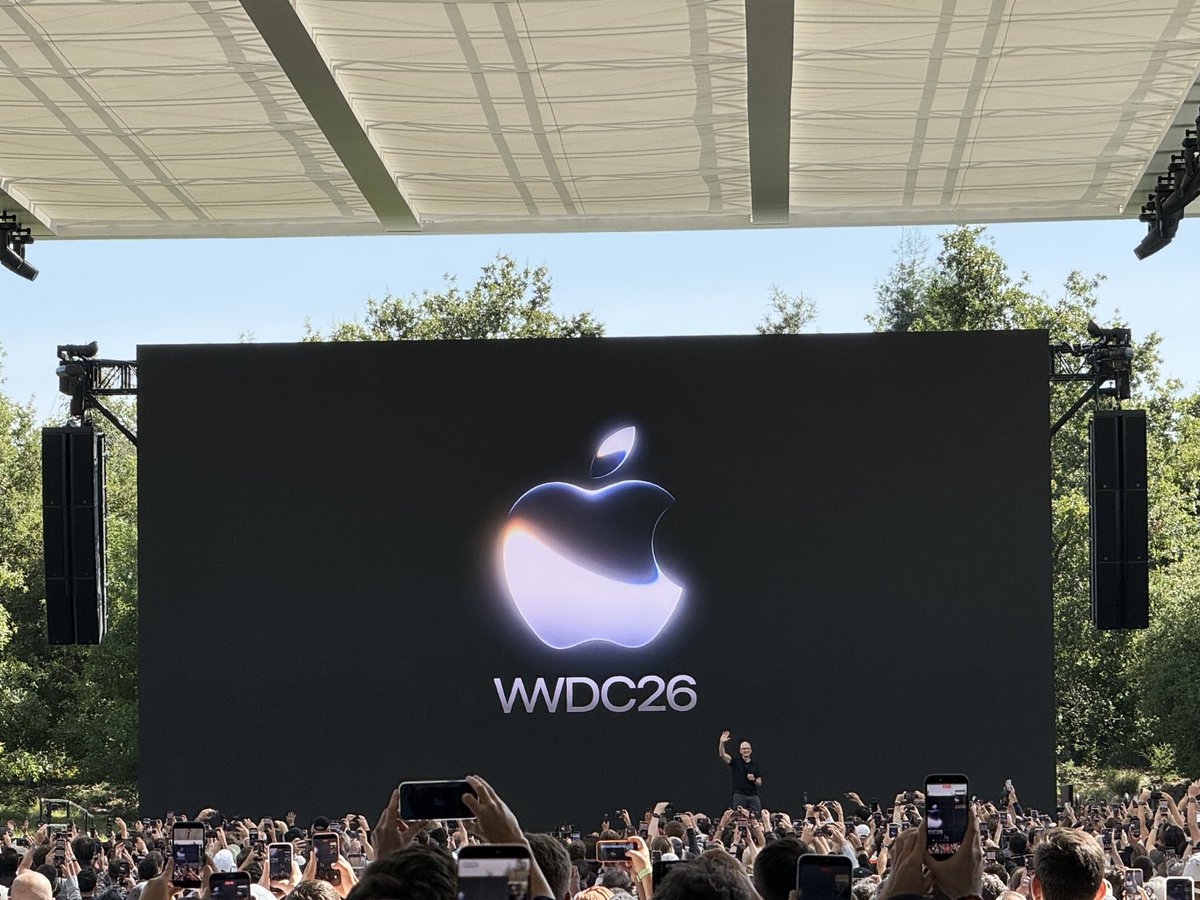
What a day! So fun to bring Siri AI, the new power of Apple Intelligence and so many OS features it enables, and a deep new architecture with new models powering them to the world! Links below


English

@illscience It’ll be exciting though. Agents will be new Apps and you can just ask your Siri to ask some remote agent from an app to do something that Siri cannot do
English
if apple launches an agent app store tomorrow it will be the biggest change to the developer ecosystem in a decade and do for consumer AI apps what the iPhone did for mobile apps in 2009
Jordan Singer@jsngr
this makes me wonder if Apple is acknowledging they own the best messaging app and agents should live in it as a first-class citizen too if they want a piece of the post-app pie
English

@illscience Have they teased anything of that nature / is there any reason to believe they'd do so? The main keynote today was one of the most underwhelming I've ever seen from Apple.
English
front page of the wsj this weekend.
consumer sentiment around AI is at all-time lows, and the moral panic about this generation is loud, but the US averaged 188k jobs a month over the past three months - the best hiring streak in two years.
the kids are gonna be alright.


Anish Acharya@illscience
the class of 2026 is being underestimated - the best of them are ambitious enough to work on the most important dynamism / ai research / business problems, are fluent in working with machine intelligence and are entering the workforce during a positive technology cycle, and at a time when the stock market is at an all time high the “olds” who came before them are going through the same moral panic that they always have, namely that these engineers aren’t doing “real” technical work - machine code programmers lamented about assembly, assembly programmers about C, C programmers about C++, and god forbid you should be a java programmer that doesn’t know how to manage memory plus there is a flattening of organizations that should really benefit new graduates - more IC work, less clumsy or poorly trained middle managers on whom your career growth tragically depends what i'd tell a new grad right now: - trust your weird interests. soundcloud and calm were both founded in the five years after i dismissed music and meditation as "not serious markets." - say the thing, do the thing. be the founder in the room. you don't need permission to have a point of view, now more so than ever. - use every product obsessively.. intuition compounds and getting there 3 months early is a lifetime right now the kids are gonna be alright!
English