Artyom Novichonok

271 posts

Artyom Novichonok

Artyom Novichonok

@illvmvm

Katılım Nisan 2013
178 Takip Edilen78 Takipçiler
Damian Peach🔭🪐
Damian Peach🔭🪐@peachastro·
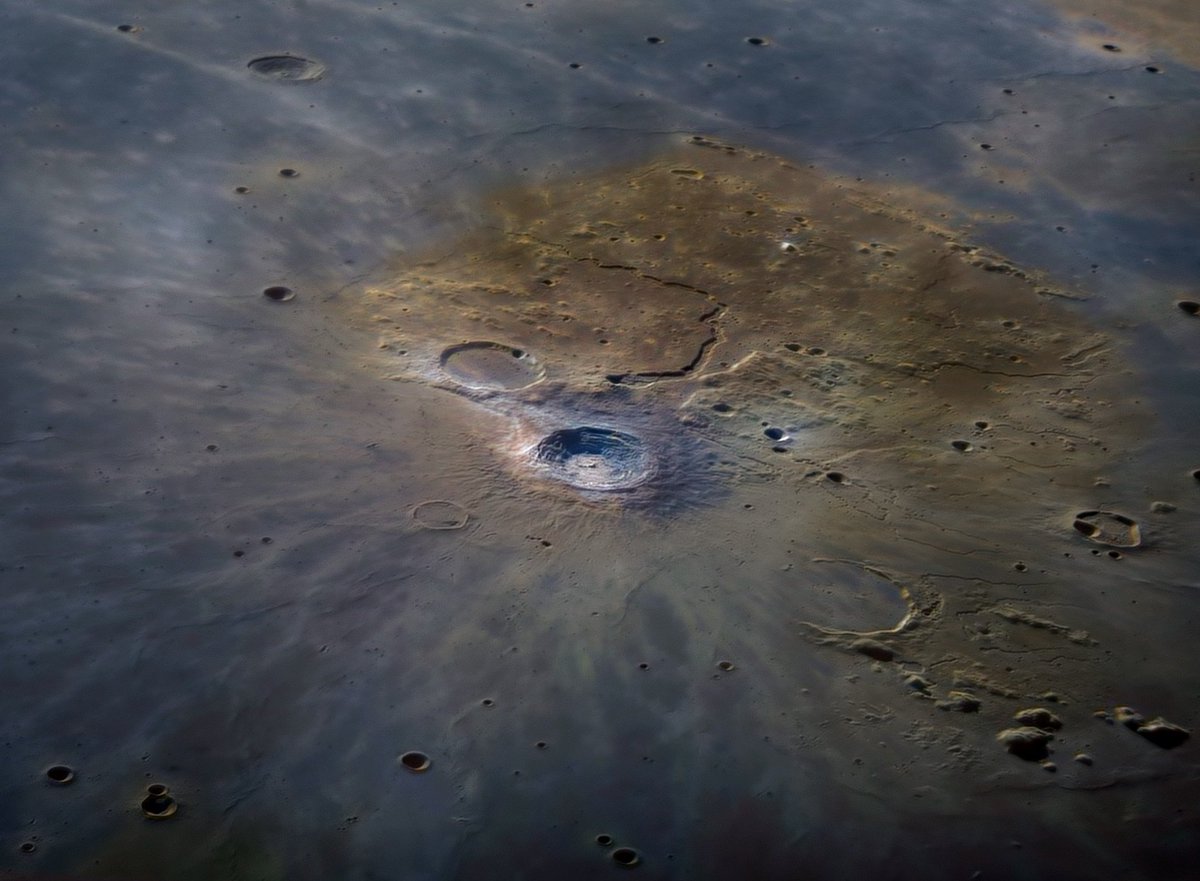
Aristarchus in saturated colour My recent post prompted me to go back and look through my own archive of the many images ive taken of this region over the years. I decided to combine my 2024 high resolution mono view with a lower res colour image i had from a couple of years previously. The result worked rather well. This area is one of the most interesting on the lunar surface. The colour differences are a result of differing mineral composition. Aristarchus itself is young in lunar terms - having formed around 450 million years ago and its brilliant appearance the result of the lack of space weathering on the material excavated by the impact that formed it. For example nearby Herodotus (upper left) and partially buried Prinz (lower right) are many times older. This has been the site of many Transient Lunar Phenomena (TLP) reports over the years, from obscurations to odd colours being reported. Most of these are very likely down to atmospheric and optical effects and in modern times no significant activity of any kind has been observed here
Damian Peach🔭🪐 tweet media
English
5
21
165
3.1K
Damian Peach🔭🪐
Damian Peach🔭🪐@peachastro·
Jupiter on February 4th. Average seeing. The GRS was nicely placed along with part of the NTBs outbreak. C14 with Uranus-C camera.
Damian Peach🔭🪐 tweet media
English
2
24
181
2.8K
Artyom Novichonok
Artyom Novichonok@illvmvm·
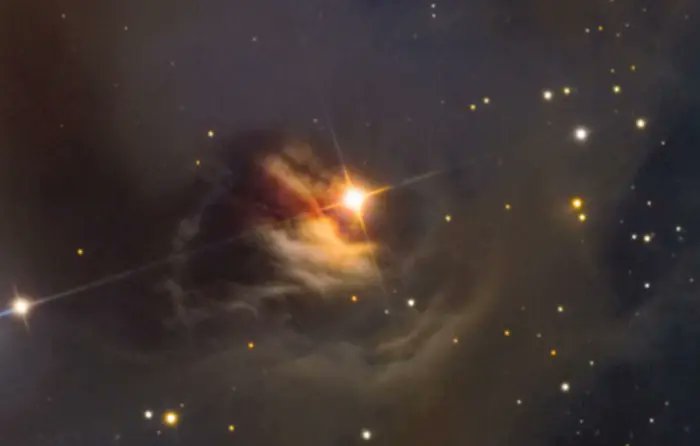
The young star T Tauri may soon disappear. At all! The reason is the eclipse. Seems that the dust disk of the neighbouring star is starting to hide T Tau from us. The eclipse is expected to last for nearly a century, and at its peak the star may be undetectable in visible light.
Artyom Novichonok tweet media
English
0
1
0
73
Artyom Novichonok
Artyom Novichonok@illvmvm·
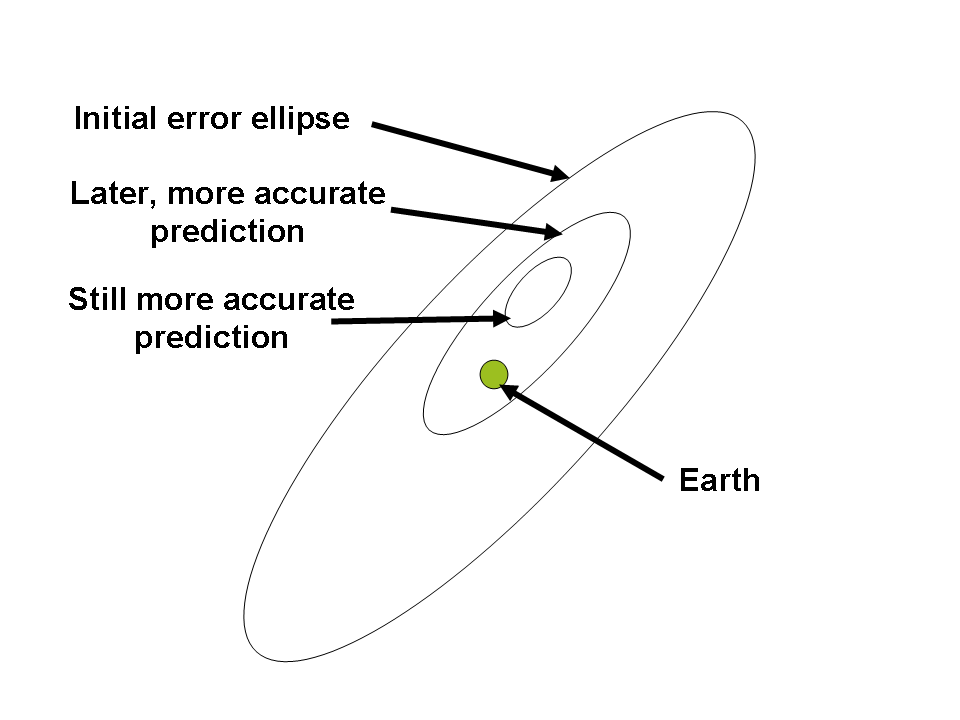
The observed increase in the impact probability for 2024 YR4 is normal; this image from Wikipedia shows why. Over time, the orbit becomes more accurate, and the Earth takes up more space in the uncertainty oval. As our planet moves beyond it, the probability quickly drops to zero
Artyom Novichonok tweet media
NASA Space Alerts@NASASpaceAlerts

While still an extremely low possibility, asteroid 2024 YR4's impact probability with Earth has increased from about 1% to a 2.3% chance on Dec. 22, 2032. As we observe the asteroid more, the impact probability will become better known. More: go.nasa.gov/3WNhxyQ

English
0
0
3
189
Artyom Novichonok
Artyom Novichonok@illvmvm·
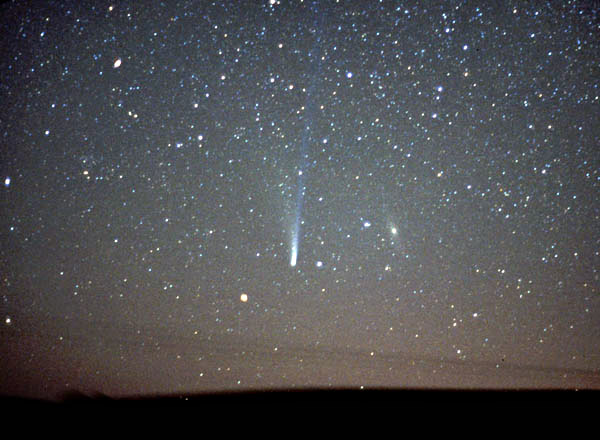
A fairly bright (16-17 G), slow moving object from NEOCP is apparently a newly outbursting comet. It has a bit odd orbit (not typical for a classical asteroid) and shows an increasing coma. It looks like the comet P/2010 H2 (Vales) observed in the spring of 2010. Image: A. Hale
Artyom Novichonok tweet media
English
0
1
4
105
Artyom Novichonok
Artyom Novichonok@illvmvm·
The recently discovered potential comet CCWF1R2 (now is on the PCCP page) could be the shortest period comet ever (P = 3.15 y). If the object turns out to be a real "classic" comet (now I am "a bit" sceptical about this), it will beat the record of comet 2P/Encke (P = 3.30 y).
Artyom Novichonok tweet media
English
0
0
3
97
Artyom Novichonok
Artyom Novichonok@illvmvm·
The ~70-m near-Earth asteroid 2024 YR4 is currently the most dangerous: in December 2032 it could hit Earth in the equatorial region with a (current) probability of 1.4% (level 3 on the Torino scale). The 8.2-m VLT telescope took this animation on 29 January (V-mag = 22.5).
English
0
0
0
367
Artyom Novichonok
Artyom Novichonok@illvmvm·
In a good scenario, the comet may reach 2-3-4 mag at its peak, becoming an easy naked-eye object. We can compare it with 153P/Ikeya-Zhang, which had a similar perihelion distance (0.5 au), passed by Earth 0.4 au (1.5 times closer) and reached 3.5m at its peak. Ph. by R. Cockman
Artyom Novichonok tweet media
Artyom Novichonok@illvmvm

Comet CCNG6P2, discovered ~3 weeks ago, is still on the PCCP page. It seems to be a very old (P ~ 1500 y) and weakly active (for now, r = 4.3 au). On 21 Oct. it will pass within 0.6 au of Earth and should reach bino visibility (7-8 mag) with excellent conditions for northerners.

English
0
1
5
190
Artyom Novichonok
Artyom Novichonok@illvmvm·
Comet CCNG6P2, discovered ~3 weeks ago, is still on the PCCP page. It seems to be a very old (P ~ 1500 y) and weakly active (for now, r = 4.3 au). On 21 Oct. it will pass within 0.6 au of Earth and should reach bino visibility (7-8 mag) with excellent conditions for northerners.
English
0
1
6
372
Artyom Novichonok
Artyom Novichonok@illvmvm·
C/2024 G3 (ATLAS) seems to have finally disintegrated after its hot (650 °C) perihelion: the new series of images by L. Majzik shows only a streak of dust instead of a pseudonucleus. Nevertheless, the the comet has already produced a tail, so the show will go on for some time.
Artyom Novichonok tweet media
English
0
1
13
462
Artyom Novichonok
Artyom Novichonok@illvmvm·
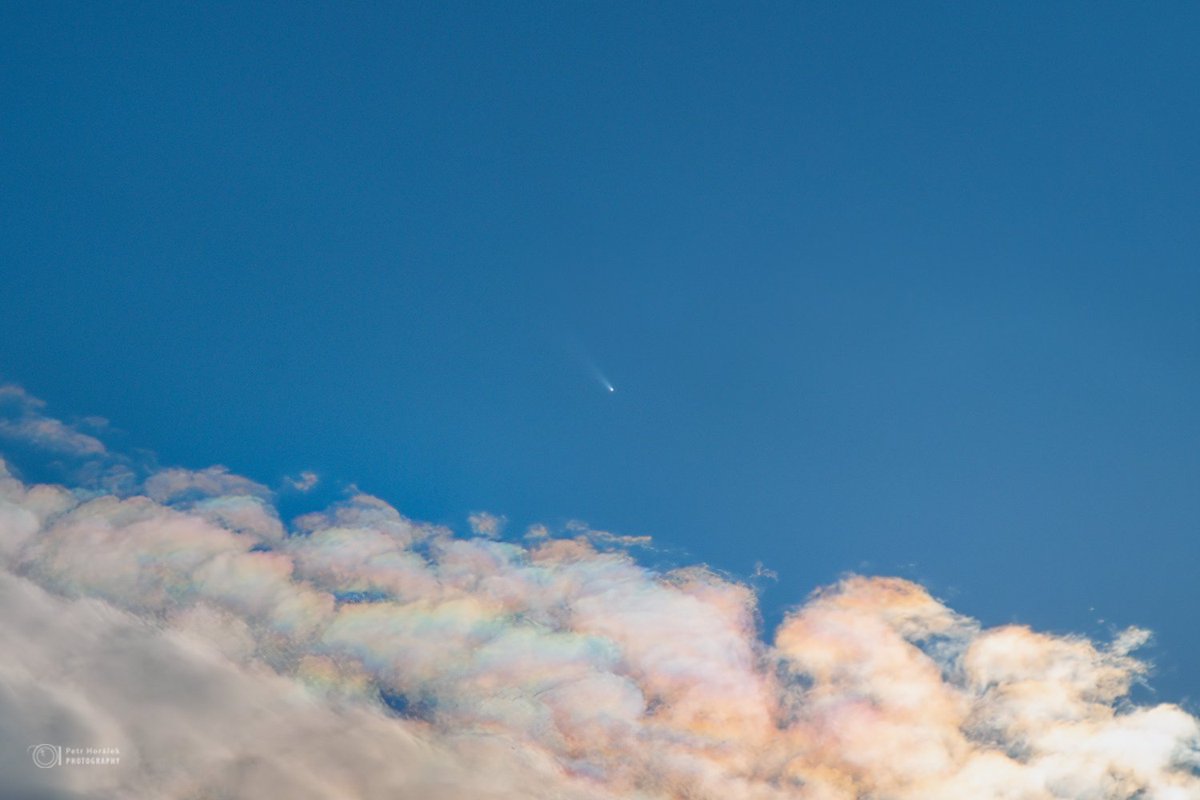
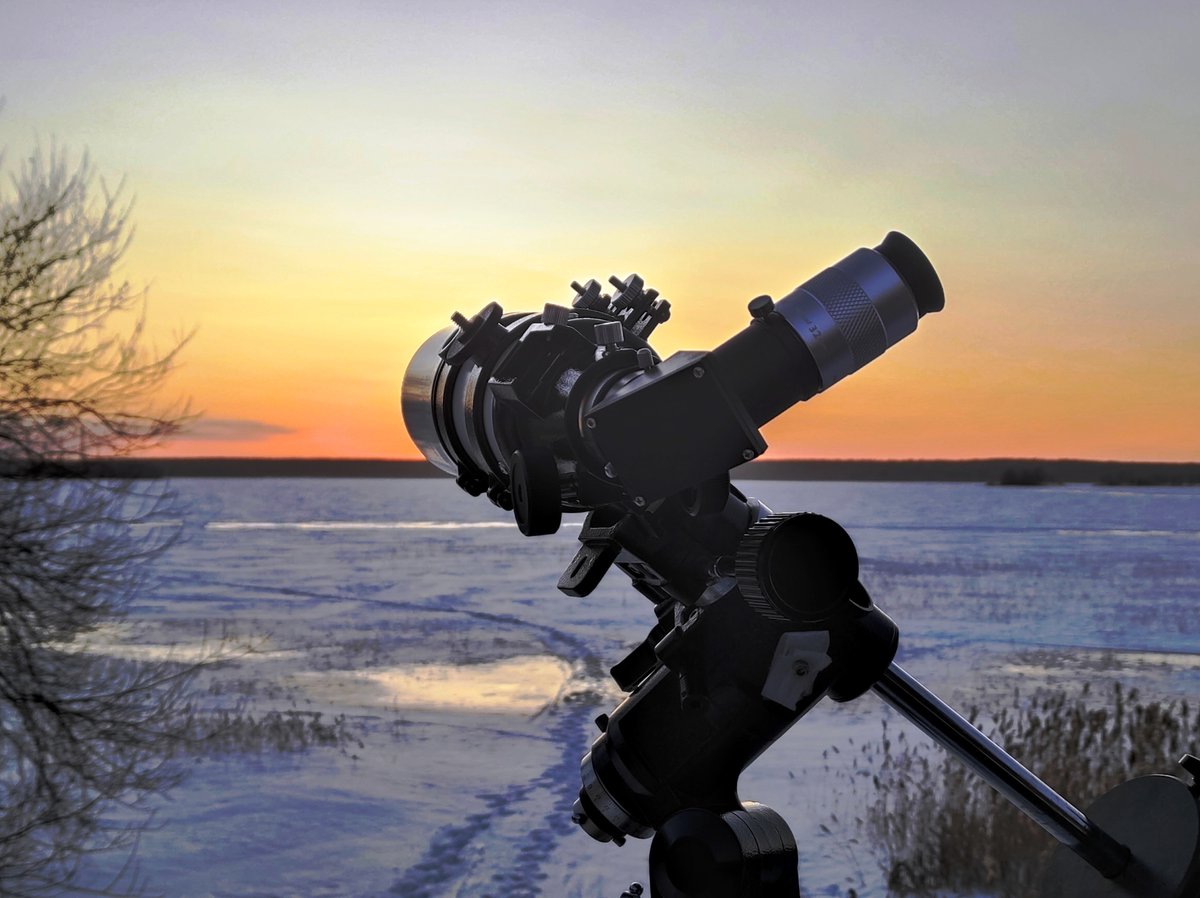
You may think that the comet was very bright at its peak. Yes, it was, but not as so bright as you can see here. As Petr noticed, he did some professional post-processing to get such a nice image. The peak mag was close to -2.5, fainter than Venus, brighter than Mercury.
Artyom Novichonok@illvmvm

In the last few days I have seen numerous daylight photos of comet C/2024 G3 (ATLAS). My favourite is this one by Maestro P. Horálek. The iridescent clouds below the comet create a special atmosphere, tell their own story. And, it's just lovely.
English
1
1
4
127
Artyom Novichonok
Artyom Novichonok@illvmvm·
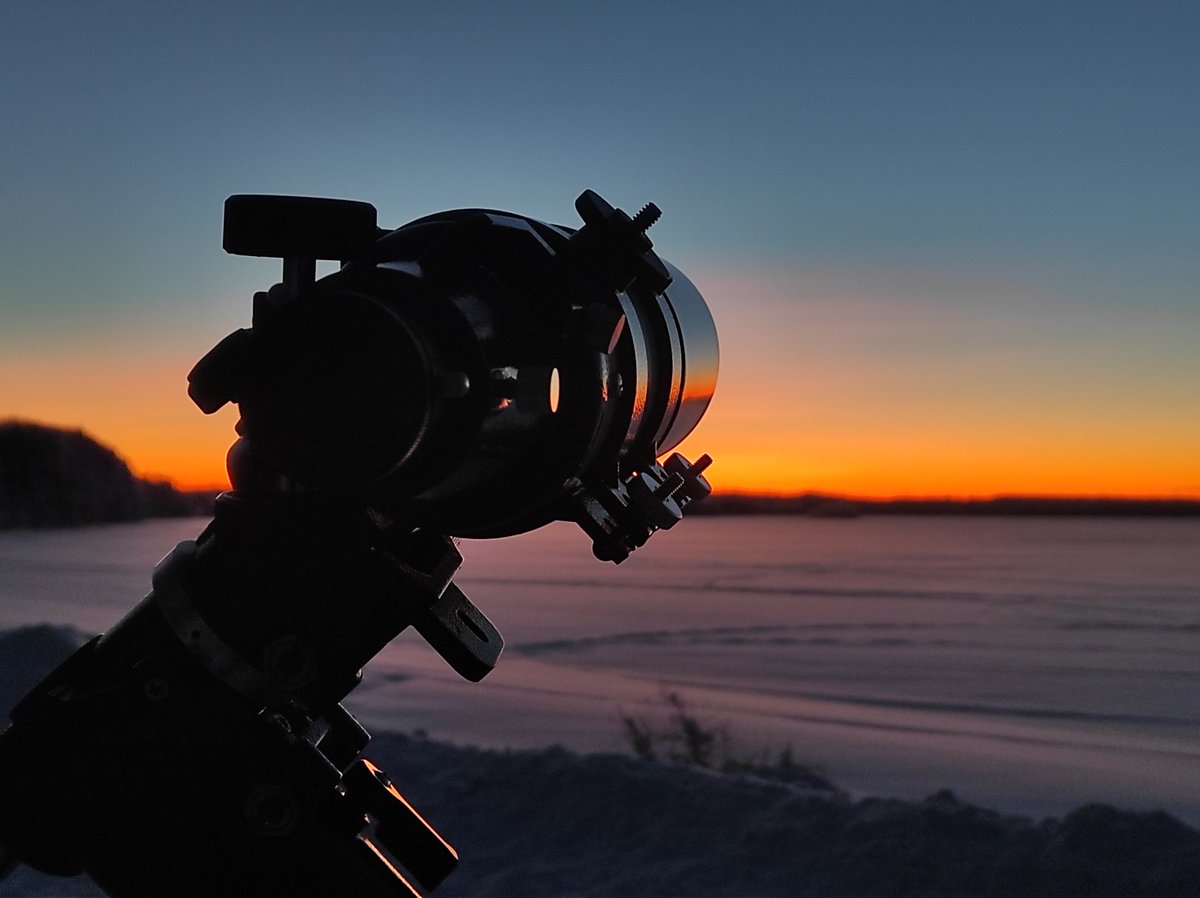
In the last few days I have seen numerous daylight photos of comet C/2024 G3 (ATLAS). My favourite is this one by Maestro P. Horálek. The iridescent clouds below the comet create a special atmosphere, tell their own story. And, it's just lovely.
Artyom Novichonok tweet media
English
0
5
16
946
Artyom Novichonok
Artyom Novichonok@illvmvm·
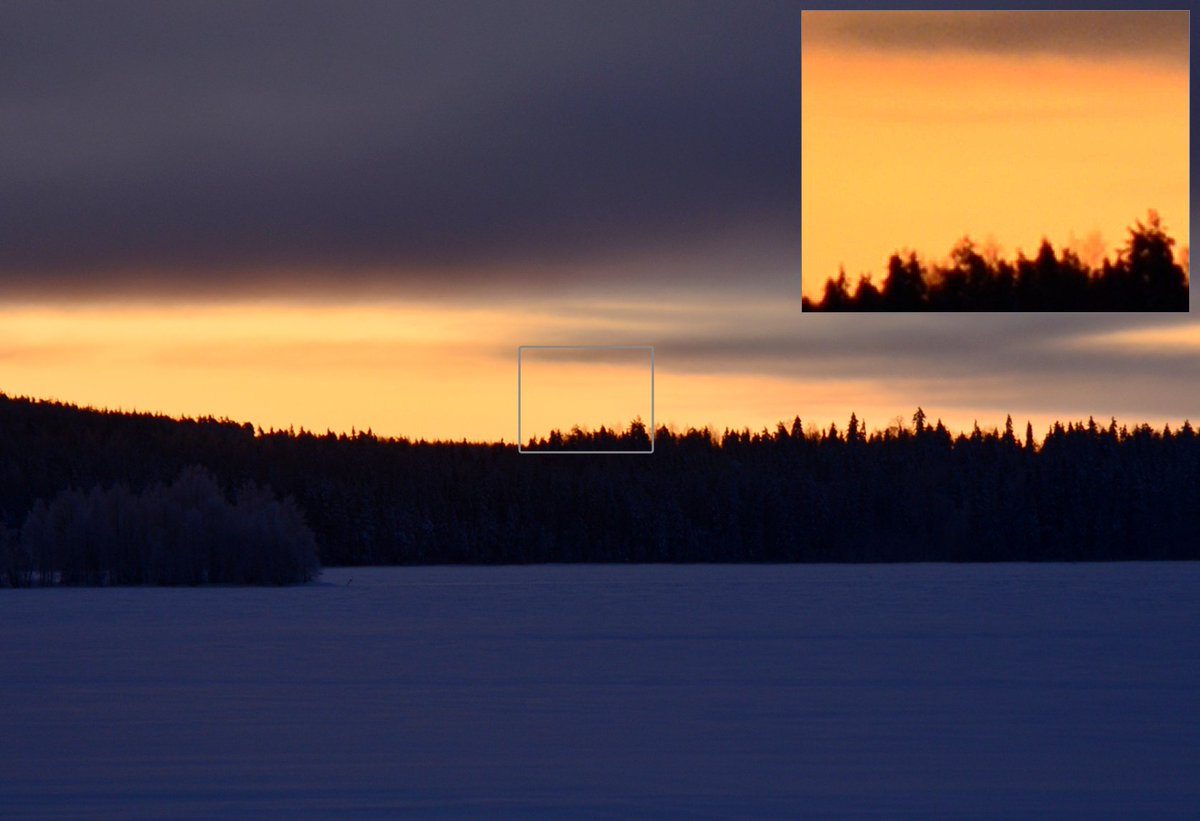
Yesterday evening (15.55 UT) I had another (and for me the last) try to search the bright comet C/2024 G3 (ATLAS) in the civil twilight, but... nothing. There were some high clouds near the horizon but I couldn't miss an especially bright object like Venus. So, fainter than -3.
Artyom Novichonok tweet media
English
1
0
6
255
Artyom Novichonok
Artyom Novichonok@illvmvm·
This morning (2025 Jan. 13.26 UT) I tried to see the comet C/2024 G3 (ATLAS) visually in the bright nautical twilight, but without success. So the comet should be fainter than -3. This is consistent with SOHO images and current estimates from other observers.
Artyom Novichonok tweet mediaArtyom Novichonok tweet media
English
0
3
9
741
吉本@彗星屋
吉本@彗星屋@katsumi_comet·
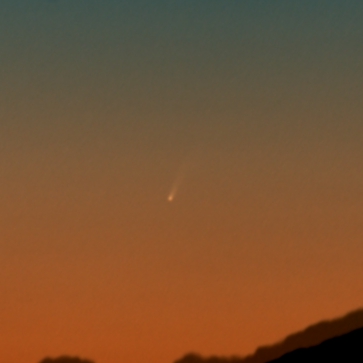
今朝のC/2024 G3 です。 135mmf/2(絞り2.8)+Canon 6D, 68x1/60秒, 1x1度に等倍トリミング
吉本@彗星屋 tweet media
日本語
1
25
198
3.7K
Artyom Novichonok
Artyom Novichonok@illvmvm·
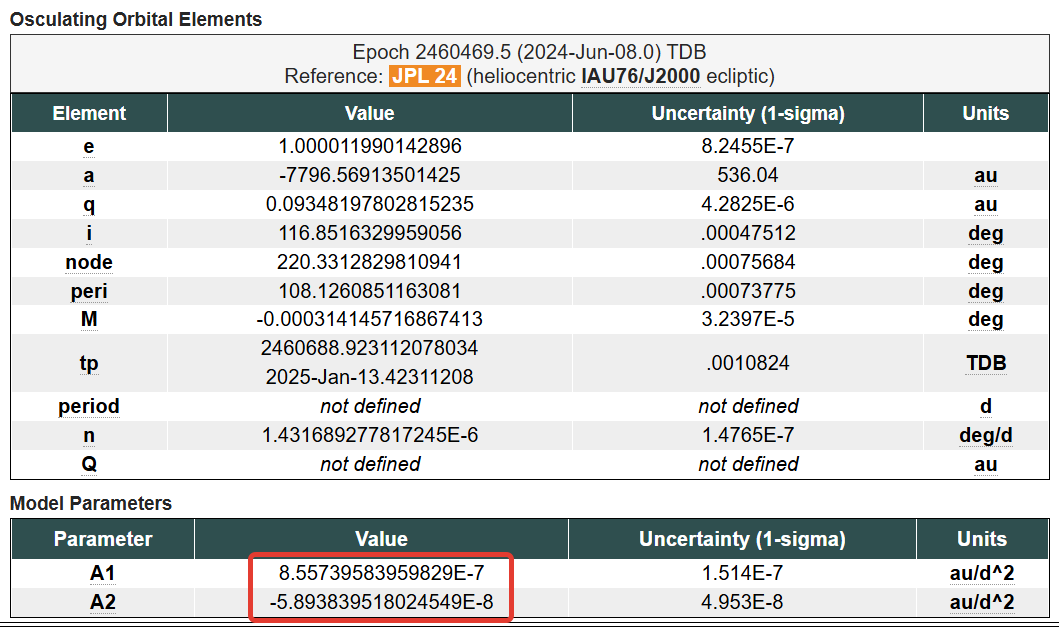
Comet C/2024 G3 (ATLAS) shows a strong non-gravitational acceleration, so its nuleus should definitely be small (maybe ~0.5 km) and very active! So I'd venture to guess that the comet will not survive its "hot" perihelion, despite its DO status and stable (current) behaviour.
Artyom Novichonok tweet media
Artyom Novichonok@illvmvm

Current observations place comet C/2024 G3 (ATLAS) just above the Bortle survival limit line. Moreover, the comet may not be dynamically new (1/a orig = 0.00038 for now). If so, perihelion survival is much more likely.

English
0
1
8
456
Artyom Novichonok
Artyom Novichonok@illvmvm·
Current observations place comet C/2024 G3 (ATLAS) just above the Bortle survival limit line. Moreover, the comet may not be dynamically new (1/a orig = 0.00038 for now). If so, perihelion survival is much more likely.
Artyom Novichonok tweet media
English
0
4
15
2.1K
Artyom Novichonok
Artyom Novichonok@illvmvm·
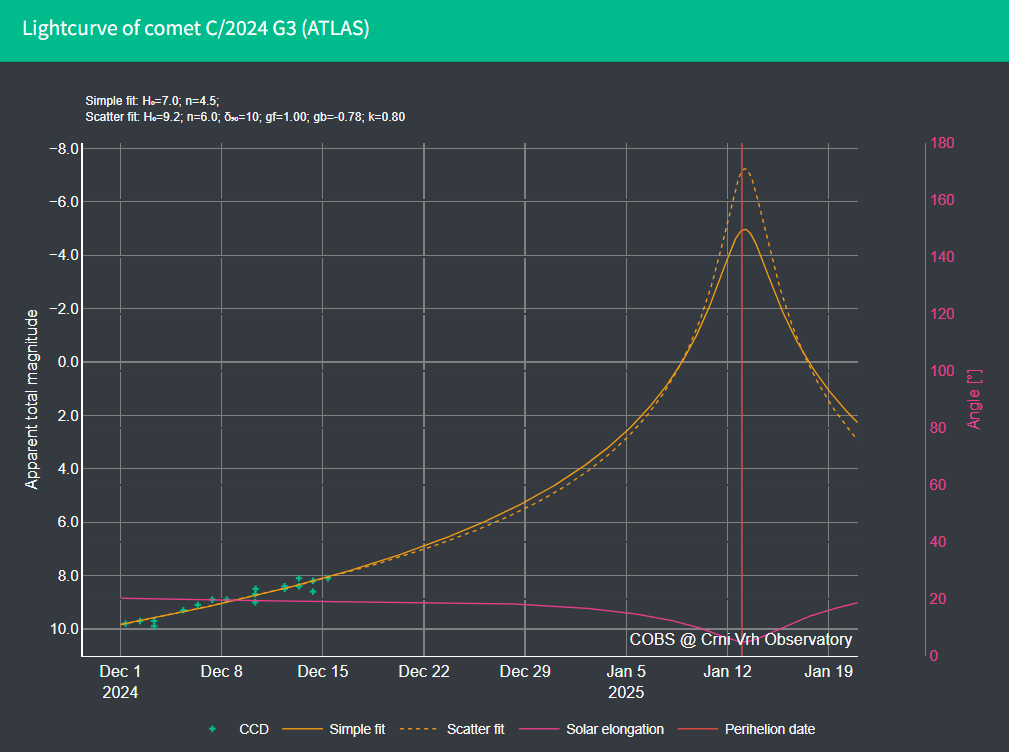
Be careful with very bright (-5...-7) "predictions" of the LC, it's only a direct approximation of actual observations to the future. In reality will be good if the comet survives its perihelion and reaches somewhere -1...+1 mag. The brighter scenarios aren't completely excluded
Artyom Novichonok@illvmvm

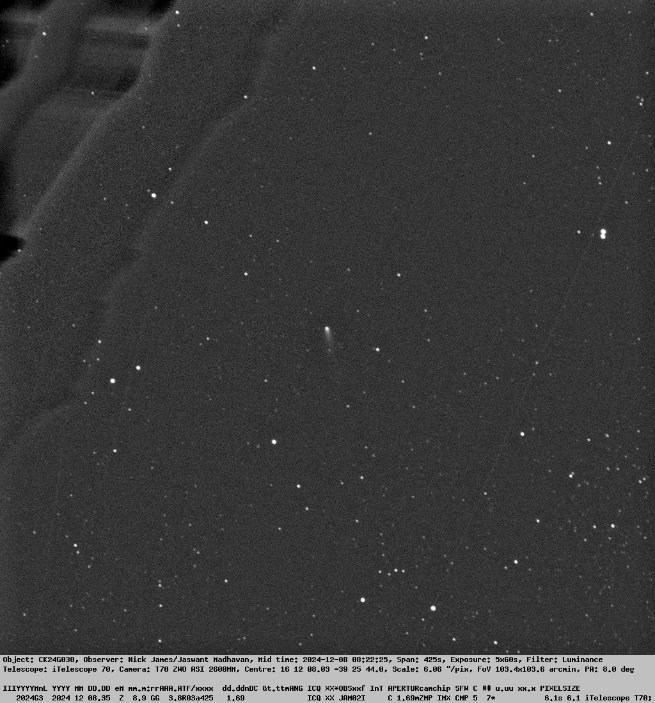
Sunskirter comet C/2024 G3 (ATLAS) is brightening stable and steadily (now ~8m), having just entered inside Earth's orbit. The images show a healthy comet with a developed dust tail. The comet has just appeared on UV SWAN images, further confirmation that it's still intact.
English
0
1
4
95
Artyom Novichonok
Artyom Novichonok@illvmvm·
Sunskirter comet C/2024 G3 (ATLAS) is brightening stable and steadily (now ~8m), having just entered inside Earth's orbit. The images show a healthy comet with a developed dust tail. The comet has just appeared on UV SWAN images, further confirmation that it's still intact.
Artyom Novichonok tweet mediaArtyom Novichonok tweet media
English
1
2
11
621
Artyom Novichonok
Artyom Novichonok@illvmvm·
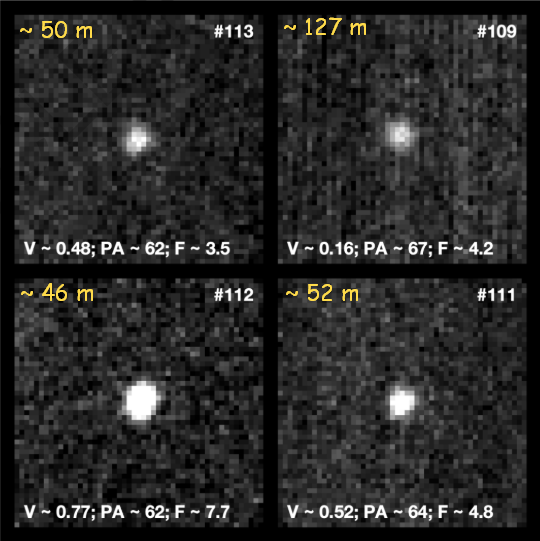
The JWST team reports the detection of >100 of the smallest MB asteroids down to 10-20 m in diameter (the image shows objects in the 30-50 m range). Moreover, the abundance of the smallest (<100 m) is much higher than expected, confirming cascading collisional fragmentation.
Artyom Novichonok tweet media
English
0
0
0
54