John Ouyang

178 posts

John Ouyang banner
John Ouyang

John Ouyang

@imouyang

Katılım Ekim 2012
164 Takip Edilen114 Takipçiler
John Ouyang
John Ouyang@imouyang·
This is a tight collaboration with Alfred Sun, following many rounds of discussion on how single-cell omics can improve the quality of mDA differentiation, a key focus of his lab for PD. Many thanks also to @PengyiYang82 and @carissaynchen for their contributions and advice.
English
0
1
1
110
John Ouyang
John Ouyang@imouyang·
BrainSTEM provides open tools to improve PD modelling and cell therapy optimisation. It flags off target DA like cells that inflate reported mDA yields. This matters because high purity mDA products are essential for safe and effective PD cell replacement.
English
1
0
0
31
John Ouyang
John Ouyang@imouyang·
Excited to share BrainSTEM, a two-tier mapping framework for single-cell data of midbrain cultures. We first map to a human fetal whole brain atlas, then refine to a midbrain subatlas to benchmark mDA identity and brain region fidelity. #scRNA #Parkinsons doi.org/10.1126/sciadv…
English
1
0
0
62
John Ouyang retweetledi
Prof Lennart Nacke, PhD
Prof Lennart Nacke, PhD@acagamic·
Most PhD students stare at a blank page for months. They have smart ideas but no mindmap. The difference between finishing and forever-editing? A bulletproof thesis structure. Here's what successful PhDs know from day one:
Prof Lennart Nacke, PhD tweet media
English
11
132
840
68.4K
John Ouyang
John Ouyang@imouyang·
@tangming2005 This is very helpful explanation! And i guess it is also the same reason why we have so many UMIs associated with MALAT1 and NEAT1.
English
1
0
2
311
Ming "Tommy" Tang
Ming "Tommy" Tang@tangming2005·
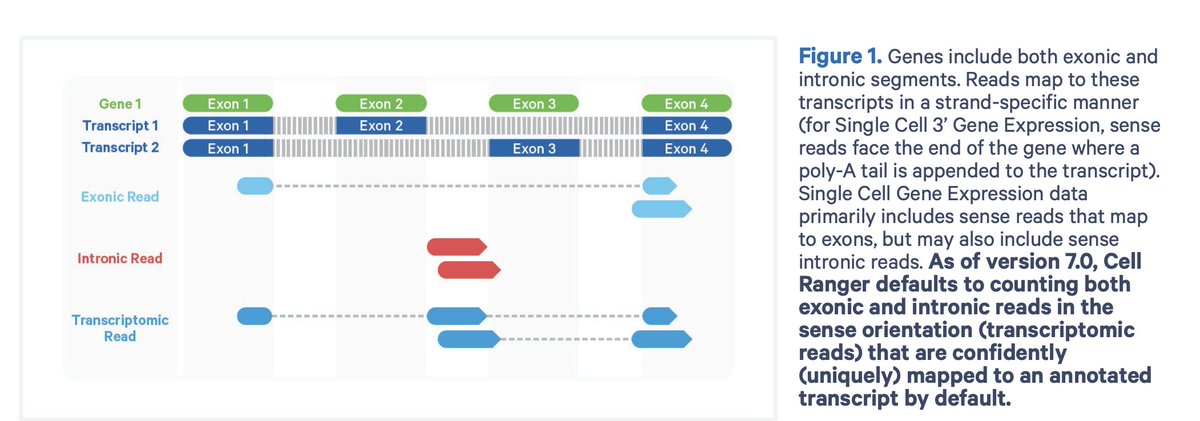
You’re analyzing 10x Genomics single-cell RNA-seq and notice lots of intronic reads. Wait—wasn’t this a 3′ UMI-based assay for mature mRNA? Let’s unpack why introns show up—and why they matter. 🧵
Ming "Tommy" Tang tweet media
English
4
35
212
27.7K
John Ouyang
John Ouyang@imouyang·
Try ShinyCell2! Extended to support spatial, scATAC and multiomics data now!
Hao Yin@HaoYin20

Want to visualize & create a website for your omics data (+CITEseq scATACseq #SpatialTranscriptomics)? Try ShinyCell2!😆 Compatible with data formats Seurat Signac ArchR Scanpy (other formats converted by sceasy) (also imaging-based ST data?😁) vs cellxgene WebAtlas Vitessce github.com/the-ouyang-lab… @OwenRackham @imouyang bioRxiv 2024 biorxiv.org/content/10.110…

English
0
1
5
683
John Ouyang
John Ouyang@imouyang·
Excited to launch ShinyCell2, which now supports interactive visualisation of spatial data, scATAC-seq and multimodal single-cell data! We also made quality of life improvements to existing plots. biorxiv.org/content/10.110…
English
1
0
1
38
John Ouyang
John Ouyang@imouyang·
Katalin Susztak@KSusztak

🎇Our new paper in @ScienceMagazine: Kidney Multiome-Based Genetic Scorecard Reveals Convergent Coding and Regulatory Variants. @Hongbo919Liu science.org/doi/10.1126/sc… 1. Full spectrum of genetic variants related to kidney function (1,000 loci). 2. Comprehensive annotation of discovered genetic variants using 32 new omics datasets and tools (QTLs, single cell data), uncovering 600+ genes for kidney function. 3. 161 genes previously believed to contribute only to rare monogenic diseases, which harbor common variants affecting CKD in the general population. 4. Discovered a large number of new druggable targets for kidney disease. 5. Developed a Kidney Genetics Scorecard for integration and interpretation

QAM
0
0
1
11
John Ouyang
John Ouyang@imouyang·
3/4 This two-tier projection mirrors iterative clustering, key for cell type annotation in large datasets. BrainSTEM ensures precise mapping without spurious assignments by distinguishing midbrain-specific neural cells, allowing for refined cellular insights in midbrain cultures.
English
1
0
0
88
John Ouyang
John Ouyang@imouyang·
1/4 Excited to launch #BrainSTEM, a framework for assessing transcriptional fidelity in midbrain cultures using #singlecell data. As neural systems grow in complexity, our approach adapts computational practices to match the biological scale via a two-tier projection approach.
English
1
0
3
375