Gajanan Khergamker

869 posts

Gajanan Khergamker banner
Gajanan Khergamker

Gajanan Khergamker

@IndiaRighter

Editor | Solicitor | Documentary Film-maker

Mumbai Katılım Nisan 2010
157 Takip Edilen163 Takipçiler
Gajanan Khergamker
Gajanan Khergamker@IndiaRighter·
Read my piece on how the surge of selective criticism against the Great Nicobar Project spearheaded by straetgic political posturing under the guise of environmental concern for the flora and fauna is an old trick. The Metro in Mumbai and the flurry of infrastructure projects needed to meet the demands of a frustrated population were placed on the backburner for years. And, when cleared by the State and the courts, the exemplary costs triggered by the delay had to be borne by the people themselves. Thankfully, the Great Nicobar Project isn't going to wait ... and mustn't either. thedraftworld.com/2026/05/the-ou… #GreatNicobar #Development #Infrastructure #Environment #Ecology #AndamanNicobar
English
0
0
0
36
Gajanan Khergamker
Gajanan Khergamker@IndiaRighter·
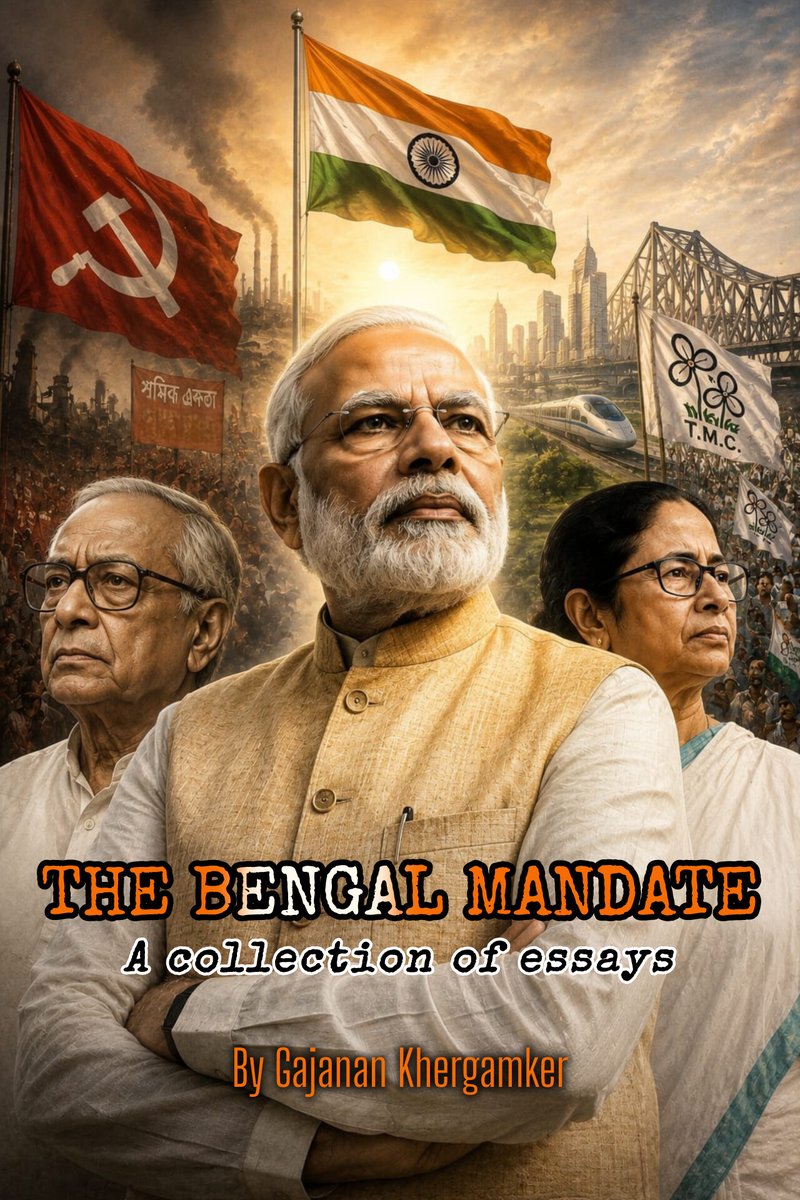
#KolkataDiaries | I did not travel to Kolkata expecting to write a series of essays. I travelled there to listen. To walk through College Street’s fading intellectualism, to sit quietly at tea stalls where politics is discussed with the seriousness of scripture, to observe a state standing at the edge of what may become one of the most consequential political transitions in contemporary India. What I encountered in West Bengal after the BJP’s phenomenal victory was not merely celebration or resistance. It was something far more layered. Fatigue. Curiosity. Anxiety. Assertion. Silence. Reinvention. That journey eventually became this collection of essays. Bengal as Blueprint is not a campaign chronicle, nor is it an exercise in partisan applause or ideological lamentation. It is an attempt to examine what happens when a state that long resisted the BJP’s political vocabulary suddenly begins speaking in a different electoral language. It asks uncomfortable questions about power, identity, federalism, bureaucracy, political violence, cultural negotiation, minority anxieties, the eclipse of the Left, and the future of opposition politics in India. Over several essays, I explore whether Bengal is witnessing the end of an era, or merely the mutation of one. Can a party built on command governance adapt to Bengal’s deeply localised political culture? Has Hindu consolidation genuinely reshaped the state’s political imagination, or is this only a temporary realignment? What becomes of Mamata Banerjee in opposition? Can the BJP govern Bengal without unsettling its cultural grammar? And perhaps most importantly, does this victory become a blueprint for eastern India, or a cautionary tale about the limits of political replication? Bengal has never been politically ordinary. It absorbs ideology differently. It negotiates power differently. It remembers differently. This was written in hotel rooms, cafés, taxis, railway compartments, and long walks through Kolkata’s restless streets immediately after the verdict. It attempts to capture not just the politics of a result, but the atmosphere of a state in transition. For readers who follow Indian politics beyond headlines and television binaries, I hope these essays offer a more layered conversation. Because West Bengal is rarely just about West Bengal. Read my collection of essays 'The Bengal Mandate' here: draftcraft.hflip.co/The-Bengal-Man… #WestBengal #Kolkata #BengalPolitics #Politics #Essay #NewsEssay #Election #Elections2026 #DraftCraft
Gajanan Khergamker tweet media
English
0
4
0
45
Gajanan Khergamker
Gajanan Khergamker@IndiaRighter·
#KolkataDiaries | In a parliamentary democracy built on the foundational principle that electoral mandate is sovereign, that the people's verdict is not a suggestion but a directive, the Chief Minister of West Bengal has chosen to remain in office following a result that, by any honest accounting, constitutes a significant popular rejection. The refusal is not merely a political calculation, though it is certainly that. It is a direct challenge to the moral architecture of representative governance, a test of whether the structures designed to ensure accountability retain any operational force or whether they have become elaborate theatre - the costumes of democracy without the substance. The numbers do not require creative interpretation. West Bengal delivered its verdict. The mandate was not ambiguous. In democratic tradition across every serious parliamentary system, from Westminster to the state capitals of India's own history, an electoral rebuke of this character carries a singular obligation: the acknowledgment that the public trust has been withdrawn, and the dignified transfer of moral authority that follows from that acknowledgment. Mamata Banerjee's Trinamool Congress has received that verdict. She has received it. And she has declined to act on it. Read my report from Ground Zero: thedraftworld.com/2026/05/mamata… #WestBengal #GroundReport #GroundZero #BengalPolitics #MamataBanerjee
English
0
0
0
31
Gajanan Khergamker
Gajanan Khergamker@IndiaRighter·
#GroundZero | West Bengal has come a long way. From a democratically-elected communist party to have a record run to being overthrown by Mamata Banerjee's TMC that gave a tough opposition to Narendra Modi's saffron sweep across the nation, to finally ... align with the force of the BJP ... development is here ... and to stay! Read my latest ground report from Kolkata - thedraftworld.com/2026/05/kolkat… #bengalelections #WestBengal #BJPVictory #kolkatadiaries
English
0
0
0
23
Gajanan Khergamker
Gajanan Khergamker@IndiaRighter·
BJP's Gujarat Sweep Is Not A Victory ... It's A Verdict Gujarat's municipal corporation results are not a verdict on governance. They are a verdict on the complete structural collapse of opposition politics in one of India's most contested states. The Bharatiya Janata Party's sweep across 15 of Gujarat's municipal corporations, including clean sweeps in Morbi and Porbandar, consolidates what political analysts have been reluctant to name plainly: The organised, near-total electoral erasure of credible opposition in a state that was once the testing ground for competitive democracy at the local governance level. Morbi, the town still carrying the weight of the October 2022 bridge collapse that killed over 135 people, returning a BJP clean sweep, is not a political footnote. It is a structural statement about how accountability is mediated through narrative in contemporary Indian electoral politics. The numbers, wherever the Congress and Aam Aadmi Party fielded candidates in these municipal contests, tell the story more honestly than any press conference. The Congress, which held Gujarat local bodies through much of the 1990s and early 2000s, has progressively ceded not just seats but the organisational infrastructure to contest them. The AAP, which arrived in Gujarat ahead of the 2022 state assembly elections promising urban disruption and a middle-class revolt against incumbency, has demonstrated precisely what ambition without grassroots architecture produces; noise, candidacy and negligible returns. The Porbandar sweep carries its own symbolism. The birthplace of Mahatma Gandhi, a city whose political identity was once shaped by the moral weight of that association, now returns its municipal representatives without contest in any meaningful sense. The irony is not lost, and it should not be softened. What the BJP's Gujarat municipal dominance reveals is a campaign machinery operating at a level of local penetration that its opponents have neither matched nor, by available evidence, strategically attempted to match. Booth-level management, ward-by-ward candidate selection calibrated to caste arithmetic and a welfare delivery infrastructure that functions as both governance and campaign. These are not accidental advantages, but the compounded returns of three decades of organisational investment. The Morbi result demands specific attention. A tragedy of the scale of the Morbi bridge collapse, with its charge sheet of negligence, its questions about the municipal corporation's oversight role, its pending accountability, would, in most political environments operating under normal opposition pressure, translate into localised electoral consequence. It did not. The explanation is not that voters are indifferent to accountability. It is that accountability requires a credible vehicle, and in Morbi, as in most of Gujarat's urban wards, that vehicle does not exist. The AAP's Gujarat project, launched with considerable media amplification and some early traction in the 2022 assembly results where the party crossed double digits in seat share, has evidently not translated into the municipal-level organisation capable of sustaining a challenge. Vote share without ward presence is a headline, not a movement. Congress, for its part, continues the managed decline it has performed across western India with a consistency that would be admirable if it were intentional strategy rather than structural disintegration. The party that once governed Gujarat, that gave the state chief ministers, shaped its bureaucratic culture, contested its every ward, is now operating as a protest placeholder, not a governing alternative. What Gujarat's 15 municipal corporation results confirm is that the BJP's dominance here has moved beyond the electoral cycle into something more durable: institutional presence at the granular level of local governance where civic contracts are administered, licences issued, and daily political loyalty formed. Elections at this level are won or lost years before polling day, in the ward offices, in the welfare queues, in the candidate selections that precede every vote. Gujarat is not a bellwether. It is a terminus, the furthest point the BJP's organisational model has reached in any Indian state. The question for national politics is not whether the opposition can win Gujarat. It is whether the opposition has studied, with sufficient seriousness, exactly how it lost it. #Gujarat #BJPAAP #BJP #MunicipalElections #Elections
Gajanan Khergamker tweet media
English
0
0
0
7
Gajanan Khergamker
Gajanan Khergamker@IndiaRighter·
It's the same story everywhere and the drama, much the same, in everyone's backyard. The law provides for free access, free speech and free movement but, come the social media frenzy, there must be some prerequisites and conditions to be met, in place. Or there's a guaranteed crisis waiting to happen. #Goa #Tourism #Privacy #PublicSpace
The Draft News@TheDraftWorld

#LegallySpeaking | The ‘No Photography’ signs across #Fontainhas reflect local fatigue with constant intrusion, but raise a key question: can locals restrict freedoms that the #law permits in public spaces? Legal Analysis by Gajanan Khergamker. #Nuisance #Privacy #PublicSpace

English
0
0
0
21
Gajanan Khergamker
Gajanan Khergamker@IndiaRighter·
A month ago, on 10 March 2026, I released my e-book '10/3: Exile, Empire And War In The Andamans' in a limited offline digital format, symbolically at Flag Point overseeing Ross Island, in Port Blair. It was never meant to be a finished product. It was, instead, the beginning of a conversation, one burgeoning with patriotic nostalgia. Today, after a month of sustained engagement across lecture halls, seminar rooms, and discussion forums with academia, students, professionals, and policy observers, I have made the work publicly accessible online. This journey began in the Andaman & Nicobar Islands, where I spent time alongside a remarkable cohort of journalists, environmentalists, researchers, and legal minds. What emerged from that experience was not a travelogue, nor a static documentary narrative, but a layered exploration of a geography that resists simplification. The Andamans compel you to confront uncomfortable questions. ...Development here is not an abstract policy ambition; it is a lived disruption. Every road, every structure, every intervention redraws equations that have existed for centuries... The deeper I went, the clearer it became that documentation itself is not a neutral act. ...To document the Andamans is to confront a paradox. The more one observes, the clearer it becomes that visibility itself alters the subject... And beyond the visible lies memory, often unarticulated, frequently ignored. ...Memory in these islands does not rest in monuments alone. It lingers in landscapes, in silences, and in narratives that remain deliberately unrecorded... Over the past month, the responses, critiques, and conversations around 10/3 have reshaped my own understanding of the work. What I had initially conceived as a publication has now evolved into something far more dynamic. Project 10/3 is no longer just a book. It is a live, evolving framework. And, with this, I am opening that framework to you. I invite researchers, institutions, practitioners, and engaged citizens to read, question, critique, and contribute. The intent is not passive readership, it's participation. This is only the beginning. The road ahead will involve deeper field studies, interdisciplinary collaboration, and continued documentation of vulnerable geographies that demand nuanced attention. If 10/3 does anything, I hope it unsettles certainty and provokes inquiry. The work is now out there. What it becomes next will depend on how we choose to engage with it. Do have a read... Click to View/Download PDF: tinyurl.com/EBook-10-3-And… #EBook #Publication #Research #History #Andaman #FreedomStruggle #Chatham #ChathamIsland #FreedomFighters #Opportunity #Internship #IndiaRighter
Gajanan Khergamker tweet media
English
0
3
0
60
Gajanan Khergamker
Gajanan Khergamker@IndiaRighter·
The ceremonial choreography of Ambedkar Jayanti in 2026, with its blue pennants, choreographed reverence, and ritual invocations, risks presenting B. R. Ambedkar as a figure safely embalmed in national memory. That instinct, though politically convenient, is intellectually dishonest. Ambedkar was never meant to be commemorated in stillness. He was meant to be argued with, returned to, and, where necessary, confronted. His 135th birth anniversary does not mark closure. It sharpens the discomfort of an unfinished constitutional conversation that India continues to defer. The reference to the Constitution of India as a moral contract is not rhetorical indulgence. It is a precise legal characterisation. Ambedkar’s constitutionalism was not limited to institutional design. It was an attempt to recalibrate the moral grammar of Indian society. The recent judicial reaffirmation of the “absolute religion bar” in Scheduled Caste status by the Supreme Court of India underscores the persistence of the very dilemmas he grappled with. The ruling, while doctrinally anchored in precedent, exposes the uneasy intersection of religion, caste, and state recognition. It raises a question that Ambedkar himself wrestled with in his critique of caste as a system sustained by religious sanction. Can a constitutional democracy afford to freeze social categories in theological amber while claiming to dismantle hierarchy? At Chaityabhoomi, the site of Ambedkar’s cremation, the annual convergence of citizens is often read as an act of collective gratitude. In 2026, it also reads as a site of quiet dissent. The gathering is no longer merely commemorative, it is interpretative. Citizens arrive not just to remember Ambedkar, but to renegotiate his meaning in a republic where the distance between formal equality and substantive justice remains stubbornly intact. The symbolism of that space is inseparable from the anxieties of the present. The recently-held 'National Conference on Judicial Process Re-Engineering and Digital Transformation' in New Delhi presents itself as a technocratic exercise. It is, in fact, an Ambedkarite moment disguised as administrative reform. Ambedkar’s insistence that law must be accessible to the last citizen finds a contemporary echo in the digitisation of courts. The project promises efficiency and transparency. It also risks reproducing exclusion in a new form. Digital justice, if not accompanied by digital literacy and infrastructural parity, may well become an instrument of procedural alienation. The question is not whether justice can be digitised. It is whether it can be democratised in the process. The expansion of the gig economy and the visibility of platforms such as the e-Shram portal reveal another layer of Ambedkar’s continuing relevance. As India’s first Labour Minister, he approached labour not as a mere economic category but as a site of dignity. The registration of millions of unorganised workers on e-Shram is administratively significant. It is also a quiet indictment. It reflects a workforce that remains structurally vulnerable despite decades of constitutional governance. The language of flexibility and entrepreneurship that defines the gig economy often obscures the absence of social security, collective bargaining, and legal protection. Ambedkar would have recognised this paradox immediately. He would have asked whether economic modernity without social safeguards merely repackages old inequities in new vocabulary. The interventions of the National Human Rights Commission of India in cases of bonded labour, including its recent virtual hearings, must be read within this continuum. The emphasis on rehabilitation and skill development signals an attempt to move beyond rescue into reintegration. It also highlights the persistence of conditions that the Constitution sought to abolish. Bonded labour is not an aberration but a structural residue. Its continued existence challenges the celebratory narrative of India as a knowledge economy. Ambedkar’s faith in education as emancipation was never naive. It was contingent on systemic support. Without that, education risks becoming aspirational rhetoric rather than transformative practice. The contemporary judicial engagement with the 'merit versus reservation' debate further illustrates the enduring tension between formal equality and substantive justice. Ambedkar’s articulation of constitutional morality was a warning against majoritarian impatience. It demanded that institutions act not merely within the confines of legality but within the discipline of justice. The courts, in revisiting these questions, are not merely interpreting policy. They are navigating the ethical architecture of the Constitution itself. The invocation of merit, detached from historical disadvantage, risks reinstating privilege under the guise of neutrality. Ambedkar anticipated this critique with disarming clarity. Culturally, the reclamation of Ambedkar across digital platforms, corporate inclusion frameworks, and community-led initiatives reflects a decentralisation of his legacy. He is no longer confined to academic discourse or political rhetoric. He inhabits everyday conversations about dignity, representation, and belonging. This diffusion is significant as it signals that Ambedkar’s ideas have escaped the custodianship of the state and entered the vocabulary of the citizen. That transition, however, carries its own risks. Simplification can dilute complexity. Symbolism can eclipse substance. The impending hearings before the National Human Rights Commission of India on labour exploitation serve as a sobering counterpoint to the day’s commemorative fervour. They remind us that constitutional promises are not self-executing. They require continuous institutional vigilance and civic engagement. Ambedkar’s caution against the “grammar of anarchy” acquires renewed relevance in an era defined by instantaneous mobilisation and digital outrage. The temptation to bypass constitutional processes in pursuit of immediate justice is strong. Ambedkar’s warning was not conservative, it was pragmatic. He understood that the erosion of constitutional method ultimately weakens the very groups it seeks to empower. To engage with Ambedkar in 2026 is to resist the comfort of selective remembrance. It requires a willingness to interrogate the republic’s performance against its foundational commitments. The processions will disperse, the slogans will fade, and the iconography will return to its frames. What must endure is the discipline Ambedkar demanded. Justice, as he conceived it, was not an event to be celebrated annually. It was a practice to be sustained daily, through institutions that are accountable, policies that are inclusive, and a citizenry that is vigilant. In that demanding, often uncomfortable, discipline lies the true measure of Ambedkar’s relevance. He does not belong to the past. He persists as a constitutional conscience, interrogating the India of 2026 with the same rigour with which he once imagined it. #AmbedkarJayanti #Ambedkar #Constitution #India #Law #Reservation #ConstitutionOfIndia
Gajanan Khergamker tweet media
English
0
0
0
25
Gajanan Khergamker
Gajanan Khergamker@IndiaRighter·
#FakeMedia | It's time the fakes are called out for their bluff. And weeded out of the system. Riding on the yeoman's merits of a free media, a sea of fake players that include fly-by-night 'reporters', lumpen agents masquerading as 'lawyers', 'RTI' activists including 'media channels' will be exposed. The rise of politically-motivated individuals, self-styled influencers and outright blackmailers posing as arbiters of truth has systematically created a parallel information economy, one where 'news' is no longer discovered or verified but manufactured, curated, and, in the most egregious cases, monetised through coercion. The proposed 2026 amendments to the Information Technology (Intermediary Guidelines and Digital Media Ethics Code) Rules arrive at a moment when this rot has deepened into a systemic malaise, threatening not merely reputations but the foundational trust upon which democratic communication rests. Across platforms as varied as Facebook, X, Instagram and WhatsApp, the pattern has acquired a disturbing familiarity. A post appears, often crafted with deliberate sophistication, mimicking the tone, structure and visual grammar of legitimate journalism. It names individuals, alleges wrongdoing and insinuates scandal. The content is rarely substantiated, often doctored, and almost always selective. Within hours, it circulates across networks, amplified by coordinated shares, anonymous accounts and algorithmic bias towards sensationalism. The victim, frequently a private citizen with neither the institutional backing nor the digital literacy to mount a defence, is left to confront a tidal wave of reputational damage. The second act of this digital theatre is where the true intent reveals itself. The perpetrators, having established a narrative in the public domain, initiate contact. The proposition is crude in its simplicity: payment in exchange for silence, for deletion, for withdrawal. Refusal invites escalation, additional posts, more allegations and wider dissemination follow. What emerges is not merely fake news but a structured extortion racket, one that exploits the credibility of the 'news format' to lend weight to what is, at its core, criminal intimidation. The case studies are as varied as they are alarming. In Maharashtra’s smaller towns, police investigations have uncovered networks of individuals posing as journalists on Facebook pages, publishing defamatory reports about local businessmen and subsequently demanding money to retract them. The façade of journalism was meticulously maintained, complete with logos, page layouts and fabricated bylines, creating an illusion of legitimacy that proved difficult to challenge. In one instance, a trader found himself accused of financial impropriety in a series of posts that quickly went viral within his community. The allegations were entirely baseless, but the damage was immediate and severe, affecting his business relationships and social standing. The demand for payment that followed was framed not as extortion but as a 'settlement' to prevent further publication. On Instagram, the misuse has taken a more insidious, visually-driven form. Anonymous accounts, often styled as 'news update' pages, have been known to circulate morphed images and short video clips targeting individuals, particularly women. These posts, accompanied by suggestive captions and insinuations, are designed to provoke outrage and curiosity in equal measure. Once traction is achieved, the victim is approached with offers to 'take down' the content for a price. The ephemeral nature of stories and reels, far from mitigating the harm, exacerbates it by enabling rapid dissemination before any corrective action can be taken. The role of WhatsApp in this ecosystem is both pervasive and deeply problematic. Encrypted, closed-group communication lends itself to the unchecked spread of fabricated narratives, often in the form of forwards that carry the imprimatur of authenticity. In several documented instances, false allegations about individuals have been circulated within local community groups, housing societies and professional networks. The intimacy of these groups amplifies the impact, as recipients are more likely to trust and act upon information received from known contacts. In one particularly distressing case, a school teacher was accused, through a series of WhatsApp forwards, of misconduct that was entirely fictitious. The messages, formatted as 'breaking news' alerts, led to social ostracisation and professional repercussions before the truth could emerge. On X, the dynamics are shaped by virality and visibility. Coordinated campaigns, often driven by bot-like accounts and anonymous handles, can propel a false narrative into trending territory within hours. The architecture of the platform, which rewards engagement irrespective of veracity, ensures that sensational content travels faster and farther than sober correction. Individuals targeted in such campaigns find themselves subjected not only to reputational harm but also to sustained harassment, with personal information, photographs and fabricated allegations being circulated widely. The line between misinformation and targeted abuse blurs, creating an environment where digital vigilantism thrives. Statistics lend weight to these anecdotal accounts. India has consistently ranked among the countries most affected by misinformation, with multiple studies suggesting that a majority of internet users have encountered fake or misleading content online at least once in recent years. Law enforcement data points to a steady rise in cases involving cyber extortion, online defamation and impersonation of journalists, with financial losses from cybercrime collectively running into thousands of crores annually. The economic incentive that underpins this ecosystem ensures its persistence, as low risk and high reward continue to attract bad actors into this murky domain. It is within this fraught landscape that the proposed amendments to the Information Technology (Intermediary Guidelines and Digital Media Ethics Code) Rules, 2026 must be situated, not as an abstract exercise in regulatory drafting but as a direct response to a lived and escalating crisis. The legal text itself, when examined closely, reveals a deliberate attempt to reclaim regulatory ground that had been ceded, whether inadvertently or by design, to an unaccountable digital multitude. The amendment to Rule 8, for instance, extends the applicability of Part III to include “news and current affairs content” shared by users who are not formally recognised as publishers. This single insertion has far-reaching implications, effectively collapsing the distinction between institutional journalism and individual content creation, and ensuring that those who engage in the systematic dissemination of news-like material can no longer evade scrutiny by sheltering behind the label of “user”. The insertion of Rule 3(4) marks an equally significant shift in the compliance paradigm. By mandating that intermediaries adhere to government advisories, directions and standard operating procedures, and by linking such adherence to the preservation of safe harbour protections under Section 79, the law transforms what was once a largely voluntary framework into a binding obligation. Platforms that fail to act risk not merely regulatory censure but legal exposure, a prospect that is likely to recalibrate their approach to content moderation in a fundamental way. The amendment to Rule 14 further strengthens the State’s hand by empowering the Inter-Departmental Committee to take cognisance of content on its own motion, without waiting for a formal complaint. This bypassing of the earlier grievance redressal hierarchy is not merely procedural. It signals a shift from reactive governance to proactive oversight, enabling the State to intervene at a stage where the damage may still be containable. Perhaps the most striking provision, however, is the introduction of stringent timelines for the removal of content deemed misleading or synthetic. The three-hour takedown window, particularly in the context of AI-generated or doctored material, is an acknowledgment of the velocity at which misinformation travels in the digital age. Coupled with mandatory labelling requirements for AI-assisted content, it seeks to impose a degree of transparency that has hitherto been conspicuously absent. A comparative view of the regulatory framework underscores the magnitude of this transformation. Where the 2021 Rules were largely confined to recognised publishers, the 2026 draft extends its reach to anyone engaging with news and current affairs. Where enforcement was triggered primarily by user complaints, the new regime allows the Ministry to act suo motu. Where takedown timelines stretched to thirty-six hours, they are now compressed to a mere three in cases of government notice. Where advisories were once suggestive, they now carry the force of mandatory compliance. The promise of these provisions lies in their potential to disrupt the very mechanics of the fake news economy. Rapid takedowns can blunt virality. Expanded definitions can pierce anonymity. Mandatory compliance can compel platforms to act with urgency rather than expedience. The capacity of the State to initiate action independently can ensure that victims are not left to navigate a labyrinthine complaint process while their reputations are dismantled in real time. However, the durability of this promise is contingent upon the presence of clear and enforceable penal provisions. Without consequences that extend beyond content removal into the realm of criminal liability, the deterrent effect of the law risks being diluted. Those who currently orchestrate these campaigns operate with a calculated understanding that the worst outcome, in many cases, is the deletion of a post that has already served its purpose. The introduction of penalties that target not only the act of dissemination but also the intent to extort, defame or manipulate is therefore essential to alter this calculus. Such penalties must be calibrated with care, ensuring that they are directed at malicious conduct rather than inadvertent error, and that they do not become instruments for suppressing legitimate dissent or criticism. The distinction between regulation and censorship must remain sharply drawn, even as the State seeks to assert greater control over a chaotic digital landscape. Institutional capacity, including specialised cybercrime units and digital forensics expertise, will play a crucial role in translating legislative intent into effective enforcement. The credibility of the written word, whether encountered in the permanence of print or the immediacy of a screen, continues to shape perception in ways that are both profound and enduring. It is this credibility that has been systematically exploited by those who cloak falsehood in the language and aesthetics of journalism, converting trust into a tool of coercion. The proposed amendments represent an attempt, imperfect but necessary, to reclaim that trust and to restore a measure of accountability to a space that has long operated beyond the reach of conventional regulation. The challenge that lies ahead is not merely one of implementation but of balance. A framework that is too lenient risks irrelevance, while one that is overly intrusive risks undermining the very freedoms it seeks to protect. The task before the State is to craft and enforce a regime that possesses both the strength to confront abuse and the wisdom to preserve liberty. In doing so, it must ensure that the digital public square remains a space for genuine expression and informed debate, rather than a marketplace where truth is traded, distorted and, all too often, sold to the highest bidder. #FakeCheck #Extortion #MediaEthics #FakeNews #ITRules2026 #Cybercrime #Media #SocialMedia #Journalism #Law
Gajanan Khergamker tweet media
English
0
0
0
309
Gajanan Khergamker
Gajanan Khergamker@IndiaRighter·
The Supreme Court has, once again, drawn a constitutional red line: faith cannot be a gateway to reservation. Affirmative action must rest on demonstrable deprivation, not religious identity. The March 2026 ruling is a stern reminder that secularism is not ornamental, it is foundational. Read my commentary... thedraftworld.com/2026/03/Suprem… #SupremeCourt #Reservation #Constitution #Law
The Draft News@TheDraftWorld

The Supreme Court has redrawn a firm constitutional line, ruling that affirmative action cannot mask religious preference without undermining secularism. Read the legal commentary by Solicitor Gajanan Khergamker @indiarighter: thedraftworld.com/2026/03/Suprem… #SCStatusAfterConversion

English
0
0
0
35
Gajanan Khergamker retweetledi
Manu Shrivastava
Manu Shrivastava@manumatters·
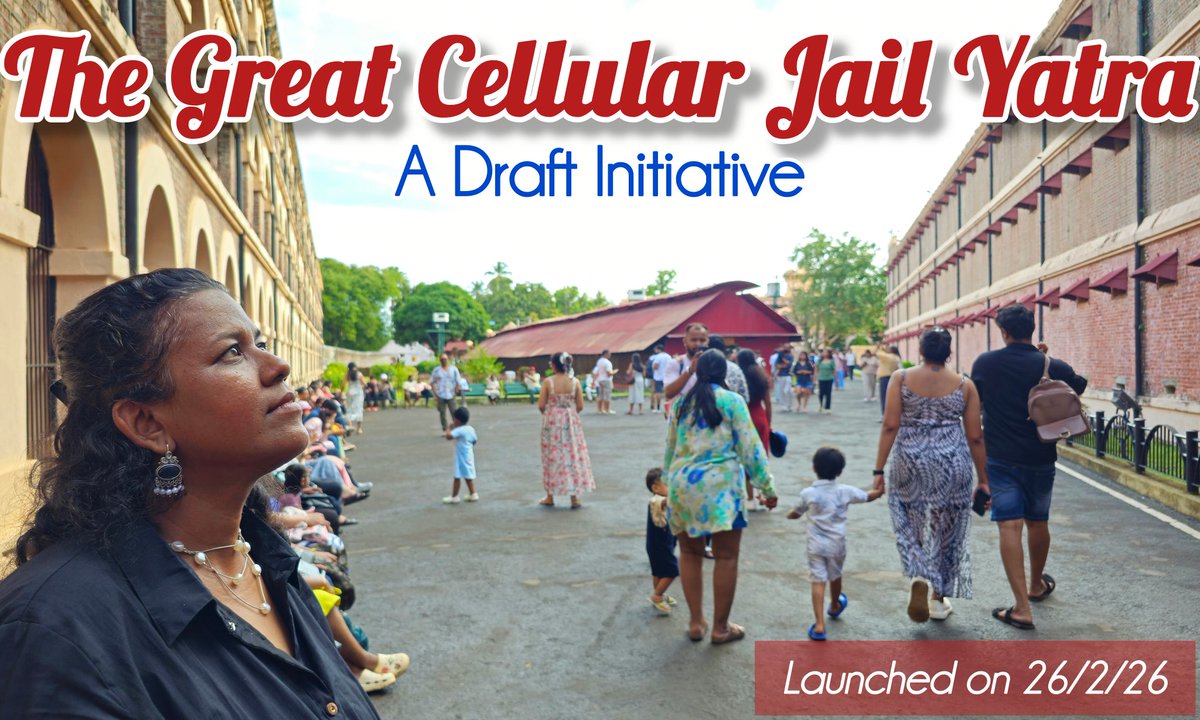
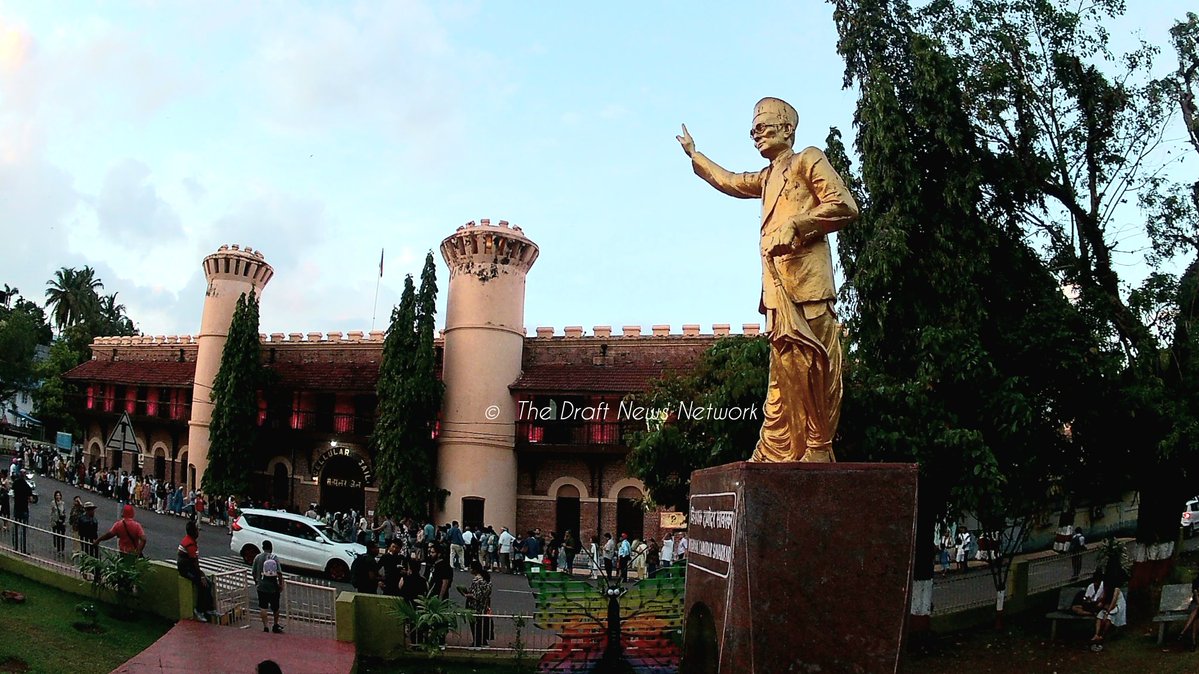
26/2: The Day the Silence Shifted There are dates that arrive with fireworks, and there are dates that arrive like a tide going out. 26 February 1942 belongs to the latter. On that day, the British administration withdrew from Cellular Jail and from Port Blair (now known ...
Manu Shrivastava tweet media
English
1
2
0
39