

@AlexGodofsky More hilarious antics from the horse carriage industry lmao.
English
infrecursion
4K posts

Berkeley law has introduced a new, much stricter AI policy law.berkeley.edu/wp-content/upl…

@ShriramKMurthi @Hesamation Fair to question - so I read the actual proof and the nine verifiers’ notes. It recombines existing number theory brilliantly; it doesn’t reach for a concept that wasn’t already there. Gowers (who checked it) names the same boundary. Wrote it up: @vishalmisra/the-hardest-test-so-far-72358d1b232c" target="_blank" rel="nofollow noopener">medium.com/@vishalmisra/t…

@souljagoyteller Can you explain his mistake in more detail? Is it that we can never run out of interesting math to do? Do we know this for sure (a theorem?) or as a common-sensical extension of the idea that we can study whatever mathematical structures we want?

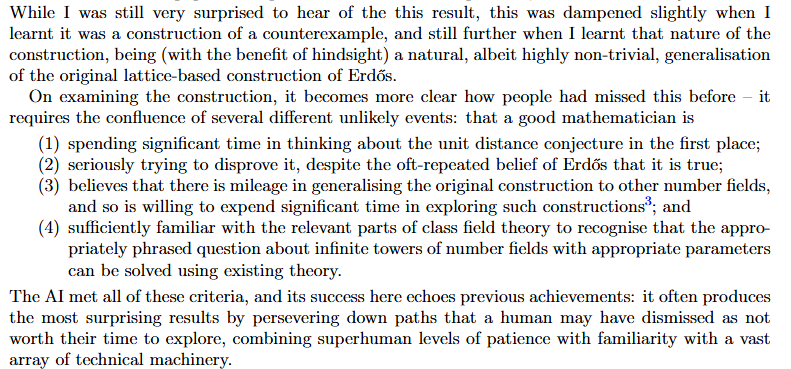
Today, we share a breakthrough on the planar unit distance problem, a famous open question first posed by Paul Erdős in 1946. For nearly 80 years, mathematicians believed the best possible solutions looked roughly like square grids. An OpenAI model has now disproved that belief, discovering an entirely new family of constructions that performs better. This marks the first time AI has autonomously solved a prominent open problem central to a field of mathematics.
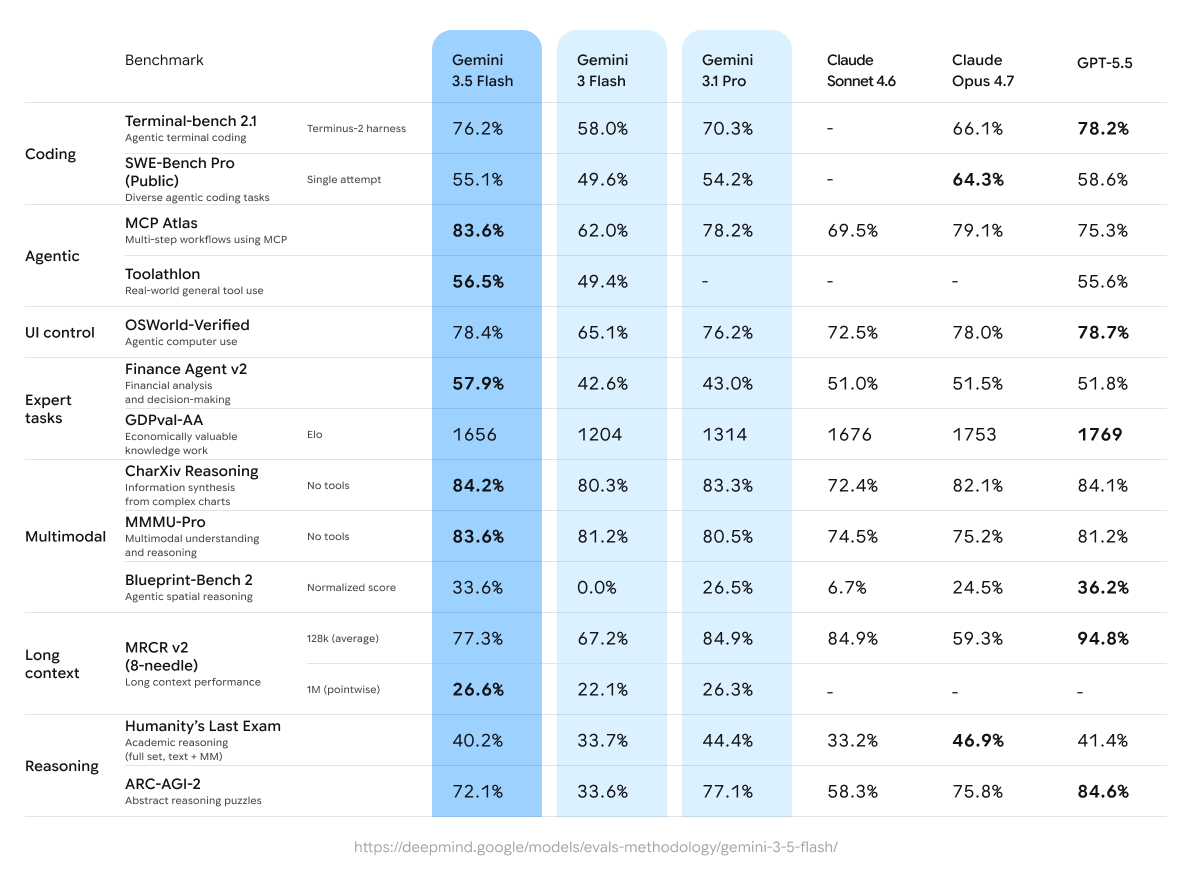



For the past 70 years, modern biology has been built on a static objects worldview: DNA = information, proteins = structures, cells = nanomachines, disease = broken parts, drugs = part repair/update. I'm honestly excited for a “new worldview” and “Dynamic Biology” to emerge.


its cool how half the global economy is contingent on this shit




Your agents die when you close your laptop. We fixed that. Omnara Cloud Sandboxing is live. Close your laptop, the session keeps running in the cloud. Open it back up, you're right where you left off. Close the lid. Keep building.


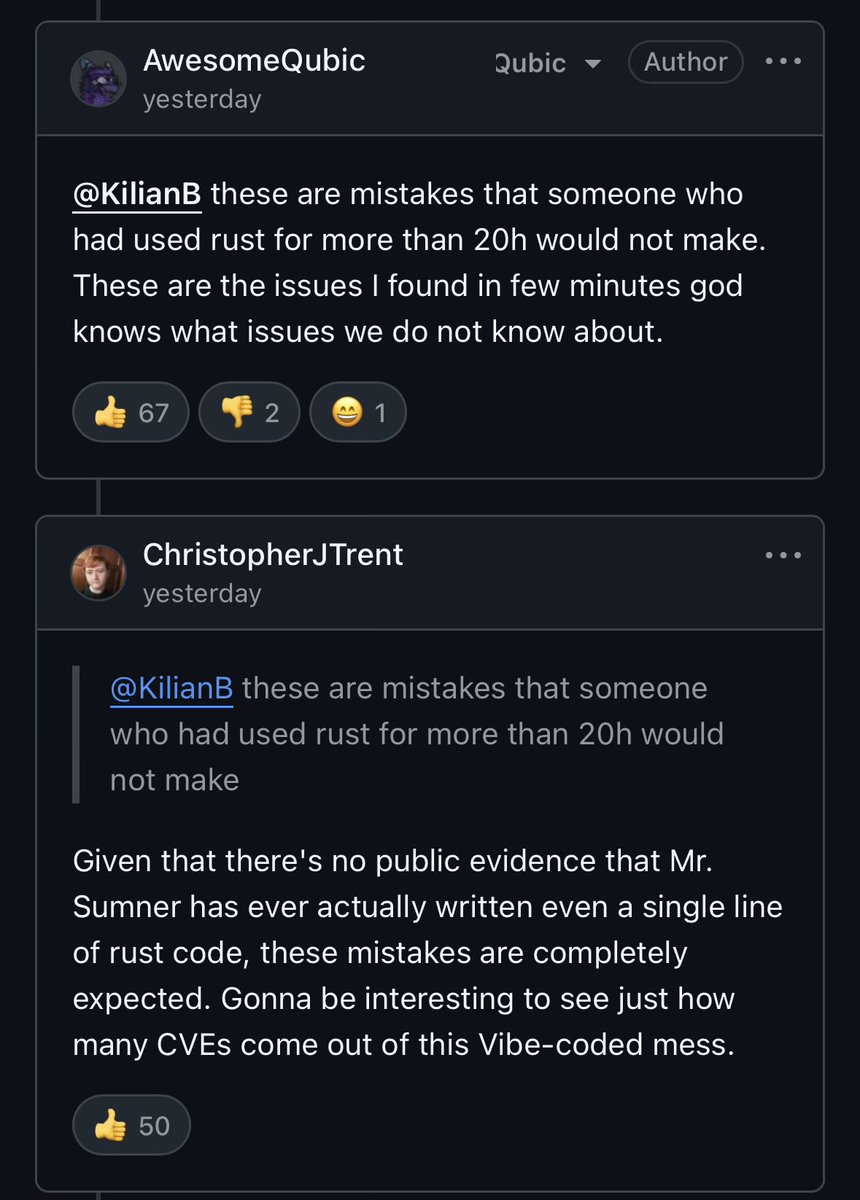
@WKCosmo Co-authors may read an entire paper and still not take the time to check that every reference exists and is relevant to how it's being used. Doing so will usually mean *each/every co-author* will have to go to Google Scholar, do a search for each citation, and follow the result.
